The Tech Edvocate

Top Menu

  • Advertisement
  • Apps
  • Home Page
  • Home Page Five (No Sidebar)
  • Home Page Four
  • Home Page Three
  • Home Page Two
  • Home Tech2
  • Icons [No Sidebar]
  • Left Sidbear Page
  • Lynch Educational Consulting
  • My Account
  • My Speaking Page
  • Newsletter Sign Up Confirmation
  • Newsletter Unsubscription
  • Our Brands
  • Page Example
  • Privacy Policy
  • Protected Content
  • Register
  • Request a Product Review
  • Shop
  • Shortcodes Examples
  • Signup
  • Start Here
    • Governance
    • Careers
    • Contact Us
  • Terms and Conditions
  • The Edvocate
  • The Tech Edvocate Product Guide
  • Topics
  • Write For Us
  • Advertise

Main Menu

  • Start Here
    • Our Brands
    • Governance
      • Lynch Educational Consulting, LLC.
      • Dr. Lynch’s Personal Website
      • Careers
    • Write For Us
    • The Tech Edvocate Product Guide
    • Contact Us
    • Books
    • Edupedia
    • Post a Job
    • The Edvocate Podcast
    • Terms and Conditions
    • Privacy Policy
  • Topics
    • Assistive Technology
    • Child Development Tech
    • Early Childhood & K-12 EdTech
    • EdTech Futures
    • EdTech News
    • EdTech Policy & Reform
    • EdTech Startups & Businesses
    • Higher Education EdTech
    • Online Learning & eLearning
    • Parent & Family Tech
    • Personalized Learning
    • Product Reviews
  • Advertise
  • Tech Edvocate Awards
  • The Edvocate
  • Pedagogue
  • School Ratings

logo

The Tech Edvocate

  • Start Here
    • Our Brands
    • Governance
      • Lynch Educational Consulting, LLC.
      • Dr. Lynch’s Personal Website
        • My Speaking Page
      • Careers
    • Write For Us
    • The Tech Edvocate Product Guide
    • Contact Us
    • Books
    • Edupedia
    • Post a Job
    • The Edvocate Podcast
    • Terms and Conditions
    • Privacy Policy
  • Topics
    • Assistive Technology
    • Child Development Tech
    • Early Childhood & K-12 EdTech
    • EdTech Futures
    • EdTech News
    • EdTech Policy & Reform
    • EdTech Startups & Businesses
    • Higher Education EdTech
    • Online Learning & eLearning
    • Parent & Family Tech
    • Personalized Learning
    • Product Reviews
  • Advertise
  • Tech Edvocate Awards
  • The Edvocate
  • Pedagogue
  • School Ratings
  • A Visitors Guide to Long Beach (CA), United States

  • A Visitor’s Guide to Fresno (CA), United States

  • A Visitors Guide to New Orleans (LA), United States

  • A Visitors Guide to Sacramento (CA), United States

  • A Visitors Guide to Lyon, France

  • JisuLife Ultra2 Portable Fan: A Powerful Multi-Function Cooling Solution

  • A Visitors Guide to Viña del Mar, Chile

  • A Visitors Guide to Århus, Denmark

  • A Visitors Guide to Bakersfield (CA), United States

  • A Visitors Guide to Aurora (CO), United States

Digital & Mobile Technology
Home›Digital & Mobile Technology›Windows XP Command Prompt Commands

Windows XP Command Prompt Commands
By Matthew Lynch
June 23, 2023
0
Spread the love

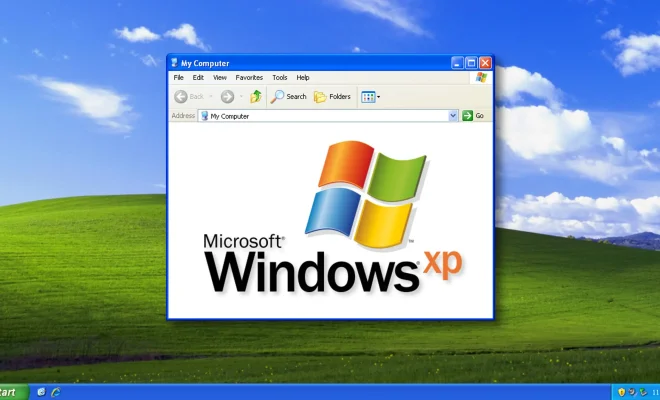
The Command Prompt is a powerful tool that allows users to interact with the Windows operating system using text-based commands. In Windows XP, the Command Prompt offers a variety of commands that can be used to perform a wide range of tasks. Let’s take a look at some of the most useful commands.

  1. ipconfig

The ipconfig command displays the current IP configuration of a computer, including the IP address, subnet mask, and default gateway. This command can be useful for troubleshooting network connectivity issues.

  1. ping

The ping command is used to test network connectivity by sending packets of data to a specified IP address or hostname and measuring the response time. This command can be used to diagnose network connectivity issues and to verify that a particular host is reachable.

  1. netstat

The netstat command displays active network connections, including the protocol, local address, foreign address, and state of each connection. This command can be useful for troubleshooting network connectivity issues and identifying potential security threats.

  1. tasklist

The tasklist command displays a list of all running processes on a computer, including the process ID, process name, and memory usage. This command can be useful for troubleshooting performance issues and identifying potential security threats.

  1. systeminfo

The systeminfo command displays detailed information about the computer’s hardware and software, including the operating system version, processor type, and installed memory. This command can be useful for troubleshooting hardware and software issues and for verifying system configurations.

  1. dir

The dir command displays a list of files and directories in the current directory. This command can be useful for navigating the file system and for verifying file and directory names and permissions.

  1. cd

The cd command is used to change the current directory. This command can be useful for navigating the file system and for executing commands in a specific directory.

  1. md

The md command is used to create a new directory. This command can be useful for organizing files and for creating directories for specific purposes.

  1. del

The del command is used to delete a file. This command can be useful for removing unwanted files and for freeing up disk space.

  1. format

The format command is used to format a disk or a volume. This command can be useful for preparing a disk for use or for erasing all data on a disk.

In conclusion, the Windows XP Command Prompt offers a wide range of powerful commands that can be used for a variety of tasks, including network troubleshooting, system configuration, and file management. By mastering these commands, users can become more efficient and effective in their use of the Windows operating system.

Previous Article

How to Clean and Maintain Your Nintendo ...

Next Article

Draw Something Is the Pictionary App You ...

Matthew Lynch

Related articles More from author

  • Digital & Mobile Technology

    The Best Sites for Learning How to Play the Harmonica

    June 23, 2023
    By Matthew Lynch
  • Digital & Mobile Technology

    How to Zoom In or Out With Your Keyboard

    June 2, 2023
    By Matthew Lynch
  • Digital & Mobile Technology

    What Is SWIFT and How Does It Work?

    June 13, 2023
    By Matthew Lynch
  • Digital & Mobile Technology

    Best People Search Engines for Finding Anyone

    June 12, 2023
    By Matthew Lynch
  • Digital & Mobile Technology

    Ways You Can Be Tracked While Incognito or Private Browsing

    June 11, 2023
    By Matthew Lynch
  • Digital & Mobile Technology

    What is Wi-Fi Beamforming?

    June 15, 2023
    By Matthew Lynch

Search

Login & Registration

  • Register
  • Log in
  • Entries feed
  • Comments feed
  • WordPress.org

Newsletter

Signup for The Tech Edvocate Newsletter and have the latest in EdTech news and opinion delivered to your email address!

About Us

Since technology is not going anywhere and does more good than harm, adapting is the best course of action. That is where The Tech Edvocate comes in. We plan to cover the PreK-12 and Higher Education EdTech sectors and provide our readers with the latest news and opinion on the subject. From time to time, I will invite other voices to weigh in on important issues in EdTech. We hope to provide a well-rounded, multi-faceted look at the past, present, the future of EdTech in the US and internationally.

We started this journey back in June 2016, and we plan to continue it for many more years to come. I hope that you will join us in this discussion of the past, present and future of EdTech and lend your own insight to the issues that are discussed.

Newsletter

Signup for The Tech Edvocate Newsletter and have the latest in EdTech news and opinion delivered to your email address!

Contact Us

The Tech Edvocate
910 Goddin Street
Richmond, VA 23231
(601) 630-5238
[email protected]

Copyright © 2025 Matthew Lynch. All rights reserved.