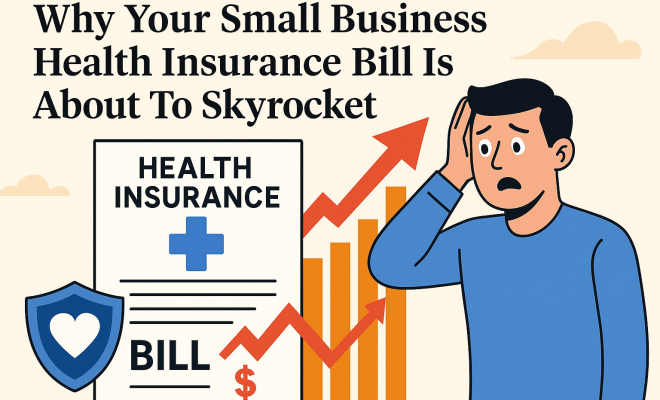
Why Your Small Business Health Insurance Bill Is About To Skyrocket
“`html
If you run a small business in America, you’ve probably felt the squeeze on your bottom line from pretty much every direction lately. But there’s one area that’s about to get a whole lot tighter, and it’s probably already making you sweat: small business health insurance. We’re talking about a truly staggering 31% surge in premiums since 2022, and it’s not slowing down. This isn’t just a minor bump; it’s a seismic shift that’s forcing small business owners to make some incredibly tough decisions, with the median premium projected to hit an eye-watering $8,743 per employee by 2026. What’s driving this? A big part of it is the looming expiration of enhanced Affordable Care Act (ACA) premium subsidies at the end of 2025. This isn’t just an abstract policy change; it’s a direct hit to the wallets of millions of Americans and, by extension, the small businesses that employ them. The public outcry is already loud and clear on social media, with affordability being the central, emotionally charged issue.
So, what exactly does this mean for you, your employees, and the future of your business? It means tough choices are coming, if they haven’t arrived already. You’re likely weighing whether you can continue to offer robust coverage, if you’ll need to absorb these costs by cutting elsewhere, or if you’ll have to consider less generous plans. It’s a balancing act between employee retention, financial solvency, and the moral obligation many small business owners feel to provide good benefits. The good news (if you can call it that) is that you’re not alone in this struggle. The vast majority of small businesses are choosing to absorb these rising costs rather than cut coverage, which speaks volumes about their commitment to their teams. But how sustainable is that in the long run? That’s the million-dollar question.
1. The Looming Subsidy Cliff: A Massive Cost Driver for Small Business Health Insurance
Let’s get straight to the heart of the matter: the expiration of enhanced ACA premium subsidies at the close of 2025. This isn’t some minor tweak to healthcare policy; it’s a ‘subsidy cliff’ that’s set to significantly impact the affordability of health insurance for millions of Americans, and by direct extension, the small businesses trying to provide it. During the pandemic, these subsidies were beefed up to make marketplace plans more accessible, effectively lowering monthly premiums for many individuals and families. For a time, this offered a degree of relief, even if indirect, to the broader healthcare market.
However, as these enhanced subsidies phase out, the true cost of coverage for many will resurface, often with a vengeance. This isn’t just a concern for individuals buying their own plans; it trickles down to employers. When the overall cost of healthcare rises for the general population, it creates upward pressure on premiums across the board, including for small group plans. Businesses might find that even if their employees aren’t directly using marketplace subsidies, the underlying market dynamics are pushing up their own small business health insurance costs. It forces a reckoning with the true price of comprehensive care.
2. The 31% Premium Spike: An Unprecedented Financial Burden
When we talk about a 31% surge in health insurance premiums since 2022, it’s not just a statistic; it’s a concrete financial hit that’s impacting every decision a small business makes. Imagine your operational costs for a key component skyrocketing by nearly a third in just a few years – that’s precisely what’s happening with small business health insurance. This isn’t a gradual, manageable increase; it’s a sharp, aggressive climb that demands immediate attention and difficult adjustments. For many small firms, where margins can be razor-thin, this kind of increase can feel existential.
This massive spike means that budgets are stretched, and difficult choices are being made. Will you absorb the full cost, risking profitability? Will you pass some of it on to employees through higher deductibles or co-pays, potentially impacting their financial well-being and job satisfaction? Or, will you have to consider reducing other benefits, or even slowing down hiring? These are the real-world implications of that 31% number, and they underscore the immense pressure small business owners are under to maintain competitive benefits while staying afloat.
3. Median Premium Nears $9,000 Per Employee: The Staggering Reality of 2026
Let’s look ahead to 2026, where projections indicate the median premium for small business health insurance will reach an astounding $8,743 per employee. Think about that for a moment. For a business with just five employees, that’s nearly $44,000 annually just for health coverage. For ten employees, you’re looking at almost $87,500. These aren’t insignificant sums; they represent a major line item in any small business budget, often rivaling or even surpassing costs like rent, utilities, or even a significant portion of payroll.
This figure isn’t just a projection; it’s a stark warning. It means that small businesses will face an even greater financial hurdle to provide what many consider a fundamental benefit. This kind of cost escalation can stifle growth, deter new hires, and force business owners to divert funds from other critical areas like innovation, marketing, or employee development. It paints a challenging picture for the future of small business viability and the ability of these vital economic engines to compete for talent against larger corporations with deeper pockets.
4. The Tough Choice: Absorb or Cut? The Small Business Dilemma
One of the most telling details from recent reports is the overwhelming tendency of small businesses to absorb these rising health insurance costs rather than cut coverage. This speaks volumes about the priorities and values of small business owners. Many understand that offering health insurance isn’t just a perk; it’s a crucial tool for employee retention, recruitment, and overall morale. In a competitive job market, the absence of health benefits can be a deal-breaker for top talent, especially when larger companies often offer comprehensive packages. (See: CDC health insurance statistics.)
However, absorbing these costs isn’t a sustainable, endless solution. It means that money has to come from somewhere. Often, this translates into slower wage growth for employees, reduced investment in other areas of the business, or even delayed hiring plans. It creates a domino effect throughout the organization. While the commitment to employees is admirable, it highlights the immense strain these premium increases place on the financial health of the business itself. It’s a constant tightrope walk between being a good employer and maintaining profitability.
5. The Shift to High-Deductible Plans: A Strategy for Survival
In response to these escalating premiums, many small businesses are strategically shifting towards high-deductible, HSA-eligible health plans. This isn’t necessarily a preference; it’s often a necessity born out of the desire to keep monthly premium costs manageable. High-deductible plans typically come with lower monthly premiums, which can provide immediate relief to a strained budget. The trade-off, of course, is that employees bear more of the upfront costs for their healthcare until the deductible is met. For more context, see the shocking truth about insurance costs.
The appeal of HSA-eligible plans, specifically, lies in the accompanying Health Savings Account (HSA). These accounts allow employees to save money for healthcare expenses on a tax-advantaged basis. Contributions are tax-deductible, the money grows tax-free, and withdrawals for qualified medical expenses are also tax-free. For businesses, offering an HSA-eligible plan can be a way to provide a valuable benefit while keeping their own premium contributions lower. For employees, it offers a way to manage those higher deductibles, provided they can afford to contribute to the HSA. It’s a complex solution, but for many, it’s becoming the most viable path to continuing to offer small business health insurance. For more on this, see eclipse your mortgage payments.
6. Impact on Wage Growth and Hiring: A Ripple Effect
When small businesses are forced to absorb a 31% increase in health insurance premiums, the financial impact inevitably ripples through other aspects of their operations. One of the most significant areas affected is wage growth. If a business has a fixed budget for employee compensation, and a larger portion of that budget is now allocated to health benefits, there’s less left over for salary increases. This can be incredibly frustrating for employees, especially in an inflationary environment where their own cost of living is rising.
Beyond wages, hiring plans often take a hit. A small business might delay expanding its team, or even freeze new hires altogether, if the cost of adding another employee—which now includes that near-$9,000 health premium—becomes prohibitive. This doesn’t just impact individual job seekers; it slows down economic growth and innovation that small businesses are known for. It’s a cruel irony: the very benefit designed to attract and retain talent can, when its cost spirals, actually hinder a company’s ability to grow and create more jobs.
7. Public Outcry and Social Media Sentiment: The Human Cost
This isn’t just a dry financial issue; it’s an emotionally charged topic that directly impacts personal finances and peace of mind. The public outcry on social media regarding healthcare affordability is already palpable. You see countless posts from individuals sharing their shock at rising premiums, exorbitant deductibles, and the feeling of being trapped by a system that seems to prioritize profit over patient well-being. This sentiment extends to employees of small businesses, who feel the pinch when their out-of-pocket costs rise or their benefits are scaled back.
This widespread discontent creates a difficult environment for small business owners. They’re often caught in the middle, trying to do right by their employees while also keeping their businesses afloat. The public’s frustration with healthcare costs becomes their frustration, as they grapple with how to communicate these difficult changes to their teams. It underscores the urgent need for broader solutions that address the root causes of healthcare inflation, rather than simply leaving small businesses and individuals to bear the brunt.
8. High Search Volume for Affordable Options: A Sign of Desperation
The fact that there’s a consistently high search volume for terms like ‘affordable health insurance options,’ ‘small business health insurance comparison tools,’ and ‘financial planning for healthcare costs’ speaks volumes. It’s not just casual curiosity; it’s a reflection of genuine desperation among individuals and business owners alike. People are actively looking for ways to navigate this incredibly complex and expensive landscape, searching for any glimmer of hope or a viable alternative.
This search behavior highlights a critical need in the market. It means that while the problem of rising costs is pervasive, so is the desire to find solutions. For small business owners, this translates into a demand for brokers and consultants who can offer creative strategies, explain complex plans, and help them find the best possible coverage within their budgetary constraints. It’s a testament to the resilience of small businesses, always seeking a way forward even when the challenges seem insurmountable.
9. Prime Target for High-CPC Ad Niches: The Market Responds to Need
The confluence of soaring costs, public anxiety, and high search volume makes small business health insurance a prime target for high-CPC (cost-per-click) ad niches. Industries like health insurance providers, financial services, and even legal consultations are investing heavily in advertising to capture the attention of those desperately seeking solutions. This isn’t just about market dynamics; it’s about the economic value of addressing a pain point that affects millions. (See: NIH report on health insurance premiums.)
For small business owners, this means navigating a marketplace saturated with options, advertisements, and often conflicting information. It underscores the importance of working with trusted advisors who can cut through the noise and provide clear, unbiased guidance. While the ad market demonstrates the profitability of addressing this crisis, it also highlights the complexity for those simply trying to find the best care for their employees without getting lost in a labyrinth of choices. We covered best insurance options 2023 in more detail.
10. Strategies for Small Businesses: Navigating the Rising Tide of Small Business Health Insurance
Given the challenging landscape, what can small business owners actually *do*? First, a thorough review of your current small business health insurance plan is non-negotiable. Don’t just accept the renewal quote; challenge it. Work closely with an independent insurance broker who specializes in small group benefits. They can often access a wider range of plans and carriers than you might find on your own, and they understand the nuances of plan design that can help manage costs without completely sacrificing coverage quality. For more context, see this one change is revolutionizing insurance.
Consider alternative funding mechanisms. Beyond fully insured plans, some small businesses explore level-funded or even self-funded options, particularly if they have a relatively healthy workforce. While these come with their own risks and complexities, they can offer more control over costs in the long run. Also, look into benefit platforms that allow for greater employee choice, perhaps through a defined contribution model where you give employees a set amount to spend on the benefits they value most. The key is proactive engagement and a willingness to explore options beyond the traditional, as the old ways are simply becoming too expensive to sustain for many.
11. Expert Perspectives: What Industry Leaders Are Saying
It’s not just small business owners feeling the heat; industry experts are also weighing in on the deepening crisis of small business health insurance. Economists specializing in healthcare markets point to a perfect storm of factors: an aging population driving up demand for services, the increasing cost of new medical technologies and pharmaceuticals, and persistent administrative inefficiencies within the healthcare system. One prominent health policy analyst recently noted, “The current trajectory isn’t sustainable for small businesses. We’re asking them to shoulder a disproportionate burden of healthcare inflation, which stifles their ability to grow and innovate. Without systemic reform, this trend will only accelerate.”
Insurance carriers, while acknowledging the rising costs, often cite their own increased payouts for claims as the primary driver for premium hikes. They’ll tell you that the frequency and severity of medical claims continue to climb, forcing them to adjust their pricing models. However, critics argue that a lack of transparency in pricing, particularly for hospital services and prescription drugs, allows these costs to spiral unchecked, with insurance companies simply passing the buck to employers and individuals. Understanding these different viewpoints helps paint a more complete picture of the complex forces at play.
12. The Broader Economic Impact: Beyond the Small Business
The struggles of small businesses to provide affordable health insurance don’t just affect them and their employees; they have broader implications for the economy as a whole. Small businesses are often called the backbone of the American economy, responsible for creating the majority of new jobs and fostering innovation. When these businesses are forced to divert significant capital to health insurance premiums, it lessens their capacity to invest in growth, research and development, or even simply expanding their physical footprint.
This economic drag can manifest in several ways. We might see a slower rate of job creation, reduced competitive pressure on larger corporations, and a decrease in entrepreneurial activity. If starting a new business means immediately facing an almost $9,000 annual health insurance cost per employee, it becomes a significant barrier to entry. This can stifle the very dynamism that makes the small business sector so vital. Essentially, the health of small businesses is directly linked to the health of the overall economy, and expensive health insurance is a serious impediment.
13. Comparisons: How Other Countries Tackle Employer-Provided Health Benefits
It’s helpful to look at how other developed nations approach employer-provided health benefits to understand potential alternative models, even if they aren’t directly applicable to the US system today. Many European countries, for instance, operate under universal healthcare systems where the government plays a much larger role in funding and regulating healthcare. In these systems, employers typically contribute to national social security schemes that cover health, rather than directly purchasing private insurance plans for their employees.
For example, in Germany, a system of “sickness funds” provides mandatory health insurance, with contributions shared by employers and employees, based on income. In the UK, the National Health Service (NHS) is primarily funded through general taxation, meaning employers aren’t generally responsible for providing health insurance. These models often lead to lower administrative costs and greater negotiating power for drug prices. While a complete overhaul of the US system is a massive political undertaking, these international comparisons highlight that the current employer-sponsored model isn’t the only way, and perhaps not the most efficient way, to deliver healthcare. For more context, see AI platforms fixing insurance claims. (See: AP news on health care costs.)
Frequently Asked Questions About Small Business Health Insurance
Q1: What exactly are the ACA premium subsidies and why are they expiring?
The ACA premium subsidies are financial assistance provided by the government to help individuals and families afford health insurance purchased through the Health Insurance Marketplace. They reduce the amount people pay each month for their premiums. During the COVID-19 pandemic, these subsidies were temporarily enhanced to make coverage even more affordable, as part of the American Rescue Plan Act. These enhanced subsidies are set to expire at the end of 2025, which means many people will see their monthly premium costs jump significantly if Congress doesn’t act to extend them. This expiration directly impacts the overall affordability of healthcare, putting upward pressure on all insurance costs, including those for small businesses.
Q2: My business is small. Do I have to offer health insurance?
Generally, if your small business has fewer than 50 full-time equivalent (FTE) employees, you are not legally required by the Affordable Care Act (ACA) to offer health insurance. This mandate primarily applies to larger employers (those with 50 or more FTEs), who face penalties if they don’t offer affordable, minimum value coverage. However, many small businesses choose to offer health insurance as a crucial benefit for employee recruitment, retention, and overall morale, even if they aren’t legally mandated to do so. The challenge, as this article discusses, is the rapidly increasing cost of that choice.
Q3: What’s the difference between fully insured and self-funded plans for small businesses?
In a fully insured plan, your business pays a fixed monthly premium to an insurance carrier. The carrier then assumes the financial risk for all claims. This means if claims are higher than expected, the insurance company covers the difference. It offers predictable costs for your business. In a self-funded plan (or sometimes a level-funded plan for smaller groups), your business pays for each employee’s medical claims directly. You typically hire a third-party administrator (TPA) to manage the plan and process claims, and you usually purchase stop-loss insurance to protect against catastrophic claims. Self-funding can offer more control over plan design and potentially lower costs if your employee claims are low, but it also carries more financial risk for your business.
Q4: How can an independent insurance broker help my small business?
An independent insurance broker can be a valuable asset. Unlike agents who might work for a single insurance company, independent brokers work with multiple carriers. This allows them to shop around and compare a wider range of plans, often finding options that better fit your specific budget and employee needs. They can also explain complex plan designs, help you navigate regulatory requirements, and provide guidance on alternative strategies like HSAs, HRAs, or level-funded plans. Their expertise can save you significant time and potentially money by finding the most cost-effective and suitable small business health insurance solutions.
Q5: Are there any government programs or tax credits available for small businesses offering health insurance?
Yes, there are a couple of programs. The most notable is the Small Business Health Care Tax Credit. This credit is designed to help small businesses and tax-exempt organizations afford the cost of providing health insurance to their employees. To qualify, you generally need fewer than 25 full-time equivalent employees, pay average wages of less than a certain amount (this figure changes annually), and contribute at least 50% of the premium cost for your employees. The maximum credit is 50% of your contribution for small businesses and 35% for tax-exempt employers. Additionally, some states or local governments may have their own programs or initiatives to support small businesses with healthcare costs, so it’s worth checking with your state’s Department of Insurance or small business associations.
The 31% surge in small business health insurance premiums is more than just a number; it’s a profound challenge that’s reshaping how small businesses operate and how employees receive care. While the instinct to absorb these costs to protect employees is commendable, it’s not a long-term solution. The expiration of ACA subsidies, coupled with ongoing healthcare inflation, demands a strategic, informed approach. Small business owners need to be proactive, exploring every avenue from high-deductible plans to alternative funding models, and leveraging expert advice to navigate this volatile landscape. The future of your business, and the well-being of your employees, depends on it.
“`
Trending Now
Frequently Asked Questions
Why are small business health insurance premiums increasing?
Small business health insurance premiums are projected to surge due to the expiration of enhanced Affordable Care Act (ACA) premium subsidies at the end of 2025. This change significantly impacts small business owners, with premiums expected to reach a median of $8,743 per employee by 2026.
What is the impact of the ACA on small business health insurance?
The Affordable Care Act (ACA) has provided premium subsidies that help lessen the financial burden on small businesses. As these subsidies are set to expire, small businesses will face a substantial increase in health insurance costs, affecting their budgets and employee benefits.
How can small businesses manage rising health insurance costs?
Small businesses can manage rising health insurance costs by evaluating their coverage options, considering less generous plans, or absorbing the increased costs by cutting expenses in other areas. The decision often hinges on balancing employee retention with financial sustainability.
What are the consequences of rising health insurance premiums for employees?
Rising health insurance premiums can lead to reduced coverage options for employees or increased out-of-pocket costs. Small businesses may struggle to maintain robust benefits, which could impact employee satisfaction and retention in the long run.
Are small businesses absorbing health insurance cost increases?
Many small businesses are currently choosing to absorb rising health insurance costs instead of cutting coverage. This reflects their commitment to providing good benefits for their employees, though it raises concerns about long-term sustainability.
What did we miss? Let us know in the comments and join the conversation.