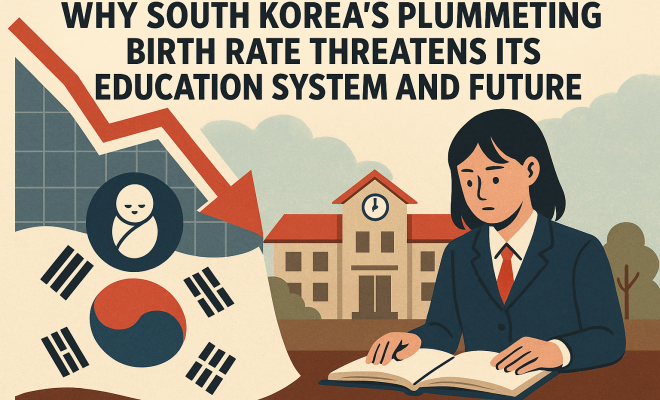
Why South Korea’s Plummeting Birth Rate Threatens Its Education System and Future
“`html
South Korea is experiencing a demographic crisis that could reshape its future. The country now holds the record for the lowest birth rate in the world, a statistic that has profound implications for its education system, labor market, and overall societal structure. As highlighted in a recent OECD publication titled Korea’s Unborn Future, the challenges posed by this trend are profound, intertwining issues of gender roles, economic pressures, and educational reform. Understanding this crisis is essential for grasping the forces that could redefine the Korean landscape in the coming decades.
The Stark Numbers Behind Korea’s Birth Rate
According to the OECD report, South Korea’s total fertility rate (TFR) plummeted to an alarming 0.84 in 2020, significantly lower than the global average of 2.4. This statistic is not merely a number; it represents a trend that has deep roots in societal expectations and economic realities. For context, a fertility rate below 2.1 is considered below the replacement level, meaning that the population will begin to shrink in the long term. The implications of such a trend are staggering — fewer births today lead to diminished school enrollments tomorrow, affecting everything from early childhood education to higher education.
The Intersection of Gender Roles and Family Life
The pressures of modern life in South Korea are pushing women to choose between career and family. Many women feel that to succeed professionally, they must forego starting a family. This pressure is compounded by traditional gender roles that still dominate South Korean society, where men are often expected to be the primary breadwinners. Women who desire to maintain their careers after childbirth face significant challenges, including a lack of affordable childcare options and workplace cultures that are not accommodating to parental duties.
To illustrate this, consider the case of Lee, a young professional who works in Seoul. After the birth of her first child, she struggled to balance her demanding job with her new responsibilities at home. Despite her ambition, she found herself considering whether to leave her job — a choice that many women in South Korea are forced to make. This scenario is not uncommon; in fact, many women cite work-life balance as a critical factor in their decision to delay or forgo having children altogether.
Economic Factors Contributing to Low Birth Rates
The economic landscape in South Korea also plays a significant role in the declining birth rate. High costs associated with raising children, including education and housing, contribute to a hesitance to start families. The OECD report indicates that South Korean parents spend a staggering amount on their children’s education, often leading to financial strain. This economic pressure forces many couples to prioritize financial stability over family expansion.
Moreover, the competitive nature of the education system intensifies this issue. South Korea is known for its rigorous educational standards and high-stakes testing, which can be both a point of national pride and a source of stress for families. Parents often invest heavily in their children’s education from a very young age, leading to a cycle where the financial burden of child-rearing seems overwhelming. This contributes to the perception that children are an economic liability rather than a blessing.
Effects on the Education System
The implications of these demographic trends for the Korea education system are stark. With fewer children being born, schools are facing declining enrollment rates. In urban centers like Seoul, this could mean the closure of schools, reduced resources, and fewer educational opportunities. As the population ages, the need for a robust education system to prepare future generations will become more pressing, yet the resources may not be available to support this.
This trend also raises concerns about the quality of education. As school populations shrink, it can lead to a reduction in funding, which is often tied to the number of students enrolled. Schools may struggle to maintain a high standard of education with dwindling resources, ultimately affecting the quality of education provided to the next generation. This could create a vicious cycle, further discouraging families from having more children.
Future Workforce Implications
The long-term implications of a declining birth rate extend beyond the immediate education system and into the labor market. A shrinking workforce could lead to significant challenges in sustaining economic growth. As the population ages, there will be fewer young people entering the workforce to support an increasing number of retirees. The OECD report emphasizes that South Korea will face a labor shortage that could hinder its economic competitiveness on the global stage.
Moreover, with fewer young people, there will be greater pressure on the current workforce. Employers may struggle to fill positions, leading to heightened competition for talent and potentially driving wages higher. This could exacerbate existing economic inequalities, making it difficult for lower-income families to compete in the job market. (See: CDC Reproductive Health Statistics.)
Social Policy Solutions
Addressing this complex issue requires innovative social policies that tackle both gender roles and economic pressures. The South Korean government has already initiated various measures aimed at encouraging higher birth rates, such as providing financial incentives for families and improving childcare services. However, these measures have seen limited success, indicating that a more comprehensive approach is needed.
For instance, countries like Sweden and Norway have successfully implemented policies that promote work-life balance, such as generous parental leave and flexible work arrangements. South Korea could look to these models as a template for reform, incentivizing both men and women to share parenting responsibilities equally. This would not only alleviate some of the pressures on women but also help reshape societal perceptions around gender roles.
Education System Reforms for a Changing Demographic Landscape
As South Korea grapples with these demographic shifts, education reform will be crucial. Policymakers need to consider how to adapt the education system to a smaller student population while maintaining high educational standards. This could involve the consolidation of schools or the redesign of curricula to emphasize skills that will be valuable in an evolving job market.
Moreover, the educational focus may need to shift from rote learning and high-stakes testing to more holistic approaches that foster creativity, critical thinking, and emotional intelligence. Such changes could better prepare students for the realities of a globalized workforce while making education more appealing to families considering having more children.
Cultural Shifts and Public Perception
Beyond policy and educational reforms, there also needs to be a cultural shift in how society perceives family life and gender roles. Efforts to normalize the sharing of parental responsibilities and to support diverse family structures could go a long way in changing attitudes toward having children. Public campaigns that celebrate families and encourage discussions around work-life balance might foster a more supportive environment for prospective parents.
Interestingly, younger generations of South Koreans are showing signs of changing attitudes. There’s a growing acceptance of alternative lifestyles, including delayed marriage and childbearing or choosing not to have children at all. While this reflects personal choice, it also indicates a significant shift in societal values that policymakers must understand and navigate.
The Global Context and What Other Nations Can Learn
South Korea’s situation is not unique; many developed nations are grappling with declining birth rates and aging populations. Countries like Japan and Italy also face similar challenges. The lessons learned from South Korea’s experience can serve as a cautionary tale for other nations. Understanding the interplay between economic pressures, gender roles, and education can help other countries anticipate and mitigate the impacts of a declining birth rate.
In this context, international cooperation and knowledge sharing can be invaluable. Countries can benefit from examining how others have tackled these challenges, allowing for the emergence of innovative solutions tailored to each nation’s unique circumstances.
Challenges Facing the Korea Education System
With the declining birth rate, one of the most pressing challenges for the Korea education system is retaining quality educators. As enrollments decrease, some schools may resort to reduced staffing and, in turn, may struggle to maintain effective teaching practices. This issue is compounded in rural areas, where teacher recruitment is already difficult. The scarcity of qualified teachers can lead to larger class sizes and less individualized attention for students.
Additionally, with many parents investing heavily in private education, public schools may be perceived as less attractive. This disparity can create a two-tiered education system, where only those with the financial means can afford the best education, further entrenching social inequalities.
International Comparisons in Education Systems
When looking at how other countries handle similar challenges, comparisons can be illuminating. For example, Finland’s education system is frequently lauded for its emphasis on equality and student well-being. Finnish schools prioritize less standardized testing and focus on holistic education, which could serve as a model for South Korea. Adopting such approaches could alleviate some stress within the education system and help cultivate a more favorable environment for families. (See: New York Times on South Korea's Birth Rate.)
Japan, facing its own declining birth rate, has been developing policies aimed at encouraging families to have more children. This includes promoting flexible work hours and improving childcare facilities. Analyzing Japan’s multi-faceted approach can provide South Korea with a framework for addressing its demographic challenges while simultaneously transforming its education system.
Potential Impact of Technology on Education
As educational systems evolve, integrating technology into teaching and learning could offer innovative solutions. Online education platforms, remote learning, and artificial intelligence in the classroom can provide personalized learning experiences, making education more accessible. This shift may attract families who are hesitant to have children due to concerns about public education quality. By leveraging technology, South Korea can create a more dynamic education system that fits the needs of fewer students without sacrificing quality.
Moreover, embracing technology can also create opportunities for lifelong learning, allowing adults to reskill and adapt to a changing job market. This could mitigate some of the workforce challenges posed by declining birth rates, ensuring that the economy remains robust and competitive.
FAQ: Understanding the Korea Education System and Birth Rates
What is the current birth rate in South Korea?
As of 2020, South Korea’s total fertility rate stands at 0.84, which is the lowest in the world. This figure underscores the demographic challenges the country is facing.
How does the birth rate affect the education system?
A declining birth rate leads to fewer students enrolling in schools, which can result in school closures, reduced funding, and decreased educational opportunities. This can affect the overall quality of education as resources become scarce.
What role do economic factors play in the declining birth rate?
High costs of living, especially in urban areas, coupled with the financial burden of raising children, discourage couples from starting families. Parents often prioritize financial stability, leading to delayed or reduced childbearing.
How can cultural shifts impact family planning in South Korea?
Cultural shifts towards shared parenting responsibilities and diverse family structures can help reshape societal attitudes towards having children. Public campaigns promoting family life and work-life balance may support prospective parents in their decisions.
What are some examples of successful policies from other countries?
Countries like Sweden and Norway offer generous parental leave and promote flexible work arrangements. Their focus on work-life balance has contributed to higher birth rates and can serve as a model for South Korea.
How might technology influence the future of education in South Korea?
Integrating technology into the education system can provide personalized learning experiences, making education more accessible while also preparing students for a digital economy. This could attract families concerned about educational quality.
Addressing Educational Inequality
As the birth rate declines and the education system faces challenges, educational inequality is becoming an increasing concern. In South Korea, the divide between wealthy families who can afford private education and those who rely on public schooling is widening. This divide can lead to a cycle of poverty where lower-income families find it challenging to access quality education, further impacting their future opportunities.
To address this, the government could focus on equitable funding for public schools, ensuring that all children, regardless of economic status, have access to high-quality education. Initiatives that target underprivileged areas with additional resources, training for teachers, and community support programs could help alleviate some of the disparities. By investing in education for all, South Korea can work towards a more inclusive society where every child has the opportunity to thrive.
The Role of Community in Supporting Families
Communities play a vital role in supporting families and fostering an environment that encourages child-rearing. In South Korea, initiatives that engage local communities in family support can create networks that alleviate some of the pressures that come with parenting. Community-based childcare programs, family counseling services, and recreational activities can help strengthen family bonds and provide much-needed support.
Communities can also facilitate programs that educate parents about the options available to them regarding work-life balance and child-rearing practices. By fostering a culture that values family and community involvement, South Korea can create a more supportive environment for parents, which may, in turn, encourage higher birth rates.
Long-term Strategies for a Sustainable Future
Looking ahead, South Korea needs to adopt long-term strategies that not only address the immediate concerns of declining birth rates and educational challenges but also set the foundation for a sustainable future. This includes comprehensive policies that integrate economic, social, and educational factors.
Encouraging family-friendly workplace policies and enhancing support for parents through tax benefits, parental leave, and childcare subsidies can significantly impact birth rates. Additionally, continuous public dialogue about the value of family life and the importance of education in shaping the future can help shift societal perceptions. Engaging with young people to understand their aspirations and fears about family life can also inspire policies that resonate with their values.
Conclusion: A Call to Action
The intersection of South Korea’s declining birth rate, evolving education system, and future workforce presents both challenges and opportunities. As the country navigates these complex issues, it is essential for government, businesses, and society at large to collaborate on solutions that support families, empower women, and create a sustainable future.
While the statistics may paint a bleak picture, there is still hope in proactive measures and cultural shifts. By addressing the root causes behind low birth rates and ensuring that the education system adapts, South Korea can work towards a brighter future — one where families thrive and the economy remains robust.
“`
Trending Now
Frequently Asked Questions
What is South Korea's current birth rate?
As of 2020, South Korea's total fertility rate (TFR) has plummeted to 0.84, making it the lowest in the world. This figure is significantly below the global average of 2.4 and indicates a concerning trend of declining births that could reshape the country's demographic landscape.
How does South Korea's birth rate affect its education system?
A declining birth rate leads to fewer children being born, which results in diminished school enrollments over time. This trend can impact all levels of education, from early childhood programs to higher education institutions, potentially altering the educational landscape in South Korea.
What are the main reasons for South Korea's low birth rate?
South Korea's low birth rate is attributed to various factors, including economic pressures, traditional gender roles, and the challenges women face in balancing career and family. Many women feel compelled to prioritize professional success over starting a family due to societal expectations and workplace cultures.
What implications does a low birth rate have on South Korea's future?
The implications of a low birth rate in South Korea are profound, as it could lead to a shrinking population, labor shortages, and increased pressure on social services. This demographic crisis poses challenges for sustaining economic growth and maintaining a balanced societal structure.
How are gender roles influencing birth rates in South Korea?
Traditional gender roles in South Korea significantly influence birth rates, as women often feel pressured to choose between career advancement and starting a family. The lack of affordable childcare and accommodating workplace policies further complicates their ability to balance both responsibilities, contributing to the declining birth rate.
What did we miss? Let us know in the comments and join the conversation.