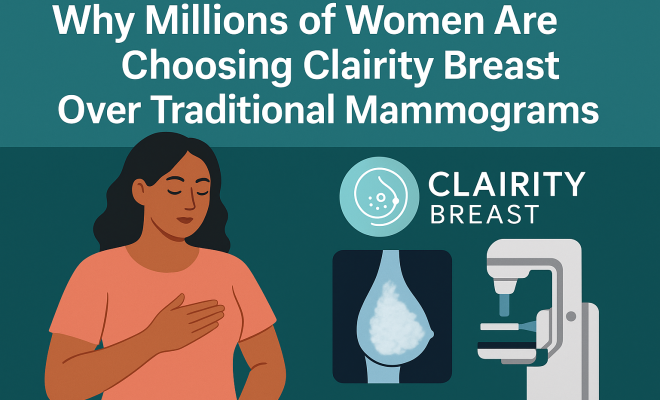
Why Millions of Women Are Choosing Clairity Breast Over Traditional Mammograms
For decades, the mammogram has been the gold standard in breast cancer screening. It’s a technology that has saved countless lives, giving us an early peek at potential threats within breast tissue. But what if there was a way to not just detect existing cancer, but to peer into the future, to assess your individual risk of developing breast cancer over the next five years? That’s the promise of Clairity Breast, a groundbreaking AI-powered tool that’s quickly becoming a hot topic in women’s health. The question on everyone’s mind, naturally, is: how does Clairity Breast vs traditional mammograms stack up, and which one is truly better for you?
As a journalist who has covered healthcare innovations for years, I can tell you that few developments have generated this level of buzz and emotional resonance. Launched nationwide on October 1st, 2026, and developed in partnership with the Breast Cancer Research Foundation, Clairity Breast isn’t just another screening tool; it’s a paradigm shift. It offers a proactive, personalized approach to breast health, moving beyond simple detection to empowering women with critical, forward-looking information. This isn’t about replacing the mammogram, but rather enhancing it, transforming a diagnostic snapshot into a predictive forecast. Let’s delve into what makes Clairity Breast so compelling and how it fundamentally differs from the traditional approach.
1. The Core Technology: AI’s Eye vs. the Human Eye
At the heart of Clairity Breast’s innovation lies artificial intelligence. This isn’t just fancy software; it’s a sophisticated algorithm trained on vast datasets of digital mammograms, learning to identify subtle patterns that are invisible to the human eye. Dr. Connie Lehman, the visionary founder and CEO of Clairity, explains that the crucial information for predicting future cancer risk has always been present in mammograms. We just lacked the means to interpret it until now.
Traditional mammograms, while incredibly effective for detecting existing tumors, rely heavily on the radiologist’s trained eye. Radiologists are highly skilled professionals, but they are human. They look for masses, calcifications, and architectural distortions that signal a current problem. Clairity Breast, on the other hand, isn’t looking for a current problem; it’s looking for the precursors, the tiny, almost imperceptible imaging patterns that indicate a heightened risk of cancer developing in the coming years. This fundamental difference in what they’re ‘looking’ for is key to understanding the distinction between Clairity Breast vs traditional mammograms.
The AI models used by Clairity Breast are a type of deep learning, specifically convolutional neural networks (CNNs), which are excellent at image recognition. These networks analyze millions of pixels in a mammogram, identifying subtle textures, densities, and spatial relationships that a human observer might miss or dismiss as normal variation. Think of it like a master art appraiser who can spot a fake based on a brushstroke no one else notices. The AI learns these ‘brushstrokes’ of future cancer risk. It’s not about finding a lump; it’s about finding the subtle changes in the underlying breast tissue architecture that statistically correlate with an increased likelihood of a tumor forming in the near future. This level of granular analysis is simply beyond human capability, making the AI a powerful complement to the radiologist’s expertise.
2. Predictive Power: Forecasting Future Risk
Perhaps the most significant differentiator of Clairity Breast is its predictive capability. Traditional mammograms are diagnostic tools; they tell you if you have cancer *now*. If a suspicious area is found, further investigation, like biopsies, follows. It’s reactive, in a sense, responding to an existing concern. You get your results, and if they’re clear, you return for your next screening in a year or two.
Clairity Breast, however, offers a five-year risk assessment. Imagine knowing, with a statistically sound prediction, your likelihood of developing breast cancer in the next half-decade. This isn’t a crystal ball, but it’s a powerful data-driven projection. This information fundamentally changes the conversation you can have with your healthcare provider, shifting from simply screening for disease to actively managing and mitigating your future risk. This proactive stance is where Clairity Breast truly shines, offering a dimension that traditional mammograms simply cannot.
The science behind this predictive power is rooted in extensive research and validation studies. For instance, early clinical trials demonstrated Clairity Breast’s ability to identify women at high risk who might otherwise have been considered average risk by traditional methods. This early identification means that interventions, like closer surveillance with additional imaging (e.g., MRI), lifestyle modifications, or even preventive medications, can begin much sooner. This proactive window of opportunity is invaluable. For example, if a woman receives a high-risk score, she might discuss with her doctor starting tamoxifen or raloxifene, drugs known to reduce breast cancer risk in certain populations, or opt for more frequent clinical breast exams and imaging. This moves us away from a ‘wait and see’ model to a ‘predict and prevent’ paradigm, which is a monumental shift in how we approach breast health.
3. Personalized Healthcare: Tailoring Your Approach
One of the biggest complaints about healthcare today is its often one-size-fits-all approach. Annual mammograms are recommended for most women over a certain age, regardless of individual risk factors. While this broad approach catches many cancers, it can also lead to over-screening for some and under-screening for others who might have higher, unacknowledged risks.
Clairity Breast ushers in an era of truly personalized breast health. By providing an individualized five-year risk score, it empowers you and your doctor to tailor your screening schedule and risk reduction strategies. If your risk is higher, you might opt for more frequent screenings, supplementary imaging like MRI, or discuss lifestyle changes and preventive medications. If your risk is lower, you might find peace of mind. This level of personalized insight is a game-changer, allowing for conversations that are specific to *your* body and *your* future health, a significant advantage in the Clairity Breast vs traditional mammograms debate.
Consider two women, both 50 years old, with no family history of breast cancer. Under traditional guidelines, they’d both receive annual mammograms. However, if one woman’s Clairity Breast score indicates a significantly elevated five-year risk (say, 8% vs. the average 2%), her doctor might recommend a supplemental MRI every year, alongside her mammogram, to catch any potential cancers even earlier. Conversely, if the other woman’s score is exceptionally low (e.g., 0.5%), her doctor might agree to biennial mammograms, reducing potential anxiety and radiation exposure. This isn’t about skipping screenings; it’s about optimizing them. This tailored approach not only improves the efficacy of screening but also reduces unnecessary procedures for those at very low risk, and intensifies surveillance for those who need it most, leading to more efficient and effective healthcare resource allocation. (See: CDC Breast Cancer Screening Guidelines.)
4. Cost and Accessibility: A New Financial Landscape
Let’s talk about the practicalities, specifically cost. A traditional mammogram is typically covered by insurance, especially for women over 40 or those with specific risk factors. Out-of-pocket costs, if any, are usually manageable, ranging from nothing to a few hundred dollars depending on your plan and deductible.
Clairity Breast, as a newer, advanced AI service, is currently available through digital healthcare service Everlywell for approximately $250. This is an out-of-pocket expense for most at the moment, as insurance coverage for such predictive tools is still evolving. While $250 might seem significant, consider the value of proactive information and the potential for earlier intervention or risk mitigation. For many, this cost is a worthwhile investment in peace of mind and personalized health planning, especially when weighing the long-term benefits of Clairity Breast vs traditional mammograms in terms of comprehensive risk assessment. For more context, see AI education advancements.
The current out-of-pocket cost of $250 for Clairity Breast analysis might be a barrier for some, but it’s important to view this in the broader context of healthcare costs. A single breast cancer diagnosis and treatment can easily run into hundreds of thousands of dollars, not to mention the emotional and physical toll. If Clairity Breast can lead to earlier detection or even prevention through timely interventions, the $250 cost could be considered a highly cost-effective preventative measure. As more data becomes available, demonstrating the clinical utility and cost-effectiveness of Clairity Breast, it’s highly probable that insurance providers will begin to cover it. The healthcare industry is slowly but surely recognizing the value of predictive analytics in reducing long-term costs and improving patient outcomes. Advocacy groups are also pushing for insurance companies to recognize Clairity Breast as a critical component of personalized preventive care, which could accelerate its inclusion in standard coverage plans.
5. The User Experience: Seamless Integration
One of the most appealing aspects of Clairity Breast is its seamless integration with existing healthcare practices. You don’t need a new, specialized scan. The technology analyzes *digital mammograms* you’ve already had. This means if you’ve had a recent digital mammogram, you can likely submit it for analysis without undergoing another procedure.
The process with Everlywell is designed to be user-friendly: you order the service, provide your digital mammogram images (which your clinic can usually provide), and receive your personalized risk assessment report. This contrasts with traditional mammograms which, while routine, still require scheduling an appointment, going to a facility, and undergoing the physical scan. The ease of access to Clairity Breast’s insights, by leveraging existing imaging data, is a huge plus for busy individuals seeking deeper health understanding.
The convenience factor here can’t be overstated. Imagine you had your annual mammogram last month. Instead of waiting another year for your next screening, you can proactively get a deeper understanding of your future risk by simply uploading those existing images. This eliminates the need for additional appointments, time off work, or travel to a clinic. The results are delivered digitally, often within a few days, allowing you to quickly share them with your primary care physician or gynecologist. This streamlined approach makes integrating advanced predictive analytics into your health routine incredibly straightforward, removing many of the logistical hurdles that often prevent people from accessing new health technologies. It’s a testament to how digital health platforms are making cutting-edge tools more accessible and less burdensome for the average person.
6. Empowerment Through Information: Taking Control
Breast cancer diagnoses often feel like a sudden, unwelcome ambush. Clairity Breast aims to change that narrative by providing women with actionable information long before a diagnosis might occur. Knowing your five-year risk allows for a sense of control and empowerment. You’re not just waiting for something to happen; you’re actively participating in your health journey.
This critical information facilitates richer, more informed discussions with healthcare providers. Instead of a routine check-up where you’re simply told your mammogram is ‘normal,’ you can now discuss specific risk factors, potential preventive strategies, and personalized screening protocols. This shift from passive recipient to active participant is a profound emotional benefit, making the investment in Clairity Breast vs traditional mammograms truly about taking charge of one’s future health.
This sense of empowerment extends beyond just discussions with your doctor. It can influence daily choices. For example, if your Clairity Breast score indicates a higher risk, you might be more motivated to consistently engage in lifestyle changes known to reduce breast cancer risk, such as maintaining a healthy weight, increasing physical activity, limiting alcohol consumption, and adopting a diet rich in fruits and vegetables. While these are good practices for everyone, a personalized risk assessment can provide that extra push, that concrete reason to prioritize these healthy habits. It transforms general health advice into a personalized action plan, fostering a sense of agency and proactive engagement with one’s own well-being. This shift from anxiety-driven waiting to informed, proactive management is a significant psychological benefit that many women find invaluable.
7. Limitations and the Need for a Holistic Approach
It’s crucial to understand that Clairity Breast is not a diagnostic tool for *current* cancer. If you have symptoms or a palpable lump, a traditional diagnostic mammogram, ultrasound, or MRI is still the appropriate first step. Clairity Breast tells you your *risk* of developing cancer in the future, not if you have it today. It’s a predictive tool, not a diagnostic one.
Therefore, it’s not a matter of ‘either/or’ when considering Clairity Breast vs traditional mammograms; it’s an ‘and.’ Traditional mammograms remain essential for detecting existing cancers early. Clairity Breast adds a crucial layer of predictive insight. The best approach to breast health will likely involve both: regular traditional mammograms for current detection, supplemented by Clairity Breast for future risk assessment and personalized prevention strategies. No single tool is a magic bullet, and a holistic approach combining various screenings, lifestyle factors, and open communication with your doctor remains paramount.
Beyond integrating Clairity Breast and traditional mammograms, a truly holistic approach to breast health also considers other critical factors. Genetic testing for BRCA1/2 mutations, for example, offers a different layer of risk assessment, identifying hereditary predispositions that Clairity Breast, which focuses on imaging patterns, doesn’t directly address. Similarly, a thorough family history, personal medical history, and assessment of lifestyle factors like hormone therapy use, alcohol intake, and reproductive history all contribute to a comprehensive risk profile. Clairity Breast enhances this profile by adding an objective, imaging-based predictive element. It’s a powerful piece of the puzzle, but not the entire puzzle itself. The goal is to combine all available data points to create the most accurate and actionable picture of an individual’s breast cancer risk, allowing for truly individualized care that leverages every tool at our disposal.
8. The Future of Breast Health: An Evolving Landscape
The launch of Clairity Breast signals a significant leap forward in preventive medicine, particularly in the realm of breast health. It’s a clear indication of how artificial intelligence is not just automating tasks, but genuinely enhancing our ability to understand and manage complex health risks. As AI technology continues to advance, we can expect even more sophisticated predictive tools to emerge, offering deeper insights into various health conditions. (See: NIH Breast Cancer Information.)
This development is going viral because it taps into a deep human desire for agency and proactive health management. Women want to be informed, they want to be empowered, and they want the best tools available to protect their health. The conversation around Clairity Breast vs traditional mammograms isn’t just about technology; it’s about shifting our mindset from reactive treatment to proactive prevention. This AI-powered risk assessment is a powerful new arrow in the quiver for women everywhere, offering a glimpse into a future where personalized, predictive healthcare is not just a dream, but a tangible reality.
9. Addressing Common Concerns and Misconceptions
As with any new technology, especially one dealing with something as sensitive as cancer risk, there are bound to be questions and a few misconceptions floating around. Let’s tackle some of the most common ones to provide a clearer picture of Clairity Breast. For more context, see AI innovations in healthcare.
One frequent concern is the idea of “false positives” or “over-diagnosis.” Traditional mammograms already grapple with this, where suspicious findings turn out to be benign, leading to anxiety and sometimes unnecessary biopsies. With Clairity Breast, the concern might be about being labeled “high risk” and undergoing more intense surveillance, even if cancer never develops. It’s important to remember that a high-risk score is a *probability*, not a certainty. It means you have a statistically higher chance, which warrants a more vigilant approach, not that you *will* get cancer. The goal is to catch it early if it does develop, or to implement preventative measures. The alternative, missing a high-risk individual and diagnosing cancer at a later, less treatable stage, is a far greater concern.
Another misconception is that Clairity Breast is only for younger women or those without a family history. In reality, it’s beneficial across a wide range of demographics. While younger women might use it to establish a baseline and guide early screening decisions, older women can use it to refine their ongoing screening protocols. Even those with a strong family history can gain valuable insights, as the AI might identify additional, imaging-based risk factors that aren’t apparent from genetic or familial data alone. It provides an objective, data-driven layer of risk assessment that complements all other known risk factors, making it broadly applicable.
Finally, some worry about data privacy and the security of their medical images. Everlywell, and any reputable health technology provider, adheres to strict HIPAA compliance and data security protocols. Your mammogram images are de-identified and encrypted, ensuring your personal health information remains private and secure. The algorithms learn from aggregated, anonymous data, not from individual patient files used for commercial purposes. Understanding these safeguards can help ease concerns about sharing sensitive medical data for analysis.
10. The Broader Impact on Public Health and Screening Guidelines
The introduction of tools like Clairity Breast has the potential to significantly impact public health strategies and potentially reshape national breast cancer screening guidelines. Currently, guidelines are often based on age and a general risk assessment, leading to a somewhat uniform approach across large populations.
With personalized risk assessment becoming more widespread, we could see a future where screening recommendations are far more nuanced. Instead of a blanket recommendation for annual mammograms for women over 40 or 50, guidelines might evolve to recommend specific screening intervals and modalities (e.g., mammogram only, mammogram plus MRI, or even less frequent screening) based on an individual’s dynamic risk score, which could be updated periodically. This could lead to more efficient use of healthcare resources, reduce unnecessary radiation exposure for low-risk individuals, and crucially, intensify surveillance for those who truly need it.
From a public health perspective, this shift could lead to a reduction in advanced-stage breast cancer diagnoses, an increase in early-stage diagnoses, and ultimately, improved survival rates. When high-risk individuals are identified earlier, they have more time for interventions, lifestyle changes, and closer monitoring, increasing the chances of preventing cancer or catching it when it’s most treatable. Moreover, the data gathered from millions of Clairity Breast analyses could further refine our understanding of breast cancer risk factors, leading to even more advanced predictive models and a deeper scientific understanding of the disease itself. This iterative process of data collection, analysis, and guideline refinement holds immense promise for the future of breast cancer prevention and early detection on a population scale.
Frequently Asked Questions About Clairity Breast vs Traditional Mammograms
Q1: Is Clairity Breast a replacement for my traditional mammogram?
No, absolutely not. Clairity Breast is a predictive tool, not a diagnostic one. It analyzes your digital mammogram images to assess your future risk of developing breast cancer over the next five years. Traditional mammograms are diagnostic tools used to detect existing cancers. You still need your regular traditional mammograms for current detection. Clairity Breast works *with* your mammograms to provide a more complete picture of your breast health.
Q2: How does Clairity Breast actually work? What is it looking for that a radiologist isn’t?
Clairity Breast uses advanced artificial intelligence, specifically deep learning algorithms, trained on massive datasets of mammograms. While a radiologist looks for visible masses, calcifications, and architectural distortions that signal a current problem, the AI looks for incredibly subtle, almost imperceptible patterns in the breast tissue architecture. These patterns, invisible to the human eye, have been statistically correlated with a heightened risk of cancer developing in the future. It’s essentially finding the precursors and micro-changes that indicate future risk.
Q3: What kind of information will I get from a Clairity Breast report?
You’ll receive a personalized five-year risk assessment score, which is a statistically sound prediction of your likelihood of developing breast cancer within that timeframe. The report will explain what your score means in context and often provides recommendations for discussions with your doctor regarding personalized screening schedules, lifestyle modifications, or potential preventive medications. It’s designed to be actionable information.
Q4: Do I need a new mammogram to use Clairity Breast?
No, that’s one of its key advantages! Clairity Breast analyzes *digital mammograms* you’ve already had. If you’ve had a recent digital mammogram, you can typically obtain the images from your clinic and submit them for analysis without undergoing another procedure. This makes the process very convenient.
Q5: How accurate is Clairity Breast’s prediction?
Clairity Breast’s predictive accuracy has been validated through extensive research and clinical trials. While no prediction is 100% certain (it’s a probability, not a guarantee), it provides a statistically sound and significantly more personalized risk assessment than general population statistics or traditional risk models. It’s a powerful tool for identifying individuals who might be at higher risk than previously thought, allowing for earlier intervention or closer monitoring.
Q6: Will my insurance cover the cost of Clairity Breast?
Currently, Clairity Breast is generally an out-of-pocket expense, costing approximately $250 through services like Everlywell. As it’s a newer, predictive AI tool, insurance coverage is still evolving. However, as more data emerges demonstrating its clinical utility and cost-effectiveness in improving patient outcomes, it’s anticipated that insurance providers will increasingly begin to cover it in the future. It’s always a good idea to check with your specific insurance provider.
Q7: What if my Clairity Breast score is high? Does that mean I will definitely get cancer?
A high Clairity Breast score does *not* mean you will definitely get cancer. It means your risk of developing breast cancer in the next five years is statistically higher than average. This information empowers you and your doctor to have a more focused discussion about increased surveillance (like more frequent mammograms or supplemental MRI), lifestyle adjustments, or preventive medications. It’s about proactive management and reducing your risk or catching any potential cancer as early as possible.
Q8: What if my Clairity Breast score is low? Can I skip my regular mammograms?
A low Clairity Breast score can offer significant peace of mind, indicating a lower-than-average risk. However, it does *not* mean you should skip your regular traditional mammograms. Traditional mammograms are still essential for detecting existing cancers. A low risk score might influence the *frequency* or *type* of future screenings in consultation with your doctor, but it doesn’t eliminate the need for ongoing screening entirely. Breast cancer can still develop even in low-risk individuals.
Q9: How does Clairity Breast compare to genetic testing (e.g., BRCA1/2)?
Clairity Breast and genetic testing are different but complementary tools. Genetic testing identifies inherited genetic mutations (like BRCA1/2) that significantly increase lifetime breast cancer risk. Clairity Breast, on the other hand, analyzes imaging patterns in your mammogram to assess your *short-term* (five-year) risk, regardless of genetic predisposition. Both provide valuable, distinct pieces of information for a comprehensive risk assessment. Many women may benefit from both, especially if they have a family history that warrants genetic testing.
Q10: Who should consider using Clairity Breast?
Any woman who undergoes regular digital mammograms and wants a more personalized and proactive understanding of her future breast cancer risk can consider Clairity Breast. It’s particularly useful for women who want to optimize their screening schedule, explore preventive strategies, or simply gain more peace of mind through detailed information about their individual risk profile. It’s a tool for anyone looking to be an active participant in their breast health journey.
Trending Now
- this guide on urgent warning: gitlab ai gateway flaw lets hackers take control
- our breakdown of aignosis’ rs 4 crore seed funding: why this startup could revolutionize autism diagnosis
- this guide on the billionaire’s bombshell: why startup funding 2024 could be a minefield
- read the full story
- our breakdown of the astonishing reason why china’s ai education will leave the west behind
Frequently Asked Questions
What is Clairity Breast and how does it differ from traditional mammograms?
Clairity Breast is an AI-powered tool that not only detects existing breast cancer but also assesses an individual's risk of developing it in the next five years. Unlike traditional mammograms, which focus solely on detection, Clairity Breast offers a proactive, personalized approach to breast health, enhancing the screening process with predictive insights.
Is Clairity Breast more accurate than traditional mammograms?
Clairity Breast utilizes advanced AI algorithms trained on extensive datasets to identify subtle patterns in mammograms that may be missed by the human eye. This technology aims to improve accuracy in predicting future cancer risks, making it a complementary tool to traditional mammograms rather than a direct replacement.
When was Clairity Breast launched and who developed it?
Clairity Breast was launched nationwide on October 1st, 2026, in partnership with the Breast Cancer Research Foundation. This innovative tool represents a significant advancement in breast cancer screening technology.
What are the benefits of using Clairity Breast for breast cancer screening?
The primary benefit of Clairity Breast is its ability to provide a personalized risk assessment for developing breast cancer over the next five years. This proactive approach empowers women with critical information, allowing for earlier interventions and better-informed health decisions.
Can Clairity Breast replace traditional mammograms?
Clairity Breast is not intended to replace traditional mammograms but rather to enhance them. It transforms the diagnostic process from a singular detection event into a comprehensive predictive assessment, offering women a more complete understanding of their breast health.
What's your take on this? Share your thoughts in the comments below — we read every one.