Why Millions of Homeowners Are Ditching Traditional HVAC for Geothermal Heating
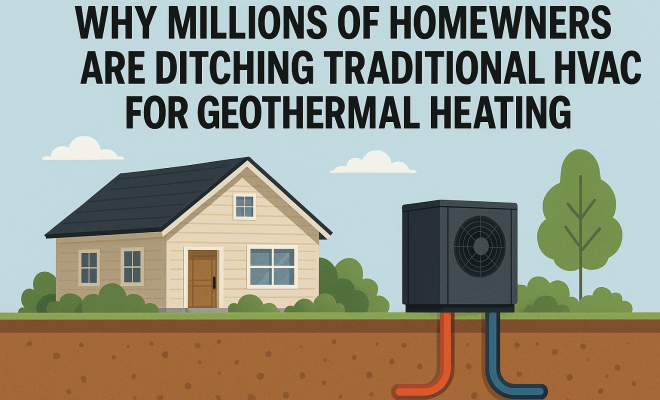
When you’re thinking about your home’s comfort, efficiency, and long-term costs, the choice between geothermal heating and traditional HVAC systems isn’t just a minor decision. It’s a fundamental one that impacts your wallet, your environmental footprint, and even your daily comfort for decades to come. With breakthroughs in home energy technology promising to transform our houses into self-powered hubs, the idea of ‘ending utility bills forever’ isn’t some futuristic fantasy – it’s quickly becoming a real possibility. And at the heart of this revolution? Advanced geothermal energy, emerging as a truly reliable, always-available power source that’s making the traditional furnace look… well, a little old-fashioned.
As a homeowner, you’ve probably heard the buzz about solar panels and smart thermostats. But what if I told you there’s a system that taps into the earth’s consistent temperature, offering heating and cooling that’s dramatically more efficient than anything you’ve experienced before? That’s the promise of geothermal. It’s a comparison that homeowners are increasingly making: geothermal heating vs traditional HVAC. Let’s dive deep into why this seemingly complex technology is gaining viral traction and why it might just be the best choice for your home’s energy needs, not just in 2026, but far beyond.
1. Harnessing Earth’s Constant Temperature: The Fundamental Difference
At its core, the most significant distinction between geothermal heating and traditional HVAC lies in their energy source. Traditional HVAC systems, whether they’re furnaces burning natural gas or oil, or air conditioners using refrigerants to exchange heat with the outdoor air, rely heavily on ambient air temperatures. This means that on a scorching summer day, your AC is working overtime to expel heat into already hot air. In the dead of winter, your furnace is struggling to generate warmth from frigid outdoor air. It’s a constant battle against extreme conditions, and it consumes a lot of energy.
Geothermal systems, on the other hand, don’t play that game. They tap into the earth’s remarkably stable temperature, which, just a few feet below the surface, remains relatively constant year-round – typically between 45 and 75 degrees Fahrenheit (7 to 24 degrees Celsius), depending on your region. This consistency is the secret sauce. A geothermal heat pump uses this stable underground temperature as a heat sink in summer and a heat source in winter. It’s always drawing from a moderate temperature, which means it doesn’t have to work nearly as hard to achieve your desired indoor climate. Think of it: no matter how hot or cold it gets outside, the earth beneath your home is offering a consistent, steady hand. This fundamental difference sets the stage for unparalleled efficiency.
2. Unmatched Energy Efficiency: Saving Serious Money
When we talk about energy efficiency, geothermal systems aren’t just a little better; they’re in a league of their own. Traditional HVAC systems typically operate with a Seasonal Energy Efficiency Ratio (SEER) of 13-21 for air conditioners and an Annual Fuel Utilization Efficiency (AFUE) of 80-98% for furnaces. These numbers are decent, but they pale in comparison to geothermal. Geothermal heat pumps boast impressive Coefficients of Performance (COP) ranging from 3.0 to 5.0 for heating and Energy Efficiency Ratios (EER) of 13-30 for cooling. What does that jargon mean for you?
It means that for every unit of electricity a geothermal system consumes, it can deliver 3 to 5 units of heating or cooling energy. That’s a 300% to 500% efficiency rate! Compare that to even the most efficient traditional furnace, which at 98% AFUE, still loses 2% of its energy. This incredible efficiency translates directly into massive savings on your utility bills. Homeowners often report reductions of 25% to 70% on heating and cooling costs, a significant chunk of change when you consider that these often represent the largest portion of a home’s energy consumption. Imagine cutting your biggest utility expense by more than half, year after year. That’s a compelling argument in the geothermal heating vs traditional HVAC debate.
3. Long-Term Cost Savings: Beyond the Initial Investment
Let’s be upfront: the initial installation cost of a geothermal system is generally higher than that of a traditional HVAC system. You’re looking at significant upfront investment for the underground loop system, which can involve drilling or trenching. However, this is where a common misconception arises, and it’s crucial to look beyond the sticker price to the long-term cost benefits. The substantial energy savings we just discussed accumulate quickly, often leading to a payback period of 5 to 10 years, sometimes even less depending on local energy prices and incentives.
Beyond the monthly savings, consider the longevity of the systems. The underground loops of a geothermal system are incredibly durable, often lasting 50 years or more with minimal maintenance. The indoor components, the heat pump itself, typically last 20-25 years – significantly longer than the 10-15 year lifespan of a conventional furnace or air conditioner. This means fewer replacements, fewer major repair bills, and a much lower total cost of ownership over the decades you’ll live in your home. When you factor in potential tax credits, rebates, and financing options, the financial picture for geothermal becomes even more attractive, making it a truly smart investment for the savvy homeowner.
4. Environmental Impact: A Greener Footprint
For many homeowners, the environmental benefits of geothermal heating are just as important as the financial ones, if not more so. Traditional HVAC systems, particularly those that burn fossil fuels, contribute significantly to greenhouse gas emissions. Furnaces release carbon dioxide, nitrogen oxides, and other pollutants into the atmosphere, directly impacting air quality and climate change. Even electric air conditioners, while not burning fuel on-site, rely on electricity that is often generated by power plants burning fossil fuels.
Geothermal systems, by contrast, are remarkably clean. They don’t burn fossil fuels, meaning no on-site emissions of greenhouse gases. They simply move heat, using a small amount of electricity to power the compressor and pump. This dramatically reduces your home’s carbon footprint. It’s a powerful step towards energy independence and sustainability, aligning perfectly with the global push for cleaner energy solutions. If you’re looking to make a tangible difference in reducing your environmental impact, choosing geothermal heating over traditional HVAC is one of the most impactful decisions you can make for your home and the planet. (See: Geothermal Heating and Cooling.)
5. Comfort and Consistency: No More Hot and Cold Spots
Beyond the numbers and environmental impact, let’s talk about something incredibly practical: your actual comfort. Traditional HVAC systems can often lead to temperature fluctuations. Furnaces blast hot air, then shut off, leading to cycles of warmth and coolness. Air conditioners can struggle to maintain an even temperature across different rooms, creating drafts or stuffy areas. Ever noticed how some rooms always feel colder or warmer than others?
Geothermal systems, operating on the principle of heat exchange with the earth, provide a much more consistent and even distribution of heat and cool air. They don’t produce super-hot or super-cold air; instead, they deliver a steady, moderate temperature that feels incredibly comfortable and consistent throughout your entire home. This gentle, continuous operation means fewer temperature swings, better humidity control, and a quieter home environment. You’ll experience a level of comfort that most traditional systems simply can’t match, creating a truly superior living experience. For more context, see the hidden truth about AI mortgage tools.
6. Quiet Operation and Aesthetics: Out of Sight, Out of Mind
Have you ever tried to have a conversation next to a roaring outdoor AC unit or felt the vibration of a furnace kicking on in the middle of the night? Traditional HVAC systems, especially the outdoor compressor units, can be noisy and visually obtrusive. They take up space, disrupt your landscaping, and can be a source of constant background hum.
Geothermal systems are a homeowner’s dream for quiet operation. The main components – the heat pump and the distribution system – are typically located indoors, often in a basement, utility closet, or garage. The outdoor component consists only of the buried loop system, which is completely out of sight and silent. There’s no noisy outdoor fan unit to contend with, no unsightly metal box cluttering your yard. This means a quieter outdoor living space, undisturbed views, and a more peaceful indoor environment. It’s a significant aesthetic and auditory advantage in the geothermal heating vs traditional HVAC comparison.
7. Reduced Maintenance and Increased Reliability: Set It and Forget It
Because geothermal systems have fewer moving parts exposed to the harsh outdoor elements, they are inherently more reliable and require less maintenance than traditional HVAC systems. Think about it: no outdoor unit means no exposure to rain, snow, ice, dust, or accidental damage from lawnmowers. The underground loops are essentially maintenance-free once installed.
The indoor heat pump components typically only require routine filter changes and occasional inspections, similar to a traditional furnace. This reduced maintenance schedule translates to fewer service calls, lower ongoing costs, and less hassle for you as a homeowner. When you combine this with the extended lifespan of the components, you get a system that’s not only efficient but also incredibly robust and dependable, giving you peace of mind for decades.
8. Heating and Cooling from a Single System: Streamlined Comfort
One of the brilliant efficiencies of geothermal technology is its ability to provide both heating and cooling from a single integrated system. Unlike traditional homes that often have a furnace for heating and a separate air conditioner for cooling (or a heat pump that struggles in extreme temperatures), a geothermal heat pump seamlessly transitions between modes. In winter, it extracts heat from the earth and transfers it into your home. In summer, it reverses the process, extracting heat from your home and depositing it back into the cooler earth.
This dual functionality simplifies your home’s mechanical systems, often reducing the amount of space required for equipment and streamlining your energy management. It’s an elegant solution that offers year-round comfort without the need for separate, often less efficient, units. This integrated approach is another compelling reason why many homeowners are choosing geothermal heating over traditional HVAC options.
9. Potential for Water Heating Integration: Added Value
As if the heating and cooling benefits weren’t enough, many geothermal systems offer an additional perk: the ability to assist with your home’s water heating. Some geothermal heat pumps come with a desuperheater, a device that can capture waste heat from the compressor and use it to preheat your domestic hot water. This means your water heater doesn’t have to work as hard, further reducing your energy consumption and utility bills.
In some cases, a geothermal system can even be configured to provide all of your hot water needs, making it an even more comprehensive energy solution for your home. This integration adds another layer of efficiency and savings, maximizing the return on your initial investment and truly turning your home into a more self-sufficient energy hub. It’s an often-overlooked but significant advantage in the geothermal heating vs traditional HVAC discussion.
10. Increased Home Value and Future-Proofing: A Smart Investment
Installing a geothermal system isn’t just about immediate savings; it’s also a significant upgrade that can increase the value of your home. As energy costs continue to rise and environmental consciousness grows, homes equipped with highly efficient, sustainable energy systems are becoming increasingly desirable. Potential buyers are often willing to pay a premium for a home that promises dramatically lower utility bills and a reduced carbon footprint. (See: Geothermal Heat Pumps Overview.)
Furthermore, investing in geothermal energy is a way to future-proof your home against fluctuating energy prices and evolving environmental regulations. You’re less reliant on volatile fossil fuel markets and more aligned with the direction of sustainable living. In an era where energy independence is a universal desire, and innovations like next-generation battery storage and smart energy management systems are transforming homes, a geothermal system positions your property at the forefront of modern, efficient living. It’s not just an expense; it’s an investment in your comfort, your finances, and the future of your home.
11. Understanding Geothermal Loop Systems: Open vs. Closed
The magic of geothermal heating truly begins with its underground loop systems, and there are a couple of main types you should know about: closed-loop and open-loop systems. Each has its own characteristics and suitability depending on your property and local regulations. For more context, see the mortgage AI scandal.
Closed-loop systems are the most common and versatile. They circulate a mixture of water and environmentally friendly antifreeze through a sealed network of pipes buried in the ground. This fluid absorbs heat from the earth in winter or dissipates heat into it in summer, then carries it to the indoor heat pump. There are a few configurations for closed-loop systems:
- Horizontal loops: These are usually buried in trenches about 4-6 feet deep. They need a good amount of land, so they’re often chosen for new construction or homes with larger yards. They’re generally less expensive to install than vertical loops.
- Vertical loops: When space is limited, vertical loops are the way to go. They involve drilling boreholes hundreds of feet deep, with pipes inserted into them. While more costly initially due to drilling, they require a much smaller footprint.
- Pond/Lake loops: If your property has a suitable body of water nearby, you can install a closed loop at the bottom of it. This is highly efficient because water is an excellent conductor of heat, but it’s only an option for specific properties.
Open-loop systems, on the other hand, utilize a well or surface water source (like a pond or lake) as the heat exchange medium. Water is drawn from the source, circulated through the geothermal heat pump, and then returned to the same source or a separate discharge well. These systems are incredibly efficient because water is so good at transferring heat. However, they require an adequate, clean water supply and local regulations often dictate their use to protect groundwater resources. While highly effective, they’re less common for residential applications due to these specific requirements.
Understanding these loop types is key to grasping the initial installation process and what might be feasible for your home. Your installer will help determine the best fit based on your land, soil conditions, and budget.
12. Government Incentives and Rebates: Making Geothermal More Accessible
While we’ve touched on the initial investment being higher for geothermal, it’s really important to highlight the financial assistance available that can significantly offset these costs. Governments at federal, state, and even local levels recognize the immense environmental and energy security benefits of geothermal technology, so they’ve put programs in place to encourage adoption.
The most impactful is often the federal tax credit. The U.S. federal government, for example, offers a significant Investment Tax Credit (ITC) for geothermal heat pump installations. This credit can cover a substantial percentage of the total cost, including equipment and installation. It’s not a deduction; it’s a direct reduction in the amount of tax you owe, making it incredibly valuable.
Beyond federal incentives, many states and local municipalities offer their own rebates, grants, or low-interest loan programs. These can vary widely by location. Some utility companies even provide incentives for switching to high-efficiency systems like geothermal, seeing it as a way to reduce strain on their grids. Checking with your local energy provider and state energy office is a crucial step when considering geothermal, as these incentives can dramatically shorten your payback period and make the upfront cost much more manageable. It’s a constantly evolving landscape, so staying informed about current programs is key to maximizing your investment.
13. Geothermal Heating in Different Climates: A Universal Solution?
One common misconception is that geothermal systems are only suitable for certain climates. The truth is, because they rely on the earth’s stable underground temperature, geothermal systems perform exceptionally well in virtually any climate, from the scorching deserts to the frigid arctic regions. Unlike air-source heat pumps that lose efficiency as outdoor temperatures drop, a geothermal system’s heat source (or sink) remains consistently moderate. (See: Geothermal Energy in Engineering.)
In very cold climates, the ground below the frost line still maintains a temperature significantly warmer than the ambient air, providing an efficient heat source. In extremely hot climates, the earth acts as a much cooler heat sink than the blazing outdoor air, allowing the system to shed heat efficiently. This climate independence is a huge advantage over traditional HVAC, which sees its efficiency plummet during peak heating and cooling demands. So, whether you live in Minnesota or Florida, geothermal offers reliable, efficient comfort year-round, proving its versatility as a truly universal heating and cooling solution.
Frequently Asked Questions about Geothermal Heating vs. Traditional HVAC
Q1: How long does a geothermal installation take?
The installation timeline for a geothermal system can vary significantly based on the type of loop system (horizontal vs. vertical), the size of your home, and the complexity of your property. Horizontal loop installations might take a few days to a week for trenching and pipe laying. Vertical loop drilling can take longer, potentially several days for the drilling itself, plus the time for indoor equipment installation. Overall, most residential geothermal installations are completed within 1 to 3 weeks. It’s a more involved process than swapping out a traditional furnace or AC, but the long-term benefits typically outweigh the temporary inconvenience.
Q2: Does geothermal work with existing ductwork?
Yes, in most cases, a geothermal heat pump can connect directly to your home’s existing ductwork. This is one of the reasons it’s a popular retrofit option for homes currently using forced-air systems. The indoor heat pump unit replaces your furnace and/or air handler. However, it’s crucial to have your existing ductwork inspected by an HVAC professional. Geothermal systems deliver air at a more moderate temperature than traditional furnaces, so proper duct sizing and sealing are essential to ensure optimal performance and even distribution throughout your home. Sometimes, minor modifications or sealing of leaks might be recommended for maximum efficiency.
Q3: What happens if there’s a power outage?
Like traditional HVAC systems, geothermal heat pumps require electricity to operate the compressor, fan, and pump. So, during a power outage, the system will not function. However, the consistent underground temperature means your home will lose or gain heat more slowly than if it were exposed to extreme outside air. If you’re looking for continuous operation during outages, you’d need to pair your geothermal system with a backup generator or a robust home battery storage system, just as you would with a conventional HVAC unit.
Q4: Are geothermal systems noisy?
No, quite the opposite! Geothermal systems are celebrated for their remarkably quiet operation. The main components, including the compressor, are housed indoors, often in a basement or utility room. Unlike traditional air conditioners or heat pumps, there’s no noisy outdoor fan unit constantly cycling. The only sounds you’ll typically hear are the gentle hum of the indoor fan circulating air through your ducts, which is comparable to, or often quieter than, a conventional indoor furnace fan.
Q5: Is my property suitable for geothermal?
Most properties are suitable for some type of geothermal system. The primary considerations are the amount of available land and soil conditions. For horizontal loops, you need enough open space for trenching. For vertical loops, less land is needed, but drilling access is required. Properties with rocky terrain might incur higher drilling costs. An experienced geothermal installer will conduct a site assessment to determine the best loop configuration and provide a tailored solution for your specific property. They’ll look at factors like soil composition, water tables, and property boundaries to design the most efficient and cost-effective system.
The choice between geothermal heating vs traditional HVAC isn’t one to take lightly. While the initial outlay for geothermal might seem daunting, the long-term benefits in terms of energy savings, environmental impact, comfort, reliability, and increased home value paint a clear picture. As we move towards a future of self-powered homes and the exciting prospect of ending utility bills forever, geothermal energy stands out as a powerful, proven technology that truly delivers on its promise. It’s an intelligent decision for any homeowner looking to make a lasting, positive impact on their finances and the planet.
Trending Now
Frequently Asked Questions
What are the benefits of geothermal heating over traditional HVAC?
Geothermal heating offers several advantages over traditional HVAC systems, including higher efficiency, reduced energy bills, and a lower environmental impact. By utilizing the earth's consistent temperature, geothermal systems can provide reliable heating and cooling, making them more effective in extreme weather conditions compared to traditional systems that struggle with ambient air temperatures.
How does geothermal heating work?
Geothermal heating operates by harnessing the earth's stable temperature below the surface. A series of pipes, known as a ground loop, circulates a fluid that absorbs heat from the ground in winter and expels heat back into the ground in summer, providing efficient heating and cooling throughout the year.
Is geothermal heating worth the investment?
While the initial installation cost of geothermal systems can be higher than traditional HVAC, the long-term savings on energy bills and maintenance can make it a worthwhile investment. Additionally, geothermal systems have a longer lifespan and can increase your home's value, making them a smart choice for many homeowners.
Can geothermal systems work in all climates?
Yes, geothermal systems are effective in a variety of climates. Unlike traditional HVAC systems that rely on outdoor air temperatures, geothermal systems utilize the earth’s stable underground temperature, making them efficient regardless of extreme weather conditions, whether hot or cold.
What is the environmental impact of geothermal heating?
Geothermal heating has a significantly lower environmental impact compared to traditional HVAC systems. It reduces reliance on fossil fuels, lowers greenhouse gas emissions, and promotes sustainable energy use, making it an eco-friendly choice for homeowners looking to minimize their carbon footprint.
What did we miss? Let us know in the comments and join the conversation.