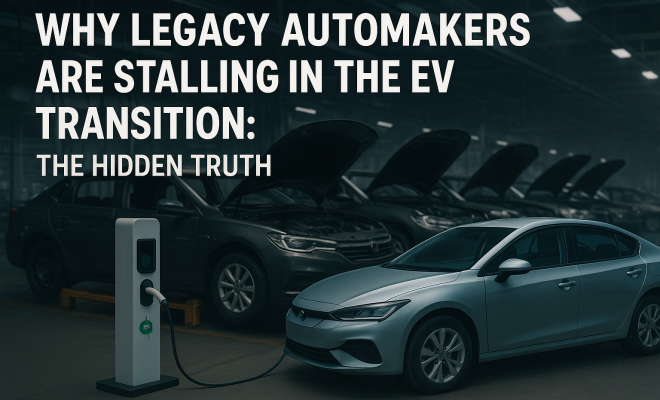
Legacy Automakers Stalling EV Transition: The Hidden Truth Revealed
“`html
The race to electrification has become a defining moment for the automotive industry, with consumers, regulators, and environmental advocates all demanding faster action on electric vehicles (EVs). However, a recent report by the International Council on Clean Transportation (ICCT) raises eyebrows by revealing that many legacy global automakers are retreating from their initial enthusiasm for EVs. Instead of ramping up electric vehicle production, companies, particularly in the United States and Japan, are increasingly turning their focus toward plug-in hybrids and less ambitious transitional strategies. This shift creates a significant controversy that pits the aspirations of eco-conscious consumers against the realities of corporate strategy, ultimately framing automakers as followers rather than innovators in the EV space.
Understanding the Current Landscape of the EV Transition
As the global automotive market shifts toward electrification, the stakes have never been higher. Governments around the world are implementing stricter emissions regulations, consumers are becoming more environmentally conscious, and technology is evolving rapidly. According to the ICCT, the demand for EVs is surging, with sales rising significantly in regions like Europe and China. However, this momentum seems to be met with mixed responses from traditional automakers.
The ICCT’s findings suggest that while some automakers are making meaningful strides, others are faltering in their commitment to a fully electric future. Instead of investing heavily in battery-electric vehicles (BEVs), some companies are opting for hybrids or even maintaining their gasoline-powered models longer than initially planned. This raises questions about their long-term viability and commitment to sustainability.
The Shift Toward Plug-In Hybrids
Plug-in hybrids have been touted as a bridge technology, allowing consumers to ease into the EV experience without fully committing. However, the ICCT report indicates that a growing number of legacy automakers in the U.S. and Japan are now prioritizing these vehicles over fully electric options. This can be interpreted in several ways.
First, plug-in hybrids can be seen as a safety net, providing drivers with the flexibility of a gasoline engine for longer trips while offering the benefits of electric driving for daily commutes. But as the market moves toward fully electric solutions, leaning too heavily on hybrids could be interpreted as a lack of ambition.
Consumer Expectations vs. Corporate Strategy
One of the most fascinating aspects of this shift is the disconnect between what consumers want and what legacy automakers are offering. Surveys indicate that a significant portion of the consumer base is eager for fully electric vehicles, with many expressing frustration at the slow rollout of new models from traditional manufacturers.
This disconnect creates a tension that fuels online debates and discussions. Consumers expect automakers to be at the forefront of the EV transition, yet the reality is that many are dragging their feet. For automakers, the challenge lies in balancing corporate strategy and marketing with the rising tide of consumer expectations.
Regulatory Pressures and Market Forces
Regulatory frameworks play a crucial role in shaping the strategies of legacy automakers. Governments in Europe, China, and even the United States are implementing strict emissions targets that essentially mandate a transition to electric vehicles. However, the ICCT report points out that some automakers are coasting on existing regulations while making vague promises about future electrification.
The result is a potential misalignment between regulatory pressures and the actual pace of innovation. With consumers increasingly demanding transparency and accountability, automakers risk alienating their customer base if they fail to meet regulatory requirements while simultaneously living up to consumer expectations.
Branding and Public Perception
In today’s social media-driven world, branding plays an indispensable role in shaping public perception. The automotive industry has long relied on brand loyalty, but consumers are becoming more discerning. They are not just looking for reliable vehicles; they want sustainable options that align with their values.
This cultural shift presents a challenge for legacy automakers, who have spent decades crafting their identities around traditional combustion engines. As the ICCT’s findings suggest, if these companies are perceived as lagging in the EV transition, they risk losing market share to newer players who are fully committed to electrification.
Examples of Legacy Automakers’ Strategies
To illustrate this shift in strategy, consider the approaches taken by some of the industry giants. Ford, for instance, has made headlines with its ambitious plans for electric vehicles, including the fully electric Ford F-150 Lightning. In contrast, GM has also touted its commitment to an all-electric future, but recent reports indicate that the company is focusing more on hybrids and alternative fuel sources. (See: CDC on environmental health impacts.)
Similarly, Japanese automakers like Toyota, which have long been known for their hybrid technology, have been slow to embrace fully electric models. Despite consumer demand for electric options, Toyota’s focus on hybrids raises questions about its commitment to the EV transition.
The Role of Startups and New Entrants
The rise of electric vehicle startups has added another layer of complexity to the market. Companies like Tesla have disrupted the automotive landscape by delivering innovative, fully electric vehicles that resonate with environmentally conscious consumers. These newcomers are often more agile and willing to take risks, which contrasts sharply with the cautious approaches of legacy automakers.
This competition forces traditional automakers to rethink their strategies. If they continue to lag behind in the EV transition, they may find themselves outpaced by startups that prioritize sustainability and consumer preferences. The pressure to innovate is mounting, and legacy players must adapt or risk becoming obsolete.
Investor Sentiment and Market Dynamics
Investor sentiment is another critical factor influencing legacy automakers’ strategies. In recent years, there has been a noticeable shift in how investors view companies focused on electric vehicles. Firms committed to a greener future have seen stock prices soar, while those hesitant to fully embrace electrification face increasing scrutiny.
The ICCT report highlights that investors are increasingly looking for transparency and progress in the EV transition. Companies that fail to provide clear and actionable plans may find themselves on shaky financial ground. As the EV market continues to evolve, investor pressure will likely play a significant role in shaping corporate strategies.
Investing in Infrastructure and Charging Solutions
The successful transition to electric vehicles isn’t solely about manufacturing; it also relies heavily on infrastructure. Legacy automakers need to invest in charging solutions to support their EV offerings fully. Without sufficient charging stations, the potential for widespread adoption may fizzle out, leaving consumers feeling frustrated.
Several companies have already begun to recognize this need. For instance, major automakers like Ford and GM have announced partnerships with charging network providers to expand access to charging stations. However, the pace of these initiatives must match the speed of vehicle production if the industry hopes to gain consumer trust.
Looking Ahead: The Future of the EV Transition
The road to a fully electric automotive future is fraught with challenges, and legacy automakers must make strategic decisions that align with consumer expectations and regulatory pressures. While the ICCT report highlights a troubling trend away from full EV commitment, it also serves as a wake-up call for the industry.
As consumers increasingly demand sustainable options, automakers cannot afford to lag behind. The legacy automakers EV transition is not just about technology; it’s about adapting to a new market landscape that prioritizes sustainability and innovation. The future is electric, and those who embrace this truth stand to benefit immensely.
Challenges Facing Legacy Automakers in the EV Transition
As legacy automakers pivot toward electric vehicles, they encounter several significant challenges. One of the foremost hurdles is the existing infrastructure, which has been primarily built around internal combustion engine vehicles. Upgrading manufacturing facilities to produce electric drivetrains and batteries demands substantial investment, which can strain the financial resources of companies that are already navigating tight margins.
Another challenge is the talent gap in the engineering workforce. The transition to EVs requires expertise in areas like battery technology, software development, and renewable energy systems, which may not have been a focus in traditional automotive engineering programs. Companies need to attract and retain skilled workers who can lead their electrification strategies, which can be a daunting task in a competitive labor market.
Comparative Analysis: Legacy Automakers vs. New Entrants
When comparing legacy automakers to new entrants in the EV market, the differences become strikingly apparent. New entrants like Tesla have not only disrupted the industry with their innovative products but also with their business models. Tesla’s direct-to-consumer sales approach eliminates dealership networks, allowing for greater control over pricing and customer experience.
On the other hand, legacy automakers are often bound by traditional sales structures and dealer relationships, which can slow their ability to respond to changing consumer demands. This difference can lead to a lag in product development timelines and a slower rollout of new technologies.
Moreover, new entrants tend to embrace agile methodologies and iterative product development, allowing them to adapt quickly to feedback and market changes. Legacy automakers, with their established processes, may find it more challenging to implement such rapid changes, potentially leading to missed opportunities and market share erosion. (See: New York Times on legacy automakers and EVs.)
Government Initiatives Supporting the EV Transition
Government policies play a pivotal role in encouraging the shift to electric vehicles. Subsidies, tax incentives, and grants can significantly lower the barrier to entry for consumers looking to purchase EVs. For instance, in the United States, federal tax credits can reduce the purchase price of electric vehicles, making them more appealing to the average consumer.
Additionally, some countries have set ambitious goals for phasing out gasoline and diesel vehicles, further incentivizing automakers to shift their production strategies. For example, the United Kingdom has announced a ban on the sale of new petrol and diesel cars by 2030, compelling manufacturers operating in the region to commit to electrification.
Consumer Concerns: Range Anxiety and Upfront Costs
Despite the growing interest in electric vehicles, consumer concerns remain a significant barrier to widespread adoption. One of the most common issues is range anxiety, the fear that an EV will run out of power before reaching a charging station. This concern is compounded by the current state of charging infrastructure, which, while improving, can still be sparse in rural or less populated areas.
The upfront costs of EVs also present a hurdle. Many consumers are deterred by the higher initial price point of electric vehicles compared to their gasoline counterparts. Although the total cost of ownership can be lower due to reduced fuel and maintenance costs, the initial investment remains a sticking point for many potential buyers.
Frequently Asked Questions (FAQ)
1. What are legacy automakers?
Legacy automakers refer to traditional car manufacturers that have been producing vehicles for an extended period, typically before the rise of electric vehicles. Examples include Ford, General Motors, Toyota, and Honda.
2. Why are some legacy automakers focusing on hybrids instead of fully electric vehicles?
Many legacy automakers view hybrids as a transitional solution that allows consumers to ease into electrification while still relying on gasoline engines. This strategy is often seen as a way to maintain sales and revenue during the transition period.
3. How can consumers help accelerate the EV transition?
Consumers can support the EV transition by choosing to purchase electric vehicles, advocating for more charging infrastructure, and encouraging their local governments to adopt policies that favor sustainable transportation solutions.
4. What role do government incentives play in the EV market?
Government incentives, such as tax credits, rebates, and grants, significantly lower the financial burden on consumers purchasing electric vehicles. Such initiatives can make EVs more accessible and encourage broader adoption.
5. Are legacy automakers capable of competing with startups like Tesla?
While legacy automakers have resources and established supply chains, they face challenges in agility and innovation compared to startups. However, many are investing heavily in R&D for EV technologies to remain competitive.
6. What is range anxiety and how does it affect EV adoption?
Range anxiety refers to the fear that an electric vehicle will run out of battery power before reaching a charging station. This concern can deter potential buyers from switching to electric vehicles, especially if they are not familiar with charging infrastructure.
7. How important is infrastructure in the EV transition?
Infrastructure is critical for the successful adoption of electric vehicles. A robust network of charging stations is necessary to alleviate consumer concerns about range anxiety and make EVs a practical option for more drivers.
8. What are some environmental benefits of transitioning to electric vehicles?
Transitioning to electric vehicles can lead to significant reductions in greenhouse gas emissions, improved air quality, and decreased dependence on fossil fuels. These benefits contribute to the fight against climate change and promote sustainability.
The Importance of Battery Technology in the EV Transition
Battery technology is a cornerstone of the EV transition. The efficiency, cost, and lifespan of batteries will significantly influence the viability of electric vehicles. As legacy automakers pivot toward electrification, they must invest in research and development of better battery technologies.
For example, lithium-ion batteries have dominated the market, but alternatives like solid-state batteries are emerging. Solid-state batteries promise higher energy densities, faster charging times, and improved safety. If legacy automakers can invest in these technologies, they may stand a better chance of competing with startups that have already integrated more advanced battery systems into their designs.
Case Studies of Successful EV Transitions
Looking at case studies of companies that have successfully transitioned to electric vehicles can offer valuable insights. For instance, Volvo has committed to becoming a fully electric car brand by 2030. This bold move has not only aligned with regulatory trends but has also resonated with consumers who seek sustainable options. By investing in infrastructure and training its workforce for this new direction, Volvo exemplifies a proactive approach that legacy automakers can learn from.
Another notable example is Volkswagen, which has launched its ID. series of electric vehicles and has made substantial investments in battery production. Their “New Auto” strategy aims to make electric vehicles the backbone of the brand’s future, showcasing how a legacy automaker can pivot successfully by embracing electrification wholeheartedly.
The Impact of Supply Chain on the EV Transition
As legacy automakers navigate the EV landscape, the supply chain becomes increasingly critical. The sourcing of raw materials, such as lithium, cobalt, and nickel, for batteries can create vulnerabilities. Fluctuations in the supply chain can lead to higher costs and production delays, which can hinder the EV transition.
To mitigate these risks, some automakers are exploring vertical integration, where they take more control over the supply chain. For instance, Tesla has engaged in direct negotiations with mining companies to secure the materials needed for their batteries. This proactive approach can help ensure a steady supply of essential resources, allowing for uninterrupted production of electric vehicles.
The Role of Consumer Education in the EV Transition
Consumer education also plays a pivotal role in promoting the EV transition. Many potential buyers are still unfamiliar with how electric vehicles operate, their benefits, and available incentives. Automakers and advocacy groups need to invest in educational campaigns that inform consumers about the advantages of EVs, such as lower running costs and reduced environmental impact.
Additionally, providing clear information on charging options and the actual range of vehicles can help alleviate concerns like range anxiety. The more informed consumers are, the more likely they are to consider making the switch to electric vehicles.
In this rapidly changing environment, the question remains: Will legacy automakers rise to the occasion, or will they continue to falter in their ambitions? Only time will tell, but one thing is clear: the EV transition is here to stay, and the pressure is on for everyone involved.
“`
Trending Now
Frequently Asked Questions
Why are legacy automakers hesitant to fully embrace electric vehicles?
Legacy automakers are showing hesitation towards fully embracing electric vehicles (EVs) due to a combination of factors including market uncertainties, the high costs of battery technology, and a strategic pivot towards plug-in hybrids. This shift indicates a preference for less ambitious transitional strategies rather than a complete commitment to electric vehicle production.
What is the current trend in EV production among traditional car manufacturers?
The current trend among traditional car manufacturers shows a mixed response to EV production. While some companies are ramping up their electric vehicle offerings, others are retreating from initial commitments and focusing more on plug-in hybrids or maintaining gasoline-powered models, raising concerns about their long-term sustainability goals.
How are consumer demands influencing the EV market?
Consumer demands are significantly influencing the EV market as there is a growing awareness and desire for environmentally friendly vehicles. This shift is prompting regulators to implement stricter emissions standards, pushing automakers to adapt. However, the response from legacy automakers has been inconsistent, with some prioritizing hybrids over fully electric options.
What role do plug-in hybrids play in the transition to electric vehicles?
Plug-in hybrids are seen as a bridge technology in the transition to electric vehicles. They allow consumers to gradually adapt to EV technology without fully committing to a battery-electric vehicle, but critics argue that reliance on hybrids may delay the shift towards a fully electric future.
Are legacy automakers still investing in battery-electric vehicles?
While some legacy automakers are still investing in battery-electric vehicles (BEVs), many are opting to invest more in hybrids or delaying the production of BEVs. This trend raises questions about their commitment to a sustainable, fully electric future amid increasing consumer and regulatory pressure for more robust EV offerings.
What’s your take on this? Share your thoughts in the comments below — we read every one.