The Tech Edvocate

Top Menu

  • Advertisement
  • Apps
  • Home Page
  • Home Page Five (No Sidebar)
  • Home Page Four
  • Home Page Three
  • Home Page Two
  • Home Tech2
  • Icons [No Sidebar]
  • Left Sidbear Page
  • Lynch Educational Consulting
  • My Account
  • My Speaking Page
  • Newsletter Sign Up Confirmation
  • Newsletter Unsubscription
  • Our Brands
  • Page Example
  • Privacy Policy
  • Protected Content
  • Register
  • Request a Product Review
  • Shop
  • Shortcodes Examples
  • Signup
  • Start Here
    • Governance
    • Careers
    • Contact Us
  • Terms and Conditions
  • The Edvocate
  • The Tech Edvocate Product Guide
  • Topics
  • Write For Us
  • Advertise

Main Menu

  • Start Here
    • Our Brands
    • Governance
      • Lynch Educational Consulting, LLC.
      • Dr. Lynch’s Personal Website
      • Careers
    • Write For Us
    • The Tech Edvocate Product Guide
    • Contact Us
    • Books
    • Edupedia
    • Post a Job
    • The Edvocate Podcast
    • Terms and Conditions
    • Privacy Policy
  • Topics
    • Assistive Technology
    • Child Development Tech
    • Early Childhood & K-12 EdTech
    • EdTech Futures
    • EdTech News
    • EdTech Policy & Reform
    • EdTech Startups & Businesses
    • Higher Education EdTech
    • Online Learning & eLearning
    • Parent & Family Tech
    • Personalized Learning
    • Product Reviews
  • Advertise
  • Tech Edvocate Awards
  • The Edvocate
  • Pedagogue
  • School Ratings

logo

The Tech Edvocate

  • Start Here
    • Our Brands
    • Governance
      • Lynch Educational Consulting, LLC.
      • Dr. Lynch’s Personal Website
        • My Speaking Page
      • Careers
    • Write For Us
    • The Tech Edvocate Product Guide
    • Contact Us
    • Books
    • Edupedia
    • Post a Job
    • The Edvocate Podcast
    • Terms and Conditions
    • Privacy Policy
  • Topics
    • Assistive Technology
    • Child Development Tech
    • Early Childhood & K-12 EdTech
    • EdTech Futures
    • EdTech News
    • EdTech Policy & Reform
    • EdTech Startups & Businesses
    • Higher Education EdTech
    • Online Learning & eLearning
    • Parent & Family Tech
    • Personalized Learning
    • Product Reviews
  • Advertise
  • Tech Edvocate Awards
  • The Edvocate
  • Pedagogue
  • School Ratings
  • The Bombshell Truth About Slim Boost Tea: Don’t Buy Until You Read This

  • Jaw-Dropping: Charbroil Bistro Pro Electric Grill Recall — Is Your Grill a Hidden Danger?

  • This Corgi Tech Startup Just Imploded — Here’s How Social Media Wrecked Everything

  • September 2026: The Latest in Tech Authoritarianism – Overturned by Kelly Stonelake

  • GTA 6 Collector’s Box Price: The $400 Outrage That Just Broke Gaming

  • Unbelievable: Gamers Fought Blizzard’s Censorship and Saved Ogre Butts

  • The Radical New Bill That Could Halt AI — And Jails Its Creators

  • This OpenAI Hack Just Exposed a Terrifying New AI Threat

  • This One Leaked Video Just Blew Open New Zealand’s Curriculum Battle

  • The AI Deception: Stanford’s Scandalous Photo Alteration Reignites Representation Debate

Early Childhood & K-12 EdTech
Home›Early Childhood & K-12 EdTech›When Embedding Devices Into Your Curriculum, Focus On Active Screen Time

When Embedding Devices Into Your Curriculum, Focus On Active Screen Time
By Matthew Lynch
February 26, 2020
0
Spread the love

The use of devices, such as computers and mobiles in the classroom can have a wealth of positive effects on student retention and engagement. However, there is a sharp difference between the possibilities of active screen time as opposed to passive screen time.

In short, students use more of their brains and are more apt to focus and retain information when given active tasks to do on screens rather than just sitting back and watching a YouTube video.

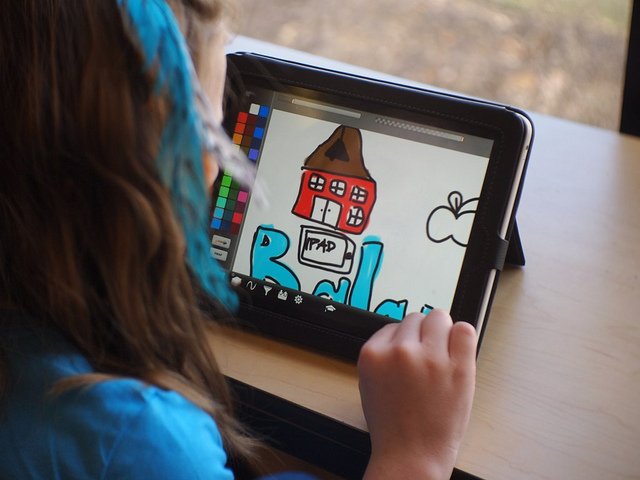
Children focus more acutely when their screen time is linked to action – whether it’s playing a game or encouraging a physical response outside of the online realm. Such stimulation and calls to action spur engagement and aid retention. If they are tasked with just watching video after video, they’re going to zone out.

To maximize the power of screen time when it comes to technology in the classroom, you must limit the opportunities for them to zone out of focus and spur them into engaging learning as active users.

Look For Both Student Engagement And Student Enjoyment

Didactic one-way teaching simply doesn’t translate well to the current youth populace and their learning habits. You have to engage students at their level and get them to enjoy the process of learning!

This isn’t just a face-to-face thing, either. If you rely on passive screen time activities such as videos and online reading, it functions as the technological equivalent of a long, boring lecture. Students want to be spurred into action.

Furthermore, students want to enjoy being spurred into action. Therefore, the active learning mechanisms you use on devices such as computers and mobiles must be enjoyable enough for them to want to engage. 

These active learning programs should teach students a new skill or tool while doing it in such a way that they enjoy the process and want to do it again. You want them to participate in their own learning, rather than watch it passively. This will get their brain firing in such a way that they’ll retain information better, problem-solve with more intuition, and find their own intrinsic motivations to learn and keep learning.

Recalibrating The Idea Of Learning And Keeping It In An Active Context

While videos and passive screen time have their place in learning, it’s active screen time and learning activities that will really stick with students. After all, learning itself is not merely the passive acquisition of knowledge.

Learning is the active assimilation of knowledge. Whether it’s online games, coding, building a communal relationship with other students with group online tasks or what have you, pushing active screen time as the primary goal of using technology in the classroom will get your students to become active learners.

Concluding Thoughts

At its best, active screen time pushes students to take what they’ve learned and apply it thoughtfully. When they do this, they are more willing to learn new concepts that correlate and put what they’ve learned to use in a real-world context.

This aids retention, builds student engagement, and primes students for real-life problem solving where they’re going to have to actively learn and assimilate knowledge on the fly.


Previous Article

The Spread Of Digital Assistants To Classrooms ...

Next Article

Careful Tech Vetting Process Key To Safeguarding ...

Matthew Lynch

Related articles More from author

  • Early Childhood & K-12 EdTech

    The Real Definition of Learning Science

    May 22, 2019
    By Matthew Lynch
  • Early Childhood & K-12 EdTech

    How Virtual Reality Can Revolutionize Science Education

    March 7, 2018
    By Matthew Lynch
  • Early Childhood & K-12 EdTech

    7 Must Have Edtech Apps, Tools, and Resources for Preschoolers

    August 18, 2017
    By Matthew Lynch
  • Early Childhood & K-12 EdTech

    A mother’s view on cell phones in the classroom

    June 25, 2016
    By Matthew Lynch
  • Early Childhood & K-12 EdTechGoogle Classroom

    How to Use Google Slides in the Classroom

    May 28, 2018
    By Matthew Lynch
  • Best of the Best ListsEarly Childhood & K-12 EdTechHigher Education EdTech

    29 of the Best Flipped Classroom Apps for Elementary School Teachers

    February 5, 2018
    By Matthew Lynch

Search

Login & Registration

  • Log in
  • Entries feed
  • Comments feed
  • WordPress.org

Newsletter

Signup for The Tech Edvocate Newsletter and have the latest in EdTech news and opinion delivered to your email address!

About Us

Since technology is not going anywhere and does more good than harm, adapting is the best course of action. That is where The Tech Edvocate comes in. We plan to cover the PreK-12 and Higher Education EdTech sectors and provide our readers with the latest news and opinion on the subject. From time to time, I will invite other voices to weigh in on important issues in EdTech. We hope to provide a well-rounded, multi-faceted look at the past, present, the future of EdTech in the US and internationally.

We started this journey back in June 2016, and we plan to continue it for many more years to come. I hope that you will join us in this discussion of the past, present and future of EdTech and lend your own insight to the issues that are discussed.

Newsletter

Signup for The Tech Edvocate Newsletter and have the latest in EdTech news and opinion delivered to your email address!

Contact Us

The Tech Edvocate
910 Goddin Street
Richmond, VA 23231
(601) 630-5238
[email protected]

Copyright © 2026 Matthew Lynch. All rights reserved.