The Tech Edvocate

Top Menu

  • Advertisement
  • Apps
  • Home Page
  • Home Page Five (No Sidebar)
  • Home Page Four
  • Home Page Three
  • Home Page Two
  • Home Tech2
  • Icons [No Sidebar]
  • Left Sidbear Page
  • Lynch Educational Consulting
  • My Account
  • My Speaking Page
  • Newsletter Sign Up Confirmation
  • Newsletter Unsubscription
  • Our Brands
  • Page Example
  • Privacy Policy
  • Protected Content
  • Register
  • Request a Product Review
  • Shop
  • Shortcodes Examples
  • Signup
  • Start Here
    • Governance
    • Careers
    • Contact Us
  • Terms and Conditions
  • The Edvocate
  • The Tech Edvocate Product Guide
  • Topics
  • Write For Us
  • Advertise

Main Menu

  • Start Here
    • Our Brands
    • Governance
      • Lynch Educational Consulting, LLC.
      • Dr. Lynch’s Personal Website
      • Careers
    • Write For Us
    • The Tech Edvocate Product Guide
    • Contact Us
    • Books
    • Edupedia
    • Post a Job
    • The Edvocate Podcast
    • Terms and Conditions
    • Privacy Policy
  • Topics
    • Assistive Technology
    • Child Development Tech
    • Early Childhood & K-12 EdTech
    • EdTech Futures
    • EdTech News
    • EdTech Policy & Reform
    • EdTech Startups & Businesses
    • Higher Education EdTech
    • Online Learning & eLearning
    • Parent & Family Tech
    • Personalized Learning
    • Product Reviews
  • Advertise
  • Tech Edvocate Awards
  • The Edvocate
  • Pedagogue
  • School Ratings

logo

The Tech Edvocate

  • Start Here
    • Our Brands
    • Governance
      • Lynch Educational Consulting, LLC.
      • Dr. Lynch’s Personal Website
        • My Speaking Page
      • Careers
    • Write For Us
    • The Tech Edvocate Product Guide
    • Contact Us
    • Books
    • Edupedia
    • Post a Job
    • The Edvocate Podcast
    • Terms and Conditions
    • Privacy Policy
  • Topics
    • Assistive Technology
    • Child Development Tech
    • Early Childhood & K-12 EdTech
    • EdTech Futures
    • EdTech News
    • EdTech Policy & Reform
    • EdTech Startups & Businesses
    • Higher Education EdTech
    • Online Learning & eLearning
    • Parent & Family Tech
    • Personalized Learning
    • Product Reviews
  • Advertise
  • Tech Edvocate Awards
  • The Edvocate
  • Pedagogue
  • School Ratings
  • The Reckless Ben Controversy: An Outrageous Fight for Justice

  • Outrageous: The Sydney Sweeney Ad Controversy You Didn’t See Coming — And Why It’s Working

  • The AI CRM War: Why Salesforce Just Made a $2 Billion Bid for a Startup

  • OpenAI’s Navier-Stokes ‘Solution’ Ignites Firestorm: Did They Steal It?

  • Blizzard’s Boldest Bet: Why a StarCraft Shooter in 2030 Could Redefine Gaming

  • Volatile: Why Top AI Bosses Just Triggered a Massive AI Stocks Decline

  • ‘Godfather of AI’ backs Anthropic chief’s call to slow down development

  • Why Millions Are Flocking to Trade Schools as AI Reshapes the Job Market

  • Unmasking the Bizarre ‘Cat in the Hat’ Trend: Why Schools Are Sounding the Alarm

  • Florida DMV Hacked: 200,000 Driver Records Exposed in Stunning Breach

Digital & Mobile Technology
Home›Digital & Mobile Technology›What’s the Difference Between 32-Bit and 64-Bit Windows?

What’s the Difference Between 32-Bit and 64-Bit Windows?
By Matthew Lynch
June 23, 2023
0
Spread the love

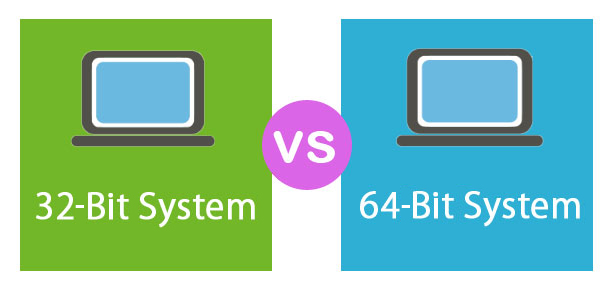
When it comes to choosing which version of Windows to install on your computer, the most common question that arises is what’s the difference between 32-bit and 64-bit? This question is important since choosing the wrong version could affect the performance of your computer. In this article, we’ll take a closer look at the differences between 32-bit and 64-bit Windows.

First, let’s talk about what these terms mean. The “bitness” of an operating system refers to the number of bits, which are the smallest units of information stored on a computer, that the CPU can handle at one time. In other words, it refers to the maximum amount of memory that the computer can address.

A 32-bit system can only address a maximum of 4GB of RAM, which is why computers running 32-bit versions of Windows are limited to using less than 4GB of RAM. A 64-bit system can address much more memory, up to 16 exabytes, which is equivalent to 16 billion gigabytes.

The advantages of using a 64-bit version of Windows are clear. Systems with more memory can run more apps at once, handle larger files more easily, and generally operate more efficiently. But there are some downsides as well.

One of them is that not all apps are compatible with 64-bit versions of Windows. While most modern software is now built to work with 64-bit operating systems, some older apps or drivers may not be compatible. This issue is especially prevalent in businesses whose software is custom-built and hasn’t been updated in years.

Another downside is that 64-bit apps may use up more disk space than their 32-bit counterparts. That’s because 64-bit apps require larger executable files, which can be a factor if you have limited storage space.

So, how do you know which version of Windows you have, and which one you should choose? To find out which version of Windows you have, right-click on My Computer and select Properties. Under System, you’ll see whether you have a 32-bit or 64-bit operating system.

If you plan to use your computer for video editing or other intensive tasks, it’s worth upgrading to 64-bit Windows. If you’re just using your computer for general tasks such as web browsing, email, and word processing, 32-bit Windows is more than sufficient.

Previous Article

How to Upscale an Image Without Losing ...

Next Article

Ways to Fix “The Remote Computer Requires ...

Matthew Lynch

Related articles More from author

  • Digital & Mobile Technology

    What is Twitter?

    May 13, 2023
    By Matthew Lynch
  • Digital & Mobile Technology

    What Is Crossfading in Music?

    June 8, 2023
    By Matthew Lynch
  • Digital & Mobile Technology

    How to Fix It When an Instagram Story Isn’t Uploading

    May 31, 2023
    By Matthew Lynch
  • Digital & Mobile Technology

    Reasons MacBooks Are Better Than Other Laptops

    August 5, 2023
    By Matthew Lynch
  • Digital & Mobile Technology

    What is a Data Packet?

    March 20, 2023
    By Matthew Lynch
  • Digital & Mobile Technology

    How to develop a technology strategy

    May 28, 2023
    By Matthew Lynch

Search

Login & Registration

  • Log in
  • Entries feed
  • Comments feed
  • WordPress.org

Newsletter

Signup for The Tech Edvocate Newsletter and have the latest in EdTech news and opinion delivered to your email address!

About Us

Since technology is not going anywhere and does more good than harm, adapting is the best course of action. That is where The Tech Edvocate comes in. We plan to cover the PreK-12 and Higher Education EdTech sectors and provide our readers with the latest news and opinion on the subject. From time to time, I will invite other voices to weigh in on important issues in EdTech. We hope to provide a well-rounded, multi-faceted look at the past, present, the future of EdTech in the US and internationally.

We started this journey back in June 2016, and we plan to continue it for many more years to come. I hope that you will join us in this discussion of the past, present and future of EdTech and lend your own insight to the issues that are discussed.

Newsletter

Signup for The Tech Edvocate Newsletter and have the latest in EdTech news and opinion delivered to your email address!

Contact Us

The Tech Edvocate
910 Goddin Street
Richmond, VA 23231
(601) 630-5238
[email protected]

Copyright © 2026 Matthew Lynch. All rights reserved.