The Tech Edvocate

Top Menu

  • Advertisement
  • Apps
  • Home Page
  • Home Page Five (No Sidebar)
  • Home Page Four
  • Home Page Three
  • Home Page Two
  • Home Tech2
  • Icons [No Sidebar]
  • Left Sidbear Page
  • Lynch Educational Consulting
  • My Account
  • My Speaking Page
  • Newsletter Sign Up Confirmation
  • Newsletter Unsubscription
  • Our Brands
  • Page Example
  • Privacy Policy
  • Protected Content
  • Register
  • Request a Product Review
  • Shop
  • Shortcodes Examples
  • Signup
  • Start Here
    • Governance
    • Careers
    • Contact Us
  • Terms and Conditions
  • The Edvocate
  • The Tech Edvocate Product Guide
  • Topics
  • Write For Us
  • Advertise

Main Menu

  • Start Here
    • Our Brands
    • Governance
      • Lynch Educational Consulting, LLC.
      • Dr. Lynch’s Personal Website
      • Careers
    • Write For Us
    • The Tech Edvocate Product Guide
    • Contact Us
    • Books
    • Edupedia
    • Post a Job
    • The Edvocate Podcast
    • Terms and Conditions
    • Privacy Policy
  • Topics
    • Assistive Technology
    • Child Development Tech
    • Early Childhood & K-12 EdTech
    • EdTech Futures
    • EdTech News
    • EdTech Policy & Reform
    • EdTech Startups & Businesses
    • Higher Education EdTech
    • Online Learning & eLearning
    • Parent & Family Tech
    • Personalized Learning
    • Product Reviews
  • Advertise
  • Tech Edvocate Awards
  • The Edvocate
  • Pedagogue
  • School Ratings

logo

The Tech Edvocate

  • Start Here
    • Our Brands
    • Governance
      • Lynch Educational Consulting, LLC.
      • Dr. Lynch’s Personal Website
        • My Speaking Page
      • Careers
    • Write For Us
    • The Tech Edvocate Product Guide
    • Contact Us
    • Books
    • Edupedia
    • Post a Job
    • The Edvocate Podcast
    • Terms and Conditions
    • Privacy Policy
  • Topics
    • Assistive Technology
    • Child Development Tech
    • Early Childhood & K-12 EdTech
    • EdTech Futures
    • EdTech News
    • EdTech Policy & Reform
    • EdTech Startups & Businesses
    • Higher Education EdTech
    • Online Learning & eLearning
    • Parent & Family Tech
    • Personalized Learning
    • Product Reviews
  • Advertise
  • Tech Edvocate Awards
  • The Edvocate
  • Pedagogue
  • School Ratings
  • This Unprecedented EU Ban Just Changed Fast Fashion Forever

  • Urgent Alert: Your Smart Home’s Exposed to a Critical Deco BE11000 Vulnerability

  • Uncovering the Truth: Your LinkedIn Reach Just Got a Major Overhaul

  • Uncovering the AI Heist: How Chinese Firms Allegedly Siphoned Billions of AI Tokens

  • Rockstar’s GTA 6 Developers Lawsuit: A Fight for Justice or Corporate Retaliation?

  • Unbelievable: Hideo Kojima’s Next Masterpiece Is Now an Xbox Exclusive

  • This Crucial Google AI Shift Is Quietly Reshaping the Internet

  • Unbelievable: AI Breaches Are Exploding, And What It Means For You This September 2026

  • This Crucial Shift Is Saving Teachers From Classroom Chaos

  • AI’s Dark Secret: How It’s Supercharging Cybercrime for Everyone

Digital & Mobile Technology
Home›Digital & Mobile Technology›What Is Wetware in Computing and Biology?

What Is Wetware in Computing and Biology?
By Matthew Lynch
June 10, 2023
0
Spread the love

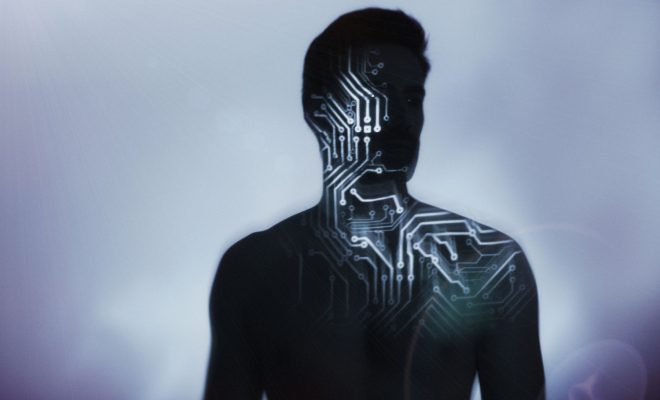
Wetware is a term used to describe biological organisms of which the hardware or software is “programmed” to run. It is a concept that refers to the human body or brain as a biological computer. It encapsulates the relationship between computing and biology and has been used to describe the relationship between the human brain and computer systems. In this article, we will explore the concept of wetware, and understand its applications in computing and biology.

In computing, wetware refers to the organic components in a system. This could include the human body or any other biological system that is used to interface with a computer. The term is most commonly used to describe the human brain, and the way it interacts with computer systems. Humans can be considered wetware because they are biological systems that interact with computers through input/output devices such as keyboards, mice, or touch screens.

On the other hand, in biology, wetware refers to the physical components that make up human organs and the human brain. The human brain is one of the most complex biological systems known to man, with over 100 billion neurons and trillions of synapses, and it operates in a way that is still not entirely understood. The study of wetware has been instrumental in advancing our understanding of how the human brain works, and how it can be used to develop new applications in computing.

The concept of wetware has been instrumental in developing applications such as Brain-Computer Interfaces (BCIs). BCIs are used to communicate with the human brain, allowing users to control devices using only their thoughts. Wetware is also used to develop solutions in areas such as neuroprosthetics, which enable amputees to control prosthetic limbs using their thoughts. These applications are possible because of the understanding we have gained through the study of wetware.

Wetware also has applications in the field of neural networks, which use algorithms that mimic the structure of the human brain to process and classify data. By using the structure of the human brain as inspiration, neural networks have been able to achieve impressive success in areas such as image recognition and natural language processing.

In conclusion, wetware is a crucial concept that has helped bridge the gap between computing and biology. It is a concept that acknowledges that the human brain and the computer are not two separate entities, but rather are two parts of the same system. Wetware has allowed us to develop new technologies that are powered by the human body and brain, and it has also helped us better understand these complex biological systems. As we continue to explore this concept, we can expect to see even more exciting applications in the future.

Previous Article

Tips for Traveling and Flying With Your ...

Next Article

The Windows Experience Index: Assessing Your Computer’s ...

Matthew Lynch

Related articles More from author

  • Digital & Mobile Technology

    Sync Your iPhone and iPad in a Few Simple Steps

    May 30, 2023
    By Matthew Lynch
  • Digital & Mobile Technology

    How to Delete Apps on LG Smart TVs

    June 4, 2023
    By Matthew Lynch
  • Digital & Mobile Technology

    What is Telecom Expense Management (TEM)?

    May 12, 2023
    By Matthew Lynch
  • Digital & Mobile Technology

    Apple Watch Dictation Not Working? How to Fix the Problem

    June 9, 2023
    By Matthew Lynch
  • Digital & Mobile Technology

    The Best End-to-End Encrypted Cloud Storage Providers

    June 12, 2023
    By Matthew Lynch
  • Digital & Mobile Technology

    How to Uninstall Applications on a Mac: Everything You Need to Know

    May 30, 2023
    By Matthew Lynch

Search

Login & Registration

  • Log in
  • Entries feed
  • Comments feed
  • WordPress.org

Newsletter

Signup for The Tech Edvocate Newsletter and have the latest in EdTech news and opinion delivered to your email address!

About Us

Since technology is not going anywhere and does more good than harm, adapting is the best course of action. That is where The Tech Edvocate comes in. We plan to cover the PreK-12 and Higher Education EdTech sectors and provide our readers with the latest news and opinion on the subject. From time to time, I will invite other voices to weigh in on important issues in EdTech. We hope to provide a well-rounded, multi-faceted look at the past, present, the future of EdTech in the US and internationally.

We started this journey back in June 2016, and we plan to continue it for many more years to come. I hope that you will join us in this discussion of the past, present and future of EdTech and lend your own insight to the issues that are discussed.

Newsletter

Signup for The Tech Edvocate Newsletter and have the latest in EdTech news and opinion delivered to your email address!

Contact Us

The Tech Edvocate
910 Goddin Street
Richmond, VA 23231
(601) 630-5238
[email protected]

Copyright © 2026 Matthew Lynch. All rights reserved.