The Tech Edvocate

Top Menu

  • Advertisement
  • Apps
  • Home Page
  • Home Page Five (No Sidebar)
  • Home Page Four
  • Home Page Three
  • Home Page Two
  • Home Tech2
  • Icons [No Sidebar]
  • Left Sidbear Page
  • Lynch Educational Consulting
  • My Account
  • My Speaking Page
  • Newsletter Sign Up Confirmation
  • Newsletter Unsubscription
  • Our Brands
  • Page Example
  • Privacy Policy
  • Protected Content
  • Register
  • Request a Product Review
  • Shop
  • Shortcodes Examples
  • Signup
  • Start Here
    • Governance
    • Careers
    • Contact Us
  • Terms and Conditions
  • The Edvocate
  • The Tech Edvocate Product Guide
  • Topics
  • Write For Us
  • Advertise

Main Menu

  • Start Here
    • Our Brands
    • Governance
      • Lynch Educational Consulting, LLC.
      • Dr. Lynch’s Personal Website
      • Careers
    • Write For Us
    • The Tech Edvocate Product Guide
    • Contact Us
    • Books
    • Edupedia
    • Post a Job
    • The Edvocate Podcast
    • Terms and Conditions
    • Privacy Policy
  • Topics
    • Assistive Technology
    • Child Development Tech
    • Early Childhood & K-12 EdTech
    • EdTech Futures
    • EdTech News
    • EdTech Policy & Reform
    • EdTech Startups & Businesses
    • Higher Education EdTech
    • Online Learning & eLearning
    • Parent & Family Tech
    • Personalized Learning
    • Product Reviews
  • Advertise
  • Tech Edvocate Awards
  • The Edvocate
  • Pedagogue
  • School Ratings

logo

The Tech Edvocate

  • Start Here
    • Our Brands
    • Governance
      • Lynch Educational Consulting, LLC.
      • Dr. Lynch’s Personal Website
        • My Speaking Page
      • Careers
    • Write For Us
    • The Tech Edvocate Product Guide
    • Contact Us
    • Books
    • Edupedia
    • Post a Job
    • The Edvocate Podcast
    • Terms and Conditions
    • Privacy Policy
  • Topics
    • Assistive Technology
    • Child Development Tech
    • Early Childhood & K-12 EdTech
    • EdTech Futures
    • EdTech News
    • EdTech Policy & Reform
    • EdTech Startups & Businesses
    • Higher Education EdTech
    • Online Learning & eLearning
    • Parent & Family Tech
    • Personalized Learning
    • Product Reviews
  • Advertise
  • Tech Edvocate Awards
  • The Edvocate
  • Pedagogue
  • School Ratings
  • Viaim Opennote Review: The AI Note-Taker That Disappears Into Your Daily Routine

  • A Visitors Guide to Long Beach (CA), United States

  • A Visitor’s Guide to Fresno (CA), United States

  • A Visitors Guide to New Orleans (LA), United States

  • A Visitors Guide to Sacramento (CA), United States

  • A Visitors Guide to Lyon, France

  • JisuLife Ultra2 Portable Fan: A Powerful Multi-Function Cooling Solution

  • A Visitors Guide to Viña del Mar, Chile

  • A Visitors Guide to Århus, Denmark

  • A Visitors Guide to Bakersfield (CA), United States

Digital & Mobile Technology
Home›Digital & Mobile Technology›What is IP Address Blocking?

What is IP Address Blocking?
By Matthew Lynch
May 23, 2023
0
Spread the love

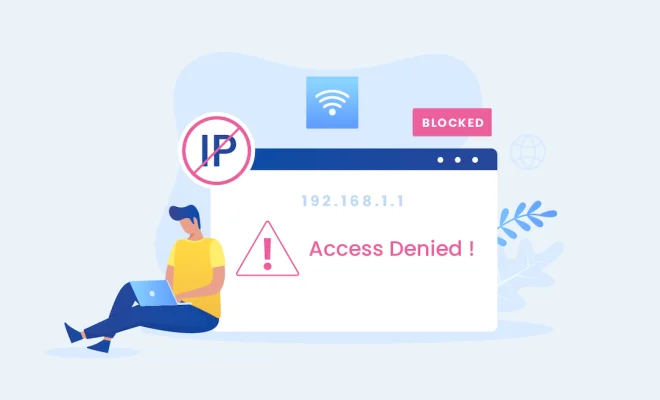
IP Address blocking is the process through which a network administrator blocks access to a specific IP address or range of IP addresses. This is a widely-used technique in network security and helps prevent unauthorized access to a network or website. In order to understand IP address blocking, it is important to first understand what an IP address is.

An IP address is a unique numerical identifier assigned to every device connected to the internet. It enables the device to communicate with other devices on the internet. An IP address is either assigned by the Internet Service Provider (ISP) or is configured manually by the network administrator. Every IP address is unique and no two devices can have the same IP address.

IP address blocking is the ability of network administrators to prevent unwanted traffic from coming to their website or network by blocking the IP addresses that are associated with the traffic. For example, if a network administrator receives a lot of spam traffic from a particular IP address or range of IP addresses, they can use IP address blocking to prevent that traffic from reaching its destination.

In addition to preventing unwanted traffic, IP address blocking can also be used to block specific users or groups from accessing a website or network. For example, if a user repeatedly violates a website’s terms of service, the network administrator can use IP address blocking to prevent that user from accessing the website.

There are two main types of IP address blocking: blacklisting and whitelisting.

Blacklisting is the process of blocking a specific IP address or range of IP addresses from accessing a website or network. This type of IP address blocking is often used to prevent spam or malicious traffic from reaching a website or network.

Whitelisting is the process of allowing access to only certain IP addresses and blocking all others. This type of IP address blocking is often used to provide secure access to a website or network.

In conclusion, IP address blocking is an essential tool for network administrators to help prevent unwanted traffic and to ensure the security of their website or network. By using IP address blocking, network administrators can prevent malicious activity and provide a better experience for their users.

Previous Article

What is IT Security Management (ITSM)?

Next Article

What is IT organization (information technology organization)?

Matthew Lynch

Related articles More from author

  • Digital & Mobile Technology

    How Many People Can You Add to a WhatsApp Group?

    September 7, 2023
    By Matthew Lynch
  • Digital & Mobile Technology

    Firefox vs. Opera: Which Browser Is Better for Security?

    June 9, 2023
    By Matthew Lynch
  • Digital & Mobile Technology

    How to Upscale and Restore Images With This Free AI Tool

    August 2, 2023
    By Matthew Lynch
  • Digital & Mobile Technology

    How to Set Up a Mesh Network

    June 4, 2023
    By Matthew Lynch
  • Digital & Mobile Technology

    Best Free Messaging Apps for Android

    September 8, 2023
    By Matthew Lynch
  • Digital & Mobile Technology

    How to Fix: My iPad Is Zoomed in or Shows a Magnifying Glass

    July 27, 2023
    By Matthew Lynch

Search

Login & Registration

  • Register
  • Log in
  • Entries feed
  • Comments feed
  • WordPress.org

Newsletter

Signup for The Tech Edvocate Newsletter and have the latest in EdTech news and opinion delivered to your email address!

About Us

Since technology is not going anywhere and does more good than harm, adapting is the best course of action. That is where The Tech Edvocate comes in. We plan to cover the PreK-12 and Higher Education EdTech sectors and provide our readers with the latest news and opinion on the subject. From time to time, I will invite other voices to weigh in on important issues in EdTech. We hope to provide a well-rounded, multi-faceted look at the past, present, the future of EdTech in the US and internationally.

We started this journey back in June 2016, and we plan to continue it for many more years to come. I hope that you will join us in this discussion of the past, present and future of EdTech and lend your own insight to the issues that are discussed.

Newsletter

Signup for The Tech Edvocate Newsletter and have the latest in EdTech news and opinion delivered to your email address!

Contact Us

The Tech Edvocate
910 Goddin Street
Richmond, VA 23231
(601) 630-5238
[email protected]

Copyright © 2025 Matthew Lynch. All rights reserved.