The Tech Edvocate

Top Menu

  • Advertisement
  • Apps
  • Home Page
  • Home Page Five (No Sidebar)
  • Home Page Four
  • Home Page Three
  • Home Page Two
  • Home Tech2
  • Icons [No Sidebar]
  • Left Sidbear Page
  • Lynch Educational Consulting
  • My Account
  • My Speaking Page
  • Newsletter Sign Up Confirmation
  • Newsletter Unsubscription
  • Our Brands
  • Page Example
  • Privacy Policy
  • Protected Content
  • Register
  • Request a Product Review
  • Shop
  • Shortcodes Examples
  • Signup
  • Start Here
    • Governance
    • Careers
    • Contact Us
  • Terms and Conditions
  • The Edvocate
  • The Tech Edvocate Product Guide
  • Topics
  • Write For Us
  • Advertise

Main Menu

  • Start Here
    • Our Brands
    • Governance
      • Lynch Educational Consulting, LLC.
      • Dr. Lynch’s Personal Website
      • Careers
    • Write For Us
    • The Tech Edvocate Product Guide
    • Contact Us
    • Books
    • Edupedia
    • Post a Job
    • The Edvocate Podcast
    • Terms and Conditions
    • Privacy Policy
  • Topics
    • Assistive Technology
    • Child Development Tech
    • Early Childhood & K-12 EdTech
    • EdTech Futures
    • EdTech News
    • EdTech Policy & Reform
    • EdTech Startups & Businesses
    • Higher Education EdTech
    • Online Learning & eLearning
    • Parent & Family Tech
    • Personalized Learning
    • Product Reviews
  • Advertise
  • Tech Edvocate Awards
  • The Edvocate
  • Pedagogue
  • School Ratings

logo

The Tech Edvocate

  • Start Here
    • Our Brands
    • Governance
      • Lynch Educational Consulting, LLC.
      • Dr. Lynch’s Personal Website
        • My Speaking Page
      • Careers
    • Write For Us
    • The Tech Edvocate Product Guide
    • Contact Us
    • Books
    • Edupedia
    • Post a Job
    • The Edvocate Podcast
    • Terms and Conditions
    • Privacy Policy
  • Topics
    • Assistive Technology
    • Child Development Tech
    • Early Childhood & K-12 EdTech
    • EdTech Futures
    • EdTech News
    • EdTech Policy & Reform
    • EdTech Startups & Businesses
    • Higher Education EdTech
    • Online Learning & eLearning
    • Parent & Family Tech
    • Personalized Learning
    • Product Reviews
  • Advertise
  • Tech Edvocate Awards
  • The Edvocate
  • Pedagogue
  • School Ratings
  • One Crucial Factor Could Decimate Your US Auto Insurance Rates in 2026

  • Unbelievable: Meta Hit With $25 Billion Fine — Is Your Health Data Next?

  • 10 Crucial AI Literacy Courses Every Parent Needs Now

  • The Unseen Force Quietly Reshaping Rural Life: 7 Satellite Internet Providers Battling for Supremacy

  • Best Buy’s Gamers Hub: The Unbelievable Truth About Its “Rewards” And Discounts

  • 8 Crucial Reasons Why MAI-DxO Just Obliterated Doctors in a Head-to-Head Diagnosis Battle

  • The Brutal Truth About Student Loan Refinancing for New Grads in 2024

  • The Brutal Truth: AI Just Blew Up PHP Security – Here’s How to Survive ‘Black October’

  • Sodium-ion storage maker Peak Energy raises $108 million in GM-led round – PV Magazine

  • Stunning: 93,000 Nursing School Applicants Rejected — Here’s Why It’s a Crisis

Digital & Mobile Technology
Home›Digital & Mobile Technology›What Is FireWire and How Does it Work?

What Is FireWire and How Does it Work?
By Matthew Lynch
June 1, 2023
0
Spread the love

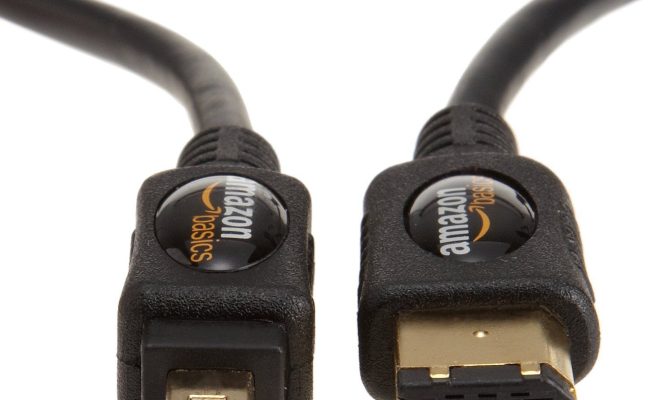
FireWire is a technology that is commonly used to transfer data between devices such as cameras, computers, and storage drives. The term FireWire usually refers to a specific type of data transfer cable and port, however, it can also refer to the technology that underlies the transfer of data. In this article, we will explore what FireWire is and how it works.

What is FireWire?

FireWire, which is also known as IEEE 1394, is a high-speed serial bus technology that was initially developed by Apple in the 1990s. It can transfer large amounts of data, such as video and audio, between devices quickly and efficiently. FireWire can transfer data at up to 800 Mbps, making it a faster option than USB 2.0, which can transfer data at up to 480 Mbps.

FireWire uses a peer-to-peer architecture, which means that devices can communicate directly with each other without the need for a master device. This allows for faster data transfer and less strain on the CPU. FireWire can also provide power to some devices, such as cameras, so they do not need an external power source.

How does FireWire work?

FireWire works by transmitting data in packets between two or more devices. The packets can be sent in both directions, allowing for data transfer to occur simultaneously. FireWire uses a serial communication protocol, which means that data is sent one bit at a time. This allows for a more reliable transfer of data since errors can be detected and corrected.

When a device is connected to a FireWire port, it is assigned an address. This address enables devices to communicate with each other without interference from other devices. FireWire also uses a handshake protocol, which ensures that both devices are ready to communicate before any data is exchanged.

FireWire also provides a feature called isochronous transmission. This allows for real-time data transfer, such as video or audio, to occur without interruption. This feature ensures that data is transmitted at a constant rate, regardless of other traffic on the FireWire bus.

Conclusion

FireWire is a technology that is widely used in the transfer of data between devices, particularly in the professional audio and video industry. It provides a fast, reliable, and efficient way to transfer large amounts of data between devices. FireWire uses a peer-to-peer architecture, isochronous transmission, and a serial communication protocol to ensure that data can be transferred quickly and reliably. While it is not as commonly used as USB, it remains a popular option for those in need of higher data transfer speeds.


Previous Article

What Is an M4A File?

Next Article

Popular and Free Instant Messaging Apps

Matthew Lynch

Related articles More from author

  • Digital & Mobile Technology

    How to Fix External Hard Drive Access Denied Error in Windows

    May 28, 2023
    By Matthew Lynch
  • Digital & Mobile Technology

    How Tech Will Shape The Upcoming Graduates

    November 3, 2022
    By Matthew Lynch
  • Digital & Mobile Technology

    Advantages and Disadvantages of SSHDs (Solid State Hybrid Drives)

    June 8, 2023
    By Matthew Lynch
  • Digital & Mobile Technology

    Free Time Tracking Apps to Maximize Your Deep Work

    June 12, 2023
    By Matthew Lynch
  • Digital & Mobile Technology

    How to Get the Administrator Password

    April 26, 2023
    By Matthew Lynch
  • Digital & Mobile Technology

    How to Watch Free Live TV Channels on Plex

    August 1, 2023
    By Matthew Lynch

Search

Login & Registration

  • Log in
  • Entries feed
  • Comments feed
  • WordPress.org

Newsletter

Signup for The Tech Edvocate Newsletter and have the latest in EdTech news and opinion delivered to your email address!

About Us

Since technology is not going anywhere and does more good than harm, adapting is the best course of action. That is where The Tech Edvocate comes in. We plan to cover the PreK-12 and Higher Education EdTech sectors and provide our readers with the latest news and opinion on the subject. From time to time, I will invite other voices to weigh in on important issues in EdTech. We hope to provide a well-rounded, multi-faceted look at the past, present, the future of EdTech in the US and internationally.

We started this journey back in June 2016, and we plan to continue it for many more years to come. I hope that you will join us in this discussion of the past, present and future of EdTech and lend your own insight to the issues that are discussed.

Newsletter

Signup for The Tech Edvocate Newsletter and have the latest in EdTech news and opinion delivered to your email address!

Contact Us

The Tech Edvocate
910 Goddin Street
Richmond, VA 23231
(601) 630-5238
[email protected]

Copyright © 2026 Matthew Lynch. All rights reserved.