The Tech Edvocate

Top Menu

  • Advertisement
  • Apps
  • Home Page
  • Home Page Five (No Sidebar)
  • Home Page Four
  • Home Page Three
  • Home Page Two
  • Home Tech2
  • Icons [No Sidebar]
  • Left Sidbear Page
  • Lynch Educational Consulting
  • My Account
  • My Speaking Page
  • Newsletter Sign Up Confirmation
  • Newsletter Unsubscription
  • Our Brands
  • Page Example
  • Privacy Policy
  • Protected Content
  • Register
  • Request a Product Review
  • Shop
  • Shortcodes Examples
  • Signup
  • Start Here
    • Governance
    • Careers
    • Contact Us
  • Terms and Conditions
  • The Edvocate
  • The Tech Edvocate Product Guide
  • Topics
  • Write For Us
  • Advertise

Main Menu

  • Start Here
    • Our Brands
    • Governance
      • Lynch Educational Consulting, LLC.
      • Dr. Lynch’s Personal Website
      • Careers
    • Write For Us
    • The Tech Edvocate Product Guide
    • Contact Us
    • Books
    • Edupedia
    • Post a Job
    • The Edvocate Podcast
    • Terms and Conditions
    • Privacy Policy
  • Topics
    • Assistive Technology
    • Child Development Tech
    • Early Childhood & K-12 EdTech
    • EdTech Futures
    • EdTech News
    • EdTech Policy & Reform
    • EdTech Startups & Businesses
    • Higher Education EdTech
    • Online Learning & eLearning
    • Parent & Family Tech
    • Personalized Learning
    • Product Reviews
  • Advertise
  • Tech Edvocate Awards
  • The Edvocate
  • Pedagogue
  • School Ratings

logo

The Tech Edvocate

  • Start Here
    • Our Brands
    • Governance
      • Lynch Educational Consulting, LLC.
      • Dr. Lynch’s Personal Website
        • My Speaking Page
      • Careers
    • Write For Us
    • The Tech Edvocate Product Guide
    • Contact Us
    • Books
    • Edupedia
    • Post a Job
    • The Edvocate Podcast
    • Terms and Conditions
    • Privacy Policy
  • Topics
    • Assistive Technology
    • Child Development Tech
    • Early Childhood & K-12 EdTech
    • EdTech Futures
    • EdTech News
    • EdTech Policy & Reform
    • EdTech Startups & Businesses
    • Higher Education EdTech
    • Online Learning & eLearning
    • Parent & Family Tech
    • Personalized Learning
    • Product Reviews
  • Advertise
  • Tech Edvocate Awards
  • The Edvocate
  • Pedagogue
  • School Ratings
  • Outrageous: AppLovin Hit With Lawsuit Over AI Claims — What Investors Need to Know

  • 9 Critical Ways AI Investment Fraud Is Quietly Draining Your Bank Account

  • Is the AI Bubble Bursting? OpenAI’s Funding Woes Revealed

  • Why Millions Are Skipping College for These 7 Online Courses Right Now

  • The Astonishing Truth About PS5 Pro vs Xbox Ally X Financing

  • The Urgent Truth About 2026 Privacy Laws: Why Your Business Could Face Catastrophic Fines

  • Shocking: Esports Pros Reveal the Critical Steps to Protect Your Earnings

  • The Staggering Truth About These New Weight Loss Drugs — And Why You Need to Know

  • The Quiet Crisis: Why Your Auto Loan Interest Rates Are Still Skyrocketing

  • Elvis’s Ghost Haunts AI: The $41 Million Anthropic Copyright Lawsuit Explained

Digital & Mobile Technology
Home›Digital & Mobile Technology›What Is Bandwidth Throttling?

What Is Bandwidth Throttling?
By Matthew Lynch
June 4, 2023
0
Spread the love

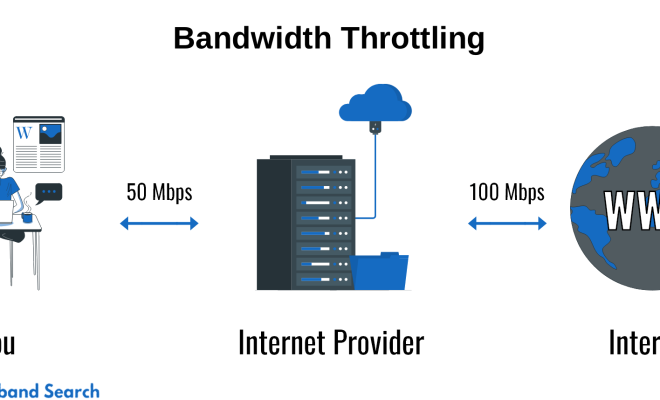
Bandwidth throttling is a term that refers to the intentional reduction of internet bandwidth by internet service providers (ISPs) during certain conditions. Bandwidth throttling occurs when a company decides to limit the amount of data allowed to pass through its network at any one time, usually to address network congestion or to restrict a user’s access to certain types of content.

The aim of bandwidth throttling is to control network traffic and prevent network slowdowns or outages. ISPs typically use bandwidth throttling to ensure that all customers have access to the same level of internet service, regardless of how much data they are using. This ensures that everyone can access important online services and prevent any one user from monopolizing bandwidth and slowing down the network.

ISPs typically use three types of bandwidth throttling techniques to control traffic flow. The first type of throttling technique is application-specific throttling, which involves lowering the speed of specific applications. These can include file-sharing programs, gaming applications, and video streaming services.

The second type of throttling technique is protocol-specific throttling. This involves limiting network traffic based on the type of protocol used to establish the connection. For example, ISPs may limit the amount of web traffic from HTTP or FTP connections while not limiting VoIP protocols like Skype or Zoom.

The third type of throttling technique is user-specific throttling, which is used to reduce the bandwidth allocated to heavy internet users. ISPs may choose to reduce the bandwidth of users who exceed a certain data limit or rely heavily on certain applications or types of streaming services.

Unfortunately, bandwidth throttling can have an adverse effect on users. It can lead to a significant slowdown of internet speed, which can make browsing, downloading, and streaming difficult and often frustrating. Some ISPs may even charge additional fees for users who require more bandwidth.

Fortunately, there are several ways to overcome bandwidth throttling. The simplest way is to use a Virtual Private Network (VPN). A VPN connects to a server outside of the ISP’s infrastructure, which allows access to the internet without any reductions in speed. However, using a VPN may lead to decreased internet speed or latency depending on the VPN quality or location of the server.

In conclusion, bandwidth throttling is an essential tool used by network administrators to manage the capacity of their networks. It is used to ensure that all users receive a reliable and equitable level of service. However, some ISPs can abuse throttling by reducing speeds too much or targeting specific types of traffic. Understanding and recognizing throttling practices and employing appropriate countermeasures such as using a VPN, can ensure that internet users can have unrestricted access to the internet while maintaining optimal performance.


Previous Article

What Is Software?

Next Article

What Does Speaker Sensitivity Mean and Why ...

Matthew Lynch

Related articles More from author

  • Digital & Mobile Technology

    Is Bloom Worth It? We Tested Out This Mental Health App So You Don’t Have To

    June 15, 2023
    By Matthew Lynch
  • Digital & Mobile Technology

    What Is an IGS File?

    June 10, 2023
    By Matthew Lynch
  • Digital & Mobile Technology

    What is Electromagnetic Compatibility (EMC)?

    May 6, 2023
    By Matthew Lynch
  • Digital & Mobile Technology

    Transparent Phones: Sci-Fi or Future Tech?

    June 10, 2023
    By Matthew Lynch
  • Digital & Mobile Technology

    Best Free Album Art Downloaders for Digital Music

    June 11, 2023
    By Matthew Lynch
  • Digital & Mobile Technology

    How to Sign Out of Netflix on Your Smart TV

    August 5, 2023
    By Matthew Lynch

Search

Login & Registration

  • Log in
  • Entries feed
  • Comments feed
  • WordPress.org

Newsletter

Signup for The Tech Edvocate Newsletter and have the latest in EdTech news and opinion delivered to your email address!

About Us

Since technology is not going anywhere and does more good than harm, adapting is the best course of action. That is where The Tech Edvocate comes in. We plan to cover the PreK-12 and Higher Education EdTech sectors and provide our readers with the latest news and opinion on the subject. From time to time, I will invite other voices to weigh in on important issues in EdTech. We hope to provide a well-rounded, multi-faceted look at the past, present, the future of EdTech in the US and internationally.

We started this journey back in June 2016, and we plan to continue it for many more years to come. I hope that you will join us in this discussion of the past, present and future of EdTech and lend your own insight to the issues that are discussed.

Newsletter

Signup for The Tech Edvocate Newsletter and have the latest in EdTech news and opinion delivered to your email address!

Contact Us

The Tech Edvocate
910 Goddin Street
Richmond, VA 23231
(601) 630-5238
[email protected]

Copyright © 2026 Matthew Lynch. All rights reserved.