The Tech Edvocate

Top Menu

  • Advertisement
  • Apps
  • Home Page
  • Home Page Five (No Sidebar)
  • Home Page Four
  • Home Page Three
  • Home Page Two
  • Home Tech2
  • Icons [No Sidebar]
  • Left Sidbear Page
  • Lynch Educational Consulting
  • My Account
  • My Speaking Page
  • Newsletter Sign Up Confirmation
  • Newsletter Unsubscription
  • Our Brands
  • Page Example
  • Privacy Policy
  • Protected Content
  • Register
  • Request a Product Review
  • Shop
  • Shortcodes Examples
  • Signup
  • Start Here
    • Governance
    • Careers
    • Contact Us
  • Terms and Conditions
  • The Edvocate
  • The Tech Edvocate Product Guide
  • Topics
  • Write For Us
  • Advertise

Main Menu

  • Start Here
    • Our Brands
    • Governance
      • Lynch Educational Consulting, LLC.
      • Dr. Lynch’s Personal Website
      • Careers
    • Write For Us
    • The Tech Edvocate Product Guide
    • Contact Us
    • Books
    • Edupedia
    • Post a Job
    • The Edvocate Podcast
    • Terms and Conditions
    • Privacy Policy
  • Topics
    • Assistive Technology
    • Child Development Tech
    • Early Childhood & K-12 EdTech
    • EdTech Futures
    • EdTech News
    • EdTech Policy & Reform
    • EdTech Startups & Businesses
    • Higher Education EdTech
    • Online Learning & eLearning
    • Parent & Family Tech
    • Personalized Learning
    • Product Reviews
  • Advertise
  • Tech Edvocate Awards
  • The Edvocate
  • Pedagogue
  • School Ratings

logo

The Tech Edvocate

  • Start Here
    • Our Brands
    • Governance
      • Lynch Educational Consulting, LLC.
      • Dr. Lynch’s Personal Website
        • My Speaking Page
      • Careers
    • Write For Us
    • The Tech Edvocate Product Guide
    • Contact Us
    • Books
    • Edupedia
    • Post a Job
    • The Edvocate Podcast
    • Terms and Conditions
    • Privacy Policy
  • Topics
    • Assistive Technology
    • Child Development Tech
    • Early Childhood & K-12 EdTech
    • EdTech Futures
    • EdTech News
    • EdTech Policy & Reform
    • EdTech Startups & Businesses
    • Higher Education EdTech
    • Online Learning & eLearning
    • Parent & Family Tech
    • Personalized Learning
    • Product Reviews
  • Advertise
  • Tech Edvocate Awards
  • The Edvocate
  • Pedagogue
  • School Ratings
  • A Visitor’s Guide to Fresno (CA), United States

  • A Visitors Guide to New Orleans (LA), United States

  • A Visitors Guide to Sacramento (CA), United States

  • A Visitors Guide to Lyon, France

  • JisuLife Ultra2 Portable Fan: A Powerful Multi-Function Cooling Solution

  • A Visitors Guide to Viña del Mar, Chile

  • A Visitors Guide to Århus, Denmark

  • A Visitors Guide to Bakersfield (CA), United States

  • A Visitors Guide to Aurora (CO), United States

  • A Visitor’s Guide to Toledo (OH), United States

Digital & Mobile Technology
Home›Digital & Mobile Technology›What Is a Floppy Disk Drive?

What Is a Floppy Disk Drive?
By Matthew Lynch
June 8, 2023
0
Spread the love

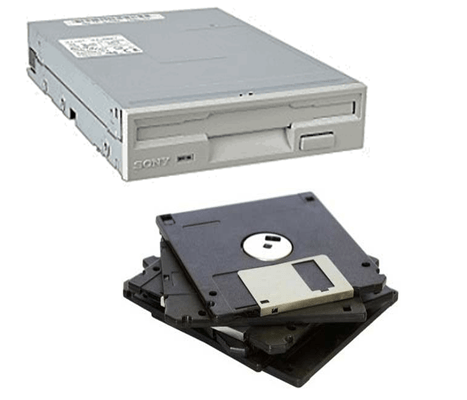
A floppy disk drive, also called a floppy drive, is a computer component that is used to read and write data to floppy disks. Floppy disks were a popular storage medium in the 1980s and 1990s, but have since been replaced by more modern storage methods, such as USB drives and cloud storage. Despite their obsolescence, floppy disk drives can still be found in some older computers or as external devices.

A floppy disk drive has a simple construction, consisting of a motor that spins the disk, a read/write head that moves across the disk’s surface, and a controller board that manages the flow of data to and from the disk. The drive interfaces with the computer using a floppy disk controller, which is a circuit board that connects the drive to the computer’s motherboard and provides the necessary interface to transfer data.

Floppy disks are square-shaped, thin plastic disks that come in different sizes, such as 5.25-inch and 3.5-inch disks. The disks are coated in a magnetic material that can store data in the form of tiny magnetic pulses. The read/write head moves back and forth across the disk’s surface, reading and writing these magnetic pulses as it goes along.

One major limitation of floppy disks is their relatively small storage capacity. Initially, 5.25-inch disks could store only 360 kilobytes of data, while 3.5-inch disks could store up to 1.44 megabytes. This may seem minuscule by today’s standards, considering that a single CD can store over 700 megabytes of data, and a Blu-ray disc can hold up to 50 gigabytes.

Despite this limitation, floppy disks were once the most popular means of storing and transferring data, particularly for personal computers. They were often used to store operating systems, software programs, and other types of data. However, they were eventually overtaken by other storage methods that offered greater capacities, faster transfer speeds, and more reliability.

The decline of the floppy disk also marked the downfall of the floppy disk drive. Modern computers no longer have floppy disk drives installed as standard, and those that do typically use them only for legacy purposes. However, many older computers and electronic devices still require floppy disks and drives, so they can be valuable for certain niche applications.

In conclusion, a floppy disk drive is a computer component that is used to read and write data to floppy disks, which were once the most popular storage medium for personal computers. Although they have been largely replaced by more modern storage methods, such as USB drives and cloud storage, floppy disks and drives can still be found in some older computers and electronic devices.


Previous Article

How to Avoid Highways on Google Maps

Next Article

What Is a Snapchat Story?

Matthew Lynch

Related articles More from author

  • Digital & Mobile Technology

    How to Print from Your iPhone or iPad

    May 2, 2023
    By Matthew Lynch
  • Digital & Mobile Technology

    The Best Apps to Navigate Mountain Biking Trails and Avoid Getting Lost

    June 12, 2023
    By Matthew Lynch
  • Digital & Mobile Technology

    Stuck With the “Getting Windows Ready” Error? Here Are Five Ways to Fix It for Good

    June 23, 2023
    By Matthew Lynch
  • Digital & Mobile Technology

    What is Driver Easy v5.8.0?

    June 6, 2023
    By Matthew Lynch
  • Digital & Mobile Technology

    PlayStation VR: What It Is and How It Works

    June 14, 2023
    By Matthew Lynch
  • Digital & Mobile Technology

    Android 13: News, Release Date, and Features

    June 10, 2023
    By Matthew Lynch

Search

Login & Registration

  • Register
  • Log in
  • Entries feed
  • Comments feed
  • WordPress.org

Newsletter

Signup for The Tech Edvocate Newsletter and have the latest in EdTech news and opinion delivered to your email address!

About Us

Since technology is not going anywhere and does more good than harm, adapting is the best course of action. That is where The Tech Edvocate comes in. We plan to cover the PreK-12 and Higher Education EdTech sectors and provide our readers with the latest news and opinion on the subject. From time to time, I will invite other voices to weigh in on important issues in EdTech. We hope to provide a well-rounded, multi-faceted look at the past, present, the future of EdTech in the US and internationally.

We started this journey back in June 2016, and we plan to continue it for many more years to come. I hope that you will join us in this discussion of the past, present and future of EdTech and lend your own insight to the issues that are discussed.

Newsletter

Signup for The Tech Edvocate Newsletter and have the latest in EdTech news and opinion delivered to your email address!

Contact Us

The Tech Edvocate
910 Goddin Street
Richmond, VA 23231
(601) 630-5238
[email protected]

Copyright © 2025 Matthew Lynch. All rights reserved.