The Tech Edvocate

Top Menu

  • Advertisement
  • Apps
  • Home Page
  • Home Page Five (No Sidebar)
  • Home Page Four
  • Home Page Three
  • Home Page Two
  • Home Tech2
  • Icons [No Sidebar]
  • Left Sidbear Page
  • Lynch Educational Consulting
  • My Account
  • My Speaking Page
  • Newsletter Sign Up Confirmation
  • Newsletter Unsubscription
  • Our Brands
  • Page Example
  • Privacy Policy
  • Protected Content
  • Register
  • Request a Product Review
  • Shop
  • Shortcodes Examples
  • Signup
  • Start Here
    • Governance
    • Careers
    • Contact Us
  • Terms and Conditions
  • The Edvocate
  • The Tech Edvocate Product Guide
  • Topics
  • Write For Us
  • Advertise

Main Menu

  • Start Here
    • Our Brands
    • Governance
      • Lynch Educational Consulting, LLC.
      • Dr. Lynch’s Personal Website
      • Careers
    • Write For Us
    • The Tech Edvocate Product Guide
    • Contact Us
    • Books
    • Edupedia
    • Post a Job
    • The Edvocate Podcast
    • Terms and Conditions
    • Privacy Policy
  • Topics
    • Assistive Technology
    • Child Development Tech
    • Early Childhood & K-12 EdTech
    • EdTech Futures
    • EdTech News
    • EdTech Policy & Reform
    • EdTech Startups & Businesses
    • Higher Education EdTech
    • Online Learning & eLearning
    • Parent & Family Tech
    • Personalized Learning
    • Product Reviews
  • Advertise
  • Tech Edvocate Awards
  • The Edvocate
  • Pedagogue
  • School Ratings

logo

The Tech Edvocate

  • Start Here
    • Our Brands
    • Governance
      • Lynch Educational Consulting, LLC.
      • Dr. Lynch’s Personal Website
        • My Speaking Page
      • Careers
    • Write For Us
    • The Tech Edvocate Product Guide
    • Contact Us
    • Books
    • Edupedia
    • Post a Job
    • The Edvocate Podcast
    • Terms and Conditions
    • Privacy Policy
  • Topics
    • Assistive Technology
    • Child Development Tech
    • Early Childhood & K-12 EdTech
    • EdTech Futures
    • EdTech News
    • EdTech Policy & Reform
    • EdTech Startups & Businesses
    • Higher Education EdTech
    • Online Learning & eLearning
    • Parent & Family Tech
    • Personalized Learning
    • Product Reviews
  • Advertise
  • Tech Edvocate Awards
  • The Edvocate
  • Pedagogue
  • School Ratings
  • The Silent Revolution: How AI Property Valuation Is Quietly Reshaping Real Estate

  • The Astonishing Truth: Why Your Dream Car Is Now a $52,000 Illusion

  • Toxic Algorithms: Why Your Bank’s AI Could Cost You Everything

  • OpenAI’s GPT-6 Cyber: A Dangerous New AI Threat or Our Ultimate Digital Guardian?

  • This Game-Changing Natural Ozempic Alternative Just Blew Up on Social Media

  • Bónuszösszeg, ingyen pörgetés és befizetési feltétel: üdvözlő és befizetés nélküli kaszinóajánlatok magyar játékosoknak

  • 9 Critical Reasons Why Athexio Might Be The Investment You Need (Or Should Avoid)

  • A Single Breakthrough Could Finally Kill Range Anxiety for Millions of EV Owners

  • Your Money, Their AI: The Secret Agents Invading Bank Accounts

  • US Battery as a Service Market Shifts Toward Fleet-Based Energy

Digital & Mobile Technology
Home›Digital & Mobile Technology›What Is a DLL File?

What Is a DLL File?

By Matthew Lynch
June 1, 2023
0
Spread the love

A DLL file is a dynamic link library that contains a set of instructions that can be used by multiple programs at the same time. These files are essential in the functioning of an operating system and other software applications. They are used for various functions such as storing resources, performing tasks, and executing code.

DLL files are created using programming languages such as C++, C#, and Visual Basic. They are compiled into a binary format that can be executed by the computer’s processor. The binary code is then linked to the program that needs to use it. This process is called dynamic linking.

Dynamic linking enables programs to access the same set of instructions without having to create multiple copies of them. This reduces the amount of memory space that is required to run multiple programs, and it makes it easier to update and maintain software applications.

DLL files contain functions that can be accessed by other programs. These functions are defined by the software developer and are specific to the intended purpose of the DLL. They can be used to manipulate data structures, perform calculations, and perform other operations that are required by the program.

DLL files are commonly used in Microsoft Windows operating systems. They are essential to the functioning of many system-level functions, such as font rendering, networking, and device drivers. Most Windows applications also use DLL files to provide additional functionality.

Although DLL files are mostly harmless, there are some instances when a DLL file may become corrupted and cause problems in the system. In such cases, it may give rise to errors or crashes. Sometimes, a DLL file may be deliberately malicious and may disrupt the functioning of the system.

Some DLL files may also be required by malware to perform their malicious actions. Therefore, it is important to be cautious when downloading DLL files from the internet. It is recommended to download DLL files only from reputable sources and to scan the files for viruses before attempting to use them.

In conclusion, DLL files are an important component of the functioning of an operating system and software applications. They provide a way for multiple programs to access the same set of instructions, reducing memory usage, and making software development easier. However, users should be cautious when downloading DLL files from the internet, as they may be malicious and can harm the system.


Previous Article

How to See Who Shared Your TikTok

Next Article

How to Fix It When Your Mouse ...

Matthew Lynch

Related articles More from author

  • Digital & Mobile Technology

    HD Tune v2.55 Review (Free Hard Drive Testing Tool

    June 4, 2023
    By Matthew Lynch
  • Digital & Mobile Technology

    The Top Client Proofing Sites for Photographers

    June 23, 2023
    By Matthew Lynch
  • Digital & Mobile Technology

    What Are AirPods and How Do They Work?

    June 2, 2023
    By Matthew Lynch
  • Digital & Mobile Technology

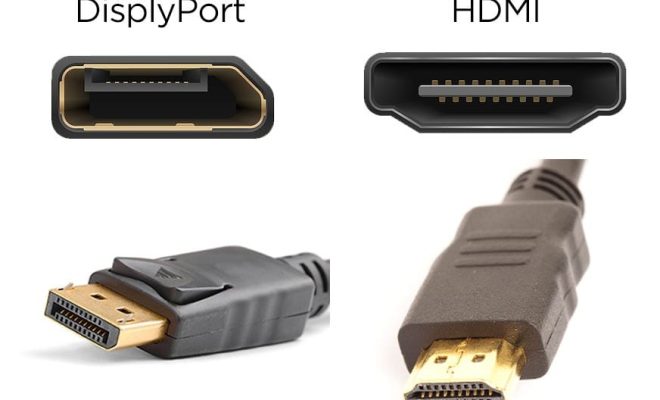
    The Difference Between Converting HDMI to DisplayPort and DisplayPort to HDMI

    June 6, 2023
    By Matthew Lynch
  • Digital & Mobile Technology

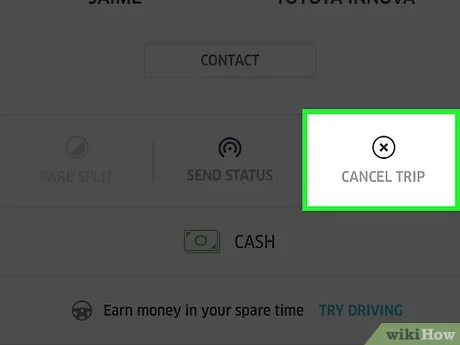
    How to Cancel Uber

    June 12, 2023
    By Matthew Lynch
  • Digital & Mobile Technology

    What Is Waze and How Does It Work?

    June 10, 2023
    By Matthew Lynch

Search

Login & Registration

  • Log in
  • Entries feed
  • Comments feed
  • WordPress.org

Newsletter

Signup for The Tech Edvocate Newsletter and have the latest in EdTech news and opinion delivered to your email address!

About Us

Since technology is not going anywhere and does more good than harm, adapting is the best course of action. That is where The Tech Edvocate comes in. We plan to cover the PreK-12 and Higher Education EdTech sectors and provide our readers with the latest news and opinion on the subject. From time to time, I will invite other voices to weigh in on important issues in EdTech. We hope to provide a well-rounded, multi-faceted look at the past, present, the future of EdTech in the US and internationally.

We started this journey back in June 2016, and we plan to continue it for many more years to come. I hope that you will join us in this discussion of the past, present and future of EdTech and lend your own insight to the issues that are discussed.

Newsletter

Signup for The Tech Edvocate Newsletter and have the latest in EdTech news and opinion delivered to your email address!

Contact Us

The Tech Edvocate
910 Goddin Street
Richmond, VA 23231
(601) 630-5238
[email protected]

Copyright © 2026 Matthew Lynch. All rights reserved.