The Tech Edvocate

Top Menu

  • Advertisement
  • Apps
  • Home Page
  • Home Page Five (No Sidebar)
  • Home Page Four
  • Home Page Three
  • Home Page Two
  • Home Tech2
  • Icons [No Sidebar]
  • Left Sidbear Page
  • Lynch Educational Consulting
  • My Account
  • My Speaking Page
  • Newsletter Sign Up Confirmation
  • Newsletter Unsubscription
  • Our Brands
  • Page Example
  • Privacy Policy
  • Protected Content
  • Register
  • Request a Product Review
  • Shop
  • Shortcodes Examples
  • Signup
  • Start Here
    • Governance
    • Careers
    • Contact Us
  • Terms and Conditions
  • The Edvocate
  • The Tech Edvocate Product Guide
  • Topics
  • Write For Us
  • Advertise

Main Menu

  • Start Here
    • Our Brands
    • Governance
      • Lynch Educational Consulting, LLC.
      • Dr. Lynch’s Personal Website
      • Careers
    • Write For Us
    • The Tech Edvocate Product Guide
    • Contact Us
    • Books
    • Edupedia
    • Post a Job
    • The Edvocate Podcast
    • Terms and Conditions
    • Privacy Policy
  • Topics
    • Assistive Technology
    • Child Development Tech
    • Early Childhood & K-12 EdTech
    • EdTech Futures
    • EdTech News
    • EdTech Policy & Reform
    • EdTech Startups & Businesses
    • Higher Education EdTech
    • Online Learning & eLearning
    • Parent & Family Tech
    • Personalized Learning
    • Product Reviews
  • Advertise
  • Tech Edvocate Awards
  • The Edvocate
  • Pedagogue
  • School Ratings

logo

The Tech Edvocate

  • Start Here
    • Our Brands
    • Governance
      • Lynch Educational Consulting, LLC.
      • Dr. Lynch’s Personal Website
        • My Speaking Page
      • Careers
    • Write For Us
    • The Tech Edvocate Product Guide
    • Contact Us
    • Books
    • Edupedia
    • Post a Job
    • The Edvocate Podcast
    • Terms and Conditions
    • Privacy Policy
  • Topics
    • Assistive Technology
    • Child Development Tech
    • Early Childhood & K-12 EdTech
    • EdTech Futures
    • EdTech News
    • EdTech Policy & Reform
    • EdTech Startups & Businesses
    • Higher Education EdTech
    • Online Learning & eLearning
    • Parent & Family Tech
    • Personalized Learning
    • Product Reviews
  • Advertise
  • Tech Edvocate Awards
  • The Edvocate
  • Pedagogue
  • School Ratings
  • Is AuraCam Pro’s Emotional AI a Privacy Nightmare or Security Breakthrough?

  • Unprecedented: N-able’s Global Shutdown After 30+ Zero-Days Revealed

  • The Urgent Truth: Your AI Tools for Financial Advisors Could Be a Compliance Nightmare

  • Unmasking the Troubling Truth About EU’s Digital Omnibus and Your Data

  • Outrageous: Your US Car Insurance 2026 Bill Is About to Explode – Here’s Why

  • Uncovering the Truth: Are AI Spending Concerns About to Tank Your Portfolio?

  • The Silent Revolution: How AI Property Valuation Is Quietly Reshaping Real Estate

  • The Astonishing Truth: Why Your Dream Car Is Now a $52,000 Illusion

  • Toxic Algorithms: Why Your Bank’s AI Could Cost You Everything

  • OpenAI’s GPT-6 Cyber: A Dangerous New AI Threat or Our Ultimate Digital Guardian?

Digital & Mobile Technology
Home›Digital & Mobile Technology›What Is a Class-D Amplifier, and What Are They Useful For?

What Is a Class-D Amplifier, and What Are They Useful For?
By Matthew Lynch
April 16, 2023
0
Spread the love

A Class-D amplifier, also known as a switching amplifier, is an electronic device that amplifies audio signals using pulse-width modulation (PWM) techniques. Unlike traditional analog amplifiers that use linear voltage and current amplification, Class-D amplifiers use high-frequency switches to convert the input signal into a series of high-speed pulses that are amplified by a low-pass filter. This technique offers several advantages over traditional amplifiers, such as higher efficiency, smaller size, and lower heat dissipation.

Class-D amplifiers are useful for a wide range of audio applications, including consumer electronics, automotive audio, professional audio, and public address systems. One of the primary benefits of Class-D amplifiers is their high efficiency, which means that they require less power to deliver the same output as traditional amplifiers. This makes them ideal for portable devices such as smartphones, tablets, and portable speakers, as well as battery-powered devices such as electric scooters, e-bikes, and drones.

Another advantage of Class-D amplifiers is their small size and weight. Since they use high-frequency switching to amplify the audio signal, they can be designed with fewer components than traditional amplifiers, without sacrificing performance. This makes them ideal for applications where space and weight are critical factors, such as automotive audio and professional audio systems.

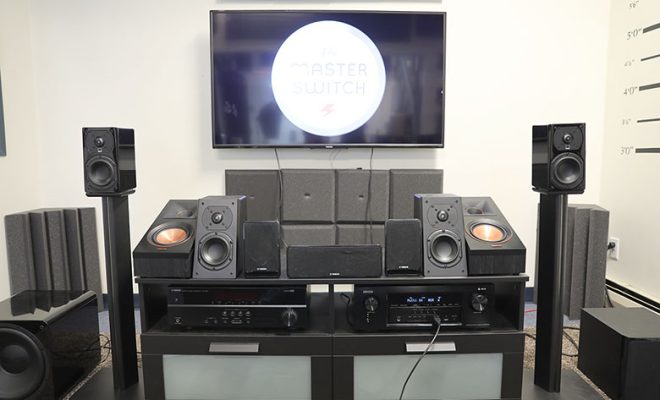
Class-D amplifiers are also known for their low heat dissipation, which reduces the need for bulky heatsinks and allows them to be mounted in tight spaces without overheating. This makes them ideal for applications where space and airflow are limited, such as audio amps built into home theater systems. Additionally, some Class-D amplifiers include advanced thermal management features such as thermal shutdown, which protects the system from overheating and damage.

Overall, Class-D amplifiers offer numerous advantages over traditional amplifiers, including high efficiency, small size, low heat dissipation, and advanced features. Whether you’re designing a high-end home theater system or a portable audio device, a Class-D amplifier is an excellent choice for delivering high-quality audio with minimal power consumption and space requirements.


Previous Article

What is a Circuit Tester?

Next Article

What is a Client (in SAP)?

Matthew Lynch

Related articles More from author

  • Digital & Mobile Technology

    A Beginner’s Guide to Mobile Apps

    June 8, 2023
    By Matthew Lynch
  • Digital & Mobile Technology

    How to Get Started With Meta’s Quest Browser

    June 30, 2023
    By Matthew Lynch
  • Digital & Mobile Technology

    What Does DTB Mean When Texting?

    June 7, 2023
    By Matthew Lynch
  • Digital & Mobile Technology

    Consider these 5 factors of DCI technology

    April 12, 2023
    By Matthew Lynch
  • Digital & Mobile Technology

    How to Install and Manage Fonts in Windows

    April 27, 2023
    By Matthew Lynch
  • Digital & Mobile Technology

    How to Burn Any Video File to a Playable Blu-Ray Disc

    May 19, 2023
    By Matthew Lynch

Search

Login & Registration

  • Log in
  • Entries feed
  • Comments feed
  • WordPress.org

Newsletter

Signup for The Tech Edvocate Newsletter and have the latest in EdTech news and opinion delivered to your email address!

About Us

Since technology is not going anywhere and does more good than harm, adapting is the best course of action. That is where The Tech Edvocate comes in. We plan to cover the PreK-12 and Higher Education EdTech sectors and provide our readers with the latest news and opinion on the subject. From time to time, I will invite other voices to weigh in on important issues in EdTech. We hope to provide a well-rounded, multi-faceted look at the past, present, the future of EdTech in the US and internationally.

We started this journey back in June 2016, and we plan to continue it for many more years to come. I hope that you will join us in this discussion of the past, present and future of EdTech and lend your own insight to the issues that are discussed.

Newsletter

Signup for The Tech Edvocate Newsletter and have the latest in EdTech news and opinion delivered to your email address!

Contact Us

The Tech Edvocate
910 Goddin Street
Richmond, VA 23231
(601) 630-5238
[email protected]

Copyright © 2026 Matthew Lynch. All rights reserved.