The Tech Edvocate

Top Menu

  • Advertisement
  • Apps
  • Home Page
  • Home Page Five (No Sidebar)
  • Home Page Four
  • Home Page Three
  • Home Page Two
  • Home Tech2
  • Icons [No Sidebar]
  • Left Sidbear Page
  • Lynch Educational Consulting
  • My Account
  • My Speaking Page
  • Newsletter Sign Up Confirmation
  • Newsletter Unsubscription
  • Our Brands
  • Page Example
  • Privacy Policy
  • Protected Content
  • Register
  • Request a Product Review
  • Shop
  • Shortcodes Examples
  • Signup
  • Start Here
    • Governance
    • Careers
    • Contact Us
  • Terms and Conditions
  • The Edvocate
  • The Tech Edvocate Product Guide
  • Topics
  • Write For Us
  • Advertise

Main Menu

  • Start Here
    • Our Brands
    • Governance
      • Lynch Educational Consulting, LLC.
      • Dr. Lynch’s Personal Website
      • Careers
    • Write For Us
    • The Tech Edvocate Product Guide
    • Contact Us
    • Books
    • Edupedia
    • Post a Job
    • The Edvocate Podcast
    • Terms and Conditions
    • Privacy Policy
  • Topics
    • Assistive Technology
    • Child Development Tech
    • Early Childhood & K-12 EdTech
    • EdTech Futures
    • EdTech News
    • EdTech Policy & Reform
    • EdTech Startups & Businesses
    • Higher Education EdTech
    • Online Learning & eLearning
    • Parent & Family Tech
    • Personalized Learning
    • Product Reviews
  • Advertise
  • Tech Edvocate Awards
  • The Edvocate
  • Pedagogue
  • School Ratings

logo

The Tech Edvocate

  • Start Here
    • Our Brands
    • Governance
      • Lynch Educational Consulting, LLC.
      • Dr. Lynch’s Personal Website
        • My Speaking Page
      • Careers
    • Write For Us
    • The Tech Edvocate Product Guide
    • Contact Us
    • Books
    • Edupedia
    • Post a Job
    • The Edvocate Podcast
    • Terms and Conditions
    • Privacy Policy
  • Topics
    • Assistive Technology
    • Child Development Tech
    • Early Childhood & K-12 EdTech
    • EdTech Futures
    • EdTech News
    • EdTech Policy & Reform
    • EdTech Startups & Businesses
    • Higher Education EdTech
    • Online Learning & eLearning
    • Parent & Family Tech
    • Personalized Learning
    • Product Reviews
  • Advertise
  • Tech Edvocate Awards
  • The Edvocate
  • Pedagogue
  • School Ratings
  • Innovative Cybersecurity Solutions Launched to Bolster Threat Detection and Response

  • US Economy Faces Headwinds as Growth Slows to 0.5% in Q4 2025

  • Mortgage Rates Dip Slightly Amid Economic Uncertainty: What Homebuyers Need to Know

  • U.S. Inflation Data and Global Economic Insights: April 2026 Overview

  • Rising AI Compute Prices Signal Challenges for Startups in China

  • Revolutionizing Startup Funding: Michigan’s AI-Driven Pitch Competition Offers $50,000 Prize

  • Boosting Local Economies: Japan’s Local 10,000 Project Empowers Community-Focused Startups

  • ShengShu Technology Secures $293 Million to Propel Artificial General Intelligence Development

  • Serve First Raises €5.7 Million to Expand AI-Powered Customer Experience Platform Across Europe and Beyond

  • Nexans Proposes Significant Amendments to Corporate Bylaws Ahead of Shareholder Vote

Digital & Mobile Technology
Home›Digital & Mobile Technology›What Does Modem Stand For?

What Does Modem Stand For?
By Matthew Lynch
June 13, 2023
0
Spread the love

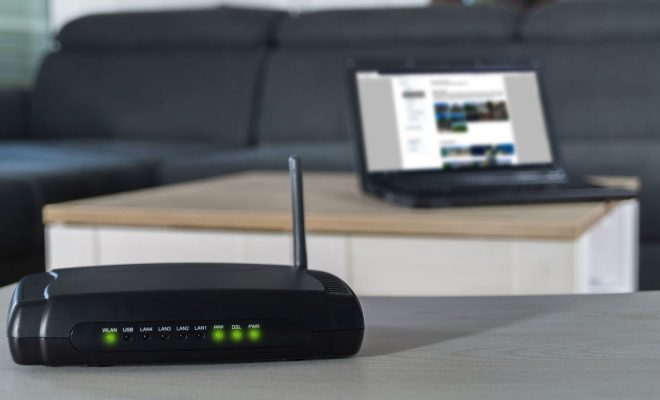
Modem is a word frequently heard when dealing with internet connectivity or computer networks. It is an essential device for sending and receiving data signals between two different networks, such as a computer network on one hand and the internet on the other. But what does modem stand for and how does it work?

Modem stands for Modulate and Demodulate. It is used to modulate digital data into analog signals for transmission over a telephone line or cable connection, and then to demodulate the analog signals back into digital data at the receiving end. In simpler terms, a modem takes digital signals from a computer and converts them into analog signals that can travel over telephone lines.

There are various types of modems available in the market, each with its own unique features. Dial-up Modems are considered the most basic type of modem. They are used to connect to the internet through a phone line and are much slower compared to other types of modems. DSL (Digital Subscriber Line) modems are used to access the internet through phone lines as well, but offer faster speeds compared to dial-up modems. Cable modems, on the other hand, use coaxial cables to connect to the internet and offer even faster speeds.

The process that occurs during modulating and demodulating is a series of complex processes. In simple terms, when a user sends a digital signal through a modem, the modem transforms the information into analog signals. These analog waves travel through the phone lines or cable connections between the sending device and the receiving device. At the receiving end, the modem then demodulates the analog signals, turning them back into digital signals that can be interpreted and understood by the computer.

Modems have played a vital role in transforming the way we access and use the internet. One of the most significant advantages of using modems is that they enable us to send and receive data over long distances. Without modems, we would not be able to communicate with people who live far away from us. In addition, modems have been instrumental in making the internet accessible to people all over the world, by allowing us to establish connections with remote servers and online resources. Modems have also paved the way for technologies like high-speed internet and wireless connectivity.

In conclusion, Modem stands for Modulate and Demodulate. It is a device that helps in sending and receiving data signals between two different networks and has revolutionized the way we access and use the internet. Modems have come a long way since their inception and continue to play a significant role in the world of technology. So the next time you hear the word modem, you will know exactly what it stands for and how it works. 

Previous Article

10 Common Dorm Room Tech Troubles & ...

Next Article

How to Save Your Gmail Chat History

Matthew Lynch

Related articles More from author

  • Digital & Mobile Technology

    Brother MFC-J985DW Printer Review

    July 6, 2023
    By Matthew Lynch
  • Digital & Mobile Technology

    How to Exit Full Screen on Google Chrome

    May 28, 2023
    By Matthew Lynch
  • Digital & Mobile Technology

    Google Nest Hub vs. Nest Hub Max: What Are the Differences?

    June 15, 2023
    By Matthew Lynch
  • Digital & Mobile Technology

    Does the iPad Have a Microphone?

    June 6, 2023
    By Matthew Lynch
  • Digital & Mobile Technology

    What to Do If Your Wii Is Unable to Read a Disc

    June 1, 2023
    By Matthew Lynch
  • Digital & Mobile Technology

    Best Free News Apps for Android and iOS

    August 5, 2023
    By Matthew Lynch

Search

Login & Registration

  • Register
  • Log in
  • Entries feed
  • Comments feed
  • WordPress.org

Newsletter

Signup for The Tech Edvocate Newsletter and have the latest in EdTech news and opinion delivered to your email address!

About Us

Since technology is not going anywhere and does more good than harm, adapting is the best course of action. That is where The Tech Edvocate comes in. We plan to cover the PreK-12 and Higher Education EdTech sectors and provide our readers with the latest news and opinion on the subject. From time to time, I will invite other voices to weigh in on important issues in EdTech. We hope to provide a well-rounded, multi-faceted look at the past, present, the future of EdTech in the US and internationally.

We started this journey back in June 2016, and we plan to continue it for many more years to come. I hope that you will join us in this discussion of the past, present and future of EdTech and lend your own insight to the issues that are discussed.

Newsletter

Signup for The Tech Edvocate Newsletter and have the latest in EdTech news and opinion delivered to your email address!

Contact Us

The Tech Edvocate
910 Goddin Street
Richmond, VA 23231
(601) 630-5238
[email protected]

Copyright © 2025 Matthew Lynch. All rights reserved.