The Tech Edvocate

Top Menu

  • Advertisement
  • Apps
  • Home Page
  • Home Page Five (No Sidebar)
  • Home Page Four
  • Home Page Three
  • Home Page Two
  • Home Tech2
  • Icons [No Sidebar]
  • Left Sidbear Page
  • Lynch Educational Consulting
  • My Account
  • My Speaking Page
  • Newsletter Sign Up Confirmation
  • Newsletter Unsubscription
  • Our Brands
  • Page Example
  • Privacy Policy
  • Protected Content
  • Register
  • Request a Product Review
  • Shop
  • Shortcodes Examples
  • Signup
  • Start Here
    • Governance
    • Careers
    • Contact Us
  • Terms and Conditions
  • The Edvocate
  • The Tech Edvocate Product Guide
  • Topics
  • Write For Us
  • Advertise

Main Menu

  • Start Here
    • Our Brands
    • Governance
      • Lynch Educational Consulting, LLC.
      • Dr. Lynch’s Personal Website
      • Careers
    • Write For Us
    • The Tech Edvocate Product Guide
    • Contact Us
    • Books
    • Edupedia
    • Post a Job
    • The Edvocate Podcast
    • Terms and Conditions
    • Privacy Policy
  • Topics
    • Assistive Technology
    • Child Development Tech
    • Early Childhood & K-12 EdTech
    • EdTech Futures
    • EdTech News
    • EdTech Policy & Reform
    • EdTech Startups & Businesses
    • Higher Education EdTech
    • Online Learning & eLearning
    • Parent & Family Tech
    • Personalized Learning
    • Product Reviews
  • Advertise
  • Tech Edvocate Awards
  • The Edvocate
  • Pedagogue
  • School Ratings

logo

The Tech Edvocate

  • Start Here
    • Our Brands
    • Governance
      • Lynch Educational Consulting, LLC.
      • Dr. Lynch’s Personal Website
        • My Speaking Page
      • Careers
    • Write For Us
    • The Tech Edvocate Product Guide
    • Contact Us
    • Books
    • Edupedia
    • Post a Job
    • The Edvocate Podcast
    • Terms and Conditions
    • Privacy Policy
  • Topics
    • Assistive Technology
    • Child Development Tech
    • Early Childhood & K-12 EdTech
    • EdTech Futures
    • EdTech News
    • EdTech Policy & Reform
    • EdTech Startups & Businesses
    • Higher Education EdTech
    • Online Learning & eLearning
    • Parent & Family Tech
    • Personalized Learning
    • Product Reviews
  • Advertise
  • Tech Edvocate Awards
  • The Edvocate
  • Pedagogue
  • School Ratings
  • 100 Best Resource Management Apps

  • The Startling Truth About Viral Weight Loss Drugs You Need to Know

  • 57% Failure Rate: The Unsettling Truth About AI Financial Advice You Need to Know

  • AI’s Quiet Takeover: 179,542 Tech Layoffs 2023 Signal a Troubling Future

  • The Billion-Dollar Race: Why U.S. Tech Giants Are Scrambling for Israeli Startups

  • The Secret Way Activision Blizzard May Be Exploiting Kids for Millions

  • This One AI Change Could Cost You Thousands in Medical Bills

  • The Billion-Dollar AI Learning Boom: Why Experts Are Sounding the Alarm

  • Your Student Loans Just Got a Massive Overhaul — Here’s What It Means For Your Future

  • Identity Theft Nightmare: Johnson Investment Counsel Data Breach Exposes SSNs

Digital & Mobile Technology
Home›Digital & Mobile Technology›What Are Load Balancing Methods?

What Are Load Balancing Methods?
By Matthew Lynch
April 15, 2023
0
Spread the love

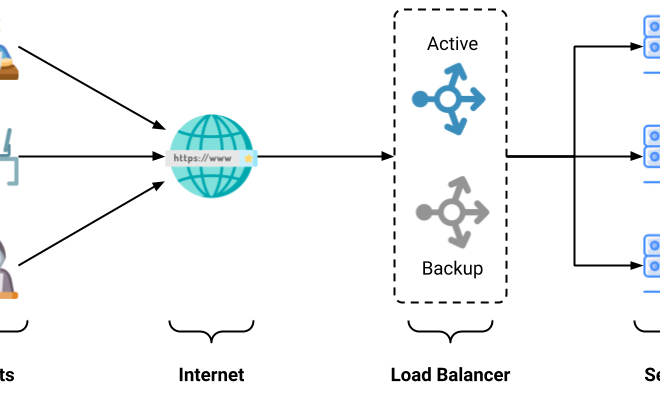
Load balancing is an essential technique used to distribute workloads across multiple computing resources. With the growing demand for high-availability and high-performance systems, load balancing has become a crucial component in modern-day infrastructure. Various load balancing methods are available, each designed to suit different use-cases and requirements. In this article, we will discuss some of the most common load balancing methods.

1. Round-robin Load Balancing

Round-robin load balancing is one of the simplest and most commonly used methods. In this method, requests are distributed equally across all available servers. The load balancer routes the first request to the first server in the list, the second request to the second server, and so on. Once it reaches the end of the list, it starts again from the beginning. This method helps to balance the workload across all servers, irrespective of their capacity.

2. Least Connections Load Balancing

Least connections load balancing is another popular method that directs incoming requests to the server with the fewest active connections. The load balancer monitors each server’s connection count and routes new requests to the server with the lowest connection count. This method ensures that no single server becomes overloaded with traffic at any given time, making it ideal for applications that require high availability.

3. IP Hash Load Balancing

IP Hash Load Balancing is a method that uses the client’s source IP address to determine which server to route traffic to. The load balancer calculates a hash value based on the client’s IP address and then sends the request to the server associated with that hash. This technique ensures that all requests from the same client are sent to the same server consistently. This method is particularly useful for applications that require session persistence.

4. Weighted Load Balancing

Weighted load balancing is a method that assigns a weight to each server. The servers with higher weights receive more traffic than servers with lower weights. This method is useful when some servers have a higher capacity or are more powerful than others. Weighted load balancing helps to balance the workload across the servers while taking individual server capacity into account.

Conclusion

Load balancing is a critical infrastructure component that helps to ensure high-availability, performance, and scalability of distributed systems. Each load balancing method has its unique strengths and limitations, and choosing the right one depends on your specific use-case and requirements. Understanding the various load balancing methods can help you build a robust, scalable, and high-performing architecture for your application or system.


Previous Article

What Are In-Ear Monitors, and Who Should ...

Next Article

What Are Managed Network Security Services?

Matthew Lynch

Related articles More from author

  • Digital & Mobile Technology

    What Equipment Do You Need to Start a YouTube Channel?

    June 14, 2023
    By Matthew Lynch
  • Digital & Mobile Technology

    How to Set Up an Alarm on Fitbit

    July 14, 2023
    By Matthew Lynch
  • Digital & Mobile Technology

    Understanding the Differences Between TCP and UDP

    July 24, 2023
    By Matthew Lynch
  • Digital & Mobile Technology

    How to Choose the Right Streaming Service for You

    August 2, 2023
    By Matthew Lynch
  • Digital & Mobile Technology

    EaseUS Data Recovery Wizard v16

    June 10, 2023
    By Matthew Lynch
  • Digital & Mobile Technology

    How to Fix the YouTube Audio Renderer Error on Windows

    August 5, 2023
    By Matthew Lynch

Search

Login & Registration

  • Log in
  • Entries feed
  • Comments feed
  • WordPress.org

Newsletter

Signup for The Tech Edvocate Newsletter and have the latest in EdTech news and opinion delivered to your email address!

About Us

Since technology is not going anywhere and does more good than harm, adapting is the best course of action. That is where The Tech Edvocate comes in. We plan to cover the PreK-12 and Higher Education EdTech sectors and provide our readers with the latest news and opinion on the subject. From time to time, I will invite other voices to weigh in on important issues in EdTech. We hope to provide a well-rounded, multi-faceted look at the past, present, the future of EdTech in the US and internationally.

We started this journey back in June 2016, and we plan to continue it for many more years to come. I hope that you will join us in this discussion of the past, present and future of EdTech and lend your own insight to the issues that are discussed.

Newsletter

Signup for The Tech Edvocate Newsletter and have the latest in EdTech news and opinion delivered to your email address!

Contact Us

The Tech Edvocate
910 Goddin Street
Richmond, VA 23231
(601) 630-5238
[email protected]

Copyright © 2026 Matthew Lynch. All rights reserved.