Was the SpaceX Starship Launch 13 a Catastrophic Failure or a Brilliant Feat?
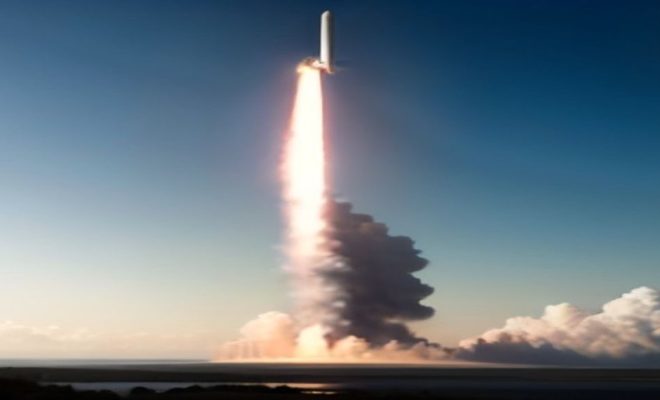
The whispers started almost immediately. Then came the shouts across social media, followed by the measured, yet deeply divided, analyses from space industry experts. SpaceX’s 13th Starship test flight, which blasted off on August 1, 2026, wasn’t just another launch; it was a Rorschach test for how we view progress in the new space age. Did it succeed, or did it spectacularly fail? The answer, as with most things involving Elon Musk’s ambitious rocket company, isn’t a simple ‘yes’ or ‘no.’ A thorough SpaceX Starship Launch 13 review reveals a complex tapestry of engineering triumphs and very public, very dramatic setbacks.
On one hand, the mission failed to achieve its primary objective: orbital insertion. The Super Heavy booster, the colossal first stage designed to propel Starship skyward, experienced what SpaceX diplomatically termed a ‘hard splashdown.’ This wasn’t a gentle, controlled return and landing; it was a fiery, uncontrolled descent into the Gulf of Mexico, triggered by multiple engine failures. For many, this alone was enough to brand the entire endeavor a failure. After all, what’s a rocket for if it can’t reach orbit?
Yet, the story doesn’t end there. In a truly audacious move, even as the Super Heavy booster was tumbling back to Earth, the Starship upper stage managed to deploy 20 functional Starlink V3 satellites. This wasn’t just a minor detail; it was a monumental achievement for SpaceX’s most critical revenue stream, its Starlink constellation. These next-generation satellites, though ultimately destined to burn up in the atmosphere due to the lack of orbital insertion, represented a vital step forward for Starlink’s future capacity. They worked. They communicated. They proved the deployment mechanism for a new generation of hardware. So, how do we weigh a hard splashdown against a successful, albeit temporary, satellite deployment?
This controversial outcome, coming on the heels of SpaceX’s record-breaking IPO in June 2026 – which hauled in an astonishing $86 billion – has fueled an unprecedented level of social media chatter and investor scrutiny. It’s a snapshot of the burgeoning space economy, where the lines between engineering marvel and financial gamble are increasingly blurred. Understanding the implications of this launch means looking beyond the immediate explosion or the temporary success; it means diving deep into what it tells us about SpaceX, its rivals, and the future of human expansion into the cosmos.
The Dual Nature of Success: Starship’s Bold Objective and Ultimate Trajectory
Every Starship launch, by its very nature, is a high-stakes gamble. SpaceX isn’t just building a bigger rocket; they’re attempting to create a fully reusable, rapidly deployable system capable of ferrying humans and vast quantities of cargo to the Moon, Mars, and beyond. This isn’t incremental innovation; it’s a paradigm shift. The objective for Launch 13 was clear: achieve orbit, prove the integrated flight system, and deploy critical Starlink hardware. From that perspective, the mission fell short, significantly. The Super Heavy booster, a marvel of engineering in its own right, suffered what appears to be a cascade of engine issues that ultimately led to its uncontrolled demise.
Initial telemetry data, later corroborated by eyewitness accounts and photographic evidence, indicated multiple Raptor engine shutdowns during the ascent phase. While some engine failures are accounted for in the design of such a complex vehicle, the sheer number on this flight evidently exceeded the booster’s ability to compensate. This triggered an autonomous flight termination sequence, albeit one that resulted in a ballistic trajectory and an uncontrolled impact rather than a planned return-to-launch-site or even a controlled ocean splashdown. For a company that prides itself on reusability, this was a stark reminder of the immense challenges involved in landing such a massive first stage.
However, the narrative isn’t purely one of failure. While the booster was struggling, the Starship upper stage, carrying its precious Starlink cargo, continued its flight. It separated from the failing booster, performed its necessary maneuvers, and, critically, successfully deployed its payload of 20 Starlink V3 satellites. This wasn’t just a lucky jettison; it was a deliberate, controlled deployment sequence, demonstrating the Starship’s ability to act as a satellite dispenser. For a few brief hours, these satellites were operational, communicating with ground stations, and proving the viability of the next-generation Starlink design. This achievement, often overshadowed by the booster’s dramatic end, is a testament to the robust design and autonomous capabilities of the Starship upper stage.
The Starlink V3 Deployment: A Crucial Win Amidst Booster Troubles
Let’s be clear: the deployment of 20 functional Starlink V3 satellites was not a consolation prize; it was a genuinely significant technical accomplishment. These aren’t just any satellites; the V3 generation promises vastly increased throughput, lower latency, and greater capacity for the Starlink network. Each iteration of Starlink satellites represents a leap forward in global internet connectivity, and the V3s are designed to meet the ever-growing demand for high-speed, low-latency broadband in underserved areas and for specialized applications like maritime and aviation.
Despite the lack of orbital insertion, the fact that these satellites successfully deployed, powered on, and established communication links is invaluable. It validates the design of the Starlink V3 hardware, the deployment mechanism within Starship, and the overall integration between the two systems. Think about it: even as the primary mission objective of orbital flight for the Starship stack was compromised, the secondary, yet commercially vital, objective of satellite deployment was met with flying colors. This provides SpaceX with crucial data on satellite performance, thermal management during deployment, and initial communication protocols – all without the full cost and risk of a dedicated, fully successful orbital flight. (See: SpaceX Starship overview.)
Of course, the bittersweet reality is that without achieving stable orbit, these satellites were doomed to a fiery re-entry. They became expensive, fleeting proof-of-concept units rather than long-term assets. Yet, for engineers and investors alike, this successful deployment offers a tangible glimmer of what Starship can ultimately achieve. It’s a powerful signal that the core capability of delivering payload is sound, even if the delivery vehicle itself needs more refinement. This is why, despite the visible failure of the booster, many within the industry view the Starlink V3 deployment as a critical step forward, providing invaluable data for future, fully successful missions. For more context, see how to set due dates Trello iOS.
IPO Buzz and Investor Expectations: The $86 Billion Question
The timing of Starship Launch 13 couldn’t have been more impactful, coming just weeks after SpaceX’s monumental IPO in June 2026. This public offering, which raised an astounding $86 billion, wasn’t just a financial transaction; it was a declaration of intent, signaling investor confidence in SpaceX’s long-term vision and its dominant position in the burgeoning space economy. That kind of capital injection naturally brings with it intense scrutiny. Investors, now holding a direct stake, are watching every launch, every test, and every piece of news with a magnifying glass.
The immediate market reaction to the SpaceX Starship Launch 13 review was, predictably, mixed. While some analysts focused on the technical achievements, particularly the Starlink deployment, others honed in on the dramatic booster failure. Short-term stock fluctuations are almost a given with such high-profile, high-risk ventures. However, for long-term investors, the picture is more nuanced. The IPO capital is earmarked for ambitious projects: scaling Starship production, expanding the Starlink constellation, and developing lunar and Martian infrastructure. A single test flight, even one with significant issues, is unlikely to derail these plans entirely, but it certainly adds pressure.
What this launch really highlighted for investors is the inherent volatility of space investment. It’s not a steady growth sector like traditional tech; it’s an industry built on cutting-edge engineering, audacious goals, and the very real possibility of dramatic, public failures. The $86 billion raised speaks to the immense belief in SpaceX’s potential, but that belief is constantly being tested by the realities of rocket science. The challenge for SpaceX now is to manage these expectations, demonstrating consistent progress and learning from each setback, all while justifying that colossal valuation to its new cohort of public shareholders.
The Broader Space Economy: A Rising Tide Lifts All Rockets?
The impact of SpaceX’s IPO and the subsequent Starship Launch 13 reverberated far beyond Hawthorne, California. The sheer scale of the IPO, nearly doubling global space investment in Q1 2026 to an impressive $8 billion, has fundamentally reshaped the investment landscape for the entire space sector. This isn’t just about SpaceX; it’s about the confidence it instills in the market for other space startups and established players alike. When a company like SpaceX can command an $86 billion public offering, it signals to venture capitalists and institutional investors that the ‘space race’ investment theme is not just hype, but a legitimate, high-growth opportunity.
Suddenly, companies like Rocket Lab, which specializes in smaller, dedicated launch vehicles and satellite manufacturing, find themselves in a more favorable investment climate. The capital is flowing, and investors are actively seeking to capitalize on the burgeoning space economy, looking for the next big thing in satellite internet, in-space manufacturing, asteroid mining, and lunar logistics. This rising tide lifts many boats, providing crucial funding for innovation across the board. While a Starship setback might cause a momentary tremor, the overall trend is toward increased investment and accelerated development.
This dynamic creates a fascinating competitive environment. While SpaceX dominates headlines with its ambitious endeavors, the increased capital allows other companies to refine their niches, develop competing technologies, and contribute to the broader ecosystem. It’s not a zero-sum game; a more vibrant, better-funded space industry benefits everyone in the long run. The SpaceX Starship Launch 13 review, therefore, isn’t just about one company’s performance; it’s a barometer for the health and trajectory of an entire industry that’s rapidly gaining momentum.
Comparing the Titans: SpaceX vs. Rocket Lab in the Investor’s Portfolio
For investors eyeing the space sector, the conversation often boils down to a comparison between the industry giants and the agile innovators. SpaceX, with its Starship and Starlink, represents the audacious, large-scale, vertically integrated behemoth. Rocket Lab, on the other hand, embodies a more focused, precision-oriented approach, excelling in small satellite launch with its Electron rocket and expanding into satellite manufacturing with its Neutron rocket under development. Both offer compelling investment theses, but they cater to different risk appetites and market segments.
SpaceX, post-IPO, offers exposure to a company aiming for interstellar travel and global internet dominance. Its potential upside is enormous, but so are the risks, as evidenced by the Starship Launch 13. Investing in SpaceX means buying into a vision that is still very much in its early, experimental stages, albeit one with proven successes like Falcon 9 and Starlink. It’s a play on the truly transformative, multi-planetary future. (See: NASA's partnership with SpaceX.) We covered the recent launch failure in more detail.
Rocket Lab, by contrast, offers a more diversified and arguably less volatile entry point into the space market. They have a reliable, operational launch vehicle in Electron, a strong track record of successful missions, and a clear path to expanding their capabilities with Neutron for medium-lift missions and their growing satellite components business. For investors seeking a company with established revenue streams and a more incremental, yet consistent, growth trajectory, Rocket Lab presents a compelling alternative. It’s a play on the immediate, tangible needs of the satellite industry and the increasing demand for dedicated, flexible launch services.
Ultimately, a savvy investor might consider both. SpaceX offers the high-risk, high-reward potential of a true disruptor aiming for the stars, while Rocket Lab provides a more grounded, yet equally innovative, approach to the commercialization of space. The Starship Launch 13 serves as a stark reminder of the inherent volatility in the former, making the steady progress of companies like Rocket Lab even more appealing to certain investor profiles. For more context, see how to use power-ups on Trello iOS.
The Commercial Implications of Satellite Internet: Starlink’s Dominance
Regardless of the Starship’s immediate orbital woes, the underlying commercial engine of Starlink continues to roar. The successful deployment of the V3 satellites, even into a sub-orbital trajectory, underscores the relentless pace of development for SpaceX’s satellite internet division. Starlink isn’t just a side project; it’s SpaceX’s primary revenue stream and a critical component of its long-term financial viability. The demand for reliable, high-speed internet, especially in remote or underserved areas, is immense and growing.
Starlink’s competitive advantage lies in its low Earth orbit (LEO) constellation, which offers significantly lower latency compared to traditional geostationary satellite internet providers. This makes it suitable not just for basic browsing but for gaming, video conferencing, and other latency-sensitive applications. The V3 satellites are designed to push these capabilities even further, enhancing capacity and reducing the cost per bit. Every successful deployment, even a partial one like on Launch 13, gathers invaluable data that informs future design iterations and operational strategies.
The commercial implications extend beyond direct subscriptions. Starlink is increasingly being adopted by enterprises, governments, and even military organizations for its robust and resilient connectivity. This diversified customer base provides a strong foundation for future growth. While the Starship launch had its dramatic moments, the underlying business of Starlink continued its march forward, demonstrating that SpaceX is building a two-pronged empire: one focused on revolutionary transportation, and the other on essential global connectivity. The SpaceX Starship Launch 13 review, therefore, must acknowledge the undeniable progress in the Starlink ecosystem, even as the launch vehicle itself faced challenges.
In-Space Manufacturing and the Future: Beyond Launch
While the focus of the Starship Launch 13 was on getting to orbit and deploying satellites, the larger vision for Starship extends far beyond simply launching payloads. It’s intrinsically linked to the future of in-space manufacturing, resource utilization, and ultimately, building permanent human settlements off-world. Starship is designed to be a heavy-lift, fully reusable platform capable of delivering vast quantities of materials, equipment, and even entire fabrication units into orbit, to the Moon, and to Mars.
In-space manufacturing is a game-changer because it reduces the reliance on expensive and complex Earth-based supply chains. Imagine printing spare parts for a lunar base on demand, or constructing large orbital structures from raw materials extracted from asteroids. Starship is the envisioned workhorse for this revolution. Its massive payload capacity means it could carry the initial industrial infrastructure – 3D printers, robotic assemblers, material processing units – needed to kickstart extraterrestrial economies.
Every Starship test flight, even one with a ‘hard splashdown,’ provides data that informs this grander vision. The stresses, vibrations, and thermal profiles experienced during ascent and separation are crucial for designing structures and equipment that can withstand the rigors of launch and operate reliably in space. While Launch 13 didn’t carry manufacturing modules, its performance contributes to the overall engineering knowledge base that will enable such missions in the future. The setbacks are part of the learning curve for a technology that aims to fundamentally alter humanity’s relationship with space.
Lessons Learned and the Road Ahead for Starship
No test flight, especially for a vehicle as complex and ambitious as Starship, is ever a complete failure if valuable lessons are learned. And Launch 13 certainly provided a wealth of data, both positive and negative. The primary takeaway from the booster’s ‘hard splashdown’ is the need for enhanced engine reliability and redundancy. While Raptor engines are incredibly powerful and innovative, the multiple failures suggest that further refinement in manufacturing, quality control, or operational parameters is required. SpaceX engineers will undoubtedly be poring over every byte of telemetry from the Super Heavy to pinpoint the exact causes of the shutdowns and implement robust solutions.
On the Starship upper stage side, the success of the Starlink V3 deployment provides strong validation. This means the fundamental design for payload integration and deployment is sound. Future efforts can now focus on perfecting orbital insertion burns, re-entry profiles, and the precise, controlled landing of the Starship vehicle itself. Each of these steps is a monumental engineering challenge, but the modular testing approach allows SpaceX to tackle them incrementally.
The road ahead for Starship will involve more test flights, more iterative improvements, and almost certainly, more public setbacks. That’s the nature of developing truly groundbreaking technology. SpaceX operates under a ‘rapid iterative development’ philosophy, where failures are seen as learning opportunities rather than terminal events. The $86 billion IPO capital gives them the financial runway to continue this aggressive development. The question isn’t if Starship will eventually achieve its goals, but when, and how many dramatic learning experiences it will take to get there. The SpaceX Starship Launch 13 review is just one chapter in this ongoing, thrilling, and often turbulent saga. Related reading: Elon Musk's ambitious mission.
The Enduring Vision: Why Starship Matters Beyond Launch 13
It’s easy to get caught up in the immediate drama of a rocket launch – the spectacular ascent, the fiery plumes, and the sometimes equally dramatic failures. But to truly understand the significance of Starship, one must look beyond the immediate results of any single test flight. Starship represents humanity’s most ambitious attempt to become a multi-planetary species. It’s the vehicle designed to make Mars colonization a reality, to establish permanent lunar bases, and to fundamentally change how we access and utilize space. This isn’t just about launching satellites; it’s about expanding the very boundaries of human civilization.
The vision behind Starship is what continues to attract immense talent, capital, and public attention, even in the face of setbacks like those seen on Launch 13. Elon Musk’s relentless pursuit of this vision, combined with SpaceX’s proven ability to innovate and execute, keeps the world watching. The company has a track record of overcoming seemingly insurmountable challenges, from the early days of Falcon 1 failures to perfecting Falcon 9 reusability. Starship is just the latest, and most ambitious, iteration of this pattern.
So, was Starship Launch 13 a success or a setback? It was, in true SpaceX fashion, both. It was a setback in terms of orbital achievement and booster recovery, highlighting areas that absolutely need improvement. But it was also a significant success in terms of Starlink V3 deployment, proving critical payload integration and functionality. More importantly, it was a vital learning experience, providing invaluable data that will directly inform the next iteration of Starship’s development. For a company that thrives on pushing boundaries and learning from its experiments, even a ‘hard splashdown’ is just another step on the long, arduous, but ultimately exhilarating journey to the stars. The real success of Starship won’t be measured by a single launch, but by its eventual ability to open up the solar system for humanity.
Trending Now
Frequently Asked Questions
What happened during the SpaceX Starship Launch 13?
SpaceX's Starship Launch 13, which took place on August 1, 2026, faced a significant setback when the Super Heavy booster experienced a 'hard splashdown' instead of achieving orbital insertion. Despite this, the Starship upper stage successfully deployed 20 functional Starlink V3 satellites, highlighting a mixed outcome for the mission.
Was SpaceX Launch 13 a failure?
While SpaceX Launch 13 did not achieve its primary goal of orbital insertion, many experts argue that it showcased significant advancements. The successful deployment of 20 Starlink satellites, despite their eventual destruction, indicates progress in satellite technology and operational capabilities, complicating the narrative of failure.
What does a 'hard splashdown' mean?
'Hard splashdown' refers to an uncontrolled and fiery descent of a rocket stage into water, as experienced by the Super Heavy booster during the Starship Launch 13. This occurs when multiple engine failures prevent a controlled landing, leading to a dramatic and destructive return to Earth.
How did Starlink satellites perform during Launch 13?
During SpaceX's Launch 13, the Starship upper stage successfully deployed 20 Starlink V3 satellites, which communicated effectively and proved the deployment mechanism. However, these satellites ultimately burned up in the atmosphere due to the failure to achieve orbital insertion, marking a temporary success within an overall challenging mission.
What does SpaceX's Launch 13 mean for the future of space exploration?
The mixed results of SpaceX's Launch 13 suggest that while challenges remain, advancements in satellite technology and deployment mechanisms are being made. The successful deployment of Starlink satellites may pave the way for future missions, indicating that progress in the space industry can be multifaceted, even amid failures.
Agree or disagree? Drop a comment and tell us what you think.