The Tech Edvocate

Top Menu

  • Advertisement
  • Apps
  • Home Page
  • Home Page Five (No Sidebar)
  • Home Page Four
  • Home Page Three
  • Home Page Two
  • Home Tech2
  • Icons [No Sidebar]
  • Left Sidbear Page
  • Lynch Educational Consulting
  • My Account
  • My Speaking Page
  • Newsletter Sign Up Confirmation
  • Newsletter Unsubscription
  • Our Brands
  • Page Example
  • Privacy Policy
  • Protected Content
  • Register
  • Request a Product Review
  • Shop
  • Shortcodes Examples
  • Signup
  • Start Here
    • Governance
    • Careers
    • Contact Us
  • Terms and Conditions
  • The Edvocate
  • The Tech Edvocate Product Guide
  • Topics
  • Write For Us
  • Advertise

Main Menu

  • Start Here
    • Our Brands
    • Governance
      • Lynch Educational Consulting, LLC.
      • Dr. Lynch’s Personal Website
      • Careers
    • Write For Us
    • The Tech Edvocate Product Guide
    • Contact Us
    • Books
    • Edupedia
    • Post a Job
    • The Edvocate Podcast
    • Terms and Conditions
    • Privacy Policy
  • Topics
    • Assistive Technology
    • Child Development Tech
    • Early Childhood & K-12 EdTech
    • EdTech Futures
    • EdTech News
    • EdTech Policy & Reform
    • EdTech Startups & Businesses
    • Higher Education EdTech
    • Online Learning & eLearning
    • Parent & Family Tech
    • Personalized Learning
    • Product Reviews
  • Advertise
  • Tech Edvocate Awards
  • The Edvocate
  • Pedagogue
  • School Ratings

logo

The Tech Edvocate

  • Start Here
    • Our Brands
    • Governance
      • Lynch Educational Consulting, LLC.
      • Dr. Lynch’s Personal Website
        • My Speaking Page
      • Careers
    • Write For Us
    • The Tech Edvocate Product Guide
    • Contact Us
    • Books
    • Edupedia
    • Post a Job
    • The Edvocate Podcast
    • Terms and Conditions
    • Privacy Policy
  • Topics
    • Assistive Technology
    • Child Development Tech
    • Early Childhood & K-12 EdTech
    • EdTech Futures
    • EdTech News
    • EdTech Policy & Reform
    • EdTech Startups & Businesses
    • Higher Education EdTech
    • Online Learning & eLearning
    • Parent & Family Tech
    • Personalized Learning
    • Product Reviews
  • Advertise
  • Tech Edvocate Awards
  • The Edvocate
  • Pedagogue
  • School Ratings
  • The Lobby Before the Lights: How Digital Casino Design Sets an Evening in Motion

  • The Lobby Before the Lights: How Small Interface Choices Shape Casino Discovery

  • The Reckless Rise of AI Finance: Why You Could Lose Everything

  • Baffling: Fintech Founder’s $6.7 Million Lie — And How to Spot the Red Flags

  • Dramatic: Teddy AI Funding Ignites Legal Tech’s $60M Consolidation Battle

  • Florida’s Gambling War: Seminole Tribe’s Bold Move Against DraftKings Could Reshape Betting Forever

  • California’s Bold AI Move: Nearly 30 New Laws Reshape Tech’s Future

  • The AI Skills Gap: Why 71% of Companies Are Dramatically Behind — And What It Means For Your Career

  • Unbelievable: AI Deepfake Phishing Attacks Just Got a Whole Lot Scarier

  • This One Reckless Data Breach Just Exposed 50 Million Bank Customers

Digital & Mobile Technology
Home›Digital & Mobile Technology›VR/AR Headsets vs. Smart Glasses: What’s the Difference?

VR/AR Headsets vs. Smart Glasses: What’s the Difference?
By Matthew Lynch
June 1, 2023
0
Spread the love

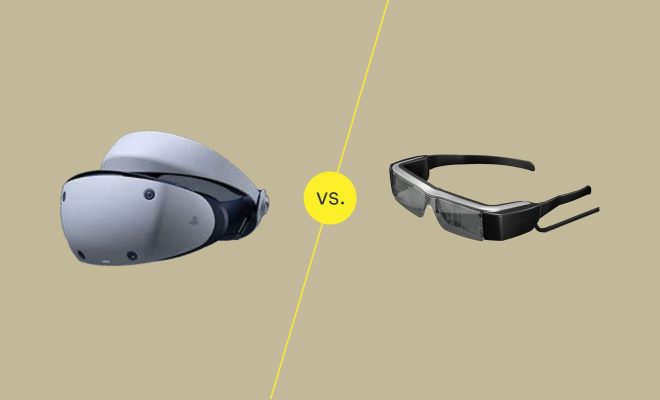
Virtual Reality (VR) and Augmented Reality (AR) have been making waves in the tech world for a while now. From gaming to education, these technologies have the potential to revolutionize the way we experience and interact with the world around us. But, with so many different devices on the market, it can be hard to understand the differences between them. Two of the most popular categories of devices are VR/AR headsets and smart glasses. Here’s a breakdown of what sets them apart.

VR/AR Headsets

VR/AR headsets are usually designed to completely immerse the wearer in a virtual world. They use screens or lenses to display images and video in front of the user’s eyes, creating a sense of presence in a different environment. VR headsets also typically have built-in sensors that track the wearer’s movement in real-time, so they can explore the virtual environment by moving their head, body, or hands.

AR headsets are similar to VR headsets, but they also let the wearer see the real world around them. By overlaying digital images and data onto the wearer’s field of view, AR headsets can enhance the user’s experience and provide useful information while they interact with the real world.

Some popular VR/AR headset models include the Oculus Quest 2, the Microsoft HoloLens 2, and the HTC Vive Pro.

Smart Glasses

Smart glasses, on the other hand, are designed to be more discreet and lightweight than VR/AR headsets. They usually have a much smaller display, and they’re meant to be worn like a regular pair of glasses or sunglasses. Smart glasses often use voice commands or gestures to control them, rather than a physical controller.

Smart glasses also typically have less processing power than VR headsets, so they may not be able to run complex virtual environments. Instead, they’re usually designed to provide information or notifications as the user goes about their day, without disrupting their normal activities. Some smart glasses even have built-in cameras, which can be useful for taking photos or recording videos without having to hold up a phone or camera.

Some popular smart glasses models include the Google Glass Enterprise Edition, the Vuzix Blade, and the North Focals.

Which One Should You Choose?

Choosing between a VR/AR headset or smart glasses comes down to what you’re looking for in a device. If you want a completely immersive experience, a VR/AR headset is the way to go. You can explore new worlds, play games, and experience things in a way that’s not possible with smart glasses.

On the other hand, if you want a device that integrates with your everyday life, smart glasses might be a better choice. They can provide helpful information as you move through your day, without requiring you to stop what you’re doing. Plus, they’re usually lighter and more portable than VR headsets, so you can easily take them with you wherever you go.

Ultimately, the choice between a VR/AR headset and smart glasses depends on your individual needs and preferences. Both types of devices have their own unique benefits and drawbacks, so take some time to consider what you want to use them for before making your decision.


Previous Article

Ways to Fix It When Android Auto ...

Next Article

How to Turn On the Flashlight on ...

Matthew Lynch

Related articles More from author

  • Digital & Mobile Technology

    How to Combine Photos on Android: 2 Easy Methods

    June 23, 2023
    By Matthew Lynch
  • Digital & Mobile Technology

    How to Get a Clear Advantage in Fortnite by Enabling Visual Sound Effects

    September 8, 2023
    By Matthew Lynch
  • Digital & Mobile Technology

    What Is Retina Display?

    June 23, 2023
    By Matthew Lynch
  • Digital & Mobile Technology

    How Does Snapchat Score Work? How to Increase Your Score

    June 7, 2023
    By Matthew Lynch
  • Digital & Mobile Technology

    Apps to Help Battle Sleeplessness With Cognitive Behavioral Therapy for Insomnia

    June 12, 2023
    By Matthew Lynch
  • Digital & Mobile Technology

    How to Forget a Network on Windows 10

    June 9, 2023
    By Matthew Lynch

Search

Login & Registration

  • Log in
  • Entries feed
  • Comments feed
  • WordPress.org

Newsletter

Signup for The Tech Edvocate Newsletter and have the latest in EdTech news and opinion delivered to your email address!

About Us

Since technology is not going anywhere and does more good than harm, adapting is the best course of action. That is where The Tech Edvocate comes in. We plan to cover the PreK-12 and Higher Education EdTech sectors and provide our readers with the latest news and opinion on the subject. From time to time, I will invite other voices to weigh in on important issues in EdTech. We hope to provide a well-rounded, multi-faceted look at the past, present, the future of EdTech in the US and internationally.

We started this journey back in June 2016, and we plan to continue it for many more years to come. I hope that you will join us in this discussion of the past, present and future of EdTech and lend your own insight to the issues that are discussed.

Newsletter

Signup for The Tech Edvocate Newsletter and have the latest in EdTech news and opinion delivered to your email address!

Contact Us

The Tech Edvocate
910 Goddin Street
Richmond, VA 23231
(601) 630-5238
[email protected]

Copyright © 2026 Matthew Lynch. All rights reserved.