Unmasking AI: How Europe’s Bold New Law Will Redefine Digital Reality
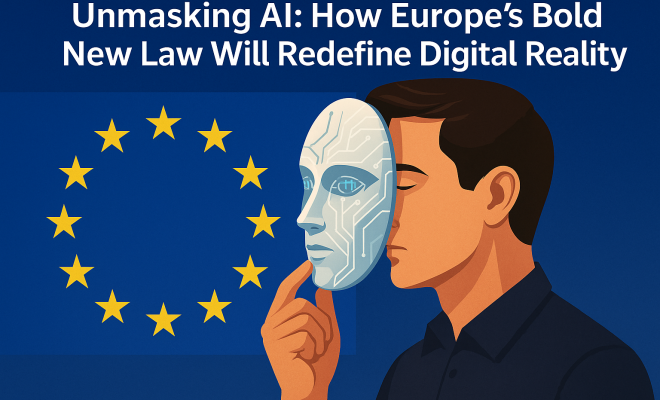
The digital world, as we know it, is undergoing a seismic shift. For years, we’ve grappled with the rising tide of artificial intelligence, marveling at its capabilities while simultaneously fearing its potential for misuse. Now, a groundbreaking development from the European Union is set to fundamentally alter this landscape. As of August 2, 2026, a comprehensive new AI law officially came into effect, bringing with it a mandate that will send ripples through every corner of the tech industry: companies must clearly label AI-generated content. This isn’t just about a minor tweak; it’s a profound declaration that aims to restore trust, combat disinformation, and empower users to discern between what’s real and what’s been synthetically created. This pioneering AI labeling regulation is poised to reshape our interaction with digital media, from the chatbots we chat with to the images and text we consume daily, with a particular focus on the insidious threat of deepfakes.
Think about it: how often have you scrolled through social media, read an article, or even engaged with a customer service bot, wondering if you were interacting with a human or a machine? Soon, in the EU, that ambiguity will be a thing of the past. The stakes are incredibly high. The proliferation of unlabelled AI content has already fueled misinformation campaigns, eroded public trust, and even influenced elections. Europe’s bold move isn’t merely a bureaucratic exercise; it’s a proactive defense against the potential chaos that unchecked AI could unleash. But, as with any sweeping legislation, the path to implementation is fraught with challenges, sparking intense debate across industries and raising crucial questions about the future of AI innovation and content creation.
The Impetus Behind Europe’s AI Labeling Regulation: A Quest for Transparency
Why now? Why such a comprehensive, far-reaching law? The answer lies in the escalating threat of AI-driven disinformation. Over the past few years, the capabilities of generative AI have exploded. We’ve moved beyond simple chatbots to sophisticated systems that can produce photorealistic images, compelling videos, and nuanced text indistinguishable from human output. While these advancements hold immense promise, they also present a dark side: the ability to create believable, yet entirely fake, content at an unprecedented scale and speed.
Consider deepfakes, for instance. These AI-generated videos or audio recordings can convincingly portray individuals saying or doing things they never did. The potential for harm is staggering: political manipulation, reputational damage, financial fraud, and even blackmail. Without clear indicators, distinguishing a deepfake from genuine footage becomes an almost impossible task for the average person. The EU’s AI labeling regulation is a direct response to this growing vulnerability. It’s an acknowledgment that technological progress, while exciting, demands a commensurate level of responsibility and transparency to protect citizens and maintain the integrity of our information ecosystem. This isn’t just about preventing malicious actors; it’s also about fostering a healthier digital environment where users can make informed decisions about the content they consume.
Defining ‘AI-Generated Content’ Under the New Law
One of the immediate challenges, and indeed a critical aspect of understanding this regulation, is precisely defining what constitutes ‘AI-generated content’ that requires a label. The EU’s law is quite broad, covering chatbots, images, and text, especially when used for professional purposes. This means that if you’re a marketing agency using AI to draft ad copy, a news organization leveraging AI to summarize reports, or a company employing an AI customer service agent, you’ll likely fall under the purview of this regulation.
The intent is clear: to encompass any content where AI plays a significant, active role in its creation, rather than merely assisting in its production. For example, an AI tool that helps a human editor correct grammar might not require a label, but one that autonomously generates an entire article from a prompt almost certainly will. The nuance here will be crucial for businesses to navigate. Companies will need to develop robust internal guidelines and potentially invest in new software solutions to accurately track and label their AI-assisted workflows. The law isn’t designed to stifle innovation but to ensure that the tools of innovation are used transparently and ethically. It’s about providing a clear signal to the end-user, much like a ‘contains artificial ingredients’ label on food, letting them know the origin of the information they’re consuming.
The Enforcement Mechanism: Fines and Compliance Challenges
Make no mistake: the EU isn’t playing around. Non-compliant firms face substantial fines, a common characteristic of the Union’s regulatory framework, as seen with GDPR. While specific figures can vary, historical precedents suggest penalties could be significant enough to act as a serious deterrent, potentially running into millions of euros or a percentage of global annual turnover. This financial threat is designed to ensure that companies take the AI labeling regulation seriously and invest the necessary resources into compliance.
However, the practical challenges of implementation are immense. How do you track every piece of content that passes through an AI system within a large organization? What about content that is partially AI-generated and partially human-edited? Or content generated by a third-party AI tool integrated into a company’s workflow? These are not trivial questions. Firms will need to invest heavily in new technologies, legal counsel, and employee training. It’s not just about slapping a label on something; it’s about developing comprehensive audit trails, detection systems, and internal policies that can withstand scrutiny. Small and medium-sized enterprises (SMEs) might find this particularly burdensome, potentially struggling to afford the necessary compliance infrastructure. This raises concerns about a two-tiered system where larger, resource-rich companies can adapt more easily, while smaller players face significant hurdles.
Impact on AI Content Creation and Innovation
It’s natural to wonder if such stringent AI labeling regulation will stifle innovation. Will companies become hesitant to adopt AI for content creation if it means adding an extra layer of compliance and potential public scrutiny? This is a valid concern, but perhaps a short-sighted one. While there might be an initial period of adjustment and some companies might slow their adoption of generative AI until they understand the full implications, the long-term effect could be positive. (See: Overview of artificial intelligence.) This builds on digital media literacy resources.
By forcing transparency, the law could actually foster more responsible AI development. Developers might prioritize building AI systems that inherently include metadata about their origin, or even design tools specifically to aid in compliance. Furthermore, consumers who trust the origin of their content are more likely to engage with it. If AI-generated content is clearly labeled and consumers know what they’re getting, they might be more open to its use in areas like personalized news digests or creative works. The regulation could push innovation towards ‘explainable AI’ and ‘responsible AI’ frameworks, making the technology more robust and trustworthy. It’s not about stopping AI; it’s about guiding its evolution in a way that benefits society rather than undermining it.
The Deepfake Dilemma: A Key Driver of the Regulation
While the regulation covers a broad spectrum of AI-generated content, the focus on deepfakes is particularly pronounced, and for good reason. Deepfakes represent a potent weapon in the arsenal of disinformation. Imagine a fabricated video of a political leader making inflammatory remarks on the eve of an election, or a deepfake audio recording used to impersonate a CEO and authorize fraudulent financial transfers. The damage can be instantaneous and irreversible.
The AI labeling regulation seeks to directly confront this threat. By mandating clear labels on deepfakes, the EU aims to empower individuals and organizations to quickly identify and dismiss synthetic content that could otherwise be highly deceptive. This doesn’t mean deepfakes will disappear entirely, but it introduces a legal framework that holds creators and distributors accountable. It places the onus on platforms and content creators to implement detection and labeling mechanisms, effectively raising the bar for malicious actors who rely on the anonymity and indistinguishability of their creations. This focus underscores the protective nature of the law, aiming to shield citizens from some of the most insidious forms of AI misuse.
Monetization Opportunities: A New AI Economy Emerges
Where there’s a challenge, there’s often an opportunity, and the EU’s AI labeling regulation is no exception. This new regulatory landscape is set to ignite a fresh wave of innovation and create significant monetization opportunities across several sectors. Think of it as a new ecosystem forming around compliance and trust in the age of AI.
Firstly, cybersecurity firms are perfectly positioned to capitalize. The demand for AI content detection tools will skyrocket. Companies will need sophisticated software that can accurately identify AI-generated text, images, and video, distinguishing it from human-created content. This isn’t just about identifying deepfakes; it’s about auditing internal content pipelines for compliance. Secondly, legal services specializing in AI law and regulatory compliance will see an unprecedented boom. Companies, especially those operating internationally, will need expert guidance to navigate the complexities of this new legal terrain. Thirdly, B2B SaaS (Software as a Service) providers will find fertile ground for new offerings. Imagine platforms that automate the labeling process, integrate with existing content management systems, or provide real-time compliance dashboards. These solutions will be indispensable for businesses striving to meet the August 2, 2026 deadline. Finally, educational and consulting services focused on AI ethics, responsible AI deployment, and disinformation protection will also be in high demand. This isn’t just about avoiding fines; it’s about building trust and reputation in a world increasingly skeptical of digital content.
The Global Ripple Effect: Will Others Follow Europe’s Lead?
Europe has a history of setting global standards for digital regulation, from data privacy with GDPR to digital markets with the Digital Markets Act. It’s highly probable that the EU’s comprehensive AI labeling regulation will serve as a blueprint, or at least a significant point of reference, for other nations and blocs considering their own AI governance frameworks. The challenges posed by AI are global; disinformation doesn’t respect national borders. Therefore, a coordinated international response, or at least harmonized approaches, would be beneficial.
Countries like the United States, Canada, and the UK are already grappling with how to regulate AI. While their approaches might differ in specifics, the underlying concerns about transparency, accountability, and the fight against disinformation are universal. Businesses operating globally will likely face a patchwork of regulations, necessitating flexible and adaptable compliance strategies. However, the very existence of a robust European framework could accelerate the adoption of similar principles elsewhere, creating a powerful incentive for AI developers and content creators worldwide to build transparency and ethical considerations into their foundational designs. It’s not just an EU problem; it’s a global conversation, and Europe has just dropped a significant marker.
Challenges and Criticisms: A Balanced Perspective
While the intent behind the AI labeling regulation is laudable, it’s essential to acknowledge the genuine challenges and criticisms that have emerged. One major concern is the potential for over-regulation. Critics argue that overly prescriptive rules could stifle the rapid pace of AI innovation, especially for startups that might lack the resources to navigate complex compliance requirements. There’s also the technological hurdle: detecting all AI-generated content, especially sophisticated new forms, is incredibly difficult. AI models are constantly evolving, and what’s detectable today might not be tomorrow.
Another point of contention is the scope of ‘professional use.’ How broadly will this be interpreted? Does a hobbyist using AI for a personal project suddenly become subject to professional regulations if they share it online? These ambiguities will need clarification as the law is implemented. Furthermore, there’s the ‘label fatigue’ argument: if everything is labeled, will users eventually ignore the labels? And what about the psychological impact of constantly being reminded that content might be fake? These are not easy questions, and the success of the regulation will depend heavily on its practical application, the clarity of its guidelines, and the ongoing dialogue between regulators, industry, and the public.
The Human Element: Preserving Authenticity and Creativity
Beyond the legal and technical aspects, the AI labeling regulation also touches on a deeper, more philosophical question: what does it mean to be human in a world increasingly filled with machine-generated content? When art, music, literature, and journalism can be indistinguishable from human creations, the value we place on genuine human endeavor might shift. This regulation acts as a fence, not to keep AI out, but to clearly delineate where the human touch ends and the algorithmic begins. It’s about preserving the authenticity of human creativity and expression. (See: Impact of AI on society.)
For artists, writers, and journalists, this clarity can be empowering. It allows their work to stand out, clearly marked as original in a sea of synthetic alternatives. This isn’t just about ethical consumption; it’s about acknowledging the unique value of human perspective, emotion, and experience that AI, for all its sophistication, cannot truly replicate. By demanding labels, the EU isn’t just fighting disinformation; it’s implicitly affirming the irreplaceable value of human originality in the digital age. It sets a standard where a human-authored article or a human-painted artwork carries a distinct weight, a badge of authenticity that AI-generated counterparts, no matter how good, will lack.
The Role of Platforms and Social Media
The success of the AI labeling regulation hinges significantly on the cooperation and implementation efforts of major online platforms and social media companies. These platforms are the primary conduits through which most users encounter digital content, and their responsibility in enforcing the labeling mandate cannot be overstated. From Facebook and X (formerly Twitter) to TikTok and Instagram, these entities will need to integrate robust detection and labeling mechanisms into their content moderation systems. There’s a fuller look at cautionary insights on technology.
This means developing new algorithms to identify AI-generated content, implementing user reporting tools for unlabeled synthetic media, and potentially even enforcing strict penalties on users who fail to comply. The sheer volume of content uploaded daily poses an immense technical challenge. Platforms will likely face pressure from regulators, users, and advertisers to demonstrate their commitment to transparency. This could lead to a shift in their terms of service, making compliance a mandatory aspect of content sharing, thereby pushing the responsibility down to individual creators and businesses utilizing their services. This collaborative effort between regulators and platforms is crucial for the AI labeling regulation to truly make a difference in combating widespread disinformation.
Expert Perspectives: Diverse Views on Implementation
The AI labeling regulation has naturally attracted a wide range of opinions from experts across various fields. Legal scholars commend the EU’s proactive stance, viewing it as a necessary step to establish legal accountability in the rapidly evolving AI landscape. They often highlight the importance of regulatory foresight in preventing future harms. Technologists, however, sometimes express skepticism about the feasibility of perfect detection, arguing that AI models are constantly evolving, making a definitive “AI-generated” label a moving target. They suggest focusing on the intent and impact of content rather than solely its origin.
Ethicists, on the other hand, generally support the transparency mandate, emphasizing the user’s right to know and the importance of informed consent in digital interactions. They often point to the potential for psychological manipulation and the erosion of trust as key reasons for such regulations. Economists sometimes raise concerns about the compliance costs for smaller businesses and the potential for regulatory arbitrage, where companies might shift operations to less regulated jurisdictions. These diverse perspectives underscore the complexity of the AI labeling regulation, highlighting that while the goal is universally supported, the path to achieving it is subject to intense debate and requires continuous adaptation.
The Future of Digital Trust in an AI-Driven World
The European Union’s AI labeling regulation is more than just a new law; it’s a profound statement about the future of digital trust. In an era where reality itself can be manufactured, the ability to discern authenticity becomes paramount. This legislation represents a significant step towards re-establishing a baseline of transparency in our increasingly AI-infused digital lives. It signals a shift from a wild west of unbridled AI development to a more governed and accountable landscape.
While the road to full implementation will undoubtedly be bumpy, fraught with technical challenges and ongoing debates, the underlying principle is sound: users have a right to know. They have a right to understand the origin of the information they consume, especially when that information can influence their beliefs, decisions, and even their perception of reality. As August 2, 2026, passes and the regulation takes hold, we will witness a fascinating evolution in how we interact with technology and with each other. The goal isn’t to demonize AI but to domesticate it, to ensure that this powerful tool serves humanity responsibly, fostering an environment where innovation thrives within a framework of honesty and clarity. The implications of this AI labeling regulation will echo for years to come, shaping not just the tech industry, but the very fabric of our digital society.
Frequently Asked Questions About the AI Labeling Regulation
Q1: When does the EU AI labeling regulation officially come into effect?
The comprehensive new AI law, including the mandate for AI-generated content labeling, officially came into effect on August 2, 2026. This date marks the point from which companies operating within the EU or targeting EU citizens must comply with the new rules.
Q2: Which types of AI-generated content require a label under this new law?
The regulation is quite broad, encompassing various forms of AI-generated content, particularly when used for professional purposes. This includes, but isn’t limited to, AI-generated text (like articles, ad copy, summaries), images (photorealistic or stylized), videos (especially deepfakes), and audio (synthetic voices or manipulated recordings). Essentially, if AI plays a significant role in creating the content, it likely needs a label.
Q3: What are the penalties for non-compliance with the AI labeling regulation?
Non-compliant firms face substantial fines. While the exact figures can vary based on the specific infringement and the size of the company, penalties could potentially run into millions of euros or a percentage of a company’s global annual turnover. The aim is to create a strong financial deterrent, similar to the penalties seen with GDPR violations. (trust in machine learning discoveries)
Q4: Will this regulation stifle AI innovation in Europe?
While some critics express concern about potential stifling of innovation, the long-term impact could be quite positive. The regulation encourages responsible AI development, pushing companies to create more transparent and trustworthy AI systems. It could foster innovation in areas like AI detection tools, explainable AI, and ethical AI frameworks, ultimately leading to more robust and user-friendly AI technologies.
Q5: How will ‘deepfakes’ be specifically addressed by this law?
Deepfakes are a key concern driving the regulation. The law mandates clear labels on deepfakes to help individuals and organizations quickly identify and disregard synthetic content that could be highly deceptive. This creates a legal framework for accountability for creators and distributors of deepfakes, aiming to reduce their potential for harm in areas like political manipulation and fraud.
Q6: Does this AI labeling regulation apply to individuals or only to businesses?
The regulation primarily targets content created for “professional purposes.” While a hobbyist sharing AI-generated content might not be the primary focus, the nuances of “professional use” will be crucial. Businesses, marketing agencies, news organizations, and any entity leveraging AI for commercial content creation will definitely fall under its purview. Platforms will also play a role in enforcing compliance, which could impact individual users who publish content.
Q7: What steps should companies take to ensure compliance?
Companies need to take several steps: invest in AI content detection and labeling software, develop robust internal guidelines and audit trails for AI-assisted workflows, train employees on the new regulations, seek legal counsel specializing in AI law, and potentially adapt their content management systems to integrate labeling mechanisms. Building a culture of transparency around AI use is essential.
Trending Now
Frequently Asked Questions
What is the new AI law in Europe?
The new AI law in Europe, effective from August 2, 2026, requires companies to clearly label AI-generated content. This regulation aims to restore trust, combat disinformation, and help users distinguish between real and synthetic media.
Why is labeling AI-generated content important?
Labeling AI-generated content is crucial to combat misinformation, restore public trust, and empower users. It helps individuals identify the authenticity of information, reducing the risk of falling victim to deepfakes and other deceptive practices.
How will the AI labeling regulation affect the tech industry?
The AI labeling regulation will significantly impact the tech industry by mandating transparency in content creation. Companies will need to adapt their practices to comply with the law, which could reshape how AI is integrated into various digital platforms.
What are the challenges of implementing the new AI law?
Implementing the new AI law poses challenges such as ensuring compliance across diverse industries, addressing concerns about innovation, and managing the technical aspects of labeling AI-generated content effectively.
How does the new law address deepfakes?
The new law specifically targets deepfakes by requiring clear labeling of AI-generated content. This measure aims to mitigate the risks associated with manipulated media, protecting users from misinformation and enhancing digital authenticity.
Agree or disagree? Drop a comment and tell us what you think.