Unbelievable: Lucid Air Owners Are Losing Half Their Investment — Here’s Why
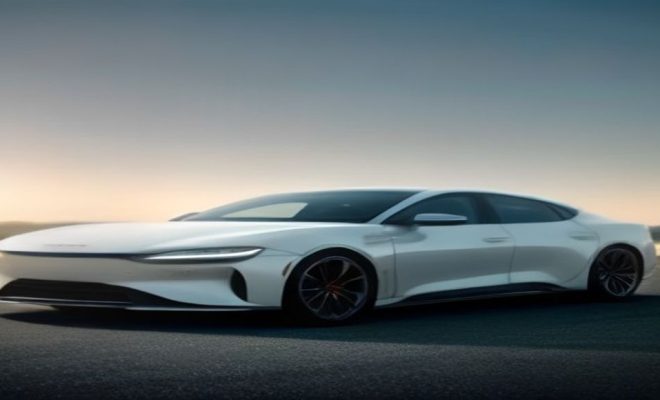
It’s a tough pill to swallow for anyone who’s invested in a brand-new car, but when that car costs well over six figures and sheds value like autumn leaves, it becomes a financial nightmare. That’s exactly the grim reality facing many early adopters of the Lucid Air. Reports surfacing, notably an August 10, 2026, analysis, paint a stark picture: these luxury electric vehicles are suffering from what can only be described as brutal depreciation, with some owners seeing their prized possessions lose up to half their initial value in a shockingly short period. This isn’t just about a few unlucky sales; it’s a systemic issue that’s deeply impacting the perception of high-end EVs and raising serious questions about the long-term investment potential of vehicles from newer manufacturers. The story of Lucid Motors depreciation is a cautionary tale unfolding in real-time.
For a company that positioned itself as a direct competitor to Tesla, with promises of unparalleled range, blistering performance, and exquisite luxury, this turn of events is nothing short of catastrophic for consumer confidence. Imagine shelling out upwards of $150,000, or even more, for a cutting-edge electric sedan, only to find its market value plummeting by tens of thousands of dollars within months. This isn’t the typical gentle curve of new car depreciation; it’s a sheer cliff dive. Understanding the forces behind this dramatic slump in used Lucid Air valuations is crucial, not just for current and prospective owners, but for anyone watching the evolving landscape of the electric vehicle market.
1. The Steep Descent of Lucid Motors Depreciation: A Half-Value Hit
The numbers are frankly, staggering. We’re not talking about minor fluctuations or the usual 10-20% first-year depreciation that’s common for many luxury cars. The August 10, 2026, report highlighted instances where Lucid Air models, some barely a year or two old, were being sold for as little as half their original sticker price. Think about that for a moment: a vehicle that commanded $150,000 new might now struggle to fetch $75,000 on the used market. This kind of value erosion is almost unheard of for such a high-end, technologically advanced product, especially one that was initially met with such high expectations and critical acclaim for its performance and design.
This isn’t just a statistical blip; it represents real, tangible financial losses for individuals who believed in Lucid’s vision and invested heavily. For many, a car is one of the largest purchases they’ll ever make, second only to a home. To see such a significant portion of that investment evaporate so quickly is a painful experience. It naturally leads to a chilling effect on the market, as potential buyers become incredibly wary of committing to a brand that seems to offer such poor residual value. The rapid Lucid Motors depreciation is turning what was once a dream car into a financial burden for many.
2. Struggling to Attract Buyers: The Core of the Problem
At the heart of the depreciation crisis lies Lucid Motors’ ongoing struggle to attract a consistent and substantial customer base. Despite critical praise for the Air’s engineering, range, and luxury features, the company has consistently missed its production and delivery targets. This isn’t just a supply chain issue; it points to a deeper challenge in converting interest into actual sales. The EV market, especially at the luxury end, is incredibly competitive, with established players like Tesla and Mercedes-Benz, alongside new entrants, all vying for discerning buyers.
Lucid’s premium pricing, while arguably justified by the vehicle’s capabilities, has also proven to be a barrier. In a market where Tesla has repeatedly adjusted its prices, sometimes downwards, to maintain market share, Lucid has largely held its ground. This inflexibility, combined with a relatively unknown brand identity compared to its rivals, has made it difficult for Lucid to break through the noise and convince enough customers to part with their substantial cash. Without a robust demand for new vehicles, the value of used models naturally suffers, creating a vicious cycle for Lucid Motors depreciation.
3. Whispers of Bankruptcy: Eroding Consumer Confidence
Perhaps the most damaging blow to Lucid’s market valuation and owner confidence has been the persistent rumors of potential financial distress, including whispers of Chapter 11 bankruptcy protection. These aren’t just idle rumors; they’re the kind of news that sends shivers down the spine of any potential car buyer, especially when considering a high-value purchase from a relatively new manufacturer. The automotive industry is littered with cautionary tales of companies that failed, leaving owners with orphaned vehicles, diminished resale values, and uncertain access to parts and service.
When a company’s financial stability is in question, the perceived risk for buyers skyrockets. Why would someone invest $100,000+ in a car from a company that might not be around in a few years? This fear directly impacts the willingness of both new and used car buyers to commit to a Lucid Air, further accelerating the Lucid Motors depreciation curve. Even if these rumors prove to be unfounded or exaggerated, the damage to consumer perception is already done, making the uphill battle for Lucid even steeper. For more on this, see the truth about luxury handbags.
4. The Fisker Fiasco Fallout: A Broader EV Market Chill
The situation with Lucid isn’t happening in a vacuum. The recent, highly publicized struggles and eventual bankruptcy of Fisker have cast a long, dark shadow over the entire luxury EV startup segment. Fisker, another ambitious EV manufacturer, promised innovative designs and sustainable luxury, only to stumble dramatically with production issues, software glitches, and ultimately, a complete collapse. This debacle has created a palpable sense of apprehension among prospective buyers considering any high-end EV from a newer, less established brand. (See: Lucid Air depreciation analysis.)
The Fisker fiasco serves as a stark reminder that not all EV startups will succeed, and that investing in them carries significant risks beyond just the vehicle itself. Buyers are now much more cautious, scrutinizing the financial health and long-term viability of companies like Lucid with renewed skepticism. This broader market chill, directly attributable to Fisker’s troubles, is undoubtedly contributing to the rapid Lucid Motors depreciation, as buyers opt for more proven brands or simply delay their luxury EV purchases altogether.
5. The Luxury EV Market Landscape: Overcrowded and Competitive
Let’s face it, the luxury EV market isn’t what it was even five years ago. It’s no longer just Tesla at the top. Mercedes-Benz has its EQS, BMW has the i7 and i5, Audi offers the e-tron GT, and Porsche has the Taycan. These are established brands with vast dealer networks, proven service histories, and deep pockets. They offer compelling electric vehicles that often come with the added reassurance of a century-old legacy in automotive manufacturing.
Lucid, despite its technological prowess, is a newcomer in this incredibly competitive arena. It lacks the brand recognition, the widespread service infrastructure, and the decades of customer trust that its German counterparts possess. In a segment where brand prestige and reliability are paramount, Lucid is fighting an uphill battle. When buyers have so many excellent, arguably safer, options from established players, the allure of a new, unproven brand, even one as impressive as Lucid, diminishes. This intense competition inherently puts pressure on pricing and, by extension, on residual values, exacerbating Lucid Motors depreciation.
6. High Price, Limited Appeal: A Niche Within a Niche
The Lucid Air, particularly in its higher trims, is an exceptionally expensive vehicle. While its performance and luxury features might justify the price tag for some, it inherently limits its appeal to a very small, affluent demographic. Unlike Tesla, which offers a range of vehicles from the relatively ‘affordable’ Model 3 to the high-end Model S and X, Lucid has focused almost exclusively on the ultra-luxury segment. This narrow focus, while aiming for exclusivity, also means a smaller pool of potential buyers, both new and used.
When the pool of buyers is small, and the supply of vehicles (even if relatively low in absolute terms) exceeds that demand, prices inevitably fall. The niche nature of the Lucid Air, combined with its aspirational pricing, means that when current owners try to offload their vehicles, they’re often waiting for a very specific type of buyer who is willing to take on the perceived risks of a newer brand and the financial hit of the depreciation. This limited market contributes significantly to the accelerated Lucid Motors depreciation.
7. Software, Service, and Support: The Unseen Value Drain
Beyond the hardware and performance, the modern luxury car experience is heavily dependent on software, service, and support. Tesla, for all its quirks, set a high bar for over-the-air updates, a seamless charging network, and direct-to-consumer service models. Legacy automakers are rapidly catching up, leveraging their vast dealer networks and improving their digital offerings.
Lucid, as a newer entity, has faced challenges in these areas. Reports of software glitches, slower-than-expected updates, and a still-developing service infrastructure can deter buyers. When you’re paying top dollar for a luxury vehicle, you expect a flawless ownership experience. Any perceived shortcomings in these critical areas, from charging reliability to timely repairs, can significantly impact a buyer’s willingness to pay a premium, whether for a new or used model. The uncertainty surrounding future software updates and service availability in light of financial rumors only compounds the issue, fueling the Lucid Motors depreciation trend.
8. Battery Warranty and Longevity Concerns: A Lingering Question Mark
One of the biggest anxieties for any EV owner, especially when considering a used model, revolves around the battery. The battery pack is the single most expensive component of an electric vehicle, and its long-term degradation and replacement cost are significant concerns. While manufacturers offer warranties, the perceived risk associated with a high-mileage or older EV battery from a newer manufacturer can be higher than with an established brand.
For Lucid, with its advanced battery technology and impressive range figures, the long-term data on battery degradation in real-world conditions is still accumulating. This lack of extensive, proven longevity data, combined with the general market apprehension about EV battery replacement costs, can make potential used car buyers hesitant. The uncertainty around future battery warranty support, particularly if the company faces financial difficulties, adds another layer of risk that directly impacts resale value and contributes to the severe Lucid Motors depreciation.
9. What This Means for the Future of Luxury EVs: A Wake-Up Call
The brutal Lucid Motors depreciation isn’t just a problem for Lucid or its owners; it’s a critical wake-up call for the entire luxury EV segment, particularly for ambitious startups. It underscores several crucial lessons: first, groundbreaking technology and luxurious interiors aren’t enough on their own. Second, financial stability and a clear path to profitability are paramount for building consumer trust and sustaining long-term value. Third, the market is becoming incredibly discerning, and the ‘early adopter’ phase for many new EV brands is giving way to a more cautious, value-driven buying public. (See: Lucid Motors EV struggles.)
This situation forces us to re-evaluate the ‘investment potential’ of certain EVs. While the environmental benefits and performance thrills are undeniable, the financial risks associated with some brands are now glaringly apparent. For consumers, it means doing even more rigorous due diligence, scrutinizing not just the car itself, but the company behind it. For manufacturers, it means proving not just that they can build an amazing car, but that they can build a sustainable business. The next few years will be telling for how the luxury EV market adapts to these harsh realities, and whether other newcomers can avoid the same brutal fate as the early Lucid Air models.
10. The Impact of Shifting Market Dynamics: Price Cuts and Tax Credits
The electric vehicle market is evolving at a breakneck pace, and these rapid shifts directly influence depreciation. For instance, Tesla’s aggressive price cuts across its lineup have set a new benchmark, forcing other manufacturers to re-evaluate their own pricing strategies. When a leading luxury EV brand suddenly makes its vehicles significantly more affordable, it creates downward pressure on the entire segment, especially for used cars. A used Lucid Air, priced at $100,000, looks much less appealing when a new Tesla Model S, with its established brand and Supercharger network, can be had for a similar or even lower price after recent adjustments.
Furthermore, government tax credits play a huge role in the perceived value of new EVs. When a new Lucid Air qualifies for a substantial federal tax credit, that credit effectively reduces the ‘real’ purchase price for the first owner. However, this credit doesn’t transfer to the used market. So, a used Lucid Air might be competing against a new EV from another brand that still offers a $7,500 tax credit, immediately putting the used Lucid at a disadvantage. These fluctuating incentives and aggressive pricing strategies by competitors create a volatile environment that can swiftly erode residual values for any brand, but particularly for a newer, less established one like Lucid.
11. Expert Perspectives: What Analysts Are Saying About Lucid’s Future
It’s not just car owners and enthusiasts noticing the sharp decline in Lucid Air values. Financial analysts and automotive industry experts are also weighing in, often with cautious or even pessimistic outlooks. Many point to Lucid’s consistent cash burn and its reliance on external funding as major red flags. For example, a recent report from a prominent automotive analytics firm highlighted Lucid’s struggle to scale production efficiently, noting that high fixed costs combined with low delivery volumes create an unsustainable financial model in the long run. They emphasize that while the product itself is innovative, the business model needs significant adjustments to achieve profitability.
Some analysts also suggest that Lucid’s strategy of starting at the ultra-luxury end, while delivering a phenomenal product, might have been a misstep. They argue that a more diversified product lineup, perhaps starting with a slightly more accessible model to build brand recognition and volume, could have provided a stronger foundation. The consensus among many experts seems to be that Lucid faces a critical juncture. They need to either significantly ramp up production and sales, attract substantial new investment, or consider strategic shifts to secure their long-term viability. The market is watching closely, and the perceived risk associated with these financial uncertainties directly translates into lower resale values for their vehicles.
12. The Resale Market Reality: Dealership Reluctance and Auction Performance
The struggles of Lucid Motors depreciation aren’t confined to private sales; they’re also evident in the wholesale and retail dealership markets. Many traditional luxury car dealerships are hesitant to take on used Lucid Air models as trade-ins or inventory. Why? Because they’re difficult to move. The limited brand recognition, the specific niche market, and the perceived financial instability of Lucid make them a riskier proposition for dealers compared to a used Mercedes S-Class or a Tesla Model S.
When dealers do take them, they often price them very aggressively to minimize their holding costs and risk. This downward pressure from the wholesale market then filters down to private sale expectations. Looking at auction data, some Lucid Air models have indeed sold for significantly less than expected, further solidifying the perception of poor resale value. This creates a challenging cycle: hesitant buyers, cautious dealers, and low auction results all contribute to a market where the Lucid Air struggles to maintain its value, making it a less attractive option even for those who appreciate its engineering and design. (future of transportation insights)
Frequently Asked Questions About Lucid Motors Depreciation
Q1: Why is Lucid Motors depreciation so severe compared to other luxury EVs?
A1: Several factors contribute to the severe Lucid Motors depreciation. Key among them are the company’s ongoing struggles to meet production and delivery targets, leading to an imbalance between perceived supply and demand. Persistent rumors about the company’s financial stability, including potential bankruptcy, significantly erode consumer confidence. The highly competitive luxury EV market, with established players and aggressive pricing from Tesla, also puts pressure on Lucid. Additionally, the limited brand recognition and a still-developing service and software infrastructure, coupled with the fallout from other EV startup failures like Fisker, make buyers wary of the long-term investment.
Q2: How much value are Lucid Air owners losing on average?
A2: Reports indicate that some early Lucid Air owners have seen their vehicles lose up to half their initial value in as little as one to two years. For a car that starts well over $100,000, this can mean a financial loss of $50,000 or more in a very short period. This rapid decline is much steeper than the typical depreciation curve for most luxury vehicles. (See: impact of EV depreciation.)
Q3: Are all Lucid Air models depreciating at the same rate?
A3: While all Lucid Air models are experiencing significant depreciation, the exact rate can vary depending on the specific trim level, mileage, condition, and optional features. Generally, the higher-priced, more exclusive trims (like the Dream Edition) might see larger absolute dollar losses due to their higher initial price, but lower trims also suffer from the same underlying market issues affecting the brand’s overall resale value.
Q4: What role do tax credits play in Lucid’s depreciation?
A4: Government tax credits, like the federal EV tax credit, effectively reduce the net purchase price for the first owner of a new Lucid Air. However, these credits do not transfer to the used market. This means a used Lucid Air might be competing against a new EV from another brand that still qualifies for a significant tax credit, immediately putting the used vehicle at a financial disadvantage for a prospective buyer. This dynamic contributes to accelerated depreciation for the used models.
Q5: Is there anything Lucid Motors can do to improve its resale values?
A5: To improve resale values, Lucid Motors needs to address several core issues. Firstly, consistently meeting and exceeding production and delivery targets would signal stability and increased demand. Secondly, achieving and demonstrating clear financial stability would rebuild consumer confidence and mitigate bankruptcy fears. Expanding its service network, improving software reliability and update frequency, and potentially diversifying its product lineup to reach a broader market could also help. Building a stronger, more recognizable brand identity through effective marketing is also crucial.
Q6: Should I avoid buying a used Lucid Air because of depreciation concerns?
A6: Buying a used Lucid Air currently presents a unique situation. The significant depreciation means you can acquire a technologically advanced, luxurious EV for a much lower price than its original sticker. This could be a great value proposition if you’re comfortable with the potential risks associated with a newer brand’s long-term financial stability and service infrastructure. However, you should be prepared for continued depreciation and potential challenges if you plan to sell the vehicle again in the near future. It’s essential to weigh the potential savings against these risks and do thorough research on the specific vehicle and Lucid’s current market position.
Q7: How does Lucid Motors depreciation compare to Tesla’s depreciation?
A7: While Tesla vehicles also experience depreciation, especially with recent price cuts and increased competition, their depreciation curve has generally been less severe than Lucid’s, particularly for popular models like the Model 3 and Model Y. Tesla benefits from a much larger installed base, a robust charging network, established brand recognition, and a proven track record of sales and service. Lucid, as a newer, smaller player, lacks these advantages, which contributes to its more brutal depreciation.
Q8: What impact does the Fisker bankruptcy have on Lucid’s depreciation?
A8: The highly publicized bankruptcy of Fisker, another luxury EV startup, has created a broader sense of apprehension and skepticism among consumers considering high-end EVs from newer brands. This “Fisker effect” makes buyers more cautious and less willing to take risks on unproven companies, directly contributing to the rapid Lucid Motors depreciation as people opt for more established brands or delay their luxury EV purchases altogether.
Trending Now
Frequently Asked Questions
Why are Lucid Air owners losing so much value?
Lucid Air owners are experiencing significant depreciation due to a combination of factors including oversupply, lower demand for luxury electric vehicles, and market perception issues surrounding newer manufacturers. Reports indicate that some models are losing up to half their initial value within a year, leading to a financial nightmare for early adopters.
How much do Lucid Air cars depreciate?
Lucid Air vehicles are reportedly depreciating at an alarming rate, with some owners witnessing losses of up to 50% of their car's value within just a year or two. This steep decline contrasts sharply with typical luxury car depreciation rates of around 10-20% in the first year.
What factors are driving Lucid Motors' depreciation?
The depreciation of Lucid Motors' vehicles can be attributed to oversupply in the market, diminished consumer confidence in newer brands, and the competitive landscape dominated by established players like Tesla. These elements contribute to a perception that affects resale values significantly.
Is it a bad investment to buy a Lucid Air?
Given the current depreciation trends, investing in a Lucid Air may not be advisable for those concerned about resale value. The sharp decline in market value poses a risk, especially for buyers who expect their luxury electric vehicle to hold its worth over time.
How does Lucid Air compare to other luxury electric vehicles?
While the Lucid Air was positioned as a competitor to high-end electric vehicles like Tesla, its rapid depreciation raises concerns about its long-term investment potential compared to more established brands. Buyers should weigh these depreciation trends against the features and performance offered by other luxury EVs.
What did we miss? Let us know in the comments and join the conversation.