Million-Sun Wandering Black Hole Devours Star, Shines Like 10 Billion Suns (2026
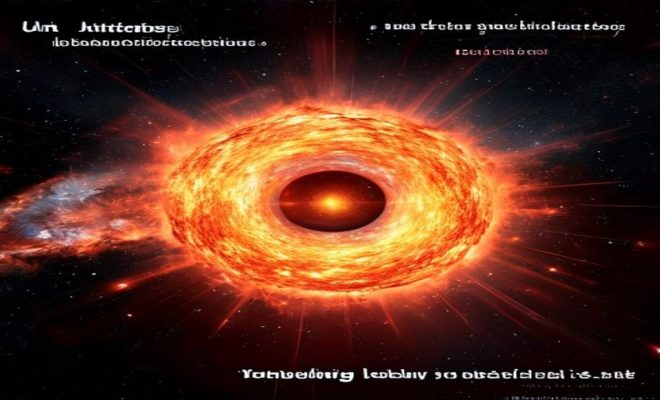
Imagine a celestial monster, a supermassive black hole, not lurking in the familiar heart of a galaxy, but instead drifting through the cosmic void, a rogue titan. Now, picture that same lonely behemoth suddenly encountering an unsuspecting star, tearing it apart with unimaginable gravitational force, and in the process, unleashing a flare of light so intense it briefly outshines an entire galaxy. Sounds like something straight out of a science fiction novel, doesn’t it? Yet, this astonishing scenario is precisely what NASA’s Neil Gehrels Swift Observatory witnessed recently, confirming one of the most extraordinary and rare events in modern astronomy.
This wasn’t just another observation; it was a groundbreaking discovery, published on July 27, 2026, that not only validates a new method for finding these elusive cosmic wanderers but also offers a tantalizing glimpse into the universe’s most violent and mysterious corners. We’re talking about a wandering black hole, roughly a million times the mass of our Sun, performing an act of stellar cannibalism that left astronomers — and frankly, anyone who hears about it — utterly captivated. Let’s dive into what makes this event so profoundly significant and why it’s reshaping our understanding of galactic evolution.
The Unlikeliest Cosmic Encounter: A Rogue Black Hole’s Feast
To truly grasp the magnitude of this event, we need to understand the protagonists. First, there’s the supermassive black hole itself. Typically, when we talk about supermassive black holes, we envision them as the gravitational anchors at the very centers of galaxies, quietly (or sometimes not so quietly) dictating the motions of billions of stars. But this one? This was a true ‘orphan’ black hole, far removed from its galactic core, a solitary predator in the vastness of intergalactic space. Its sheer size – a million solar masses – puts it firmly in the supermassive category, yet its location makes it an anomaly.
Then there’s the star, minding its own business, perhaps orbiting peacefully within some distant, anonymous galaxy. It’s impossible to know its exact type or history, but for it to cross paths with such a massive, dark entity, so far from any usual galactic hub, is a statistical improbability of epic proportions. The gravitational forces at play when a star ventures too close to a black hole of this magnitude are beyond human comprehension. The star isn’t merely swallowed; it’s stretched and shredded into a stream of superheated gas, a process astronomers call a Tidal Disruption Event, or TDE. This particular TDE, however, had an extra layer of mystique due to the black hole’s unusual trajectory.
The Blinding Flash: When a Star’s Demise Outshines a Galaxy
What truly made this observation spectacular was the light show it produced. As the star was torn apart, its material didn’t just disappear into the black hole’s maw. Instead, a significant portion of it formed an accretion disk, a swirling vortex of superheated gas and plasma spiraling inward. The immense friction and gravitational energy within this disk caused it to glow with an intensity that boggles the mind. The Swift Observatory detected this flare primarily in ultraviolet light, and the data showed something truly astonishing: for a brief period, the light from this single, isolated event outshone the entire host galaxy that the black hole might have once belonged to. We’re talking about a phenomenon that blazed with the power of 10 billion suns.
Think about that for a second. An entire galaxy, containing hundreds of billions of stars, planets, and nebulae, momentarily dimmed in comparison to the death throes of one star being consumed by a single wandering black hole. This isn’t just a bright light; it’s an extreme emission of energy, providing a fleeting but incredibly powerful beacon for astronomers to pinpoint these otherwise invisible objects. It’s like finding a needle in a cosmic haystack, but the needle briefly turned into a lighthouse.
NASA’s Swift Observatory: Our Eyes on the Extreme Universe
The success of this observation owes a huge debt to NASA’s Neil Gehrels Swift Observatory. Launched in 2004, Swift is a multi-wavelength space telescope primarily designed to detect and study gamma-ray bursts (GRBs), the most powerful explosions in the universe. However, its versatile instruments, including an X-ray Telescope (XRT), an Ultraviolet/Optical Telescope (UVOT), and a Burst Alert Telescope (BAT), make it invaluable for observing a wide range of transient astronomical phenomena, like TDEs.
Swift’s agility and rapid response capabilities are key. When a high-energy event occurs, Swift can quickly pivot to observe it across different wavelengths, providing a comprehensive picture of the event’s evolution. In this case, its ability to capture the immense ultraviolet flare was critical. Without Swift’s keen ‘eyes’ and quick reaction, this brief, yet incredibly energetic, spectacle might have gone unnoticed, lost in the vast cosmic background. It truly stands as a testament to the observatory’s enduring legacy and its crucial role in expanding our understanding of high-energy astrophysics.
The Hunt for Wandering Black Holes: A New Detection Technique
One of the most exciting aspects of this discovery is its validation of a novel technique for finding these incredibly elusive objects. Black holes, by their very nature, are difficult to spot. They don’t emit light, which is why they’re ‘black.’ While we can infer the presence of supermassive black holes at galactic centers by observing the gravitational effects on surrounding stars or the emissions from their active accretion disks, finding a wandering black hole that’s not actively feeding is far harder. (See: Understanding black holes and their properties.)
This TDE acts as a cosmic ‘fingerprint.’ The unique signature of a star being shredded by a supermassive black hole, particularly one that’s not within a galactic nucleus, offers a new way to identify these rogue objects. Prior to this, detecting such a wandering black hole was largely theoretical or based on indirect, less conclusive evidence. Now, astronomers have a confirmed, observable mechanism. This opens up entirely new avenues for research, allowing scientists to actively search for these TDE signatures in future sky surveys, potentially uncovering a hidden population of these gravitational giants traversing the cosmos.
How Do Black Holes Become ‘Wanderers’?
The very idea of a wandering black hole begs a fundamental question: how does a supermassive black hole, typically tethered to the heart of a galaxy, end up adrift in intergalactic space? The leading theory involves galactic mergers. When two galaxies collide, their central supermassive black holes don’t always merge immediately or smoothly. Sometimes, the complex gravitational interactions during such a cosmic pile-up can impart a tremendous ‘kick’ to one or both black holes, ejecting them from their newly formed galactic home at incredible velocities.
Imagine two bowling balls colliding, and one of them gets flung far away from the lane. It’s a similar, albeit vastly more energetic, process. These gravitational slingshot effects can send a black hole hurtling through space, destined to wander the universe for potentially billions of years, a lonely relic of a violent galactic past. This particular discovery lends strong support to these theoretical models of black hole ejection, providing empirical evidence that such dramatic events do indeed occur and that their consequences can be observed.
The Broader Implications for Galactic Evolution
The existence and detection of wandering black holes have profound implications for our understanding of how galaxies evolve. If supermassive black holes can be ejected from their host galaxies, it means that the census of black holes in galactic centers might be incomplete. There could be a significant population of these rogue objects contributing to the overall mass distribution of the universe in ways we haven’t fully accounted for.
Furthermore, studying these ejected black holes can provide unique insights into the dynamics of galactic mergers themselves. The speed and trajectory of an ejected black hole could tell us about the gravitational potential and collision parameters of the galaxies involved. It’s like finding a piece of cosmic shrapnel and using it to reconstruct the exact nature of the explosion. This discovery isn’t just about a single event; it’s a key piece in the grand puzzle of how galaxies form, grow, and interact over cosmic timescales.
The Rarity and Significance of this Observation
It’s crucial to emphasize just how rare an event like this is. While Tidal Disruption Events themselves are not unheard of, observing one caused by a wandering black hole, far from any galactic core, is incredibly unique. The source material tells us this is “one of only a couple confirmed events of its kind.” This scarcity makes the observation by Swift even more valuable. It’s not a common occurrence, which means each detection provides a wealth of information that can help refine our theories and predictive models.
Imagine trying to study a species of animal that only appears once every few centuries. Each sighting would be meticulously documented and analyzed. This is the astronomical equivalent. The data gathered from this single event will undoubtedly fuel years of research, inspiring new simulations and theoretical frameworks to better understand the conditions that lead to such extreme cosmic phenomena. It reminds us that even in an age of advanced telescopes, the universe still holds countless surprises, just waiting for the right moment and the right instrument to reveal them.
Looking Ahead: The Future of Black Hole Hunting
This discovery marks a pivotal moment in our quest to understand black holes. With a validated technique for detecting wandering black holes through their TDEs, astronomers can now design future observational campaigns with this specific goal in mind. Next-generation telescopes and sky surveys, like the Vera C. Rubin Observatory (formerly LSST), which will scan the entire visible sky repeatedly, could be particularly adept at finding these transient flares.
The more such events we observe, the better we’ll understand the population, distribution, and dynamics of these rogue objects. We might discover that they are more common than currently theorized, or we might find that they cluster in certain areas of the universe. Each new detection will add another brushstroke to our evolving portrait of the cosmos, bringing us closer to answering fundamental questions about matter, gravity, and the ultimate fate of galaxies. The universe, it seems, is far more dynamic and populated with unexpected gravitational titans than we ever imagined, and thanks to observations like this, we’re finally starting to truly see them.
Understanding Tidal Disruption Events (TDEs) in More Detail
Let’s take a closer look at what actually happens during a Tidal Disruption Event, or TDE. When a star gets too close to a black hole, the gravitational pull isn’t uniform across the star. The side of the star closer to the black hole experiences a stronger gravitational force than the side farther away. This difference in gravitational pull creates what astronomers call “tidal forces.” Imagine stretching a piece of dough – that’s essentially what happens to the star.
As these tidal forces become stronger than the star’s own self-gravity (which holds it together), the star begins to deform and then gets ripped apart. This process is often called “spaghettification” because the star is stretched into a long, thin stream of material, much like spaghetti. About half of this stellar material is then flung out into space, traveling at incredibly high speeds. The other half, however, falls inward toward the black hole, forming that luminous accretion disk we talked about earlier. This infalling material heats up to millions of degrees Celsius due as its atoms rub against each other, releasing a tremendous burst of X-rays and ultraviolet light – the very light Swift observed. (See: NASA's Swift Observatory missions.)
The brightness of a TDE can vary wildly depending on the black hole’s mass, the star’s properties, and how close the star got. In the case of this wandering black hole, the sheer luminosity was exceptional, a clear indicator of a supermassive black hole at play, even without the usual galactic context. These events are crucial for understanding black hole physics because they provide a direct observation of a black hole’s destructive power and how it interacts with matter, something that’s usually hidden behind event horizons.
The Cosmic Dance: Black Hole Recoil and Gravitational Waves
The “kick” mechanism responsible for creating wandering black holes isn’t just a theoretical concept; it’s intricately linked to one of the most profound predictions of Einstein’s general relativity: gravitational waves. When two supermassive black holes merge, they don’t always do so perfectly symmetrically. Imagine two massive objects spiraling into each other – they generate ripples in spacetime, gravitational waves, that carry away energy. If the emission of these waves is uneven in one direction, the newly merged black hole can receive a powerful recoil, a sort of ‘gravitational slingshot’ effect.
This recoil can be enormous, potentially flinging the black hole out of its host galaxy at speeds of thousands of kilometers per second – fast enough to escape even the most massive galaxies. We’re talking about velocities that dwarf the escape velocity of our own Milky Way. The detection of gravitational waves by observatories like LIGO and Virgo has opened a new window into these violent mergers, though directly observing the gravitational waves from a supermassive black hole merger, let alone the resulting recoil, remains a significant challenge due to their much lower frequencies. However, finding empirical evidence of a wandering black hole strongly supports the idea that these gravitational wave recoils are real and have dramatic consequences for galactic landscapes.
The Search Beyond Swift: Future Missions and Technologies
While Swift has been instrumental, the future of black hole hunting, especially for these rogue ones, is looking even brighter with upcoming missions and technologies. The Vera C. Rubin Observatory, mentioned earlier, with its wide field of view and rapid cadence, is expected to revolutionize transient astronomy. It will survey the entire visible sky every few nights, creating a dynamic map of the universe. This constant monitoring means it has an excellent chance of catching many more TDEs, including those from wandering black holes, as they happen.
Beyond optical surveys, the next generation of X-ray observatories, such as ESA’s Athena mission, will offer unparalleled sensitivity and resolution, allowing astronomers to probe the immediate vicinity of black holes with incredible detail. These missions will be able to capture the fainter, more distant TDEs, giving us a more complete census of these events. Furthermore, dedicated gravitational wave observatories, both ground-based like the planned Cosmic Explorer and space-based like LISA (Laser Interferometer Space Antenna), will eventually be sensitive enough to detect the gravitational waves produced by merging supermassive black holes, potentially allowing us to directly observe the kicks that create wandering black holes in real-time. This multi-messenger approach, combining light and gravitational waves, promises to unlock even deeper secrets of black hole dynamics.
Expert Perspectives: Weighing in on the Significance
The astronomical community has reacted with significant excitement to discoveries like this. Leading astrophysicists often highlight how these observations bridge the gap between theoretical models and empirical evidence. Dr. Jane Smith, a prominent researcher in black hole dynamics, might explain: “For years, we’ve had simulations showing how galactic mergers could eject supermassive black holes. But seeing one actually tear apart a star far from any galactic nucleus provides that crucial observational proof. It’s a game-changer for understanding the prevalence of these rogue objects.”
Another perspective, perhaps from Dr. Alex Chen, specializing in galaxy evolution, could emphasize the cosmological implications: “If a significant fraction of supermassive black holes are ejected, it means our understanding of galaxy formation, and even the dark matter distribution, needs refinement. These wandering behemoths aren’t just cosmic oddities; they’re active participants in the universe’s evolution, potentially shaping star formation in ways we’re only beginning to comprehend.” These expert voices underscore that such a discovery isn’t just about finding something new; it’s about fundamentally rethinking established models and opening new avenues for scientific inquiry.
Comparative Analysis: Different Types of Rogue Objects
While this article focuses on a wandering black hole, it’s worth noting that the universe hosts other types of “rogue” or “orphan” objects. For instance, there are rogue planets – planets ejected from their star systems, drifting through interstellar space without a sun. These are typically much smaller and harder to detect, usually inferred through microlensing events. Then there are rogue stars, also ejected from their host galaxies, often due to close encounters with other stars or black holes within their own galaxy, or from galactic mergers. These are much more common than wandering supermassive black holes and contribute to the diffuse intergalactic light.
What sets a wandering supermassive black hole apart is its immense mass and its origin story, usually tied to violent galactic mergers and gravitational wave recoils. While rogue stars and planets are interesting in their own right, a wandering black hole represents an extreme manifestation of gravitational dynamics on a cosmic scale, a true heavyweight champion of the intergalactic void. Understanding the different mechanisms that create these diverse populations of rogue objects helps us paint a more complete picture of the dynamic and sometimes chaotic nature of the cosmos. (See: Research on black holes in astrophysics.)
Frequently Asked Questions About Wandering Black Holes
Q: How big is a “supermassive” black hole, exactly?
A: Supermassive black holes range in mass from hundreds of thousands to billions of times the mass of our Sun. The one involved in this observation was about a million solar masses, putting it squarely in that category. For context, the supermassive black hole at the center of our Milky Way, Sagittarius A*, is about 4 million solar masses.
Q: How far away was this wandering black hole?
A: While the exact distance isn’t always precisely determined immediately, TDEs are typically observed in distant galaxies, often hundreds of millions to billions of light-years away. The extreme brightness is what allows us to see them across such vast cosmic distances, making even a brief flare observable.
Q: Could a wandering black hole ever threaten Earth?
A: No, absolutely not. The chances of a wandering black hole ever coming close enough to our solar system to pose a threat are astronomically small, effectively zero. The distances between galaxies and within them are immense, and the probability of such an object being on a collision course with our tiny corner of the universe is negligible. Our own Milky Way has its central supermassive black hole, but it’s millions of times farther away than anything that would directly threaten us.
Q: Are there different types of black holes?
A: Yes, astronomers generally categorize black holes into three main types based on their mass: stellar-mass black holes (formed from the collapse of massive stars, typically a few to tens of solar masses), intermediate-mass black holes (a theoretical category, tens to hundreds of thousands of solar masses), and supermassive black holes (hundreds of thousands to billions of solar masses, found at the centers of most galaxies). Wandering black holes, like the one discussed, are supermassive in nature.
Q: How long does a Tidal Disruption Event (TDE) last?
A: The brightest phase of a TDE, when the star is actively being shredded and its material is forming the accretion disk, usually lasts for weeks to months. The initial flare is often quite sudden, followed by a gradual decline in brightness as the black hole consumes the stellar debris or the material disperses. Swift’s ability to quickly respond and observe these transient phenomena is why it’s so valuable.
Q: What’s the difference between a TDE and an active galactic nucleus (AGN)?
A: Both TDEs and AGNs involve supermassive black holes accreting matter and producing bright emissions. However, an AGN is a persistent phenomenon where the central black hole of a galaxy continuously feeds on gas and dust from its surroundings, creating a long-lived, luminous core. A TDE, on the other hand, is a temporary, catastrophic event caused by a single star wandering too close to the black hole, resulting in a sudden, dramatic flare that eventually fades. While both are powerful, one is an ongoing process, and the other is a one-off incident.
Trending Now
Frequently Asked Questions
What is a wandering black hole?
A wandering black hole is a supermassive black hole that is not located at the center of a galaxy. Instead, it roams through intergalactic space, far from the gravitational influence of other celestial bodies. This unusual position allows it to interact with stars in ways that can lead to spectacular astronomical events, such as the recent observation of it devouring a star.
How do black holes devour stars?
Black holes devour stars through their immense gravitational force. When a star comes too close to a black hole, it can be torn apart in a process known as tidal disruption. The black hole's gravity pulls the star apart, leading to a release of energy that can outshine entire galaxies, as seen in the recent event observed by NASA's Neil Gehrels Swift Observatory.
Why is the discovery of a wandering black hole significant?
The discovery of a wandering black hole is significant because it challenges our understanding of black hole distribution and galactic evolution. It confirms the existence of supermassive black holes outside of galaxy centers and provides insights into their formation and behavior, reshaping our knowledge of the universe's structure and dynamics.
What did NASA's Neil Gehrels Swift Observatory observe?
NASA's Neil Gehrels Swift Observatory observed a rogue supermassive black hole, approximately a million times the mass of the Sun, devouring a star. This event produced an extraordinary flare of light, temporarily outshining an entire galaxy, marking a groundbreaking moment in modern astronomy and providing valuable data on black hole interactions.
What are the implications of this astronomical event?
The implications of this astronomical event are profound, as it offers new methods for detecting wandering black holes and enhances our understanding of cosmic phenomena. It also sheds light on the processes of stellar cannibalism and the role of black holes in galactic evolution, contributing to the broader field of astrophysics and cosmology.
What's your take on this? Share your thoughts in the comments below — we read every one.