U.S. Embassy Urges Citizens to Evacuate Baghdad Amid Escalating Attacks
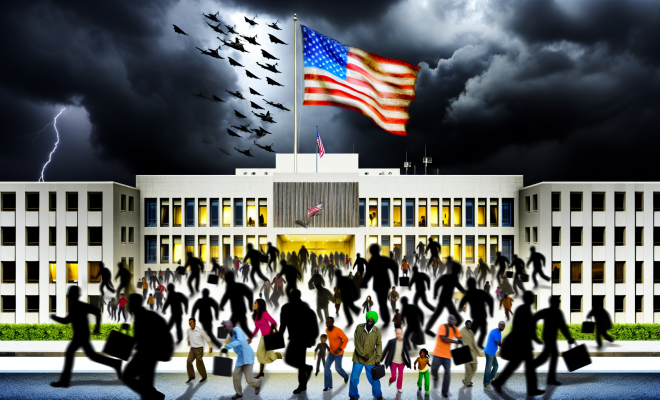
In a significant escalation of tensions in the Middle East, the U.S. Embassy in Baghdad has issued a stark warning to American citizens, urging them to leave Iraq immediately. This advisory comes in the wake of a second attack on the embassy attributed to Iran-aligned militias, a situation that has raised alarms about the safety of U.S. nationals in the region.
Background of the Attacks
Since the onset of the recent conflict with Iran, the U.S. has seen a marked increase in hostility towards its diplomatic missions and personnel. The embassy attacks are part of a broader pattern of aggression against U.S.-associated sites, which have included not only diplomatic facilities but also businesses and hotels frequented by Americans.
Details surrounding the attacks indicate a coordinated effort by Iranian-backed militias to target U.S. interests, reflecting the heightened tensions following increased military engagements and political rhetoric in the region. The embassy’s urgent advisory serves as a critical response to these developments.
Travel Advisory and Safety Instructions
In light of the recent violence, the U.S. Embassy has recommended that all American citizens in Iraq immediately take steps to exit the country. The advisory particularly emphasizes the following:
- Traveling overland to neighboring countries, as commercial flights have been suspended.
- Avoiding the embassy or consulate in Erbil, which may also be at risk.
This directive underscores the precarious security situation that U.S. citizens face in Iraq, where the potential for further attacks remains high. The embassy has also highlighted the importance of remaining vigilant and aware of one’s surroundings while traveling through the region.
Escalating Regional Tensions
The urgency of the U.S. warning is compounded by recent declarations from Hezbollah’s leadership, who have expressed their readiness for a prolonged confrontation with Israel. This declaration hints at a broader context of instability in the region, with various factions mobilizing in response to perceived threats.
Hezbollah’s readiness to engage militarily not only impacts the Israeli-Lebanese border but also has ramifications for U.S. interests throughout the Middle East. As the situation unfolds, the interconnectedness of these conflicts suggests that American citizens could find themselves in increasingly precarious positions.
Impact on U.S. Foreign Policy
The escalation of violence and the need for a rapid evacuation of American citizens reflect the challenges faced by U.S. foreign policy in the Middle East. Historically, the U.S. has maintained a strong presence in Iraq, but the current wave of attacks raises questions about the viability of this approach in a landscape marked by rising anti-American sentiment and the influence of Iran and its proxies.
The Biden administration may need to reassess its strategy in the region, balancing diplomatic engagement with the imperative to protect American lives and interests. This could involve recalibrating military presence and support to Iraqi forces, as well as re-evaluating alliances with local partners.
Reactions from Officials and Experts
Officials in Washington have expressed grave concerns over the recent developments. National security experts note that the attacks signify not only a tactical assault on U.S. assets but also a strategic maneuver by Iranian-aligned groups to assert their influence in Iraq and beyond.
Some analysts argue that the United States must adopt a more robust stance against these militias, including enhanced military support to Iraqi security forces and increased intelligence-sharing to preempt further attacks. Others caution that a heavy-handed approach could exacerbate tensions and lead to further violence.
Conclusion
The situation in Iraq remains fluid, with the potential for further escalation posing significant risks to American citizens and interests. The U.S. Embassy’s call for immediate evacuation highlights the urgent need for safety measures and responsive strategies in the face of ongoing threats.
As the geopolitical landscape continues to evolve, American citizens and officials must remain vigilant. The interplay of local and regional dynamics will be crucial in determining the future of U.S. involvement in Iraq and the broader Middle East.