The Tech Edvocate

Top Menu

  • Advertisement
  • Apps
  • Home Page
  • Home Page Five (No Sidebar)
  • Home Page Four
  • Home Page Three
  • Home Page Two
  • Home Tech2
  • Icons [No Sidebar]
  • Left Sidbear Page
  • Lynch Educational Consulting
  • My Account
  • My Speaking Page
  • Newsletter Sign Up Confirmation
  • Newsletter Unsubscription
  • Our Brands
  • Page Example
  • Privacy Policy
  • Protected Content
  • Register
  • Request a Product Review
  • Shop
  • Shortcodes Examples
  • Signup
  • Start Here
    • Governance
    • Careers
    • Contact Us
  • Terms and Conditions
  • The Edvocate
  • The Tech Edvocate Product Guide
  • Topics
  • Write For Us
  • Advertise

Main Menu

  • Start Here
    • Our Brands
    • Governance
      • Lynch Educational Consulting, LLC.
      • Dr. Lynch’s Personal Website
      • Careers
    • Write For Us
    • The Tech Edvocate Product Guide
    • Contact Us
    • Books
    • Edupedia
    • Post a Job
    • The Edvocate Podcast
    • Terms and Conditions
    • Privacy Policy
  • Topics
    • Assistive Technology
    • Child Development Tech
    • Early Childhood & K-12 EdTech
    • EdTech Futures
    • EdTech News
    • EdTech Policy & Reform
    • EdTech Startups & Businesses
    • Higher Education EdTech
    • Online Learning & eLearning
    • Parent & Family Tech
    • Personalized Learning
    • Product Reviews
  • Advertise
  • Tech Edvocate Awards
  • The Edvocate
  • Pedagogue
  • School Ratings

logo

The Tech Edvocate

  • Start Here
    • Our Brands
    • Governance
      • Lynch Educational Consulting, LLC.
      • Dr. Lynch’s Personal Website
        • My Speaking Page
      • Careers
    • Write For Us
    • The Tech Edvocate Product Guide
    • Contact Us
    • Books
    • Edupedia
    • Post a Job
    • The Edvocate Podcast
    • Terms and Conditions
    • Privacy Policy
  • Topics
    • Assistive Technology
    • Child Development Tech
    • Early Childhood & K-12 EdTech
    • EdTech Futures
    • EdTech News
    • EdTech Policy & Reform
    • EdTech Startups & Businesses
    • Higher Education EdTech
    • Online Learning & eLearning
    • Parent & Family Tech
    • Personalized Learning
    • Product Reviews
  • Advertise
  • Tech Edvocate Awards
  • The Edvocate
  • Pedagogue
  • School Ratings
  • The Reckless Ben Controversy: An Outrageous Fight for Justice

  • Outrageous: The Sydney Sweeney Ad Controversy You Didn’t See Coming — And Why It’s Working

  • The AI CRM War: Why Salesforce Just Made a $2 Billion Bid for a Startup

  • OpenAI’s Navier-Stokes ‘Solution’ Ignites Firestorm: Did They Steal It?

  • Blizzard’s Boldest Bet: Why a StarCraft Shooter in 2030 Could Redefine Gaming

  • Volatile: Why Top AI Bosses Just Triggered a Massive AI Stocks Decline

  • ‘Godfather of AI’ backs Anthropic chief’s call to slow down development

  • Why Millions Are Flocking to Trade Schools as AI Reshapes the Job Market

  • Unmasking the Bizarre ‘Cat in the Hat’ Trend: Why Schools Are Sounding the Alarm

  • Florida DMV Hacked: 200,000 Driver Records Exposed in Stunning Breach

Tech News
Home›Tech News›US & Iran Announce Ceasefire, Reopening Strait of Hormuz

US & Iran Announce Ceasefire, Reopening Strait of Hormuz
By Matthew Lynch
April 8, 2026
0
Spread the love

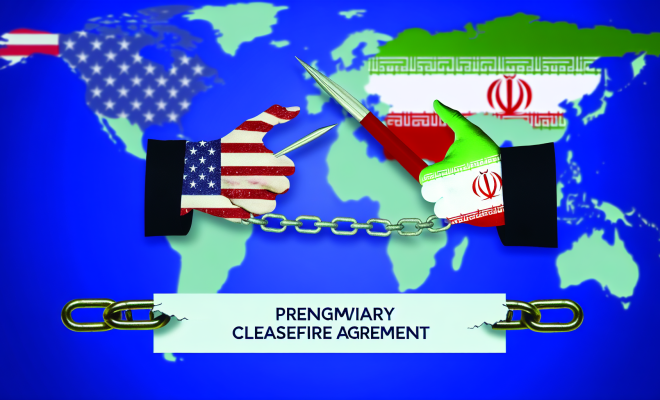
In a significant development in U.S.-Iran relations, President Donald Trump has announced a two-week ceasefire with Iran. This agreement comes in the wake of escalating tensions between the two nations and aims to pave the way for more comprehensive negotiations. The ceasefire is contingent upon Iran reopening the vital Strait of Hormuz for traffic, a strategic waterway that is essential for global oil shipments.

Ceasefire Conditions and Implications

The ceasefire agreement is not merely a pause in hostilities but rather a strategic maneuver designed to de-escalate ongoing conflicts. According to political analyst Aaron MacLean, the terms of the ceasefire include a stipulation for Iran to allow the free passage of vessels through the Strait of Hormuz. This waterway has been a flashpoint in U.S.-Iran relations, with both countries having a vested interest in its security and accessibility.

The Strait of Hormuz connects the Persian Gulf with the Gulf of Oman and is one of the most critical maritime chokepoints in the world. Approximately 20% of the world’s oil trade passes through this narrow channel, making its security vital not just for regional players but for the global economy as well. By reopening the strait, Iran would signal its willingness to engage in negotiations and reduce tensions with the United States.

Background of U.S.-Iran Tensions

The backdrop of this ceasefire is steeped in a history of animosity. The U.S. and Iran have been at odds since the 1979 Iranian Revolution, which saw the overthrow of the U.S.-backed Shah and the establishment of the Islamic Republic. Relations soured further with the U.S. withdrawal from the Joint Comprehensive Plan of Action (JCPOA) in 2018, a move that reinstated economic sanctions against Iran.

In recent months, tensions have escalated dramatically, with increased military posturing from both sides. Incidents involving naval confrontations and drone strikes have raised alarms over the potential for a broader conflict. The announcement of a ceasefire is seen as a crucial step toward restoring some degree of stability in the region.

Potential Outcomes of the Ceasefire

While the ceasefire is a positive development, its long-term impact remains uncertain. Analysts suggest that this agreement could serve as a foundation for more extensive diplomatic efforts. A successful ceasefire could lead to renewed discussions on nuclear disarmament, regional security, and even economic cooperation.

  • De-escalation of military tensions: The ceasefire could lead to a reduction in military confrontations, allowing both nations to redirect their focus toward diplomatic negotiations.
  • Reopening of trade routes: Allowing traffic through the Strait of Hormuz would facilitate the flow of oil and other goods, benefiting both Iranian and global economies.
  • Building trust: A successful ceasefire could build a level of trust that may be necessary for future negotiations on contentious issues, including Iran’s nuclear program.

International Reactions

The international community has largely welcomed the ceasefire agreement, viewing it as a hopeful signal amidst a backdrop of instability. European allies, who have long sought to mediate between the U.S. and Iran, see this as an opportunity to reinvigorate diplomatic efforts that have been stymied since the U.S. withdrew from the JCPOA.

However, skepticism remains prevalent among some analysts and policymakers. Many question whether Iran will adhere to the terms of the ceasefire, given its history of defiance in the face of U.S. sanctions and pressure. The Iranian government has previously shown reluctance to engage in negotiations that it perceives as one-sided or coercive.

Looking Ahead

As both nations navigate the complexities of this ceasefire, the next two weeks will be critical. The success or failure of this agreement could set the tone for future interactions between the U.S. and Iran. Political analysts emphasize the importance of maintaining open lines of communication to prevent misunderstandings that could lead to renewed conflict.

In conclusion, the ceasefire between the U.S. and Iran represents a glimmer of hope in a fraught geopolitical landscape. While the immediate goal is to reduce tensions and reopen the Strait of Hormuz, the broader implications for international diplomacy and regional stability are yet to be fully realized. As both sides work through the terms of this agreement, the world watches closely, hopeful for a peaceful resolution in a region long plagued by conflict.


Previous Article

US, Israel, Iran Reach Ceasefire Amid Middle ...

Next Article

Smooth Back-to-School: Avoid Common Parent Mistakes

Matthew Lynch

Related articles More from author

  • Tech News

    How to restore files from Carbonite

    August 20, 2026
    By Matthew Lynch
  • Tech News

    Uber Fare Split: Share Ride Costs Easily

    July 17, 2026
    By Matthew Lynch
  • Tech News

    How the iPhone, Apple Watch and Snoopy Get Us Into a Vision Pro Mindset

    February 1, 2024
    By Matthew Lynch
  • Tech News

    RetroPie Setup Guide: Relive Classic Gaming on Raspberry Pi

    June 19, 2026
    By Matthew Lynch
  • Tech News

    Protect Your Mac: A Comprehensive Guide to Using AVG

    July 23, 2026
    By Matthew Lynch
  • Tech News

    8 Essential Strategies for Reducing Stress Effectively

    July 1, 2026
    By Matthew Lynch

Search

Login & Registration

  • Log in
  • Entries feed
  • Comments feed
  • WordPress.org

Newsletter

Signup for The Tech Edvocate Newsletter and have the latest in EdTech news and opinion delivered to your email address!

About Us

Since technology is not going anywhere and does more good than harm, adapting is the best course of action. That is where The Tech Edvocate comes in. We plan to cover the PreK-12 and Higher Education EdTech sectors and provide our readers with the latest news and opinion on the subject. From time to time, I will invite other voices to weigh in on important issues in EdTech. We hope to provide a well-rounded, multi-faceted look at the past, present, the future of EdTech in the US and internationally.

We started this journey back in June 2016, and we plan to continue it for many more years to come. I hope that you will join us in this discussion of the past, present and future of EdTech and lend your own insight to the issues that are discussed.

Newsletter

Signup for The Tech Edvocate Newsletter and have the latest in EdTech news and opinion delivered to your email address!

Contact Us

The Tech Edvocate
910 Goddin Street
Richmond, VA 23231
(601) 630-5238
[email protected]

Copyright © 2026 Matthew Lynch. All rights reserved.