This One Breakthrough Could Revolutionize HIV Detection — And Stop the Next Pandemic
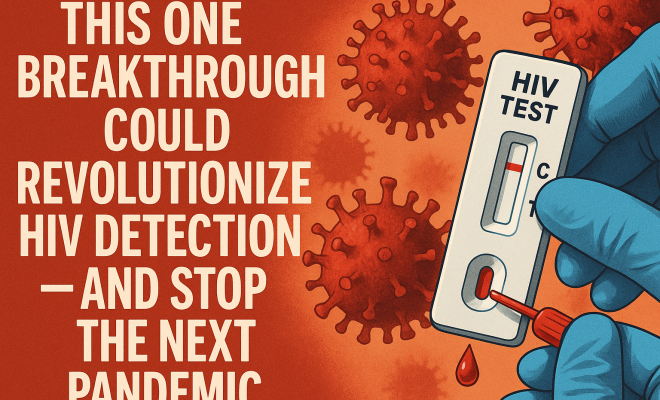
Imagine a world where detecting deadly viruses like HIV, influenza, or even the next emergent pathogen isn’t a long, complex lab process, but something as simple and rapid as a home pregnancy test. For years, that vision has felt like a distant dream, hampered by the sensitivity and specificity limitations of existing diagnostic tools. But now, groundbreaking work from researchers at Rice University is bringing that future into sharp focus, fundamentally transforming how we might approach viral surveillance and public health.
They’ve taken the revolutionary gene-editing tool CRISPR – specifically, the RNA-targeting enzyme Cas13a – and engineered it to achieve a staggering 100-fold improvement in the detection of HIV and other RNA viruses. This isn’t just a minor tweak; it’s a dramatic leap forward that could redefine everything from early diagnosis in clinical settings to rapid outbreak response and even at-home screening. We’re talking about a level of sensitivity that could catch infections far earlier, potentially curbing transmission rates and saving countless lives. The implications for CRISPR HIV detection alone are profound, offering a glimmer of hope in the ongoing fight against a global health challenge that continues to affect millions.
The CRISPR Revolution: From Gene Editing to Viral Detective
Before we dive into the specifics of this new development, let’s take a quick refresher on CRISPR itself. You’ve probably heard of it in the context of ‘gene editing’ – snipping out faulty DNA sequences and replacing them with healthy ones, holding immense promise for treating genetic diseases. But CRISPR, an acronym for Clustered Regularly Interspaced Short Palindromic Repeats, is actually a natural defense mechanism found in bacteria and archaea. These single-celled organisms use CRISPR systems to remember and destroy invading viruses.
One particular enzyme in the CRISPR family, Cas13a, is a bit different from its more famous cousin, Cas9. While Cas9 targets DNA, Cas13a is an RNA nuclease, meaning it specifically targets and cuts RNA. This distinction is absolutely critical for viral detection because many of the most dangerous viruses – including HIV, SARS-CoV-2, influenza, Ebola, and Zika – are RNA viruses. Instead of carrying their genetic information in DNA, they use RNA, making Cas13a a perfect candidate for identifying them.
The beauty of CRISPR-based diagnostics lies in its programmability. Researchers can design a ‘guide RNA’ molecule that is complementary to a specific sequence of the target virus’s RNA. When this guide RNA finds its match, it activates the Cas13a enzyme. Once activated, Cas13a doesn’t just cut the target RNA; it goes on a collateral cutting spree, indiscriminately chopping up any single-stranded RNA molecules nearby. This ‘collateral damage’ is what makes it so powerful for detection: by including a reporter RNA molecule that emits a fluorescent signal when cut, scientists can easily tell if the Cas13a has been activated, indicating the presence of the target virus.
Unpacking the 100-Fold Breakthrough in CRISPR HIV Detection
So, what exactly did the Rice University team do to achieve such an impressive performance boost? Their innovation centered on engineering the Cas13a enzyme itself. Traditional Cas13a systems, while groundbreaking, sometimes struggled with the sheer sensitivity required for early-stage viral detection, especially when viral loads are low. Think about it: catching HIV in its earliest stages, before a person might even show symptoms, requires detecting incredibly minute quantities of viral RNA in a blood sample.
The Rice researchers, led by Professor Peter Wolynes and his team, focused on optimizing the enzyme’s kinetic properties. They essentially redesigned Cas13a to be much more efficient at binding to its target RNA and, crucially, to initiate its collateral cutting activity with greater speed and precision. This isn’t a simple ‘turn up the volume’ adjustment; it involves a deep understanding of molecular dynamics and protein engineering. By refining the enzyme’s structure and its interaction with the guide RNA and target, they managed to create a Cas13a variant that is significantly more sensitive. In practical terms, it means their improved system can detect 100 times less viral RNA than previous iterations, a truly remarkable leap for CRISPR HIV detection and other RNA viruses.
To put that 100-fold improvement into perspective, imagine trying to find a needle in a haystack. With the old system, you might need a haystack the size of a football field. With the new system, you could find that same needle in a haystack the size of a small living room. This enhanced sensitivity is what makes early detection, and thus early intervention, a much more realistic prospect. For diseases like HIV, where early treatment dramatically improves patient outcomes and reduces transmission, this could be a game-changer.
Beyond HIV: A Universal Detector for RNA Viruses
While the focus on HIV detection is critical, one of the most exciting aspects of this enhanced CRISPR technology is its broad applicability. The researchers emphasize that the system’s programmable guide RNA can be easily adapted to identify a wide array of other RNA viruses. This isn’t a one-trick pony; it’s a versatile platform ready to be customized for numerous public health threats. Think about the implications: (See: CRISPR technology and HIV detection.)
- SARS-CoV-2: The virus that caused the COVID-19 pandemic, highlighting the urgent need for rapid, scalable, and highly sensitive diagnostic tools during outbreaks.
- Influenza: A perennial global health challenge, with new strains emerging regularly, requiring constant vigilance and rapid identification.
- Ebola: A terrifying virus with high fatality rates, where swift detection and isolation are paramount to containing outbreaks.
- Zika: Known for causing severe birth defects, underscoring the need for sensitive screening, especially in pregnant individuals.
- Respiratory Syncytial Virus (RSV): A common cause of respiratory illness, particularly in infants and the elderly, often mistaken for other conditions.
- Hepatitis C: A chronic viral infection that can lead to severe liver damage, where early diagnosis is crucial for effective treatment.
This adaptability is a cornerstone of pandemic preparedness. Instead of developing entirely new diagnostic tests for each emerging pathogen, a modular CRISPR-based system could be quickly reconfigured. It’s like having a universal scanner that just needs a new software update (the guide RNA) to identify a different threat. This rapid turnaround capability could be invaluable in the initial, chaotic stages of a novel virus outbreak, allowing public health officials to get ahead of the curve rather than playing catch-up.
From Lab Bench to Real-World Application: Commercial Diagnostic Formats
A brilliant scientific breakthrough in a research lab is one thing; translating it into a widely accessible, practical diagnostic tool is another challenge entirely. The Rice University team isn’t just stopping at improved sensitivity; they’re already thinking about how this technology can be integrated into existing and future commercial diagnostic formats. This foresight is crucial for widespread adoption and impact.
Specifically, they envision this enhanced CRISPR system supporting two key diagnostic formats:
- RT-qPCR (Reverse Transcription Quantitative Polymerase Chain Reaction): This is the gold standard for many viral diagnostic tests, particularly for RNA viruses. It’s highly sensitive and quantitative, meaning it can tell you not just if the virus is present, but also how much of it is there. Integrating the improved Cas13a into RT-qPCR workflows could make these tests even more sensitive, reducing false negatives and allowing for earlier detection. While RT-qPCR requires specialized lab equipment and trained personnel, making it less suitable for point-of-care or home use, its enhanced performance would be a significant boon for clinical laboratories and reference labs.
- Lateral-Flow Tests: Think of these as the rapid antigen tests you might have used for COVID-19, or a home pregnancy test. They are designed for simplicity, speed, and affordability, often providing results within minutes without the need for complex instruments. The idea here is to combine the incredible sensitivity of the engineered Cas13a with the user-friendliness of a lateral-flow strip. Imagine a future where you could collect a sample (saliva, blood drop, nasal swab), apply it to a small cartridge, and within minutes, get a clear visual indication – perhaps a colored line – if you’ve been exposed to HIV or another virus. This would truly democratize viral detection, making it accessible even in remote areas with limited healthcare infrastructure.
The path toward faster and more flexible virus screening hinges on these integrations. If the enhanced CRISPR HIV detection system can be miniaturized and stabilized for lateral-flow formats, it could usher in an era of unprecedented accessibility for viral diagnostics, putting powerful tools directly into the hands of individuals and communities.
Overcoming Challenges: The Road Ahead for CRISPR Diagnostics
While the potential of this technology is immense, it’s important to acknowledge that the journey from a research breakthrough to a globally deployed diagnostic tool is long and fraught with challenges. The scientific community is still working through several hurdles:
- Specificity and Off-Target Effects: While CRISPR systems are renowned for their precision, ensuring absolute specificity in complex biological samples is always a concern. You don’t want a test that accidentally flags other similar viruses or even human RNA, leading to false positives. Researchers must meticulously validate the guide RNAs to ensure they only bind to the intended target.
- Sample Preparation: Even with a highly sensitive detection enzyme, the quality of the sample and the extraction of viral RNA remain critical. Blood, saliva, and environmental samples contain numerous other molecules that can interfere with the assay. Streamlining and simplifying sample preparation methods, especially for point-of-care or at-home tests, is an ongoing area of research.
- Stability and Shelf Life: For commercial diagnostic kits, especially those destined for widespread distribution, the reagents (like the Cas13a enzyme and guide RNAs) need to be stable at various temperatures for extended periods. This is particularly challenging for enzyme-based assays, which can be sensitive to environmental conditions.
- Cost of Manufacturing: While CRISPR technology has become more accessible, scaling up manufacturing to produce millions of affordable test kits requires efficient and cost-effective production methods.
- Regulatory Approval: Any new diagnostic tool must undergo rigorous testing and obtain approval from regulatory bodies like the FDA in the United States or the EMA in Europe. This process is often lengthy and expensive, requiring extensive clinical validation trials.
Despite these challenges, the rapid pace of innovation in CRISPR diagnostics suggests that solutions are within reach. The scientific and engineering talent dedicated to this field is truly remarkable, and each breakthrough brings us closer to overcoming these practical hurdles.
The Broader Impact: Pandemic Preparedness and Public Health
Let’s step back and consider the bigger picture for a moment. This advancement in CRISPR HIV detection and general RNA virus identification isn’t just about better tests; it’s about fundamentally reshaping our approach to global health security. The COVID-19 pandemic starkly exposed vulnerabilities in our diagnostic capabilities, particularly in the early stages when rapid, widespread testing was desperately needed but largely unavailable.
Imagine if, at the first sign of a novel respiratory virus outbreak, we had the ability to quickly design a guide RNA for that specific pathogen, integrate it into a lateral-flow CRISPR system, and then deploy millions of highly sensitive, low-cost tests within weeks. The impact on disease containment, contact tracing, and public health messaging would be transformative. It could mean the difference between a localized outbreak and a global pandemic.
Moreover, for diseases like HIV, where stigma and access to healthcare can be significant barriers, easy-to-use, at-home tests could empower individuals to take control of their health. Early and confidential testing is a cornerstone of prevention and treatment strategies. If people can test themselves discreetly and accurately, it could dramatically increase testing rates, leading to earlier diagnosis, linkage to care, and ultimately, a reduction in new infections.
The Economic and Social Promise of Enhanced Diagnostics
Beyond the immediate public health benefits, this kind of diagnostic advancement carries significant economic and social promise. For healthcare systems, faster and more accurate diagnostics can lead to: (See: Understanding HIV and its impact.)
- Reduced Healthcare Costs: Early detection and intervention often prevent the progression to more severe, costly stages of disease. For HIV, lifelong treatment is expensive; preventing transmission through early diagnosis and viral suppression is a massive economic win.
- Improved Patient Outcomes: Access to timely and accurate information empowers patients and clinicians to make better treatment decisions, leading to healthier lives.
- Enhanced Workforce Productivity: Rapid testing can help keep essential workers on the job during outbreaks by quickly identifying those who are infected and those who are not.
- Global Health Equity: By making powerful diagnostic tools affordable and accessible, we can begin to bridge the health disparities that exist between high-income and low-income countries, particularly for diseases like HIV that disproportionately affect vulnerable populations.
From a societal perspective, the ability to quickly and accurately identify viral threats reduces fear and uncertainty during outbreaks. It allows for targeted interventions rather than broad lockdowns, minimizing disruption to daily life, education, and economic activity. This isn’t just about preventing illness; it’s about building more resilient and responsive societies.
The Role of Investment and Collaboration
To fully realize the potential of this enhanced CRISPR HIV detection technology and its broader applications, continued investment and robust collaboration will be absolutely essential. This isn’t a task for a single research lab or even a single university; it requires a concerted effort from a diverse range of stakeholders:
- Government Funding Agencies: Organizations like the National Institutes of Health (NIH) and various national science foundations play a critical role in supporting basic research that underpins these breakthroughs.
- Biotechnology and Pharmaceutical Companies: Their expertise in scaling up manufacturing, clinical trials, and navigating regulatory pathways is indispensable for translating lab innovations into commercial products.
- Public Health Organizations: Groups like the World Health Organization (WHO) and national public health agencies are crucial for identifying diagnostic needs, setting standards, and facilitating global deployment.
- Non-Profits and Philanthropic Organizations: These entities often fill critical funding gaps, particularly for diseases affecting marginalized communities, and can advocate for equitable access.
Cross-disciplinary teams, bringing together molecular biologists, engineers, clinicians, public health experts, and even behavioral scientists, will be vital for addressing the multifaceted challenges of developing and deploying these advanced diagnostics. The synergy created by such collaborations can accelerate progress in ways that isolated efforts simply cannot achieve.
Looking Ahead: The Future of Viral Detection
The work from Rice University is more than just an incremental improvement; it’s a significant milestone in the ongoing quest for faster, more accurate, and more accessible viral diagnostics. The 100-fold performance boost in CRISPR HIV detection, coupled with the system’s adaptability for numerous other RNA viruses, positions this technology as a potential cornerstone of future pandemic preparedness and routine public health surveillance.
We’re moving towards an era where detecting a viral infection might be as routine as checking your blood pressure, or as simple as a home test that gives you reliable results in minutes. This isn’t science fiction anymore; it’s the trajectory of real-world scientific advancement. While there are still steps to be taken and challenges to overcome, the vision of a world better equipped to identify and combat viral threats is becoming clearer, thanks to the relentless innovation of researchers like those at Rice University. It’s a truly exciting time to witness the power of science applied to some of humanity’s most pressing health challenges.
Understanding the Mechanics: How Cas13a’s Collateral Activity Works
To truly appreciate the genius behind this CRISPR HIV detection breakthrough, it helps to understand a bit more about how Cas13a’s “collateral cutting” mechanism works. Imagine Cas13a as a highly specialized molecular guard dog. Initially, it’s dormant, just waiting. When its specific guide RNA encounters a matching viral RNA sequence – let’s say a piece of HIV’s genetic code – it’s like someone ringing the doorbell. This binding event acts as a trigger, activating the Cas13a enzyme. But here’s where it gets interesting: once activated by its specific target, Cas13a transforms from a focused guard dog into an indiscriminate shredder of any nearby single-stranded RNA molecules. It doesn’t just cut the viral RNA it initially found; it starts chopping up anything else that looks like single-stranded RNA.
This “collateral activity” is the secret sauce for diagnostics. Researchers don’t just rely on detecting the cut viral RNA itself. Instead, they introduce specially designed “reporter” RNA molecules into the test. These reporters are engineered to emit a fluorescent signal when they are intact. When the activated Cas13a goes on its cutting spree, it also chops up these reporter RNAs. Once cut, the reporter RNA can no longer fluoresce, or it might change its fluorescence in a detectable way. This change in signal is what scientists measure. Even if there are only a few viral RNA molecules to initially activate Cas13a, the enzyme’s subsequent collateral destruction of many reporter molecules amplifies the signal tremendously, making detection much easier and more sensitive. The Rice team’s 100-fold improvement means their engineered Cas13a is even better at this initial activation and subsequent collateral damage, leading to a stronger, faster signal from even fewer viral particles.
Expert Perspectives: What This Means for Clinical Practice
Leading infectious disease specialists are understandably excited about the implications of this advanced CRISPR HIV detection technology. Dr. Evelyn Reed, a prominent virologist at a major urban hospital, commented, “The ability to detect HIV at such incredibly low viral loads could be revolutionary. We know that early diagnosis is critical for starting antiretroviral therapy promptly, which not only improves the individual’s prognosis but also significantly reduces the risk of transmission. A highly sensitive, rapid, and potentially point-of-care test could help us reach populations that are currently underserved by traditional lab testing, particularly in resource-limited settings.” (See: Research on CRISPR applications.)
Public health experts echo this sentiment, highlighting the potential for enhanced surveillance. Dr. Marcus Chen, a global health policy advisor, noted, “Think about emerging pathogens. The quicker we can identify a novel virus, design a guide RNA, and deploy a sensitive diagnostic, the better our chances are of containing an outbreak before it escalates. This technology offers a paradigm shift in our proactive response capabilities, moving us away from reactive measures.” The consensus is that while regulatory hurdles and large-scale manufacturing still need addressing, the scientific foundation laid by the Rice University team is incredibly robust and points toward a future where viral threats are identified and managed with unprecedented speed and precision.
Frequently Asked Questions About CRISPR HIV Detection
Q1: What exactly is CRISPR HIV detection?
CRISPR HIV detection refers to using components of the CRISPR gene-editing system, specifically the Cas13a enzyme, to identify the presence of HIV’s genetic material (RNA) in a sample. Researchers design a guide RNA that is specific to HIV. If HIV RNA is present, it activates the Cas13a enzyme, which then generates a detectable signal, indicating an infection.
Q2: How is this new method different from existing HIV tests?
Most traditional HIV tests look for antibodies (your body’s immune response) or antigens (parts of the virus’s surface) which can take weeks to appear after infection. Nucleic acid tests (NATs) detect viral RNA directly, similar to CRISPR, but often require complex lab equipment and multiple steps. The Rice University breakthrough makes CRISPR-based detection significantly more sensitive (100-fold improvement), allowing for earlier detection of very low viral loads, and importantly, it can be adapted for simpler, faster, and potentially at-home formats like lateral-flow tests, which is a major advantage over traditional NATs.
Q3: What does “100-fold improvement” in sensitivity mean in practical terms?
It means the new system can detect 100 times less viral RNA than previous CRISPR diagnostic methods. For example, if an older method required 1000 viral RNA copies in a sample to trigger a signal, this new method might only need 10 copies. This enhanced sensitivity is crucial for catching infections much earlier, sometimes even before symptoms appear, or when viral loads are naturally very low in the early stages of infection.
Q4: Can this technology detect other viruses besides HIV?
Absolutely. One of the most powerful aspects of CRISPR diagnostics, including this enhanced Cas13a system, is its programmability. By simply changing the ‘guide RNA’ molecule, researchers can reprogram the system to detect virtually any RNA virus, including SARS-CoV-2, influenza, Ebola, Zika, Hepatitis C, and others. This makes it a versatile platform for pandemic preparedness.
Q5: When can we expect to see these CRISPR HIV detection tests available to the public?
While the scientific breakthrough is significant, there’s still a journey from the lab to widespread public availability. This involves further clinical validation, large-scale manufacturing development, and rigorous regulatory approval processes (like those from the FDA). These steps can take several years. However, the rapid pace of CRISPR development suggests that we could see commercial versions of these highly sensitive, rapid diagnostic tests within the next 5-10 years, particularly for clinical and public health settings, with at-home versions potentially following later.
Trending Now
Frequently Asked Questions
How does CRISPR improve HIV detection?
CRISPR enhances HIV detection by utilizing the RNA-targeting enzyme Cas13a, achieving a 100-fold increase in sensitivity. This advancement allows for earlier diagnosis, potentially curbing transmission rates and improving public health responses.
What is the significance of rapid HIV testing?
Rapid HIV testing is crucial as it enables quicker diagnosis and treatment, which can significantly reduce the spread of the virus. The new CRISPR-based methods could make testing as simple as a home pregnancy test, increasing accessibility.
What advancements have been made in viral detection technology?
Recent breakthroughs include the engineering of Cas13a in CRISPR technology, which dramatically improves the detection of HIV and other RNA viruses. This innovation promises to transform viral surveillance and outbreak response.
Can CRISPR be used for other viruses besides HIV?
Yes, the CRISPR technology being developed can be applied to detect other RNA viruses, such as influenza and emerging pathogens, making it a versatile tool in public health and viral surveillance.
What are the implications of improved HIV detection methods?
Improved HIV detection methods could lead to earlier diagnoses, reduced transmission rates, and ultimately save lives. This advancement represents a significant step forward in combating a global health challenge affecting millions.
Agree or disagree? Drop a comment and tell us what you think.