This Looming Debt Cliff and AI Shift Could Reshape Real Estate Forever
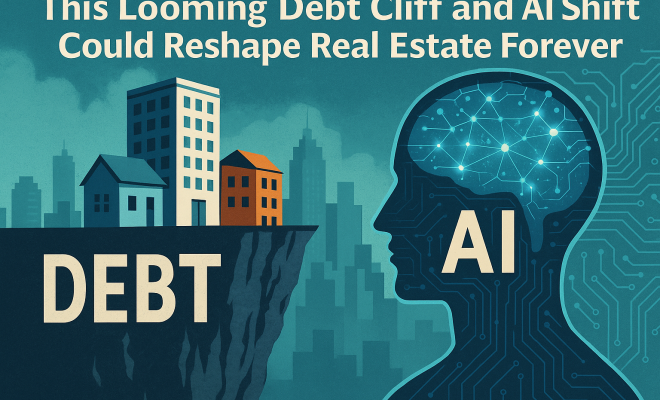
You might think the biggest story in real estate right now is rising interest rates, or maybe those stubborn office vacancies, right? Well, you’d be partly correct. But there’s a much bigger, more complex storm brewing on the horizon, one that combines massive financial pressure with an unprecedented technological revolution. We’re talking about a looming ‘maturity wall’ in commercial real estate (CRE) that’s set to crash down in 2026, paired with the relentless march of Artificial Intelligence, fundamentally altering the landscape of AI in real estate jobs and investment.
It’s a perfect storm, really. We’re staring down the barrel of an estimated $875-$930 billion in commercial and multifamily loans scheduled to mature in 2026. Think about that for a second. Many of these loans were originated when interest rates were significantly lower, making refinancing in today’s environment a brutal proposition. Add to that historically high office vacancy rates – projected to hover around 20.3% in 2026 – and you’ve got a recipe for widespread distress and potential defaults. This isn’t just a hiccup; it’s a financial cliff. And just as this economic earthquake is set to hit, AI is fundamentally transforming how we work, how we invest, and what kind of jobs are even available in real estate.
1. The 2026 Maturity Wall: A Financial Avalanche Waiting to Happen
Let’s start with the elephant in the room: the colossal debt cliff facing the commercial real estate sector. When lenders issued loans a few years back, they did so in a completely different economic climate. Interest rates were incredibly low, making it easy for developers and investors to secure financing for new projects or refinance existing properties. Fast forward to today, and the Federal Reserve’s aggressive rate hikes have completely upended that calculus. Properties that once generated enough cash flow to cover their debt service are now struggling, especially as higher rates make refinancing an expensive, sometimes impossible, endeavor.
The sheer scale of this problem is staggering. We’re talking about nearly a trillion dollars in loans – somewhere between $875 billion and $930 billion – that need to be refinanced or repaid within the next two years. Imagine a homeowner who bought a house with a low fixed-rate mortgage suddenly facing a mandatory refinance at double the interest rate with less equity. Now multiply that by hundreds of thousands of commercial properties. Many borrowers simply won’t be able to make the new, higher payments, leading to defaults, foreclosures, and a potential flood of distressed assets hitting the market. This isn’t just about big banks; it’s about pension funds, individual investors, and the entire ecosystem of real estate finance feeling the squeeze.
2. Office Vacancies: The Persistent Drag on CRE
Compounding the maturity wall crisis is the stubborn, seemingly intractable problem of office vacancies. Even before the pandemic, the office market was undergoing a transformation, but COVID-19 accelerated it dramatically. Remote work and hybrid models became the norm, emptying out once-bustling downtown towers. While some companies have mandated a return to the office, many have embraced flexibility, leading to a permanent reduction in their physical footprint. By 2026, projections suggest office vacancy rates will hover around 20.3%, a figure that would have been unthinkable just a few years ago.
What does a 20% vacancy rate mean for property owners? It means significantly less rental income, which directly impacts their ability to service debt. Empty floors don’t just sit there idly; they’re a drain on resources, requiring maintenance, utilities, and property taxes, all without generating revenue. This situation creates a vicious cycle: high vacancies lead to lower property values, making it even harder to refinance loans, especially if lenders are already nervous about the sector. It’s a fundamental challenge that, unlike a temporary economic downturn, reflects a potentially long-term shift in how and where people work, making it incredibly difficult for many traditional office properties to recover their former glory.
3. AI’s Looming Impact on White-Collar Jobs
Now, let’s weave in the AI factor, because it’s not just a technological curiosity; it’s a force multiplier for the changes we’re discussing. Artificial Intelligence is projected to replace or transform a staggering 38% of white-collar jobs by 2026. That’s not some distant future scenario; that’s next year. And real estate, with its heavy reliance on data analysis, transaction processing, and information management, is particularly susceptible. Imagine 37% of tasks within REITs (Real Estate Investment Trusts) and CRE firms becoming automatable. This isn’t about robots building houses; it’s about algorithms doing the work of analysts, appraisers, and even some brokers.
From automating property valuations and market analysis to streamlining due diligence and managing lease agreements, AI tools are becoming incredibly sophisticated. They can process vast amounts of data far more quickly and accurately than any human, identifying trends, predicting market shifts, and even flagging potential risks. This efficiency gain is attractive to businesses looking to cut costs and improve decision-making. But it also means that many routine, repetitive tasks that once formed the backbone of entry-level and even mid-level AI in real estate jobs are now ripe for automation, forcing a massive re-evaluation of skill sets and career paths within the industry.
4. The Surprising JLL Revelation: AI Markets & Demand
Here’s where it gets truly interesting, and perhaps a bit counterintuitive. While the conventional wisdom might suggest that markets most exposed to AI-driven job displacement would experience a downturn in real estate demand, new research from JLL (Jones Lang LaSalle) paints a different picture. Their findings indicate a surprising divergence: markets where AI is most likely to displace jobs are also seeing the strongest real estate demand from AI companies themselves. Think about that for a moment. It’s not a uniform compression across the board; it’s a highly localized, specialized boom. (See: CDC on economic impacts of real estate.)
Why is this happening? AI companies, by their very nature, are at the forefront of innovation. They require highly skilled talent, specialized infrastructure, and often collaborative environments to develop and deploy their technologies. So, while AI might be automating certain tasks in traditional industries, it’s simultaneously creating entirely new industries and job categories that need physical space. These firms are actively seeking out locations with access to talent pools, robust tech infrastructure, and a vibrant innovation ecosystem, often leading to increased demand for specific types of office, lab, and data center space in those very same markets. It’s a fascinating dynamic that challenges our initial assumptions about AI’s impact on real estate demand.
5. Navigating the New Landscape of AI in Real Estate Jobs
So, what does all this mean for the people working in real estate? The impact on AI in real estate jobs is multifaceted. We’re not just looking at job losses, but a fundamental transformation of roles. The tasks most susceptible to automation are those that are repetitive, data-intensive, and rule-based. Think about the manual compilation of market reports, basic property valuations, or even the initial screening of investment opportunities. These are now being handled by algorithms with increasing accuracy and speed.
This shift means that real estate professionals need to adapt, and quickly. The future lies in skills that AI can’t easily replicate: critical thinking, complex problem-solving, emotional intelligence, negotiation, relationship building, and creative strategy. Instead of being replaced, many roles will be augmented. A broker might use AI to identify the perfect properties for a client, but the human element of understanding client needs, negotiating deals, and building trust remains paramount. Appraisers might leverage AI for initial valuations but will need to apply their nuanced understanding of local markets and unique property characteristics to finalize assessments. It’s about working *with* AI, not against it.
6. The Rise of New Real Estate Niches Driven by AI
The changes brought by AI aren’t just about job displacement; they’re also about the creation of entirely new opportunities and specialized niches within the real estate sector. Consider the demand for data centers, for example. As AI models become more complex and data-hungry, the need for robust, energy-efficient data infrastructure is exploding. This creates demand for specialized real estate development, investment, and management in this very specific asset class. Similarly, the growing field of ‘proptech’ – property technology – is a direct result of AI’s influence. Companies developing AI solutions for property management, smart buildings, predictive maintenance, and personalized tenant experiences are creating a vibrant ecosystem that needs its own dedicated real estate expertise.
Beyond proptech, we’re seeing an increased need for professionals who can understand and interpret AI-generated insights. Data scientists with a real estate background, AI ethicists for property tech, and consultants specializing in AI implementation for real estate firms are becoming highly valuable. This means that while some traditional roles may diminish, new, high-skill jobs are emerging, requiring a blend of real estate knowledge and technological fluency. The industry isn’t shrinking; it’s evolving, creating new frontiers for those willing to adapt and specialize.
7. Investment Opportunities in a Distressed and AI-Driven Market
For investors, this confluence of a distressed CRE market and AI’s transformative power presents a complex but potentially lucrative landscape. The maturity wall and high office vacancies will undoubtedly lead to a significant number of distressed assets coming to market. For those with capital and a long-term perspective, this could be an opportunity to acquire properties at a discount. However, it requires a keen understanding of market fundamentals, the ability to assess risk, and often, the foresight to identify properties that can be repurposed or redeveloped for new uses, such as residential conversions or specialized AI-driven facilities.
Furthermore, investing in companies that are at the forefront of AI integration within real estate is another compelling avenue. This could mean investing in proptech startups, firms developing advanced analytics for real estate decision-making, or even companies specializing in the conversion of underperforming assets into AI-ready infrastructure. The key here is not just traditional real estate acumen, but also a deep appreciation for technological trends and their potential to reshape value. The market for ‘CRE investment opportunities’ and ‘distressed asset financing’ will surely heat up, but the smartest money will also be looking at ‘AI solutions for property management’ and other tech-forward plays.
8. Repurposing Office Space: A Creative Solution to Vacancy Woes
With office vacancy rates stubbornly high, and no clear sign of a full return to pre-pandemic occupancy levels, a significant challenge for property owners and investors is what to do with all that empty space. This isn’t just an aesthetic problem; it’s a financial one. Unoccupied square footage generates no income, but still incurs costs like property taxes, insurance, and maintenance. This is where creative solutions and innovative thinking become absolutely critical. Simply waiting for tenants to return is no longer a viable strategy for many.
The most discussed solution is conversion. Many older, less desirable office buildings, particularly those with smaller floor plates and good access to natural light, are being eyed for residential conversion. Transforming offices into apartments or condos can inject new life into urban cores, addressing housing shortages while repurposing underutilized assets. However, this isn’t a simple task; it often involves significant structural changes, plumbing and electrical overhauls, and navigating complex zoning regulations. Beyond residential, other possibilities include converting space into specialized lab facilities for biotech firms, high-tech manufacturing, or even vertical farms. The success of these projects hinges on careful market analysis and the ability to secure financing for what can be very capital-intensive renovations. AI tools can even help here, by analyzing feasibility and identifying optimal conversion strategies. (See: New York Times on commercial real estate trends.)
9. The Ethical and Regulatory Landscape of AI in Real Estate
As AI becomes more deeply embedded in real estate, we can’t ignore the ethical and regulatory questions that inevitably arise. For instance, how do we ensure fairness and prevent bias in AI-driven property valuations or tenant screening processes? If an algorithm is trained on historical data that reflects past discriminatory practices, it could inadvertently perpetuate those biases, even if unintentional. This isn’t a hypothetical concern; it’s a very real challenge that needs proactive solutions. Regulators are already beginning to grapple with these issues in various sectors, and real estate will be no different.
Transparency and accountability are also key. When an AI makes a decision – say, rejecting a loan application or a lease agreement – who is responsible? How can individuals challenge these decisions? The ‘black box’ nature of some advanced AI models makes it difficult to understand their reasoning, which can be problematic in legal contexts. We’re likely to see a growing body of regulations emerge around AI use in real estate, focusing on data privacy, algorithmic transparency, and anti-discrimination measures. Real estate professionals and firms leveraging AI will need to stay abreast of these developments, ensuring their practices are not only efficient but also ethical and compliant. This creates a whole new field for legal services specializing in AI compliance for real estate, another fascinating niche in the evolving landscape.
10. The Role of Data Analytics and Predictive Modeling in the AI Real Estate Era
Beyond the direct application of AI in automating tasks, the underlying foundation for much of this transformation is advanced data analytics and predictive modeling. In the past, real estate decisions often relied heavily on experience, intuition, and relatively basic market reports. Today, with the sheer volume of data available from various sources – satellite imagery, social media trends, traffic patterns, demographic shifts, transaction histories, and more – the game has changed entirely.
AI-powered analytics can process and synthesize this disparate data to create incredibly granular insights. For example, predictive models can forecast neighborhood growth patterns with higher accuracy, identify optimal locations for new developments based on complex socio-economic factors, or even anticipate property maintenance issues before they become critical. This isn’t just about knowing what happened; it’s about predicting what *will* happen. For real estate investors, this means a significant edge in identifying undervalued assets or emerging markets. For developers, it means reducing risk by making more informed decisions about project viability. And for property managers, it translates to optimized operational costs and improved tenant satisfaction through proactive maintenance and personalized services. The demand for real estate professionals who can leverage these tools, interpret their outputs, and translate them into actionable strategies is skyrocketing. This expertise is becoming a cornerstone for any successful venture in the AI-driven real estate sector.
11. Global Perspectives: How Different Markets are Adapting to AI in Real Estate
It’s easy to focus on the domestic market, but the impact of AI in real estate jobs and investment is a global phenomenon, with varying levels of adoption and unique challenges in different regions. For instance, highly digitized markets like Singapore and Dubai are often at the forefront of implementing smart city technologies and AI-powered property management systems, driven by strong government support and a tech-savvy populace. These regions can serve as case studies for what’s possible when innovation is embraced comprehensively.
In contrast, more traditional markets, or those with less robust digital infrastructure, might see a slower adoption rate but could still benefit from localized AI solutions tailored to their specific needs. For example, emerging markets might leverage AI for more efficient land titling and registration, reducing fraud and increasing transparency – a foundational step for real estate development. China, with its massive population and rapid urbanization, is investing heavily in AI for urban planning and smart infrastructure, creating vast opportunities for AI-enabled real estate solutions. Understanding these global nuances is crucial for international investors and firms looking to expand. The challenges posed by the maturity wall might be more concentrated in certain Western markets, but the opportunities for AI integration are truly worldwide, leading to diverse applications and job roles depending on the regional context.
12. Preparing the Workforce: Education and Upskilling for AI in Real Estate
Given the rapid transformation of AI in real estate jobs, a critical question arises: how do we prepare the current and future workforce for this new landscape? The answer lies in proactive education and continuous upskilling. Traditional real estate curricula in universities and professional programs need a significant overhaul to include modules on data science, machine learning fundamentals, proptech platforms, and ethical AI considerations. It’s no longer enough to understand finance and market dynamics; a basic literacy in technology is becoming indispensable.
For existing professionals, the emphasis must be on lifelong learning. Industry associations, private training providers, and even internal corporate programs are stepping up to offer certifications and workshops in AI tools relevant to real estate. This could involve learning how to use AI-powered CRM systems, mastering advanced data visualization techniques, or understanding the principles behind algorithmic valuation models. Companies that invest in training their employees in these new skills will likely be the ones that thrive. It’s not about replacing humans with AI, but about empowering humans with AI, creating a more sophisticated and capable workforce that can leverage technology to deliver higher value services. This educational shift is perhaps one of the most important long-term strategies for navigating the AI revolution successfully. (See: Nature on technology's impact on jobs.)
The convergence of a massive debt maturity wall and the transformative power of AI is creating an unprecedented moment in commercial real estate. It’s a period of immense challenge, certainly, but also one of profound opportunity for those who are prepared to adapt, innovate, and think differently about how real estate is valued, managed, and developed. The future of AI in real estate jobs isn’t about replacement; it’s about evolution, demanding new skills, new strategies, and a willingness to embrace a rapidly changing world.
Frequently Asked Questions About AI in Real Estate Jobs
Q1: Will AI completely replace real estate agents and brokers?
No, not completely. While AI will automate many transactional and data-heavy tasks like lead generation, market analysis, and property matching, the core human elements of real estate – negotiation, emotional intelligence, understanding unique client needs, building trust, and navigating complex personal situations – remain irreplaceable. Agents will evolve into highly skilled consultants, leveraging AI tools to enhance their efficiency and focus on relationship building and strategic advice.
Q2: What specific real estate jobs are most at risk from AI automation?
Roles heavily reliant on repetitive data entry, basic market research, administrative tasks, and routine property valuations are most susceptible. This might include certain aspects of appraisal, property management bookkeeping, basic underwriting, and some junior analyst positions. However, even in these roles, the trend is more towards augmentation, where AI handles the mundane tasks, allowing humans to focus on higher-level problem-solving and decision-making.
Q3: What new job opportunities are emerging due to AI in real estate?
The rise of AI is creating exciting new roles. We’re seeing demand for PropTech developers, data scientists with real estate expertise, AI implementation specialists, smart building engineers, consultants focused on AI strategy for real estate firms, and even AI ethicists for property technology. There’s also a growing need for professionals who can interpret AI-generated insights and translate them into actionable business strategies.
Q4: How can current real estate professionals prepare for the AI transformation?
Upskilling is key. Professionals should focus on developing skills that AI can’t easily replicate, such as critical thinking, complex problem-solving, emotional intelligence, creativity, and advanced negotiation. Additionally, learning to effectively use AI tools and understanding data analytics will be crucial. Many online courses, industry workshops, and professional certifications are now available to help bridge this knowledge gap.
Q5: Is AI only impacting commercial real estate, or residential too?
AI is impacting both commercial and residential real estate. In residential, it’s transforming lead generation, personalized property recommendations, virtual tours, and even mortgage processing. In commercial, its applications are vast, from optimizing building operations and predictive maintenance to sophisticated market analysis for investment decisions and urban planning. The fundamental principles of data processing and automation apply across the entire real estate spectrum.
Trending Now
Frequently Asked Questions
What is the 2026 maturity wall in commercial real estate?
The 2026 maturity wall refers to a significant financial challenge facing the commercial real estate sector, with an estimated $875-$930 billion in loans set to mature. Many of these loans were taken out when interest rates were lower, making refinancing difficult in the current high-rate environment.
How will rising interest rates affect real estate investments?
Rising interest rates create a challenging environment for real estate investments, as properties that once generated sufficient cash flow may struggle to meet debt obligations. This situation is exacerbated by the upcoming maturity wall, potentially leading to widespread defaults in 2026.
What impact does AI have on the real estate industry?
AI is transforming the real estate industry by changing how professionals work, invest, and the types of jobs available. As technology advances, it is likely to reshape operational efficiencies, market analyses, and even property management practices.
What are the projected office vacancy rates for 2026?
Office vacancy rates are projected to remain historically high, around 20.3% in 2026. This trend adds to the financial distress faced by commercial real estate, particularly as many properties struggle to maintain profitability amid rising vacancies.
What could happen if the commercial real estate sector defaults?
If a significant number of commercial real estate loans default due to the maturity wall and rising interest rates, it could lead to widespread financial instability, impacting not only the real estate market but also the broader economy.
What's your take on this? Share your thoughts in the comments below — we read every one.