European SpaceX Competitor Raises Billions to Dominate Orbit
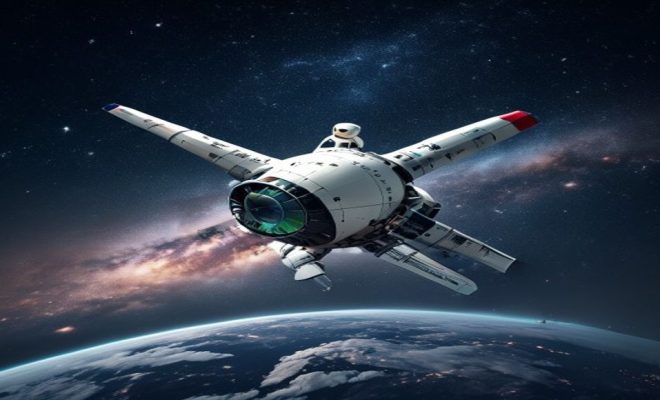
For years, the narrative in private space travel felt pretty singular: SpaceX. Elon Musk’s ambitious company, with its reusable rockets and grand visions of Mars, has largely captured the public imagination and a significant chunk of the launch market. But if you’ve been paying attention, a new challenger is quietly, but powerfully, emerging from Europe. We’re talking about a genuine European SpaceX competitor, and it’s not just one company; it’s a burgeoning ecosystem of innovative startups backed by serious capital and an even more serious ambition to reshape the global space landscape.
The latest buzz, and a truly significant development, centers around The Exploration Company. This Munich-based startup is reportedly in advanced discussions to secure at least $300 million in funding, pushing its valuation north of $2 billion. Think about that for a moment: a European startup, relatively nascent in the grand scheme of things, commanding that kind of financial muscle. This isn’t just a ripple; it’s a wave, following closely on the heels of another German rocket maker, Isar Aerospace, which recently closed a hefty €270 million funding round. These aren’t isolated incidents. They represent a clear, concerted effort by Europe to carve out its own substantial piece of the ‘new space race’ pie, a race that has historically been dominated by American and, increasingly, Asian players.
The Ascent of a European SpaceX Competitor: The Exploration Company’s Bold Play
Let’s zoom in on The Exploration Company for a moment, because their trajectory is particularly illuminating. While details of their technology are still emerging, their reported $2 billion-plus valuation speaks volumes about investor confidence. What makes a relatively new player so attractive? It’s likely a combination of factors: an experienced team, a compelling technological roadmap that addresses specific market needs, and a strategic vision that aligns with Europe’s broader space ambitions. They aren’t just building rockets; they’re aiming to build the infrastructure for future space endeavors, which often includes everything from satellite deployment to in-orbit servicing and even potential human spaceflight capabilities down the line. This holistic approach is crucial. Merely replicating SpaceX’s Falcon 9 or Starship isn’t enough; a true European SpaceX competitor needs to innovate and differentiate.
The reported $300 million investment isn’t just a cash injection; it’s a vote of confidence that signals a maturing European private space sector. For years, European space efforts have largely been the domain of government agencies like the European Space Agency (ESA) or large, established defense contractors. While these entities have achieved remarkable feats, they haven’t always had the agility or risk-taking appetite of private startups. The Exploration Company, along with others, is changing that paradigm. They’re bringing Silicon Valley-esque startup energy and venture capital funding models to a sector that desperately needs both to compete on a global scale.
Isar Aerospace and the German Rocket Renaissance
The story of Isar Aerospace is equally compelling and acts as a fantastic complementary narrative to The Exploration Company’s rise. Based in Munich, much like their peers, Isar Aerospace is focusing on the critical segment of small to medium-lift launch vehicles with their Spectrum rocket. Their recent €270 million funding round is a testament to the strong investor interest in this particular niche. Why small-to-medium lift? Because the demand for deploying constellations of small satellites – for internet, Earth observation, and scientific research – is absolutely booming. Companies like Starlink, OneWeb, and countless others need reliable, cost-effective ways to get their hardware into orbit, and they need it frequently.
Isar Aerospace isn’t just building a rocket; they’re building a scalable production capability. The funds from their latest round are specifically earmarked to expand their Spectrum launch vehicle production. This focus on manufacturing efficiency and capacity is a direct challenge to the likes of SpaceX, which has mastered high-volume, rapid-turnaround production. To be a viable European SpaceX competitor, you can’t just build one good rocket; you need to build hundreds, reliably and affordably. Isar Aerospace understands this implicitly, and their investment in production infrastructure signals a long-term strategic play to capture a significant portion of the global launch market.
The EU’s Strategic Imperative: Nurturing Domestic Talent
These private sector successes aren’t happening in a vacuum. The European Union, through initiatives like the Scaleup Europe Fund, is actively and strategically involved in nurturing this domestic space talent. The motivations are clear: economic prosperity, technological sovereignty, and national security. For too long, Europe has watched as its brightest minds and most promising technologies either migrated abroad or were acquired by foreign entities. The EU wants to stop this ‘brain drain’ and ‘tech drain’ by providing the capital and supportive ecosystem needed for these companies to thrive within Europe.
Think about the implications of having a robust, independent space launch capability. It means not being reliant on other nations to deploy your critical infrastructure, whether that’s Galileo navigation satellites, Copernicus Earth observation missions, or future defense assets. It means creating high-skilled jobs, fostering innovation, and driving economic growth across the continent. The EU’s involvement isn’t just about funding; it’s about creating a framework that encourages investment, streamlines regulations, and connects startups with established industries and research institutions. This holistic approach is essential for any European SpaceX competitor to truly flourish and sustain itself over the long haul.
The ‘New Space Race’ and National Economic Competition
The term ‘new space race’ isn’t just catchy; it accurately describes the current geopolitical and economic landscape. This isn’t just about planting a flag on the Moon; it’s about economic dominance, technological leadership, and securing strategic advantages. Every nation, or bloc of nations like the EU, recognizes the immense value of being a leader in space. From satellite internet providing connectivity to remote regions, to advanced Earth observation helping predict climate patterns and manage resources, to potential asteroid mining and off-world manufacturing – the economic opportunities are truly staggering. (See: Wikipedia article on SpaceX.)
When a company like The Exploration Company or Isar Aerospace secures hundreds of millions in funding and achieves multi-billion dollar valuations, it’s not just a win for the founders and investors; it’s a win for the entire European economy. It attracts further investment, stimulates job creation in highly specialized fields, and reinforces Europe’s position as a hub of innovation. This competition is fierce, and the stakes are incredibly high. For Europe to maintain its geopolitical influence and economic competitiveness in the 21st century, it absolutely needs to be a major player in this new space economy, and that means fostering a strong European SpaceX competitor.
High Valuations: A Sign of Confidence or a Bubble?
The reported $2 billion-plus valuation for The Exploration Company, and the significant funding rounds for Isar Aerospace, naturally raise questions. Are these valuations justified, or are we seeing a speculative bubble in the space sector? While it’s always wise to approach high valuations with a degree of caution, there are compelling arguments to suggest that these figures reflect genuine market confidence in the long-term potential of these companies and the broader space industry.
First, the addressable market is enormous and growing. The demand for launch services, satellite manufacturing, in-orbit services, and downstream data analytics is projected to expand exponentially over the coming decades. Second, these companies are not just speculative ventures; they are building tangible hardware, securing contracts, and demonstrating clear technological progress. Third, there’s a strategic premium. Governments and large corporations are willing to invest in space capabilities not just for immediate returns, but for long-term strategic advantages, national security, and critical infrastructure. While the space sector has seen its share of hype cycles, the underlying fundamentals of increased demand and technological advancement seem robust enough to support these impressive valuations, particularly for a promising European SpaceX competitor.
Monetization Opportunities: Beyond the Rocket Launch
The space industry isn’t just about launching rockets; it’s a vast ecosystem with diverse monetization opportunities, particularly for investors and businesses. For venture capitalists and space tech stock investors, these European companies represent exciting new avenues for growth. The potential for high returns, especially if these companies successfully scale and capture significant market share, is a powerful draw.
Beyond direct investment, there are significant opportunities in business-to-business (B2B) SaaS and manufacturing solutions. Aerospace software, for everything from mission planning and satellite operations to advanced simulations and data analytics, is a critical component of the industry. Manufacturing solutions, including advanced materials, additive manufacturing (3D printing), and precision engineering, are also in high demand. Every rocket, every satellite, and every ground station relies on a complex supply chain of specialized components and services. Companies that can provide these foundational elements stand to benefit immensely from the growth of a strong European SpaceX competitor sector. And let’s not forget the tantalizing, if still distant, prospect of luxury space travel and tourism – another potential revenue stream that could emerge from a thriving private space sector.
The Talent Pipeline: Fueling Europe’s Space Ambition
A thriving space industry, especially one aiming to produce a strong European SpaceX competitor, is nothing without talent. Europe has a deep pool of engineering, scientific, and technical expertise, but historically, some of the most ambitious projects and lucrative opportunities have been elsewhere. The rise of companies like The Exploration Company and Isar Aerospace is changing that by creating exciting, cutting-edge career paths within Europe.
This isn’t just about attracting experienced professionals; it’s about inspiring the next generation. When young students see European companies building rockets and spacecraft, it sparks interest in STEM fields and encourages them to pursue careers in aerospace. Universities and vocational schools will play a crucial role in developing the specialized skills needed, from propulsion engineers and avionics specialists to software developers and data scientists. Nurturing this talent pipeline is a long-term investment, but it’s absolutely essential for Europe to sustain its competitive edge and ensure a steady supply of innovators for its burgeoning space sector.
Challenges on the Horizon for a European SpaceX Competitor
While the momentum is clearly building, it would be naive to ignore the significant challenges ahead for any European SpaceX competitor. First and foremost is the sheer scale and established dominance of SpaceX. They have a massive head start, proven reusable technology, and a launch cadence that is truly unparalleled. Competing with that level of efficiency and cost-effectiveness will require continuous innovation and relentless execution.
Another challenge lies in securing consistent access to capital. While initial funding rounds have been impressive, developing and operating space launch systems is incredibly capital-intensive. These companies will need sustained investment over many years to reach full maturity. Regulatory hurdles, both national and international, can also pose significant obstacles, adding complexity and cost. Finally, the fragmented nature of Europe, with different national regulations and industrial policies, can sometimes make it harder to build a truly pan-European ecosystem compared to a single national effort. Overcoming these hurdles will require strong leadership, political will, and a collaborative spirit across the continent.
Beyond Launch: In-Orbit Servicing and Manufacturing
Being a European SpaceX competitor isn’t just about getting payloads into orbit. The future of space exploration and utilization extends far beyond the initial launch. In-orbit servicing (IOS) and manufacturing are rapidly becoming critical sectors, and this is where European startups are also making significant strides. Imagine satellites that can be refueled, repaired, or upgraded directly in space, extending their operational lifespan and reducing the need for costly replacements. This capability alone could revolutionize how we manage our orbital assets.
Companies are developing robotic arms and specialized spacecraft for these tasks, offering services like de-orbiting defunct satellites (space debris removal), inspecting orbital assets, and even assembling larger structures in space. This reduces the risk and cost associated with large, monolithic spacecraft designs launched from Earth. In-orbit manufacturing, while still in its early stages, promises to unlock even more potential, allowing for the creation of components or entire structures directly in space, optimized for the space environment without the constraints of Earth’s gravity or atmospheric re-entry. European entities are actively researching and developing these technologies, seeing them as crucial differentiators in a crowded market. It’s a smart play, moving beyond the direct launch competition and into the value-added services that will define the next era of space activity. (See: NASA's official website.)
The Role of Government Contracts and Institutional Support
While venture capital fuels much of this ‘new space’ boom, government contracts and institutional support remain foundational for a European SpaceX competitor to truly thrive. Agencies like the European Space Agency (ESA) aren’t just partners; they’re often anchor customers, providing stable revenue streams and validating new technologies through their stringent requirements. These long-term contracts can de-risk private investment and provide the certainty needed for startups to scale their operations.
The ESA’s Commercial Space Transportation Services (CSTS) program, for instance, aims to stimulate the development of competitive European launch services. By placing orders and offering development funding, ESA acts as a crucial catalyst. Furthermore, national space agencies within Europe, such as DLR in Germany or CNES in France, also play a vital role, often funding specific research and development projects that feed directly into commercial applications. This dual-track approach – private capital for agility and innovation, institutional support for stability and foundational contracts – creates a robust environment for European space companies to mature and compete on a global stage. It shows that Europe understands the need for a blended ecosystem where public and private sectors mutually reinforce each other.
Sustainability in Space: A European Differentiator
As the number of satellites and launches increases, so does concern about space debris and the long-term sustainability of orbital environments. This is an area where European companies and policymakers are increasingly taking a leading role, potentially offering a key differentiator against competitors. Europe has been at the forefront of advocating for and developing technologies related to space debris mitigation, active debris removal (ADR), and environmentally responsible space operations.
For example, initiatives like ESA’s ClearSpace-1 mission, though currently led by a Swiss company, represent a broader European commitment to tackling this problem. Private European startups are also emerging with solutions for satellite servicing that include de-orbiting capabilities. By integrating sustainability principles into their designs and business models from the outset, a European SpaceX competitor could appeal to a growing segment of environmentally conscious clients and governments. This focus on responsible space stewardship could become a unique selling proposition, aligning with Europe’s broader environmental leadership and potentially setting a new global standard for space operations.
Expert Perspectives: What Industry Leaders Are Saying
Industry leaders and analysts often emphasize a few key points when discussing Europe’s space ambition. Josef Aschbacher, Director General of the European Space Agency, frequently speaks about the critical need for independent European access to space, highlighting that reliance on non-European launch providers poses strategic risks. He’s been a strong advocate for fostering a vibrant European commercial space sector.
Venture capitalists who are investing in these European startups often point to the deep technical expertise available in Europe, particularly in countries like Germany and France, coupled with a more collaborative, less “move fast and break things” approach than some American counterparts. They see a market ripe for disruption, not just by copying existing models, but by building on Europe’s strengths in precision engineering and complex systems integration. Many believe that the diversified approach – with multiple companies focusing on different niches (small-lift, medium-lift, in-orbit services) – makes the overall European ecosystem more resilient and less prone to single points of failure. The consensus is that while the challenge is immense, the ingredients for success are definitely present.
FAQ: Understanding the European SpaceX Competitor Landscape
Q: What makes a company a “European SpaceX competitor”?
A: It’s not about being an exact replica of SpaceX. A European SpaceX competitor is a private, commercially driven company based in Europe that aims to significantly disrupt the global space market, particularly in launch services, satellite manufacturing, or advanced in-orbit capabilities, by offering innovative, cost-effective, and reliable solutions that challenge the dominance of established players like SpaceX.
Q: Are these European companies trying to build rockets as large as SpaceX’s Starship?
A: Not necessarily. While some may eye larger capabilities eventually, many European startups are initially focusing on small to medium-lift launch vehicles (like Isar Aerospace’s Spectrum) or specialized in-orbit services (like The Exploration Company’s potential focus on return capsules and servicing). This allows them to target specific, rapidly growing market segments and build expertise incrementally.
Q: How does Europe’s approach differ from the US in fostering private space companies?
A: Europe often blends private venture capital with significant institutional support from organizations like the European Space Agency (ESA) and national governments. There’s a strong emphasis on technological sovereignty and fostering a pan-European ecosystem, often with more collaborative frameworks across different countries. While the US also has government contracts, the sheer scale of private funding and the number of purely commercial ventures might be greater in the US.
Q: What are the biggest advantages for a European SpaceX competitor?
A: Key advantages include a deep pool of engineering talent, strong governmental and institutional support (e.g., ESA contracts), a growing venture capital ecosystem, a focus on specific market niches (like small satellite launches or in-orbit services), and a potential emphasis on sustainability and responsible space practices.
Q: What are the biggest challenges these European companies face?
A: Significant challenges include competing with SpaceX’s established scale, reusability, and launch cadence; securing sustained, large-scale capital for long-term development; navigating complex national and international regulatory landscapes; and fostering a truly integrated, pan-European supply chain and talent pool.
Q: Will these companies make space travel more accessible or affordable?
A: Yes, that’s a primary goal. By introducing more competition, optimizing manufacturing, and developing reusable technologies, these European companies aim to drive down the cost of accessing space. This will, in turn, make satellite deployment more affordable for businesses and governments, and potentially open doors for broader commercial and scientific utilization of space.
Q: How important is reusability to these European competitors?
A: Extremely important. SpaceX has demonstrated that reusability is key to driving down costs and increasing launch cadence. Many European startups are actively developing or planning for reusable rocket stages and spacecraft, understanding that this technology is crucial for long-term competitiveness in the global launch market.
Looking Ahead: Europe’s Place in the Cosmos
The emergence of companies like The Exploration Company and Isar Aerospace, backed by significant investment and strategic EU support, marks a pivotal moment for Europe’s role in space. This isn’t just about catching up; it’s about forging a distinct path, leveraging European strengths in precision engineering, advanced materials, and collaborative research. The goal isn’t necessarily to become ‘the next SpaceX,’ but rather to establish a robust, independent, and competitive European private space industry that can stand shoulder-to-shoulder with the best in the world.
The coming years will be crucial. We’ll be watching to see if these companies can deliver on their promises, scale their operations, and secure long-term contracts. If they succeed, we won’t just see a strong European SpaceX competitor; we’ll see a truly multi-polar space economy, fostering greater innovation, more competition, and ultimately, a more accessible and dynamic future for all of humanity in the cosmos. The race is on, and Europe is making a powerful play to be a leader.
Trending Now
Frequently Asked Questions
What is The Exploration Company?
The Exploration Company is a Munich-based startup emerging as a serious competitor to SpaceX. It focuses on innovative technologies in the space sector and is currently in discussions to secure significant funding, which could elevate its valuation to over $2 billion.
How much funding is The Exploration Company raising?
The Exploration Company is reportedly in advanced discussions to secure at least $300 million in funding. This funding round is expected to significantly boost its valuation, potentially exceeding $2 billion.
What is the significance of European space startups?
European space startups like The Exploration Company and Isar Aerospace are pivotal in the new space race. They represent a concerted effort to establish a strong presence in the global space market, traditionally dominated by American and Asian companies.
Who are the competitors to SpaceX in Europe?
In Europe, The Exploration Company and Isar Aerospace are notable competitors to SpaceX. Both companies are backed by substantial funding and are working on innovative solutions to challenge the existing space industry landscape.
What are the goals of The Exploration Company?
The Exploration Company aims to reshape the global space landscape by developing advanced technologies that meet specific market needs. Their strategic vision aligns with Europe's broader ambitions in the space sector, positioning them as a key player in the industry.
Agree or disagree? Drop a comment and tell us what you think.