This Canadian Company Just Unlocked the Moon’s Most Precious Resource
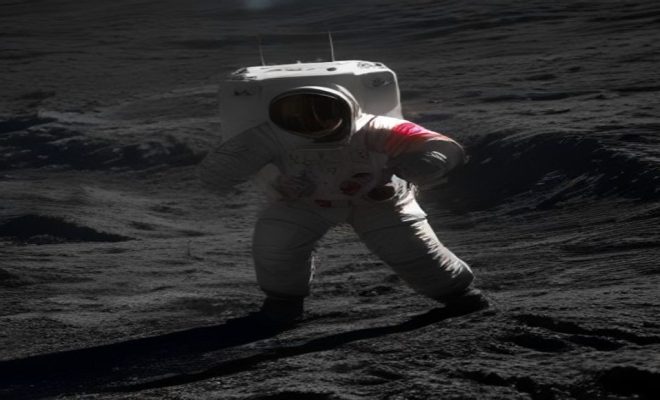
Imagine a future where humanity has a permanent foothold on the Moon. We’re talking about more than just fleeting visits; we’re envisioning sustained habitats, research outposts, and even industrial operations. But before we can truly settle the lunar surface, there’s one incredibly fundamental hurdle we absolutely have to clear: water. It’s not just for drinking, you see. Water is life support, it’s a radiation shield, and perhaps most crucially for space exploration, it’s the building block for rocket fuel. This is where a truly groundbreaking Canadian innovation steps onto the cosmic stage, promising to transform our lunar aspirations from distant dreams into tangible realities.
The Canadian Strategic Missions Corporation (CSMC), a name you’ll undoubtedly hear much more often, recently unveiled its ingenious creation, LunaPure. This isn’t just another piece of space tech; it’s a revolutionary system designed to extract and purify water directly from the Moon’s icy regolith. It’s a solution so vital, so meticulously engineered, that it clinched a prestigious win in a competition hosted by the Canadian Space Agency (CSA). This kind of moon water innovation isn’t merely a nice-to-have; it’s an absolute necessity for our species’ next great leap.
While the initial announcement of LunaPure’s triumph came in May 2026, its relevance hasn’t waned a bit. In fact, it’s only intensified as global efforts, like NASA’s ambitious Artemis program, push harder than ever towards establishing a sustained human presence on our celestial neighbor. The challenge of water scarcity in the unforgiving vacuum of space is monumental, and LunaPure offers a practical, elegant answer. Let’s dig into why this Canadian ingenuity is such a game-changer and what it means for the future of lunar exploration, resource utilization, and perhaps even the very definition of a ‘space economy.’
The Critical Role of Lunar Water for Human Presence
When we talk about venturing beyond Earth, water is arguably the single most important resource. Think about it: a human can survive only a few days without it. For astronauts living in lunar habitats, water isn’t just for hydration; it’s integral to nearly every aspect of their existence. It can be used to grow food in hydroponic systems, maintaining a semblance of terrestrial life support. It’s a coolant for sensitive equipment, crucial in environments where temperature swings are extreme. And let’s not forget its potential as a radiation shield. Deep space radiation is a serious threat to human health, and layers of water can significantly mitigate this danger, creating safer living and working spaces for lunar pioneers.
Beyond immediate survival, the presence of accessible water fundamentally alters the economics of space travel. Hauling water from Earth is incredibly expensive. Every kilogram launched costs thousands, if not tens of thousands, of dollars. Being able to ‘live off the land,’ or in this case, ‘live off the Moon’ by extracting water locally, dramatically reduces the logistical burden and financial outlay for long-duration missions. This self-sufficiency is what transforms temporary visits into genuine colonization efforts. Without a reliable, in-situ source of water, the dream of a permanent lunar base remains just that – a dream.
LunaPure’s Ingenious Approach to Moon Water Innovation
So, how does LunaPure actually work? The brilliance lies in its elegant simplicity and robust engineering, designed to tackle the unique challenges of the lunar environment. The system primarily relies on solar energy – an abundant resource on the Moon, especially during its two-week-long day cycle. This energy is harnessed to melt lunar ice, which is primarily found in permanently shadowed regions near the Moon’s poles. These regions are perpetually cold, preserving vast quantities of water ice that have accumulated over billions of years.
Once the ice is melted, the real work of purification begins. Lunar regolith, while rich in ice, also contains a mix of dust, minerals, and other contaminants that would make the meltwater undrinkable. LunaPure employs a multi-stage filtration and purification process that effectively removes these impurities, rendering the water potable and safe for human consumption. This isn’t just about filtering out visible dirt; it’s about removing dissolved solids, heavy metals, and any other undesirable elements that could compromise astronaut health or damage sensitive equipment. The CSMC’s innovative design ensures that the entire process, from extraction to purification, is highly energy-efficient and scalable, making it a true leap in moon water innovation.
From Drinking Water to Rocket Fuel: The Versatility of Lunar H2O
While providing potable water for astronauts is a monumental achievement in itself, the implications of LunaPure extend far beyond hydration. The real game-changer lies in water’s chemical composition: H₂O. By splitting water molecules through electrolysis, we can separate hydrogen and oxygen. And what are hydrogen and oxygen? They are the primary components of highly efficient rocket fuel. This means that with systems like LunaPure, the Moon could become a cosmic gas station, a refueling depot for missions venturing deeper into the solar system.
Imagine launching a mission to Mars or beyond. Instead of carrying all the necessary fuel from Earth – a hugely expensive and mass-prohibitive endeavor – spacecraft could refuel on the Moon. This ‘propellant depot’ concept radically alters the calculus of deep space exploration, making longer, more ambitious missions not just possible, but economically viable. This ability to produce rocket fuel in-situ on the Moon represents a paradigm shift, transforming our satellite from merely a destination into a launching pad for humanity’s expansion across the cosmos. This dual utility – life support and propulsion – underscores the profound impact of effective moon water innovation.
The Artemis Program and the Race for Lunar Resources
The Canadian Strategic Missions Corporation’s win and the development of LunaPure couldn’t be more timely, aligning perfectly with global initiatives like NASA’s Artemis program. Artemis aims to land humans on the Moon, including the first woman and the first person of color, and to establish a sustained presence there. This isn’t just about planting flags; it’s about building infrastructure, conducting long-term scientific research, and eventually, enabling commercial activities on the lunar surface. Water, as we’ve discussed, is at the heart of all these ambitions. (See: NASA's Artemis program overview.)
The Artemis Accords, an international agreement outlining principles for responsible space exploration, emphasize the importance of resource utilization in space. Countries like Canada, through innovations like LunaPure, are positioning themselves as key players in this new era of lunar exploration and resource development. The competition that CSMC won, hosted by the Canadian Space Agency, is a direct reflection of Canada’s commitment to contributing critical technologies to these international efforts. It’s a clear signal that the race for lunar resources isn’t just about who gets there first, but who can sustainably utilize what’s already there.
Economic Implications: A New Space Economy Emerges
The successful development and deployment of technologies like LunaPure will inevitably spark a vibrant new space economy. Consider the monetization potential: direct investment in space technology companies like CSMC, B2B solutions for lunar infrastructure (think water delivery systems, purification plants, or even fuel depots for other space agencies and private companies), and the energy sector through space-derived fuel. This isn’t science fiction anymore; it’s a rapidly approaching reality. For more context, see JotForm integration with Google Sheets.
The ability to create propellant on the Moon could dramatically reduce launch costs from Earth, making access to space cheaper for everyone. This, in turn, could spur innovation in satellite deployment, space tourism, and even asteroid mining. Furthermore, the expertise gained in developing these lunar systems could have terrestrial applications, particularly in areas facing extreme water scarcity or requiring advanced purification techniques. We’re looking at a multi-billion-dollar industry taking shape, with moon water innovation at its very core.
Beyond the Moon: Terrestrial Applications and Future Horizons
While LunaPure is specifically designed for the harsh lunar environment, the underlying technologies and principles have significant potential for applications right here on Earth. Areas suffering from severe water scarcity, remote communities without access to clean drinking water, or disaster zones requiring rapid deployment of purification systems could all benefit from adaptations of this lunar technology. Imagine a portable, solar-powered water purification unit that can turn almost any local water source into potable drinking water, inspired by the demands of lunar survival.
Moreover, the development of robust, autonomous systems capable of operating in extreme conditions has broad implications for robotics, artificial intelligence, and sustainable energy solutions. The challenges of working on the Moon – dust, radiation, vacuum, extreme temperatures – force engineers to create highly resilient and efficient designs. These ‘space-hardened’ technologies often find their way back to Earth, improving our lives in unexpected ways. LunaPure isn’t just about the Moon; it’s about pushing the boundaries of what’s possible in engineering and resource management, benefiting humanity as a whole.
The Role of International Collaboration and Canadian Leadership
Space exploration has always been a testament to international collaboration, and the pursuit of lunar resources is no different. Canada, through organizations like the Canadian Space Agency and innovative companies like CSMC, is playing a crucial role in this global endeavor. Our nation’s expertise in robotics, remote sensing, and now, life support and resource utilization, positions us as an indispensable partner in lunar missions.
The fact that a Canadian company won this competition highlights the strength of Canada’s scientific and engineering talent. It demonstrates that even a nation with a relatively smaller space budget can make disproportionately large contributions through focused innovation and strategic partnerships. This leadership in moon water innovation not only elevates Canada’s profile on the world stage but also fosters a new generation of scientists and engineers, inspired by the possibilities of space.
The Long-Term Vision: Lunar Real Estate and Online Education
As ludicrous as it might sound to some today, the concept of ‘lunar real estate’ is slowly transitioning from science fiction to speculative reality. If we can reliably extract water and produce fuel on the Moon, the viability of permanent settlements increases exponentially. This, in turn, could create a market for infrastructure development, habitat construction, and yes, even commercial land claims – albeit under a new framework of international space law. Imagine the need for specialized construction companies, mining operations, and even lunar tourism agencies in the decades to come.
To support this burgeoning lunar economy, there will be an enormous demand for specialized skills. This opens up a fascinating avenue for online education, particularly in space engineering, astrobiology, and resource management. Universities and private institutions could develop bespoke curricula to train the next generation of lunar architects, engineers, and scientists. The ‘moon water innovation’ isn’t just about a technology; it’s about catalyzing an entire ecosystem of economic activity, scientific advancement, and human endeavor that will reshape our relationship with the cosmos for centuries to come. See also lunar exploration updates.
The Science Behind Lunar Ice: A Deeper Look
It sounds almost too good to be true, right? Water ice on the Moon, just waiting to be tapped. But how did it get there, and how much is actually available? For decades, scientists debated the presence of significant water on the Moon. Early Apollo missions found traces, but it wasn’t until more recent missions, like NASA’s Lunar Prospector (1998) and India’s Chandrayaan-1 (2008) with its Moon Mineralogy Mapper (M3) instrument, that we got solid evidence. The real game-changer was NASA’s LCROSS (Lunar Crater Observation and Sensing Satellite) mission in 2009, which intentionally crashed a rocket stage into a permanently shadowed crater at the lunar south pole, confirming substantial amounts of water ice in the ejecta plume.
The prevailing theory is that lunar water ice comes from several sources. Comets and asteroids, rich in water, have impacted the Moon over billions of years, depositing their volatile contents. Additionally, the solar wind, a stream of charged particles from the Sun, carries hydrogen ions. These ions can react with oxygen in the lunar soil to form hydroxyl (OH) and even water (H2O) molecules. These water molecules then migrate across the lunar surface until they eventually get trapped in the frigid, permanently shadowed regions of the poles, where temperatures can drop to an astonishing -240°C (-400°F). These “cold traps” act like natural freezers, preserving the ice for eons. Estimates vary, but some models suggest hundreds of millions, if not billions, of tons of water ice could be hidden within these polar craters. This vast reservoir makes moon water innovation not just a clever idea, but a truly strategic one. (See: NASA's plans for lunar water extraction.)
Challenges and Considerations for Lunar Water Extraction
While LunaPure offers a fantastic solution, extracting water on the Moon isn’t without its unique challenges. The lunar environment is incredibly unforgiving. First, there’s the extreme cold in the permanently shadowed regions. Equipment needs to be designed to operate reliably at incredibly low temperatures, which can make materials brittle and electronics malfunction. Powering heaters and other systems in these dark, cold areas requires robust energy solutions, like highly efficient solar arrays or potentially small nuclear power sources for continuous operation.
Then there’s the pervasive lunar dust, or regolith. This dust is incredibly abrasive, electrostatically charged, and can cling to everything, causing wear and tear on machinery, clogging filters, and obscuring solar panels. LunaPure’s purification stages must be robust enough to handle not just dissolved impurities but also microscopic dust particles that could damage equipment or be harmful to astronauts. Finally, operating autonomously or with minimal human intervention is crucial. Sending repair crews to the Moon is expensive and time-consuming, so systems must be designed for maximum reliability, self-diagnosis, and remote repair capabilities. Overcoming these hurdles truly showcases the ingenuity behind moon water innovation. For more context, see Formstack payment integration options.
Expert Perspectives: What Scientists and Engineers are Saying
Leading figures in space exploration are unanimous in their assessment of lunar water’s importance. Dr. Mae Jemison, the first African American woman in space, often emphasizes the need for sustainable resource utilization to enable long-duration missions. She points out that “relying solely on Earth’s resources limits our reach. In-situ resource utilization (ISRU) isn’t just a cost-saver; it’s an enabler of true space settlement.”
Similarly, planetary scientists like Dr. Paul Spudis, who was a strong advocate for lunar exploration and resource extraction, frequently highlighted that “water on the Moon is more valuable than gold for anyone wanting to live and work there.” His work helped solidify the scientific understanding of lunar ice deposits. Engineers like Dr. Robert Zubrin, known for his advocacy of human missions to Mars using ISRU, see lunar water as a crucial stepping stone. He notes, “The Moon provides a proving ground for ISRU technologies that we’ll eventually need for Mars. Mastering water extraction there makes Mars missions significantly more feasible.” These expert opinions underscore that moon water innovation isn’t just a niche technology; it’s a foundational element for humanity’s future in space.
Comparisons with Other Lunar Water Extraction Concepts
While LunaPure is a standout Canadian innovation, it’s not the only concept out there for lunar water extraction. Other approaches are also being explored, each with its own advantages and challenges. Some proposals involve using microwave heating to sublimate the ice directly from the regolith, turning it into vapor that can then be collected and condensed. This method might be faster for large volumes but could require more energy and might not be as efficient at separating water from tightly bound minerals.
Another idea focuses on using drills or excavators to physically dig up ice-rich regolith, then transporting it to a central processing plant where it can be heated. This method involves more moving parts and the challenge of operating heavy machinery in the lunar environment. What makes LunaPure particularly compelling is its integrated approach, combining solar energy harvesting, efficient melting, and multi-stage purification into a cohesive, potentially scalable system. Its focus on robustness and energy efficiency for both extraction and purification sets a high bar for moon water innovation.
Frequently Asked Questions About Moon Water Innovation
Q1: How much water is actually on the Moon?
A1: While precise figures are still being refined, scientific missions have confirmed significant quantities of water ice, particularly in permanently shadowed craters near the Moon’s poles. Estimates range from hundreds of millions to billions of tons. It’s not uniformly distributed but concentrated in these “cold traps.”
Q2: Is the water on the Moon drinkable directly?
A2: No, not directly. The lunar ice is mixed with regolith (moon dust), minerals, and other volatile compounds. It would need to go through a comprehensive purification process, like LunaPure’s multi-stage filtration, to make it safe for human consumption and suitable for equipment.
Q3: What are the primary uses for lunar water?
A3: Lunar water has several critical uses: life support for astronauts (drinking, hygiene, growing food), radiation shielding for habitats, and perhaps most transformative, as a source of hydrogen and oxygen for rocket propellant through electrolysis. These components can fuel missions deeper into space.
Q4: How does LunaPure compare to other water extraction methods?
A4: LunaPure’s innovation lies in its integrated, energy-efficient approach using solar power for melting and a multi-stage purification system. Other methods include microwave heating for sublimation or physical excavation and transport of ice-rich regolith to a processing plant. LunaPure aims for a comprehensive solution from raw ice to purified water.
Q5: What are the biggest challenges in extracting lunar water?
A5: Key challenges include the extreme cold in permanently shadowed regions (-240°C), the abrasive and pervasive lunar dust, the need for robust autonomous systems due to limited human presence, and efficient energy management in areas with little to no sunlight for extended periods.
Q6: Will Canada own the water extracted by LunaPure?
A6: This falls under the evolving framework of space law. The Outer Space Treaty of 1967 prohibits national appropriation of celestial bodies. However, the Artemis Accords, which Canada is a signatory to, support the concept of in-situ resource utilization (ISRU), allowing entities to extract and utilize space resources. It’s a complex area, but generally, the resources themselves can be utilized, even if the territory can’t be claimed.
Q7: How will lunar water impact the cost of space travel?
A7: Significantly. Launching water and rocket fuel from Earth is incredibly expensive due to mass. Being able to produce these resources on the Moon dramatically reduces the mass that needs to be launched from Earth, thereby lowering overall mission costs and making deeper space exploration more economically viable.
Q8: Are there any terrestrial applications for LunaPure’s technology?
A8: Absolutely. The robust, energy-efficient water purification and extraction technologies developed for the Moon could be adapted for use in remote terrestrial communities, disaster zones, or regions facing extreme water scarcity, offering clean drinking water solutions in challenging environments.
Q9: When could we see LunaPure in action on the Moon?
A9: While specific timelines depend on funding, further development, and integration with broader lunar missions (like Artemis), technologies like LunaPure are being rapidly matured. We could potentially see test deployments or precursor missions incorporating such systems within the next decade, with full-scale operational deployment following shortly after a sustained lunar presence is established.
Q10: What’s the environmental impact of lunar water extraction?
A10: The Moon doesn’t have an atmosphere or biosphere like Earth, so “environmental impact” is viewed differently. The primary concerns would be potential contamination of pristine scientific sites, creation of lunar dust clouds, or altering the thermal environment of cold traps. Responsible resource utilization, as outlined in agreements like the Artemis Accords, aims to minimize such impacts through careful planning and designated operating zones.
The journey to establishing a permanent human presence on the Moon is fraught with challenges, but the development of LunaPure by the Canadian Strategic Missions Corporation marks a truly significant milestone. By cracking the code of efficient lunar water extraction and purification, Canada has provided a critical piece of the puzzle that makes long-duration lunar missions not just feasible, but genuinely sustainable. This isn’t just about technological prowess; it’s about foresight, innovation, and the relentless human drive to explore and inhabit new frontiers. The Moon, once a distant, barren rock, is slowly but surely revealing its potential as humanity’s next great stepping stone, and water is the key that will unlock its future. This builds on upcoming Artemis II mission.
Trending Now
Frequently Asked Questions
Why is water important for lunar exploration?
Water is crucial for lunar exploration as it serves multiple purposes: it provides life support for astronauts, acts as a radiation shield, and is essential for producing rocket fuel. Without a reliable water source, establishing a permanent human presence on the Moon would be significantly more challenging.
What is LunaPure and how does it work?
LunaPure is an innovative system developed by the Canadian Strategic Missions Corporation (CSMC) that extracts and purifies water from the Moon's icy regolith. This technology is designed to address the critical need for water in lunar habitats and industrial operations, making sustained lunar presence more feasible.
What are the benefits of extracting water from the Moon?
Extracting water from the Moon offers several benefits, including providing essential life support for astronauts, enabling the production of rocket fuel for further space missions, and supporting long-term lunar habitation and research. This resource unlocks new possibilities for space exploration and utilization.
How does LunaPure support NASA's Artemis program?
LunaPure supports NASA's Artemis program by providing a practical solution to the water scarcity challenge on the Moon. As Artemis aims to establish a sustained human presence, LunaPure's ability to extract water directly from lunar regolith is vital for life support and fuel production.
What is the significance of LunaPure's win in the Canadian Space Agency competition?
LunaPure's win in the Canadian Space Agency competition highlights its innovative approach to solving the water scarcity issue on the Moon. This recognition underscores the importance of lunar resource utilization and positions CSMC as a key player in the future of space exploration.
What did we miss? Let us know in the comments and join the conversation.