This Astonishing AI Breakthrough Could End Standardized Testing Forever
“`html
Imagine a world where every student has a personal tutor, one that understands their unique learning style, predicts their struggles, and tailors lessons perfectly. Sounds like science fiction, right? Well, Microsoft Research is pushing us closer to that reality with a fascinating new AI system called StudentSim. This isn’t just another AI tutor; it’s an AI designed to simulate individual students. Yes, you read that correctly – an AI learning to simulate human learning. It’s a concept that’s both counterintuitive and profoundly impactful, and it’s poised to shake up the entire education landscape.
The implications of an AI tutoring simulation system like StudentSim are massive. We’re talking about a potential revolution in how we develop educational tools, how students learn, and even the future of things like standardized testing. For parents, educators, and anyone invested in the next generation, this development isn’t just interesting; it’s emotionally charged. It promises a level of personalization that traditional classrooms have only ever dreamed of, and it raises crucial questions about the evolving role of human teachers in an increasingly AI-powered world.
1. StudentSim: The AI That Learns to Be You: The Core Innovation of AI Tutoring Simulation
At its heart, StudentSim is an AI system built to create personalized simulators of individual students. Think of it as a digital doppelgänger for your learning process. This isn’t just about mimicking correct answers; it’s about modeling how a student approaches a problem, what common misconceptions they might have, how they react to different types of guidance, and even how they adapt over time. The goal is to capture the nuanced, often unpredictable, dynamics of human learning within an artificial framework.
Why is this such a big deal? Historically, developing effective AI tutors has been incredibly slow and expensive. It requires extensive studies with real students, which are costly, time-consuming, and logistically complex. Getting enough diverse feedback to truly refine an AI tutor’s pedagogical strategies is a monumental task. StudentSim aims to make this feedback loop dramatically more accessible and efficient, allowing developers to iterate on AI tutors much faster and with greater precision, all within a simulated environment.
2. Overcoming the Bottleneck of Real-Learner Studies: Accelerating AI Tutor Development
One of the most significant challenges in building sophisticated AI tutors is the sheer difficulty of conducting real-world trials. Imagine you’re developing an AI that teaches algebra. To test its effectiveness, you need a large group of students, ethical clearance, dedicated teaching staff to supervise, and robust methods to collect and analyze their performance and reactions. This process can take months, even years, and the insights gained, while invaluable, are often specific to the particular cohort and curriculum tested.
StudentSim offers a way out of this bottleneck. By creating highly accurate digital twins of learners, developers can test new tutoring strategies, different explanatory approaches, and various feedback mechanisms in a fraction of the time and cost. This allows for rapid prototyping and refinement, meaning AI tutors can evolve and improve at a pace previously unimaginable. Instead of waiting for months for real-world data, developers might get actionable insights in days, leading to more robust and effective educational AI sooner.
3. The Mechanics Behind the Magic: How StudentSim Works
So, how exactly does an AI learn to simulate a student? It’s a complex process that involves machine learning models trained on vast amounts of educational data. This data includes student responses to questions, their interactions with existing tutoring systems, their progress through curricula, and even data points reflecting their engagement and frustration levels. The AI essentially learns patterns in how students learn, make mistakes, and respond to instruction.
Once trained, StudentSim can then generate a ‘synthetic student’ that behaves much like a human would. When presented with a problem, this simulated student will attempt to solve it, make errors consistent with typical human misconceptions, and respond to tutoring interventions in a predictable, yet realistic, manner. This predictive modeling capability is crucial for providing developers with a proxy for real student feedback, allowing them to fine-tune their AI tutors before they ever interact with a human learner.
4. Personalized Learning on Steroids: The Promise of Tailored Education
The ultimate vision for AI tutoring simulation extends beyond just developing better AI tutors; it’s about realizing truly personalized learning. Imagine an AI tutor that, informed by the principles behind StudentSim, can quickly build a model of you. It understands your strengths, your weaknesses, your preferred pace, and even how you best absorb new information – whether through visual examples, step-by-step instructions, or hands-on practice.
This level of personalization could transform education. Instead of a one-size-fits-all approach, students would receive instruction perfectly adapted to their individual needs. Struggling with a concept? The AI tutor might offer a different explanation, a more simplified analogy, or additional practice problems. Excelling? It could accelerate your learning, introducing more advanced topics or challenging you with complex applications. This isn’t just about efficiency; it’s about fostering a deeper understanding and a more engaging learning experience for every student. (See: U.S. Department of Education.)
5. The Controversial ‘End of Standardized Testing’ Debate: An AI Tutoring Simulation’s Unexpected Impact
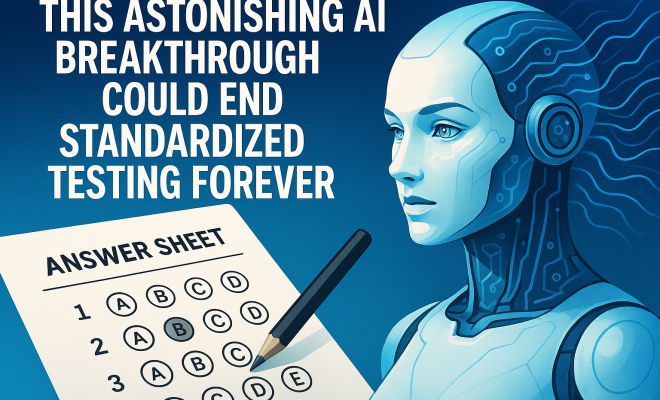
The discussion around AI tutors often veers into a fascinating, and often controversial, territory: the future of standardized testing. If AI tutors can provide continuous, real-time assessment of a student’s understanding and progress, do we still need high-stakes, once-a-year tests? Many argue that standardized tests, while offering a snapshot, often fail to capture the full picture of a student’s learning journey, nor do they account for individual learning styles or temporary setbacks. For more context, see AI self-regulation and its impact on education.
An AI tutoring simulation, by enabling the creation of highly adaptive tutors, could lead to a world where assessment is seamlessly integrated into the learning process. Imagine an AI that constantly evaluates a student’s mastery of concepts, identifies gaps, and provides immediate, targeted remediation. In such a system, a separate, stressful standardized test might become redundant. This isn’t to say all forms of assessment would disappear, but the nature and purpose of evaluation could fundamentally shift, focusing more on continuous growth and less on single-point performance.
6. The Evolving Role of Human Teachers: From Instructor to Facilitator
With advanced AI tutoring simulation systems on the horizon, it’s natural to wonder: what happens to human teachers? The fear that AI will replace teachers is a common one, but a more nuanced perspective suggests an evolution, not an obsolescence. Instead of being the primary deliverers of information, teachers could transition into roles as facilitators, mentors, and guides.
Imagine a teacher freed from the repetitive tasks of grading basic assignments or delivering generic lectures. They could focus on what humans do best: fostering critical thinking, encouraging creativity, addressing emotional and social development, and providing personalized motivation that an AI simply cannot replicate. Teachers could spend more time on project-based learning, deeper discussions, and individual mentorship, leveraging AI tutors to handle the foundational instruction and personalized practice. This shift could empower teachers to focus on the higher-order skills and human connections that are vital for student success.
7. Monetization Potential: EdTech’s Next Frontier: Leveraging AI Tutoring Simulation
The commercial implications of AI tutoring simulation and advanced AI tutors are enormous. We’re talking about a multi-billion dollar market in online education and EdTech SaaS that’s ripe for innovation. Platforms leveraging these technologies could offer unparalleled personalized learning experiences, attracting students, parents, and educational institutions alike.
Think about the potential for affiliate marketing. Reviews of ‘best AI tutoring platforms’ or ‘personalized learning software’ could become incredibly valuable. Product recommendations for ‘AI-powered learning solutions’ or ‘adaptive education tools’ would find a ready audience. This isn’t just about selling software; it’s about selling access to a fundamentally better way of learning, a proposition that resonates deeply with anyone seeking an edge in education. The demand for effective, personalized learning is immense, and AI tutoring simulation technology is positioned to meet it head-on.
8. Ethical Considerations and the Road Ahead: Navigating the Future of AI Education
While the promise of AI tutoring simulation is exciting, it’s also crucial to consider the ethical implications. How do we ensure these AI systems are fair and unbiased? What are the privacy concerns when an AI is modeling a student’s entire learning profile? How do we prevent over-reliance on AI, ensuring students still develop crucial problem-solving skills and critical thinking without constant digital assistance?
These are not trivial questions. The development of StudentSim and similar technologies will require careful consideration of data security, algorithmic transparency, and equitable access. We need robust frameworks to ensure that this powerful technology benefits all students, regardless of socioeconomic background, and doesn’t inadvertently exacerbate existing educational inequalities. The path forward involves not just technological advancement, but also thoughtful policy-making and ongoing public discourse to shape an educational future that is both innovative and ethical. The journey towards truly personalized education is just beginning, and it will be a collaborative effort to ensure it leads to a brighter future for learners everywhere.
9. The Data Fueling the Simulation: What Makes StudentSim So Smart?
For StudentSim to truly mimic a student, it needs a massive amount of high-quality data. It’s not just about correct or incorrect answers. The AI looks at the entire interaction history: how long a student spent on a problem, the sequence of their attempted solutions, where they got stuck, what hints they requested, and how they responded to different types of feedback. Imagine an AI watching thousands of students learn calculus, noting every groan of frustration, every lightbulb moment, and every common mistake. That’s the kind of rich, granular data that makes these simulations possible.
This data often comes from existing intelligent tutoring systems, online learning platforms, and even anonymized classroom interactions. The more diverse and comprehensive the dataset, the more robust and realistic the synthetic students become. It’s a continuous feedback loop: as more students interact with AI tutors, more data is generated, which in turn improves the simulations, which then helps build even better AI tutors. This virtuous cycle is what sets AI tutoring simulation apart from simpler, rule-based tutoring systems of the past. (See: New York Times on AI in Education.)
10. Beyond Academics: Simulating Social-Emotional Learning
While the initial focus of AI tutoring simulation often leans into academic subjects like math or science, the potential stretches far beyond. What if an AI could simulate a student’s emotional state, their level of motivation, or their response to encouragement versus direct correction? Imagine an AI tutor that detects signs of frustration and adjusts its approach, perhaps offering a calming break or a motivational message, much like a good human teacher would.
This moves into the realm of social-emotional learning (SEL), a critical component of holistic education. An AI that understands how different students react to pressure, failure, or success could be instrumental in developing tools that not only teach content but also build resilience, problem-solving skills, and a growth mindset. Simulating these non-cognitive factors adds another layer of complexity and power to the AI’s ability to create truly comprehensive student models, opening doors for personalized support that addresses the whole child. For more context, see the untold story behind AI's advancements.
11. Case Studies and Pilot Programs: Early Wins for AI Tutoring Simulation
While StudentSim is a cutting-edge example, the concept of using AI to understand and adapt to learners isn’t entirely new. Early intelligent tutoring systems, though less sophisticated, laid the groundwork. Today, we’re seeing pilot programs and research initiatives in universities and K-12 settings that are starting to show tangible benefits. For instance, some universities are using adaptive learning platforms, powered by AI, to help students in large introductory courses master foundational concepts, freeing up professors for more advanced discussions.
One notable example might involve an AI-powered chemistry tutor that, after a simulated trial with 1,000 synthetic students, was able to identify a pervasive misconception about chemical bonding. This insight allowed developers to refine the tutor’s explanatory module before it ever reached a real classroom, significantly reducing the learning curve for actual students. These early successes, though often small scale, demonstrate the transformative potential of AI tutoring simulation in optimizing educational tools before deployment, saving time and resources while improving learning outcomes.
12. Expert Perspectives: Educators Weigh In on AI Tutoring Simulation
The education community has a mixed but generally optimistic view on AI tutoring simulation. Dr. Anya Sharma, a professor of educational technology at a prominent university, notes, “AI simulations like StudentSim offer an unparalleled sandbox for pedagogical innovation. We can test hypotheses about teaching methods at scale and speed that were impossible before.” She emphasizes the tool’s potential to democratize access to high-quality, personalized instruction, especially in underserved communities.
However, concerns remain. Mr. David Chen, a high school history teacher with two decades of experience, voices a common sentiment: “While the tech is amazing, we must remember that learning isn’t just about content mastery. It’s about human connection, the spark of curiosity a good teacher ignites, and the social dynamics of a classroom. AI can’t replace that, but it can certainly augment our capabilities.” The consensus seems to be that AI tutoring simulation is a powerful ally, not a replacement, for human educators, allowing teachers to focus on the uniquely human aspects of education.
13. The Global Impact: Bridging Educational Divides with AI Tutoring Simulation
The promise of AI tutoring simulation isn’t just for well-funded institutions; it has the potential to address global educational disparities. In regions where qualified teachers are scarce, or access to quality educational resources is limited, AI-powered personalized learning could be a game-changer. Imagine a student in a remote village having access to an AI tutor that adapts to their specific needs, speaks their language, and teaches them at their own pace. This could unlock educational opportunities for millions of learners worldwide.
Furthermore, the ability to rapidly develop and deploy AI tutors that are culturally and linguistically appropriate for diverse populations can significantly accelerate educational equity. By simulating learning patterns across different cultural contexts, developers can fine-tune AI tutors to be more effective and relevant, ensuring that educational technology truly serves everyone, everywhere. This global reach makes AI tutoring simulation a powerful tool for achieving universal educational goals.
Frequently Asked Questions (FAQ) about AI Tutoring Simulation
Q1: What exactly is an AI tutoring simulation?
An AI tutoring simulation, like Microsoft’s StudentSim, is an artificial intelligence system designed to mimic the learning behaviors, thought processes, and common misconceptions of individual human students. It acts as a “digital twin” of a learner, allowing developers to test and refine AI tutors in a simulated environment before they interact with real people. For more context, see the urgent truth about AI in cybersecurity. (See: Scientific articles on AI in learning.)
Q2: How does AI tutoring simulation differ from a regular AI tutor?
A regular AI tutor *teaches* human students. An AI tutoring simulation, on the other hand, *pretends to be* a human student. Its purpose is to help developers build better AI tutors by providing realistic feedback on how a teaching strategy might perform, without needing actual human learners for initial testing.
Q3: What kind of data is used to train these AI simulations?
AI tutoring simulations are trained on vast datasets that include anonymized student responses, interaction logs from existing learning platforms, progress trackers, time spent on tasks, hints requested, and even indicators of engagement or frustration. This data helps the AI learn patterns in how humans acquire knowledge and make mistakes.
Q4: Will AI tutoring simulation replace human teachers?
The prevailing view is no. Instead, AI tutoring simulation technology is expected to empower human teachers by handling repetitive instructional tasks and personalized practice. This frees up teachers to focus on higher-order skills, social-emotional development, fostering creativity, and providing the invaluable human connection and mentorship that AI cannot replicate.
Q5: What are the main benefits of using AI tutoring simulation?
The primary benefits include:
- Faster development of AI tutors: Developers can iterate and refine tutoring strategies much more quickly and cost-effectively.
- Truly personalized learning: Enables the creation of AI tutors that adapt precisely to individual student needs, learning styles, and pace.
- Reduced costs and logistical hurdles: Minimizes the need for extensive, expensive real-world trials with human students.
- Improved educational outcomes: Leads to more effective and engaging AI-powered learning tools.
- Potential for global impact: Can help bridge educational disparities by making high-quality, personalized learning accessible worldwide.
Q6: Are there any ethical concerns with AI tutoring simulation?
Yes, significant ethical considerations include ensuring algorithmic fairness and preventing bias, safeguarding student data privacy, and avoiding over-reliance on AI that might hinder the development of critical thinking skills. It’s crucial to establish robust frameworks for data security, transparency, and equitable access to these powerful technologies.
Q7: How will this impact standardized testing?
AI tutoring simulation could lead to a shift away from high-stakes, infrequent standardized tests. If AI tutors can provide continuous, real-time assessment of a student’s understanding, evaluation could become an integrated part of the learning process, focusing on ongoing growth rather than single-point performance. This doesn’t mean all assessment disappears, but its nature could fundamentally change.
Q8: Can AI tutoring simulations understand emotional or motivational aspects of learning?
While challenging, research is exploring how AI tutoring simulations can incorporate social-emotional learning (SEL) factors. By analyzing interaction patterns and response data, these AIs could potentially infer frustration, engagement, or motivation levels, allowing future AI tutors to adapt their pedagogical approach to support a student’s holistic well-being, not just their academic content mastery.
“`
Trending Now
Frequently Asked Questions
What is StudentSim and how does it work?
StudentSim is an innovative AI system developed by Microsoft Research designed to simulate individual students. It models a student’s learning process, including their problem-solving approaches and common misconceptions, to provide personalized tutoring experiences that adapt over time.
Can AI replace standardized testing?
The development of AI systems like StudentSim could potentially revolutionize education by providing personalized learning experiences, which may lead to a decreased reliance on standardized testing. These systems can assess student understanding in real-time, offering a more tailored approach to evaluation.
What are the benefits of AI tutoring systems?
AI tutoring systems like StudentSim offer significant benefits, including personalized learning experiences that cater to individual student needs, real-time feedback, and the ability to adapt teaching methods based on a student's unique learning style, ultimately enhancing educational outcomes.
How does StudentSim impact traditional classroom learning?
StudentSim is poised to transform traditional classroom learning by providing personalized tutoring that supplements human instruction. This technology can help teachers identify student struggles more accurately and tailor their teaching strategies to improve overall student engagement and understanding.
What is the future of AI in education?
The future of AI in education looks promising with developments like StudentSim, which aims to create a more personalized learning environment. As AI technology evolves, it could significantly change how educational tools are developed and how students learn, potentially reshaping the role of educators.
What's your take on this? Share your thoughts in the comments below — we read every one.