Role-Playing Video Games-The Witcher 3: Wild Hunt
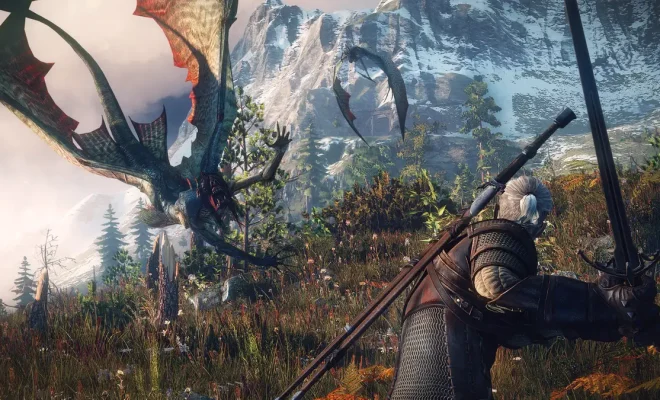
The Witcher 3: Wild Hunt, developed by CD Projekt Red and released in 2015, stands as a pinnacle of narrative-driven role-playing games. Based on the fantasy novels by Polish author Andrzej Sapkowski, the game follows Geralt of Rivia, a monster hunter known as a Witcher, as he searches for his adopted daughter while navigating a war-torn world filled with political intrigue and supernatural threats.
What sets The Witcher 3 apart is its commitment to storytelling and world-building. The game’s main quest is a gripping tale of family, destiny, and sacrifice, but it’s the numerous side quests and character interactions that truly bring the world to life. Each quest, no matter how small, is crafted with care, often presenting morally ambiguous choices that have far-reaching consequences. This attention to detail creates a sense of a living, breathing world where player actions have real impact.
The game’s setting, inspired by Slavic mythology and medieval European history, is a refreshing departure from typical fantasy tropes. The Northern Kingdoms are a gritty, often brutal place, where monsters roam the wilderness and humans can be just as dangerous. The game doesn’t shy away from mature themes, tackling issues like racism, political corruption, and the horrors of war with nuance and depth.
Visually, The Witcher 3 is stunning. From the war-ravaged swamps of Velen to the sun-drenched vineyards of Toussaint (added in the Blood and Wine expansion), each region has its own distinct character and atmosphere. The game’s day-night cycle and dynamic weather system add to the immersion, creating breathtaking vistas and moody, atmospheric moments.
Combat in The Witcher 3 strikes a balance between accessibility and depth. Geralt can use a combination of swordplay, magic signs, and alchemical concoctions to take down his foes. Preparation is key, especially when facing the game’s various monsters, each with their own strengths and weaknesses. This emphasis on research and preparation ties into Geralt’s role as a professional monster hunter, further immersing players in the game’s world.
The game’s characters are another highlight. From major players like the sorceress Yennefer and the bard Dandelion to minor NPCs encountered in remote villages, each character feels fully realized with their own motivations and personalities. The voice acting and facial animations bring these characters to life, creating memorable interactions and emotional moments.
The Witcher 3’s impact on the gaming industry has been significant. Its approach to open-world design, focusing on quality over quantity when it comes to content, has influenced many subsequent games. The game’s success also led to a renewed interest in The Witcher franchise, spawning a popular Netflix series and bringing the original novels to a wider audience.
The game’s two expansions, Hearts of Stone and Blood and Wine, are often cited as examples of how DLC should be done, offering substantial new content that could stand as games in their own right. Blood and Wine, in particular, serves as a fitting epilogue to Geralt’s story, allowing players to retire the legendary Witcher on their own terms.
Years after its release, The Witcher 3: Wild Hunt remains a benchmark for storytelling in video games. Its rich world, complex characters, and player-driven narrative continue to captivate new players and inspire game developers. As a testament to its enduring appeal, a next-gen update was released in 2022, introducing the game to a new generation of players and reaffirming its status as a modern classic.