The Tech Edvocate

Top Menu

  • Advertisement
  • Apps
  • Home Page
  • Home Page Five (No Sidebar)
  • Home Page Four
  • Home Page Three
  • Home Page Two
  • Home Tech2
  • Icons [No Sidebar]
  • Left Sidbear Page
  • Lynch Educational Consulting
  • My Account
  • My Speaking Page
  • Newsletter Sign Up Confirmation
  • Newsletter Unsubscription
  • Our Brands
  • Page Example
  • Privacy Policy
  • Protected Content
  • Register
  • Request a Product Review
  • Shop
  • Shortcodes Examples
  • Signup
  • Start Here
    • Governance
    • Careers
    • Contact Us
  • Terms and Conditions
  • The Edvocate
  • The Tech Edvocate Product Guide
  • Topics
  • Write For Us
  • Advertise

Main Menu

  • Start Here
    • Our Brands
    • Governance
      • Lynch Educational Consulting, LLC.
      • Dr. Lynch’s Personal Website
      • Careers
    • Write For Us
    • The Tech Edvocate Product Guide
    • Contact Us
    • Books
    • Edupedia
    • Post a Job
    • The Edvocate Podcast
    • Terms and Conditions
    • Privacy Policy
  • Topics
    • Assistive Technology
    • Child Development Tech
    • Early Childhood & K-12 EdTech
    • EdTech Futures
    • EdTech News
    • EdTech Policy & Reform
    • EdTech Startups & Businesses
    • Higher Education EdTech
    • Online Learning & eLearning
    • Parent & Family Tech
    • Personalized Learning
    • Product Reviews
  • Advertise
  • Tech Edvocate Awards
  • The Edvocate
  • Pedagogue
  • School Ratings

logo

The Tech Edvocate

  • Start Here
    • Our Brands
    • Governance
      • Lynch Educational Consulting, LLC.
      • Dr. Lynch’s Personal Website
        • My Speaking Page
      • Careers
    • Write For Us
    • The Tech Edvocate Product Guide
    • Contact Us
    • Books
    • Edupedia
    • Post a Job
    • The Edvocate Podcast
    • Terms and Conditions
    • Privacy Policy
  • Topics
    • Assistive Technology
    • Child Development Tech
    • Early Childhood & K-12 EdTech
    • EdTech Futures
    • EdTech News
    • EdTech Policy & Reform
    • EdTech Startups & Businesses
    • Higher Education EdTech
    • Online Learning & eLearning
    • Parent & Family Tech
    • Personalized Learning
    • Product Reviews
  • Advertise
  • Tech Edvocate Awards
  • The Edvocate
  • Pedagogue
  • School Ratings
  • This One Privacy Camera Feature Could Change Smart Homes Forever

  • Unprecedented: White House Mandates AI Security Incident Reporting After Troubling Breaches

  • The AI Storm Tracker Predicting Viral Narratives Just Landed $7 Million – Here’s Why It Matters

  • This State Just Unleashed AI to Prescribe Meds — Are We Ready for the Future of Medicine?

  • Outrageous: YouTuber Loses Decade of Work to Single YouTube Channel Ban

  • The CyberLeek Saga: What This New GTA 6 Footage Means For Rockstar

  • The Startling Truth About AI’s Medical Revolution You Need to Know

  • This Crucial Shift in AI in Higher Education Could Upend Your Future

  • Bizarre CloudConnect CRM Vulnerability: Why Thousands of Businesses Are Now Exposed

  • HomeSecure Breach: This is How 5 Million Mortgages Got Hacked

Digital & Mobile Technology
Home›Digital & Mobile Technology›The Use of Octets in Computers and Networking

The Use of Octets in Computers and Networking
By Matthew Lynch
June 8, 2023
0
Spread the love

Octets are a fundamental component of computer networking. They play a crucial role in the transmission and management of data across computer networks. In this article, we will explore what octets are, how they are used in networking, and their importance in the digital world.

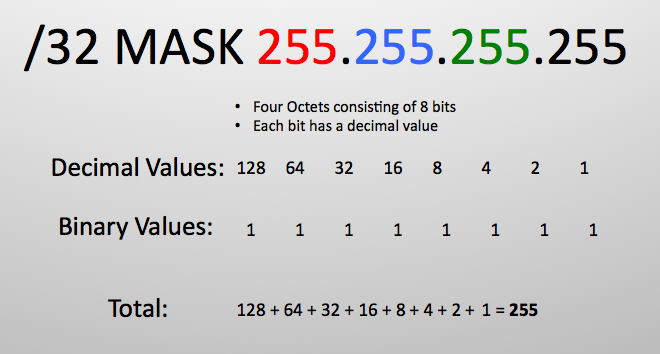
Octets, also known as bytes, are a series of eight bits of digital information. Each bit represents either a zero or a one. Eight bits arranged in a sequence make up an octet. They are often used to identify and transmit data packets across computer networks. The use of octets in networking has become an accepted standard for data management.

One of the primary uses of octets in networking is IP addressing. An IP address is a unique identifier assigned to devices connected to a network. It consists of four octets separated by periods. Each octet within an IP address ranges from 0 through 255, and the combination of four octets constitutes a 32-bit address, which can be assigned to a device.

In IP addressing, octets play a critical role in routing network traffic. A network router receives packets of data with information containing the recipient’s IP address. The router directs the packets to the appropriate destination on the network by examining the octets. The first octet in an IP address is used to signify the network address, and the remaining octets identify the different hosts on that network. Thus, routers use the octet numbering system to find the destination device on the network, directing the data packet to the correct address.

Another use of octets in networking is in subnetting. Subnetting is the process of dividing a network into smaller sub-networks or subnets. This is done to optimize network performance and manage address allocation efficiently. The use of octets in subnetting allows for flexibility in network design and efficient use of IP addresses. By rearranging and dividing the IP address’ octet structure, different segments of a network can be identified and managed separately.

In conclusion, the use of octets in computers and networking is an essential component of modern-day data transmission. They are used to identify, route, and manage data packets across networks. Without octets, it would be difficult to communicate between devices over a network, and efficient data management would be impossible. Today’s advancements in computer technologies have made the use of octets critical in developing network architecture, routing protocols, and network management strategies. Octets have become an integral part of modern computer and networking infrastructure, and their importance will continue to increase with advancing technology.


Previous Article

The Quest for the 8mm/VHS Adapter

Next Article

How to Have No Name in Among ...

Matthew Lynch

Related articles More from author

  • Digital & Mobile Technology

    How to Turn Off Quick Chat in Among Us

    August 5, 2023
    By Matthew Lynch
  • Digital & Mobile Technology

    How to Back Up Everything on Your Samsung Phone

    September 8, 2023
    By Matthew Lynch
  • Digital & Mobile Technology

    Donald Trump’s Truth Social Is Now Available on Android

    August 5, 2023
    By Matthew Lynch
  • Digital & Mobile Technology

    What Is an HDR File?

    June 9, 2023
    By Matthew Lynch
  • Digital & Mobile Technology

    What Is a WMA File?

    June 10, 2023
    By Matthew Lynch
  • Digital & Mobile Technology

    Google Backup Codes: What to Know and How to Use Them

    June 9, 2023
    By Matthew Lynch

Search

Login & Registration

  • Log in
  • Entries feed
  • Comments feed
  • WordPress.org

Newsletter

Signup for The Tech Edvocate Newsletter and have the latest in EdTech news and opinion delivered to your email address!

About Us

Since technology is not going anywhere and does more good than harm, adapting is the best course of action. That is where The Tech Edvocate comes in. We plan to cover the PreK-12 and Higher Education EdTech sectors and provide our readers with the latest news and opinion on the subject. From time to time, I will invite other voices to weigh in on important issues in EdTech. We hope to provide a well-rounded, multi-faceted look at the past, present, the future of EdTech in the US and internationally.

We started this journey back in June 2016, and we plan to continue it for many more years to come. I hope that you will join us in this discussion of the past, present and future of EdTech and lend your own insight to the issues that are discussed.

Newsletter

Signup for The Tech Edvocate Newsletter and have the latest in EdTech news and opinion delivered to your email address!

Contact Us

The Tech Edvocate
910 Goddin Street
Richmond, VA 23231
(601) 630-5238
[email protected]

Copyright © 2026 Matthew Lynch. All rights reserved.