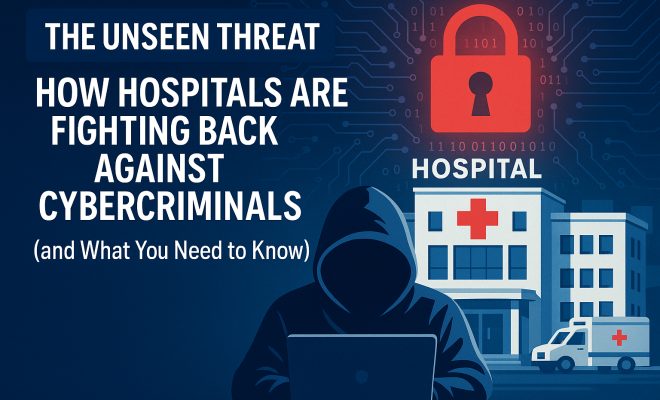
The Unseen Threat: How Hospitals Are Fighting Back Against Cybercriminals (and What You Need to Know)
The digital age has brought incredible advancements to healthcare, from electronic health records (EHRs) that streamline patient care to telehealth services that expand access. But with these benefits comes a darker side: an escalating battle against cybercriminals who see healthcare organizations as prime targets. We’re not talking about petty theft here; we’re talking about sophisticated attacks that can cripple hospitals, expose the most sensitive personal information of millions, and even jeopardize patient safety. If you’re wondering what the best healthcare cybersecurity software for hospitals looks like, you’re asking the right question at a truly critical time.
Recent events have brought this threat into stark focus. Just look at the catastrophic ransomware attack on Change Healthcare, which reportedly exposed the sensitive data of an astonishing 190 million people. That’s nearly two-thirds of the entire U.S. population! It wasn’t just a data breach; it caused widespread disruptions to pharmacies, doctors’ offices, and billing systems across the country, highlighting just how interconnected and vulnerable our healthcare infrastructure has become. Then there was the significant breach impacting nearly 20 million individuals across 80 U.S. hospitals through Oracle Health (formerly Cerner) legacy servers, where attackers exfiltrated names, Social Security numbers, and medical records. These aren’t isolated incidents; they’re a chilling reminder that no organization, regardless of its size or perceived security, is immune. It’s no wonder the U.S. Senate felt compelled to pass the ‘Health Care Cybersecurity and Resiliency Act of 2026,’ mandating minimum cybersecurity standards and expanding federal requirements.
So, what can hospitals do? How do they protect themselves, and more importantly, protect us, their patients? The answer lies in a multi-layered approach, with robust, specialized cybersecurity software at its core. This isn’t just about antivirus; it’s about comprehensive systems designed to meet the unique challenges of healthcare, from managing highly sensitive electronic protected health information (ePHI) to ensuring HIPAA compliance and maintaining operational continuity. Let’s delve into some of the leading solutions making a real difference in this high-stakes environment.
1. Fortra (formerly HelpSystems): Comprehensive Data Security & Compliance
Fortra, a name you might recognize from its recent rebranding, has built a formidable reputation in the cybersecurity space, particularly with its focus on data protection and compliance. For hospitals, this means a suite of tools designed to secure sensitive patient information at every stage of its lifecycle, from creation to archiving. Their offerings are particularly strong in data loss prevention (DLP), which is absolutely crucial in a healthcare setting where ePHI is constantly being accessed, shared, and stored across various systems.
What makes Fortra stand out for healthcare organizations is its ability to not just detect, but actively prevent, unauthorized access or exfiltration of sensitive data. Think about it: a busy hospital environment where doctors, nurses, and administrative staff are accessing records on different devices, often in a hurry. The risk of accidental or malicious data leakage is incredibly high. Fortra’s solutions help mitigate this by identifying, monitoring, and protecting data in motion, in use, and at rest, ensuring that patient records remain confidential and compliant with stringent regulations like HIPAA. This comprehensive approach to data security makes it a strong contender for the best healthcare cybersecurity software for hospitals.
2. Cisco Security Solutions: Network-Centric Defense for Healthcare
Cisco is a giant in networking, and its security division leverages that expertise to offer a robust, integrated security architecture. For hospitals, where networks are complex and vital for everything from patient monitoring systems to administrative functions, Cisco’s network-centric approach is incredibly valuable. They provide a unified platform that covers everything from advanced malware protection to secure access and cloud security, all designed to work seamlessly together.
Imagine a hospital network as a sprawling city, with different departments as neighborhoods and patient data as its most valuable citizens. Cisco’s solutions act like a comprehensive city-wide defense system, with firewalls at its borders, intrusion prevention systems monitoring traffic, and endpoint security agents protecting individual devices. Their ability to provide visibility across the entire network, identify threats in real-time, and automate responses is a game-changer. Given the increasing sophistication of cyberattacks targeting network vulnerabilities, Cisco’s integrated approach offers a powerful defense mechanism, making it a serious consideration for any hospital looking to bolster its cybersecurity.
3. Palo Alto Networks: Next-Generation Firewall and Cloud Security
Palo Alto Networks has earned its stripes by pioneering next-generation firewalls (NGFWs) that go far beyond traditional port and protocol inspection. For healthcare facilities, their technology is particularly adept at identifying and controlling applications, users, and content, rather than just IP addresses. This level of granular control is vital in an environment where a wide array of specialized medical applications, many with unique vulnerabilities, are in constant use.
Beyond their renowned firewalls, Palo Alto Networks has also made significant strides in cloud security. As more healthcare organizations migrate their data and applications to the cloud for scalability and efficiency, securing these environments becomes paramount. Their cloud security solutions help hospitals maintain compliance, protect sensitive data, and secure their cloud infrastructure against advanced threats. The ability to integrate these protections across on-premise and cloud environments offers a powerful, unified defense, which is why many consider it among the best healthcare cybersecurity software for hospitals facing evolving digital threats.
4. Medigate by Claroty: IoT and IoMT Security Specialist
Here’s where things get really specialized for healthcare. Medigate, now part of Claroty, focuses specifically on the security of Internet of Medical Things (IoMT) and other connected devices within clinical environments. Think about all the smart infusion pumps, patient monitors, MRI machines, and other networked medical devices in a modern hospital. Each of these represents a potential entry point for attackers, and traditional cybersecurity tools often aren’t equipped to handle their unique characteristics and vulnerabilities.
Medigate provides deep visibility into these devices, identifying what they are, how they’re communicating, and what risks they pose. It then monitors their behavior for anomalies that could indicate a cyberattack. This isn’t just about protecting data; it’s about ensuring the operational integrity of critical medical equipment, which directly impacts patient care and safety. In an era where IoMT attacks are becoming more prevalent, Medigate offers a tailored, essential layer of defense that complements broader cybersecurity strategies, making it indispensable for many healthcare systems. (See: CDC on healthcare cybersecurity threats.)
5. CrowdStrike Falcon Platform: Endpoint Detection and Response (EDR)
CrowdStrike has revolutionized endpoint security with its cloud-native Falcon platform, offering advanced threat detection and response capabilities. For hospitals, where endpoints can range from desktop computers in administrative offices to laptops in patient rooms and even specialized medical workstations, securing each one is absolutely non-negotiable. Traditional antivirus often isn’t enough to catch sophisticated, fileless malware or targeted attacks.
The Falcon platform uses artificial intelligence and machine learning to analyze massive amounts of data from endpoints, identifying suspicious activity in real-time and providing automated responses. This means it can detect and stop breaches that might otherwise go unnoticed, significantly reducing the time an attacker has to move laterally within a network or exfiltrate data. Its ability to provide comprehensive visibility and rapid response across all endpoints makes it an incredibly powerful tool for hospitals, especially when facing the advanced persistent threats that often target healthcare. For more context, see AI Security Incident Reporting.
6. Proofpoint: Email and Cloud Security Against Human-Centric Attacks
Let’s be honest: many cyberattacks start with a simple email. Phishing, ransomware delivered via malicious attachments, and business email compromise (BEC) schemes are rampant, and healthcare organizations are a prime target because their employees often handle sensitive information and operate under pressure. Proofpoint specializes in protecting organizations against these human-centric threats, focusing heavily on email security, but also extending to cloud and data protection.
Their solutions don’t just filter out spam; they analyze email content and attachments for sophisticated threats, identify imposter emails, and even train employees to recognize and report suspicious messages. For a hospital, where a single click on a malicious link can lead to a devastating breach, Proofpoint provides a crucial first line of defense. By safeguarding the entry point of so many attacks, they help prevent breaches before they even begin, making them an essential component of the best healthcare cybersecurity software for hospitals.
7. Microsoft Azure Security Center / Microsoft 365 Defender: Integrated Cloud and Endpoint Protection
For hospitals that have embraced the Microsoft ecosystem, leveraging Azure for cloud services or Microsoft 365 for productivity tools, Microsoft’s integrated security offerings are a natural fit. Azure Security Center (now part of Microsoft Defender for Cloud) provides comprehensive security management and threat protection across hybrid cloud environments, while Microsoft 365 Defender unifies protection across endpoints, email, identities, and applications.
The power here lies in the integration. If a hospital is already using Microsoft products, these security solutions can offer seamless deployment, centralized management, and a unified view of security posture. They provide advanced threat intelligence, automated remediation, and compliance management specifically tailored for Azure and Microsoft 365 environments. This streamlined approach can be highly efficient for healthcare organizations already invested in Microsoft’s cloud and productivity suite, providing robust protection without adding undue complexity.
8. IBM Security QRadar: Security Information and Event Management (SIEM)
In the chaotic world of hospital IT, simply having security tools isn’t enough; you need to make sense of all the alerts and logs they generate. That’s where a Security Information and Event Management (SIEM) system like IBM Security QRadar comes in. QRadar collects log data and network flow information from virtually all devices and applications across a hospital’s network, then uses advanced analytics and AI to detect anomalies and identify potential threats that might otherwise be buried in a mountain of data.
For a healthcare organization, this means getting a centralized view of its entire security landscape. QRadar can correlate events from firewalls, endpoint protection, intrusion detection systems, and even medical devices, providing a holistic picture of what’s happening. When an attack like the Change Healthcare breach occurs, having a SIEM like QRadar can be instrumental in rapidly detecting the intrusion, understanding its scope, and responding effectively. It’s the brain of the security operation, crucial for proactive defense and rapid incident response, cementing its place among the best healthcare cybersecurity software for hospitals.
9. Tenable.io: Vulnerability Management & Asset Discovery
You can’t protect what you don’t know you have, or what you don’t know is vulnerable. Tenable.io is a cloud-based vulnerability management platform that helps hospitals discover and assess all their assets – from traditional IT infrastructure to operational technology (OT) and IoMT devices – for vulnerabilities. In a healthcare environment, the sheer number and diversity of connected devices make this a particularly challenging but absolutely critical task.
Tenable.io provides a continuous, real-time view of an organization’s attack surface, helping security teams prioritize which vulnerabilities to fix first based on their potential impact. This proactive approach is essential for reducing risk, especially when you consider that many major breaches exploit known vulnerabilities that simply haven’t been patched. By helping hospitals understand and manage their vulnerabilities, Tenable.io plays a fundamental role in building a strong foundational security posture.
10. Sophos Intercept X: Advanced Endpoint and Server Protection
Sophos Intercept X brings a potent combination of deep learning AI and exploit prevention to the table for endpoint and server protection. What does this mean for hospitals? It means a defense mechanism that not only detects known threats but can also identify and block never-before-seen malware and ransomware, often before it can even encrypt a single file.
The healthcare sector is a frequent target for ransomware, as evidenced by the Change Healthcare incident. Sophos Intercept X includes specialized anti-ransomware technology, CryptoGuard, which can detect and reverse malicious encryption activity, effectively rolling back files to their unencrypted state. This capability is incredibly valuable in a hospital setting where downtime due to ransomware can have severe consequences for patient care and financial operations. Its comprehensive approach to endpoint security makes it a compelling choice for organizations seeking robust protection against modern cyber threats, and a strong contender for the best healthcare cybersecurity software for hospitals. (See: New York Times on ransomware attacks.)
11. Identity and Access Management (IAM) Solutions: Securing User Credentials
Beyond the software protecting networks and devices, securing who has access to what is absolutely foundational. Identity and Access Management (IAM) solutions like Okta, Ping Identity, or Microsoft Entra ID (formerly Azure Active Directory) are critical for hospitals. They ensure that only authorized individuals can access sensitive patient data and systems, and they manage those access privileges effectively.
Think about a large hospital with thousands of employees – doctors, nurses, administrators, lab technicians, and even temporary staff. Each role requires different levels of access. An IAM system allows IT teams to provision, de-provision, and manage user identities and their access rights centrally. Features like multi-factor authentication (MFA) are non-negotiable, adding an extra layer of security beyond just a password. If a hacker manages to steal credentials, MFA can still block their access. These systems are crucial for compliance with HIPAA and other regulations, which demand strict controls over who can view or modify ePHI. Without robust IAM, even the best perimeter defenses can be easily bypassed by compromised credentials, making it a cornerstone of effective healthcare cybersecurity. For more context, see AI in Medicine.
12. Security Orchestration, Automation, and Response (SOAR): Streamlining Security Operations
For hospitals grappling with a constant barrage of alerts and limited security staff, Security Orchestration, Automation, and Response (SOAR) platforms are becoming indispensable. Solutions from vendors like Splunk SOAR or Palo Alto Networks Cortex XSOAR help security teams manage and respond to threats more efficiently.
A SOAR platform works by collecting security alerts from various tools (like SIEM, EDR, and firewalls) and then automating routine tasks. For example, if a phishing email is detected, a SOAR playbook could automatically block the sender, scan the attachment, and quarantine any affected endpoints, all without human intervention. This automation reduces the manual workload on security analysts, speeds up incident response times, and ensures consistent application of security policies. In a high-stakes environment like healthcare, where every second counts during a cyberattack, the ability to rapidly and consistently respond to threats can significantly mitigate damage and protect patient safety. It transforms a reactive security posture into a proactive, agile defense, making it a powerful addition to any hospital’s cybersecurity toolkit.
The Evolving Landscape of Healthcare Cybersecurity
The passage of the ‘Health Care Cybersecurity and Resiliency Act of 2026’ is a clear signal from the government that the stakes in healthcare cybersecurity have never been higher. This legislation, directly spurred by the Change Healthcare catastrophe, mandates minimum cybersecurity standards like multi-factor authentication and aims to bolster the healthcare cybersecurity workforce. This isn’t just about avoiding penalties; it’s about protecting patient lives and maintaining public trust.
For hospitals, this means a renewed focus on not just acquiring the right technology, but also investing in the training and resources necessary to implement and manage it effectively. The best healthcare cybersecurity software for hospitals isn’t a silver bullet; it’s a critical component of a broader strategy that includes robust policies, continuous monitoring, incident response planning, and ongoing employee education. The threats are sophisticated, pervasive, and constantly evolving. Staying ahead requires vigilance, investment, and a commitment to making cybersecurity an integral part of patient care.
Key Considerations for Choosing Healthcare Cybersecurity Software
Selecting the right cybersecurity software isn’t a one-size-fits-all decision for hospitals. Several factors need careful evaluation to ensure the chosen solutions align with the organization’s specific needs, existing infrastructure, and regulatory obligations.
- HIPAA Compliance & Regulatory Adherence: This is paramount. Any software chosen must support or directly facilitate HIPAA compliance, ensuring the confidentiality, integrity, and availability of ePHI. Look for vendors with a proven track record in healthcare and specific features designed for regulatory reporting and auditing.
- Integration Capabilities: Hospitals often have a complex ecosystem of legacy systems, new cloud applications, and specialized medical devices. The cybersecurity software must integrate seamlessly with existing infrastructure to provide a unified view and avoid creating security gaps or operational friction.
- Scalability: Healthcare organizations are constantly growing and evolving. The chosen solutions should be scalable to accommodate new departments, facilities, increased patient loads, and the adoption of new technologies like more IoMT devices or expanding telehealth services.
- Vendor Reputation & Support: Partner with vendors who have a strong reputation in the healthcare sector and offer robust customer support, including 24/7 incident response assistance. When a breach happens, you need a reliable partner.
- Cost vs. Value: While budget is always a consideration, focusing solely on the cheapest option can be a costly mistake in the long run. Evaluate the total cost of ownership, including implementation, maintenance, and training, against the value and protection offered. The cost of a breach far outweighs the investment in preventative measures.
- User-Friendliness & Training: Complex software that’s difficult for IT staff to manage or for end-users to interact with can lead to errors and vulnerabilities. Opt for solutions with intuitive interfaces and ensure comprehensive training is provided for staff.
The Human Element: Training and Awareness
Even the most advanced software can be undermined by human error. Cybercriminals know this, which is why they frequently target healthcare employees through phishing, social engineering, and other human-centric attacks. Therefore, a critical, often underestimated, component of any robust cybersecurity strategy for hospitals is continuous employee training and awareness programs.
These programs should be more than just annual online modules. They need to be engaging, relevant, and frequent, covering topics such as:
- Phishing Recognition: How to identify suspicious emails, links, and attachments.
- Strong Password Practices & MFA: Emphasizing the importance of unique, complex passwords and why multi-factor authentication is critical.
- Data Handling Best Practices: Proper procedures for accessing, storing, and sharing ePHI, both internally and externally.
- Incident Reporting: What to do and who to contact if a suspected security incident occurs.
- Mobile Device Security: Guidelines for securing hospital-issued and personal devices used for work.
- Physical Security: The importance of securing workstations, patient records, and restricted areas.
Regular simulated phishing campaigns can also be highly effective in testing employee vigilance and reinforcing training. By fostering a strong security culture, hospitals can transform their employees from potential vulnerabilities into their strongest line of defense. For more context, see AI's Medical Revolution. (See: Nature article on cybersecurity in healthcare.)
Future Trends in Healthcare Cybersecurity
The cybersecurity landscape is constantly shifting, and hospitals need to be aware of emerging trends to stay prepared:
- AI and Machine Learning in Defense: Expect more sophisticated AI-driven tools that can predict and prevent attacks, not just react to them. These systems will analyze vast datasets to identify subtle anomalies and zero-day threats.
- Zero Trust Architecture: Moving away from the traditional “trust but verify” model, Zero Trust dictates that no user or device, whether inside or outside the network, should be trusted by default. Every access request is authenticated and authorized. This model is gaining traction in healthcare due to its stringent security posture.
- Increased Focus on Supply Chain Security: As the Change Healthcare attack showed, vulnerabilities in third-party vendors can severely impact hospitals. There will be a greater emphasis on vetting and continuously monitoring the cybersecurity practices of all suppliers and partners.
- Quantum Computing Threats: While still some years away, the potential for quantum computers to break current encryption methods is a growing concern. Hospitals will eventually need to adopt “quantum-safe” encryption standards to protect long-term data integrity.
- Cyber-Physical System (CPS) Security: Beyond IoMT, the integration of IT and OT systems in hospitals (e.g., building management, power grids, surgical robots) creates new attack surfaces. Securing these complex CPS environments will become a critical area of focus.
Frequently Asked Questions (FAQs)
Q1: Why are hospitals such attractive targets for cybercriminals?
A1: Hospitals hold a treasure trove of highly sensitive and valuable data, including patient health records, financial information, and personal identifiers. This data can be sold on the dark web for identity theft or used for blackmail. Additionally, the critical nature of healthcare services means hospitals are often more likely to pay ransoms to restore operations quickly, making them prime targets for ransomware attacks. The interconnectedness of medical devices and often stretched IT budgets also create numerous vulnerabilities.
Q2: What is the biggest cybersecurity threat facing hospitals today?
A2: Ransomware consistently ranks as one of the most devastating threats. It can encrypt critical systems, preventing access to patient records and operational tools, leading to massive disruptions, financial losses, and potentially impacting patient care and safety. Phishing and social engineering attacks, which are often the initial entry point for ransomware, are also significant.
Q3: How does HIPAA compliance relate to cybersecurity software?
A3: HIPAA (Health Insurance Portability and Accountability Act) mandates strict standards for protecting electronic Protected Health Information (ePHI). Cybersecurity software helps hospitals achieve HIPAA compliance by providing tools for data encryption, access controls, audit logging, threat detection, and incident response. While software alone doesn’t guarantee compliance, it’s an essential component for meeting HIPAA’s technical safeguard requirements.
Q4: Is antivirus software enough to protect a hospital?
A4: Absolutely not. Traditional antivirus software provides a baseline defense against known malware, but it’s insufficient against sophisticated, modern threats like zero-day attacks, fileless malware, and advanced persistent threats (APTs) that frequently target healthcare. Hospitals need a multi-layered defense strategy that includes advanced endpoint detection and response (EDR), next-generation firewalls, email security, vulnerability management, and more specialized tools for IoMT security.
Q5: What is the role of employee training in hospital cybersecurity?
A5: Employee training is paramount. Even the best cybersecurity software can be bypassed if an employee falls for a phishing scam or inadvertently exposes credentials. Regular, engaging training helps staff recognize and report threats, understand data handling best practices, and become the first line of defense against human-centric attacks. A strong security culture is as important as strong technology.
Q6: How do hospitals secure their Internet of Medical Things (IoMT) devices?
A6: Securing IoMT devices requires specialized solutions like Medigate (by Claroty). These platforms provide deep visibility into medical devices, identify their unique vulnerabilities, monitor their behavior for anomalies, and segment them from the main network to limit the spread of potential attacks. Traditional IT security tools often aren’t designed to understand or protect these unique devices, making specialized IoMT security essential.
Q7: What steps should a hospital take after a cyberattack?
A7: A rapid and well-rehearsed incident response plan is crucial. Key steps include: isolating affected systems to prevent further spread, engaging legal and cybersecurity experts, notifying relevant authorities (like HHS for HIPAA breaches), communicating with affected patients (as required), restoring systems from secure backups, conducting a thorough forensic analysis to understand the attack, and implementing lessons learned to strengthen defenses.
Trending Now
- Nostalgija kot oblikovalski jezik sodobnih spletnih…
- Piedzīvojuma naratīvs spēļu automātu bonusu ainās
- Kā bingo elementi parādās mūsdienu kazino…
- our breakdown of luksusa tēli kazino spēļu vizuālajā valodā
- this guide on les studios de casino en direct rapprochent le jeu en ligne de l’expérience audiovisuelle
Frequently Asked Questions
What are the main cybersecurity threats hospitals face?
Hospitals face a range of cybersecurity threats, including ransomware attacks, data breaches, and phishing attempts. Cybercriminals target healthcare organizations due to their valuable data, such as patient records and billing information, which can be exploited for financial gain or sold on the dark web.
How can hospitals protect themselves from cyber attacks?
Hospitals can protect themselves by implementing a multi-layered cybersecurity strategy that includes specialized software, regular security audits, employee training, and compliance with federal regulations. This comprehensive approach helps to safeguard sensitive patient information and maintain operational integrity.
What is the Health Care Cybersecurity and Resiliency Act?
The Health Care Cybersecurity and Resiliency Act of 2026 is legislation aimed at establishing minimum cybersecurity standards for healthcare organizations. It mandates that hospitals and other healthcare providers enhance their cybersecurity measures to better protect sensitive data and ensure patient safety.
What impact do cyber attacks have on patient care?
Cyber attacks can severely disrupt patient care by compromising access to electronic health records, delaying treatments, and causing operational chaos in hospitals. Such disruptions can jeopardize patient safety and lead to significant delays in critical healthcare services.
Why are healthcare organizations prime targets for cybercriminals?
Healthcare organizations are prime targets for cybercriminals because they hold vast amounts of sensitive personal information, including medical records and financial data. This valuable data can be exploited for identity theft, fraud, and ransom, making healthcare a lucrative target for attackers.
Have you experienced this yourself? We'd love to hear your story in the comments.