The Tech Edvocate

Top Menu

  • Advertisement
  • Apps
  • Home Page
  • Home Page Five (No Sidebar)
  • Home Page Four
  • Home Page Three
  • Home Page Two
  • Home Tech2
  • Icons [No Sidebar]
  • Left Sidbear Page
  • Lynch Educational Consulting
  • My Account
  • My Speaking Page
  • Newsletter Sign Up Confirmation
  • Newsletter Unsubscription
  • Our Brands
  • Page Example
  • Privacy Policy
  • Protected Content
  • Register
  • Request a Product Review
  • Shop
  • Shortcodes Examples
  • Signup
  • Start Here
    • Governance
    • Careers
    • Contact Us
  • Terms and Conditions
  • The Edvocate
  • The Tech Edvocate Product Guide
  • Topics
  • Write For Us
  • Advertise

Main Menu

  • Start Here
    • Our Brands
    • Governance
      • Lynch Educational Consulting, LLC.
      • Dr. Lynch’s Personal Website
      • Careers
    • Write For Us
    • The Tech Edvocate Product Guide
    • Contact Us
    • Books
    • Edupedia
    • Post a Job
    • The Edvocate Podcast
    • Terms and Conditions
    • Privacy Policy
  • Topics
    • Assistive Technology
    • Child Development Tech
    • Early Childhood & K-12 EdTech
    • EdTech Futures
    • EdTech News
    • EdTech Policy & Reform
    • EdTech Startups & Businesses
    • Higher Education EdTech
    • Online Learning & eLearning
    • Parent & Family Tech
    • Personalized Learning
    • Product Reviews
  • Advertise
  • Tech Edvocate Awards
  • The Edvocate
  • Pedagogue
  • School Ratings

logo

The Tech Edvocate

  • Start Here
    • Our Brands
    • Governance
      • Lynch Educational Consulting, LLC.
      • Dr. Lynch’s Personal Website
        • My Speaking Page
      • Careers
    • Write For Us
    • The Tech Edvocate Product Guide
    • Contact Us
    • Books
    • Edupedia
    • Post a Job
    • The Edvocate Podcast
    • Terms and Conditions
    • Privacy Policy
  • Topics
    • Assistive Technology
    • Child Development Tech
    • Early Childhood & K-12 EdTech
    • EdTech Futures
    • EdTech News
    • EdTech Policy & Reform
    • EdTech Startups & Businesses
    • Higher Education EdTech
    • Online Learning & eLearning
    • Parent & Family Tech
    • Personalized Learning
    • Product Reviews
  • Advertise
  • Tech Edvocate Awards
  • The Edvocate
  • Pedagogue
  • School Ratings
  • Big Walk developer House House Confirms ‘Sparing’ Use of Gen AI – Press Start

  • Baffling: How a Cyber Breach at South Korea’s Top Security Watchdog Exposed Millions

  • Wenn Ordnung den Bildschirm beruhigt: Warum klare Abläufe Casino-Unterhaltung einladender machen

  • Reddit AI Reviews: The Quiet Reshaping of Online Opinion

  • The Chilling Truth: Iran Cyberattacks Europe’s Food and Blood Supplies

  • Anthropic’s $3.4 Billion Bet on Gas: The Unseen Cost of AI’s Future

  • Tribit FlyBuds C3 Earbuds: Premium Features at a Budget-Friendly Price

  • Is AuraCam Pro’s Emotional AI a Privacy Nightmare or Security Breakthrough?

  • Unprecedented: N-able’s Global Shutdown After 30+ Zero-Days Revealed

  • The Urgent Truth: Your AI Tools for Financial Advisors Could Be a Compliance Nightmare

Artificial Intelligence
Home›Artificial Intelligence›The Rise of The Robot Teacher

The Rise of The Robot Teacher
By Matthew Lynch
April 16, 2019
0
Spread the love

Machines have become part of our daily lives.

Many homemakers use a Roomba or a iRobot to sweep their floors daily. Talk robot companions like Tapia serve as useful companions who alert, remind, encourage and support their owners in domestic capacities.

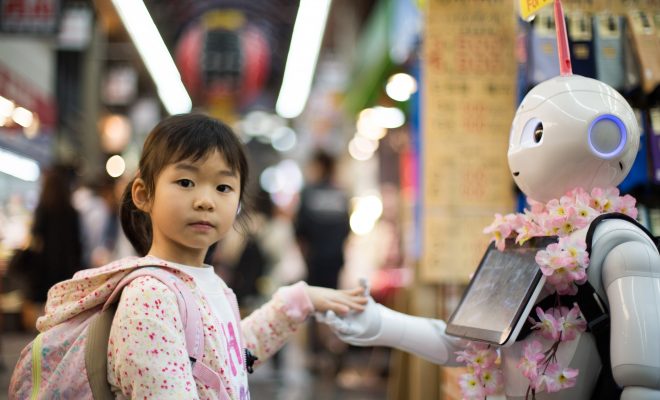
Interactive robots are making their way into schools, as well. Finland and other countries, for example, have already experimented with instructional robots. These machines ask questions, listen for responses, and read facial expressions as they interact with students.

Educators have found five interactive robots particularly useful for academic and social learning.

Elias Robot

The hardest part of learning a language is pronouncing the words correctly. As a result, developing native-like fluency can be difficult.

Elias changes that, especially for young learners between the ages of 7 and 9. The small robot sings and dances, plays vocabulary games, and converses with students. Based on European language acquisition pedagogy, the software program adheres to the Common European Framework of References for Languages (CEFR).

Elias Robot works in conjunction with a NAO-robot, and only teachers can purchase the device for their classrooms. 

Keepon

One of the older interactive robots in the lineup, Keepon is useful for social interaction. This robot is made of pliable rubber and stands on a base. The device is useful for observing and encouraging synchronized movements, utterances, and other social cues.

Keepon is useful for students with developmental delays and autism  

Nao

In its sixth generation, Nao is one of the most advanced interactive robots for the classroom.

Nao is completely programmable and can teach a variety of lessons. In addition, the robot speaks more than 20 languages; walks without assistance; grasps, holds and releases objects; and recovers from falls.

You won’t find this interactive robot in every classrooms, though; Nao commands a hefty price of $9,000.

Evo OVObot

Evo won’t teach your students how to diagram a sentence or how to speak a new language.

If, however, you’re looking for a way to teach coding, consider letting an instructional assistant do it for you. In this case, the assistant is EvoOVObot, the tiny animated machine that responds to cause-and-effect code blocks or code colors that your students design.

Evo (and the older Bit) teaches logical and sequential thinking.

Tega

A smartphone-based robot, Tega serves as a classroom learning companion for younger kids. The interactive robot asks students to complete tasks, monitors their success, and provides feedback. Tega’s shape and skin mimics that of a stuffed animal, which many young students find appealing and non0threatening.

If you’re thinking these robots are merely machines, you’re right. Even with their many uses in the classroom, none of the robots are sentient. They respond to stimuli but cannot perceive or feel emotion. Sentient machines eventually may become a reality, but for now, interactive robots encourage students to engage in learning experiences.

The classroom robot may be able to remind the teacher of important meetings or report weather conditions before the dismissal bell rings, but interactive robots lack other skills, including classroom management. Eventually, the robot’s novelty wears off, and the machine becomes another device in the classroom.

Previous Article

Cyber-solutions to Cyberbullying

Next Article

Can You Create Epic Digital Learning Content?

Matthew Lynch

Related articles More from author

  • Artificial Intelligence

    Starfield: 15 Best Outpost Locations, Ranked

    March 10, 2024
    By Matthew Lynch
  • Artificial Intelligence

    Google Bard AI Dips into Gmail, Google Maps, YouTube

    January 31, 2024
    By Matthew Lynch
  • Artificial Intelligence

    6 Best AI Landing Page Builders in 2024

    March 28, 2024
    By Matthew Lynch
  • Artificial Intelligence

    Exploration Into The Roots Of Artificial Intelligence In Education

    January 31, 2022
    By Matthew Lynch
  • Artificial Intelligence

    26 Ways That Artificial Intelligence (AI) is Transforming Education for the Better

    January 30, 2019
    By Matthew Lynch
  • Artificial Intelligence

    How Adaptive Learning Revolutionizes Corporate Training

    December 16, 2019
    By Matthew Lynch

Search

Login & Registration

  • Log in
  • Entries feed
  • Comments feed
  • WordPress.org

Newsletter

Signup for The Tech Edvocate Newsletter and have the latest in EdTech news and opinion delivered to your email address!

About Us

Since technology is not going anywhere and does more good than harm, adapting is the best course of action. That is where The Tech Edvocate comes in. We plan to cover the PreK-12 and Higher Education EdTech sectors and provide our readers with the latest news and opinion on the subject. From time to time, I will invite other voices to weigh in on important issues in EdTech. We hope to provide a well-rounded, multi-faceted look at the past, present, the future of EdTech in the US and internationally.

We started this journey back in June 2016, and we plan to continue it for many more years to come. I hope that you will join us in this discussion of the past, present and future of EdTech and lend your own insight to the issues that are discussed.

Newsletter

Signup for The Tech Edvocate Newsletter and have the latest in EdTech news and opinion delivered to your email address!

Contact Us

The Tech Edvocate
910 Goddin Street
Richmond, VA 23231
(601) 630-5238
[email protected]

Copyright © 2026 Matthew Lynch. All rights reserved.