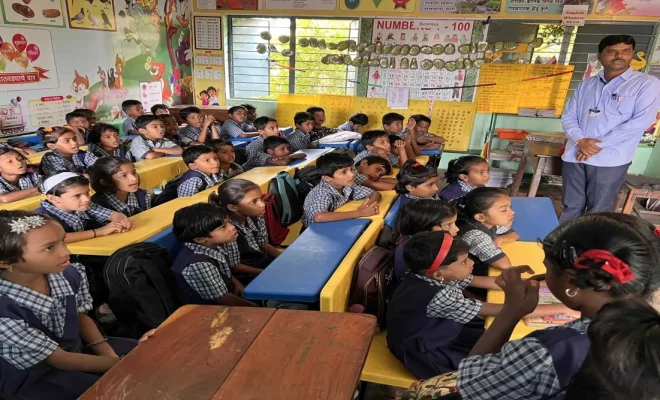
The Impact of Climate Change on Education

As we near the end of 2024, the effects of climate change are increasingly shaping educational priorities and practices across the United States. Schools at all levels are grappling with how to prepare students for a world profoundly affected by environmental changes while also adapting their own operations to be more sustainable.
Climate change education has become a core component of many school curricula, integrated across multiple subjects rather than confined to science classes. Students are learning about the scientific principles behind climate change, its social and economic impacts, and potential solutions. There’s a growing emphasis on project-based learning, with students engaging in local environmental monitoring, sustainable design projects, and community climate action initiatives.
Higher education institutions are at the forefront of climate research and innovation. Many universities have established interdisciplinary climate change centers, bringing together experts from fields such as environmental science, engineering, economics, and public policy to tackle complex climate-related challenges. These centers often provide opportunities for undergraduate and graduate students to participate in cutting-edge research and real-world problem-solving.
The impact of climate change on education extends beyond the curriculum. Schools and universities are increasingly facing direct challenges from extreme weather events, from hurricanes and floods to wildfires and heat waves. This has led to a growing focus on climate resilience in educational infrastructure, with institutions investing in sustainable building practices, renewable energy systems, and emergency preparedness plans.
Moreover, there’s a rising trend of “green skills” education, preparing students for careers in renewable energy, sustainable agriculture, green construction, and other environmentally focused industries. Many technical and vocational programs are adapting their offerings to meet the growing demand for workers skilled in sustainable practices across various sectors.
However, the integration of climate change into education is not without controversy. In some regions, there’s pushback against what some view as politicized content in the curriculum. Educators and policymakers continue to debate how to present climate science and its implications in a way that is both scientifically accurate and sensitive to diverse perspectives.
Despite these challenges, the trend towards comprehensive climate change education shows no signs of slowing. As the impacts of global warming become increasingly apparent, there’s a growing recognition that preparing students to understand and address these challenges is not just an educational imperative, but a societal one.
Looking ahead, it’s clear that climate change will continue to be a defining issue in education. The goal is not just to inform students about environmental challenges, but to empower them with the knowledge, skills, and motivation to become active participants in creating a more sustainable future. As we educate the next generation of leaders, innovators, and citizens, their ability to navigate and address the complexities of climate change will be crucial for the future of our planet and society.