The Housing Market’s Astonishing Divide: Why Luxury Soars While Starter Homes Stall
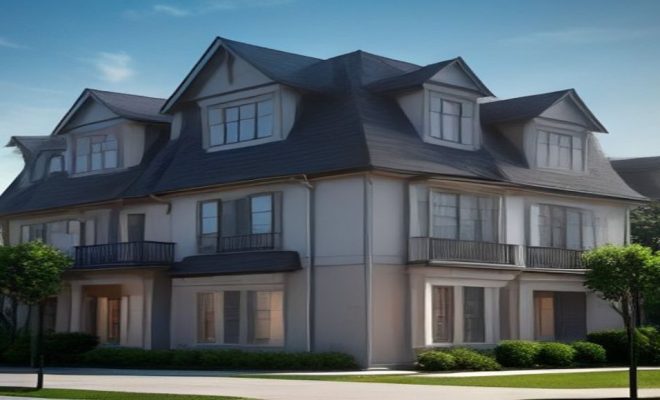
You might think the housing market moves as one big, cohesive entity, rising and falling in predictable cycles. But what if I told you it’s actually splitting in two, right before our eyes? A recent report from Zillow, released on July 29, 2026, pulls back the curtain on an astonishing divergence: the luxury homes market is absolutely booming, while starter homes are gathering dust. It’s a fascinating, and frankly, a bit unsettling, look at how different segments of the economy are impacting our most fundamental asset: a place to call home.
This isn’t just a minor fluctuation; it’s a significant shift challenging everything we thought we knew about housing cycles. We’re seeing robust demand and surging sales at the high end, contrasting sharply with a slowdown and increased inventory for those just trying to get their foot in the door. For anyone watching the real estate landscape, or perhaps dreaming of their own slice of it, this split has profound implications. Let’s dig into the ten key aspects of this unprecedented market phenomenon.
1. The Luxury Homes Market Surge: High-End Properties Are Flying Off the Shelves
It sounds almost counterintuitive, doesn’t it? In an economic climate where many are feeling the pinch, the luxury homes market is experiencing a remarkable boom. Zillow’s data shows that sales of high-end properties surged by a significant 6.2% year-over-year as of May. This isn’t just a blip; it’s a sustained increase indicating strong buyer confidence and purchasing power among the affluent.
What’s driving this? A big part of it comes down to the stock market. When equities perform well, high-net-worth individuals see their wealth grow, giving them more capital to invest in premium real estate. These buyers often aren’t as sensitive to interest rate fluctuations as first-time homebuyers, making them formidable contenders in a competitive market. They’re looking for amenities, location, and exclusivity, and they’re willing to pay for it.
2. Shrinking Luxury Inventory: Less to Choose From, More Competition
Accompanying the surge in luxury sales is a noticeable dip in inventory. The Zillow report indicates that the supply of luxury homes decreased by 5.2% year-over-year. Think about what that means: more buyers chasing fewer properties. It creates a classic seller’s market at the top end, driving up prices and intensifying competition.
This tight supply isn’t just about sales; it’s also about homeowners at the high end being less willing to sell. Many are sitting on low mortgage rates secured years ago, making them hesitant to move unless absolutely necessary, or unless they’re upgrading to an even more exclusive property. This scarcity further fuels the demand side, making the luxury homes market a hotbed of activity.
3. Starter Home Sales Plummet: First-Time Buyers Face an Uphill Battle
Now, let’s pivot to the other side of the coin: starter homes. While luxury properties are flying, sales of homes typically targeted at first-time buyers or those on a tighter budget have taken a hit. Zillow’s analysis reveals a 5.4% decline in starter home sales, a stark contrast to their luxury counterparts. This isn’t just a minor dip; it represents a real struggle for a huge segment of the population.
Why the slowdown? A confluence of factors is at play. Rising interest rates have significantly increased monthly mortgage payments, making affordability a huge hurdle. Coupled with persistent inflation impacting everyday costs – from groceries to gas – potential first-time homebuyers simply have less disposable income to save for a down payment or to qualify for a mortgage. The dream of homeownership feels more distant than ever for many.
4. Rising Starter Home Inventory: More Options, But Fewer Buyers
Unlike the shrinking inventory in the luxury segment, starter homes are seeing their stock grow. The report shows a 4.5% increase in starter home inventory. On the surface, more homes available might sound like good news for buyers, but in this context, it tells a different story: these homes are sitting longer because there aren’t enough qualified buyers.
This excess inventory often leads to something else: price cuts. Sellers who need to move their property are finding they have to reduce their asking price to attract interest. This creates a challenging environment for sellers in this segment, who might have expected a quick sale in previous years, and highlights the lack of purchasing power among entry-level buyers. (See: U.S. Census Bureau Housing Statistics.) There’s a fuller look at new platform for luxury buyers.
5. Geographic Hotbeds of Disparity: San Francisco’s Extreme Example
While this split is a national trend, certain metropolitan areas are experiencing it more acutely. Take San Francisco, for instance, a city renowned for its high cost of living and tech-driven wealth. The Zillow report highlights an extreme divergence there: luxury home sales soared by an incredible 21.6%, while starter home sales actually fell by 1.2%.
This kind of regional data really underscores the economic divide. In places like San Francisco, where tech wealth is concentrated, significant stock market gains directly translate into purchasing power for high-end real estate. Meanwhile, the general population faces immense affordability challenges, pushing the dream of homeownership further out of reach, even for what would be considered a modest property.
6. The Stock Market’s Influence on the Luxury Homes Market: A Clear Link
It’s not just a coincidence that the luxury homes market is thriving while the stock market has seen significant gains. There’s a direct, undeniable link. Wealthy individuals often have a substantial portion of their assets tied up in investments. When these investments appreciate, it frees up capital that can then be deployed into other asset classes, including high-end real estate.
This creates a kind of virtuous cycle for the wealthy: their investments grow, they buy more luxury assets, further solidifying their financial position. It also means that the luxury segment is somewhat insulated from the everyday economic pressures affecting most households. They’re playing a different game, with different rules, largely dictated by global financial markets rather than local job numbers or inflation rates.
7. Everyday Costs Burdening First-Time Buyers: The Struggle Is Real
Contrast that with the plight of the first-time homebuyer. They’re not typically seeing massive gains in their investment portfolios that translate into down payments. Instead, they’re battling rising everyday costs. Inflation has been a persistent antagonist, making everything from groceries and utilities to transportation significantly more expensive. This erosion of purchasing power directly impacts their ability to save.
Every dollar spent on elevated living expenses is a dollar that can’t go into a savings account for a down payment. This reality, combined with higher interest rates on mortgages, creates a formidable barrier to entry. For many, just maintaining their current standard of living feels like a win, leaving little room to save for a home, even if they found an affordable one.
8. Challenging Traditional Housing Cycle Expectations: A New Normal?
This market split is more than just an interesting anomaly; it actively challenges traditional housing cycle expectations. Typically, economists and real estate analysts look for a more uniform market movement. When interest rates rise, the expectation is generally a slowdown across all segments, perhaps with different degrees of impact but still a shared direction.
This Zillow report suggests that we might be entering a ‘new normal’ where different segments of the market operate almost independently. The resilience of the luxury homes market in the face of headwinds that are crippling the starter home market is a powerful indicator that economic disparities are now fundamentally reshaping how real estate functions. It begs the question: are we seeing a permanent structural change or just a prolonged anomaly?
9. The Emotional Impact and Social Divide: More Than Just Numbers
Beyond the statistics, there’s a profound emotional and social impact at play here. For those struggling to buy a starter home, seeing the luxury market thrive can be incredibly frustrating, even infuriating. It highlights a growing economic divide and reinforces the feeling that the system is rigged against the average person. Housing affordability is already a hot-button issue, and this report pours gasoline on that fire.
This emotional resonance is why discussions about this market split are going viral. People are passionate about homeownership, and when it feels increasingly out of reach for one group while another flourishes, it sparks outrage and concern. It’s not just about property values; it’s about the very fabric of the American dream and whether it remains accessible to all.
10. Implications for Investors and Policymakers: Navigating a Divided Market
For investors, this market split presents a complex but potentially lucrative landscape. The luxury homes market, with its robust demand and shrinking inventory, might offer attractive opportunities for those with the capital to participate. Strategies focused on high-end rentals, luxury developments, or even fractional ownership could become more appealing. Conversely, the starter home market, while challenging, might eventually present opportunities for patient investors looking for distressed properties or long-term growth as affordability eventually improves.
For policymakers, the message is clear and urgent: the current trajectory is unsustainable from a social equity standpoint. Addressing housing affordability for first-time buyers will require innovative solutions, whether that’s through incentivizing affordable housing development, exploring new financing models, or re-evaluating zoning laws. Ignoring this widening chasm risks exacerbating social tensions and creating long-term economic instability. The market is speaking, and it’s telling us a tale of two very different realities. (See: U.S. Department of Housing and Urban Development.)
11. The Role of Cash Buyers in the Luxury Homes Market: Bypassing Traditional Hurdles
A significant factor fueling the luxury homes market boom is the prevalence of cash buyers. Unlike buyers in the starter home segment who rely heavily on mortgages, a substantial portion of high-end transactions are conducted entirely in cash. This means these buyers are completely immune to rising interest rates and stringent lending requirements.
When you don’t need a mortgage, the entire purchasing process simplifies dramatically. There’s less paperwork, fewer contingencies, and typically a much faster closing time. This speed and simplicity are incredibly attractive to sellers, giving cash offers a distinct advantage, even if they aren’t the absolute highest bid. It’s a powerful differentiator that further widens the gap between the luxury and entry-level markets, where securing financing is often the biggest hurdle.
12. Demographic Shifts and Wealth Concentration: The Aging Affluent
The demographics of wealth also play a crucial role in the luxury homes market. A large segment of the affluent population is older, often having accumulated significant wealth over decades through careers, investments, and previous real estate gains. These individuals are often downsizing from even larger estates or acquiring secondary and tertiary residences, rather than entering the market for the first time.
This demographic isn’t facing the same pressures as younger, first-time buyers. They typically have paid-off mortgages, substantial retirement savings, and often benefit from inherited wealth. Their buying decisions are less about necessity and more about lifestyle upgrades, investment diversification, or securing legacy properties, further solidifying demand at the top end.
13. The Impact of Remote Work on Luxury Locations: New Desires, New Destinations
The long-term effects of remote work are also reshaping the luxury homes market, particularly in certain desirable locations. With less tethering to physical offices, high-net-worth individuals have greater flexibility to choose where they live. This has led to an increased demand for luxury properties in scenic, amenity-rich areas that were once considered vacation destinations, such as mountain towns, coastal communities, or exurban estates with ample land.
These buyers are seeking more space, better access to nature, and an improved quality of life, often willing to pay a premium for properties that offer these features. This geographic redistribution of wealth and demand is creating new luxury hot spots and intensifying competition in established ones, irrespective of traditional employment hubs.
14. Future Economic Headwinds and the Luxury Homes Market’s Resilience: A Stress Test
While the luxury homes market has shown remarkable resilience, it’s not entirely impervious to future economic headwinds. A significant downturn in the stock market, for example, could temper some of the current enthusiasm. Similarly, changes in tax policy affecting capital gains or estate taxes could influence buying and selling patterns among the wealthy. We covered unseen forces in luxury housing in more detail.
However, the luxury segment typically has deeper pockets and a longer-term investment horizon, often treating real estate as a store of value and a tangible asset hedge against inflation. This inherent stability often means that even during economic contractions, the luxury market tends to correct less severely and recover more quickly than other segments, though it’s certainly not immune to major shocks. It’s a stress test, for sure, but one that this market segment seems better equipped to handle.
15. The “K-Shaped” Recovery and its Real Estate Manifestation: A Visual of Disparity
This market split is a clear manifestation of what economists often refer to as a “K-shaped” recovery. Imagine the letter ‘K’: one arm goes up, representing segments of the economy and population that are thriving, while the other arm goes down, signifying those that are struggling. In real estate, the luxury homes market is firmly on the upward arm of the K, experiencing growth and prosperity.
Conversely, the starter home market, with its declining sales and increasing affordability challenges, is on the downward slope. This visual accurately captures the widening chasm and reinforces the idea that economic recovery and growth are not uniformly distributed. It’s a critical concept for understanding why different parts of the housing market are moving in opposite directions.
Frequently Asked Questions About the Luxury Homes Market Split
Q1: What exactly defines a “luxury home” in this report?
A1: Zillow defines luxury homes as properties in the top one-third of a given market’s price tier. This isn’t a fixed dollar amount across the country because what’s considered luxury in, say, Omaha is very different from what’s considered luxury in New York City. It’s a relative measure designed to capture the high-end segment within each local market’s unique pricing structure.
Q2: Are there specific amenities or features that luxury home buyers are prioritizing right now?
A2: Absolutely. Post-pandemic, buyers in the luxury homes market are increasingly prioritizing features that enhance lifestyle and well-being. Think expansive outdoor living spaces, dedicated home offices or multiple flex spaces, state-of-the-art smart home technology, high-end kitchens designed for entertaining, private gyms, and wellness amenities like spas or meditation rooms. Privacy, security, and proximity to nature or exclusive recreational facilities are also high on the list.
Q3: How much of an impact do international buyers have on the luxury homes market?
A3: International buyers can have a significant impact, especially in global gateway cities like New York, Miami, and Los Angeles. While their activity fluctuates based on global economic conditions, currency exchange rates, and geopolitical stability, they often represent a substantial portion of cash transactions in the ultra-luxury segment. They view U.S. luxury real estate as a stable investment and a safe haven for capital, further contributing to demand and price appreciation at the high end.
Q4: Could this split eventually lead to a “trickle-down” effect, making luxury homes more affordable?
A4: A direct “trickle-down” effect where luxury homes become starter homes isn’t likely in the short term. The price points are simply too disparate. What *could* happen, however, is that if the luxury market becomes oversaturated or sees a significant correction, some of that wealth might eventually find its way into other investments or stimulate broader economic activity that indirectly helps the lower end. More directly, if high-end homeowners move, it frees up mid-tier homes, which *could* create more options further down the chain, but that’s a slow and indirect process.
Q5: What are policymakers doing to address the starter home affordability crisis?
A5: Policymakers are exploring a range of options, though progress can be slow. These include initiatives to increase housing supply through zoning reform (allowing for more diverse housing types like duplexes or ADUs), financial assistance programs for first-time buyers (down payment assistance, lower interest rates), and incentives for developers to build affordable housing. Some cities are also looking at rent control or inclusionary zoning policies, but these are often contentious and vary widely in effectiveness and local political will.
Q6: Is this market split unique to the U.S., or is it a global phenomenon?
A6: This K-shaped housing market split is not unique to the U.S. Many developed nations are experiencing similar trends, particularly in major global cities. Factors like wealth concentration, the influence of global financial markets, rising interest rates, and inflation are impacting housing affordability for different segments of the population worldwide. It’s a complex global economic narrative playing out in local housing markets.
This Zillow report isn’t just a collection of numbers; it’s a stark reflection of our current economic landscape. The luxury homes market is soaring, buoyed by the wealth of the few, while the entry-level market struggles under the weight of everyday costs and rising interest rates. It’s a compelling, and frankly, a bit unsettling picture of how money, or the lack thereof, is shaping the very places we call home.
Trending Now
Frequently Asked Questions
Why are luxury homes selling so well?
Luxury homes are experiencing a surge in sales due to strong buyer confidence among affluent individuals. With a year-over-year increase of 6.2% in high-end property sales, factors like stock market performance are boosting the wealth of high-net-worth buyers, allowing them to invest in premium real estate despite economic challenges.
What is causing the divide in the housing market?
The housing market is splitting into two distinct segments: a booming luxury market and a stagnating starter home market. While high-end properties see increased demand and sales, starter homes face a slowdown and rising inventory, highlighting the contrasting economic conditions affecting different buyer demographics.
How do interest rates affect luxury home buyers?
Luxury home buyers are generally less sensitive to interest rate fluctuations compared to first-time buyers. Their financial stability and wealth allow them to navigate rising rates without significantly impacting their purchasing decisions, making them competitive in the high-end market.
What trends are impacting starter homes?
Starter homes are currently stalling in sales and facing increased inventory, primarily due to economic pressures affecting first-time buyers. Many potential buyers are challenged by affordability and rising interest rates, leading to a slowdown in this segment of the housing market.
What implications does the housing market divide have?
The stark divide in the housing market has profound implications for both buyers and the economy. It challenges traditional housing cycle perceptions and suggests that economic disparities are influencing real estate trends, making it crucial for potential buyers to understand these dynamics.
What did we miss? Let us know in the comments and join the conversation.