The Expanding Role of AI: Beyond Speed to Strategic Impact
AI’s Evolving Landscape in 2026
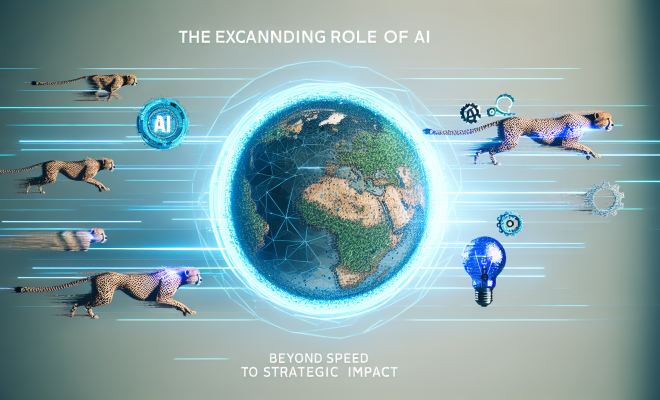
As we enter March 2026, the conversation surrounding artificial intelligence (AI) is shifting significantly. While speed has long been touted as a primary advantage of AI, emerging research indicates that the true power of AI encompasses much more than just rapid calculations. In the current landscape, AI is demonstrating unparalleled capabilities in areas such as scale, consistency, and the integration of multimodal data, impacting various fields from medicine to climate science.
Redefining Speed: The New Metrics of AI Performance
Modern AI systems are engineered to perform millions of calculations per second. This impressive speed is crucial, but it’s the combination of speed with other attributes that is driving innovation. Pattern recognition and synthesis have emerged as key strengths of AI, enabling machines to analyze vast datasets and uncover insights that may elude human analysts.
Pattern Recognition: A Game Changer in Various Fields
In domains such as medicine and climate science, the ability of AI to recognize patterns is revolutionizing the way professionals approach complex problems. For instance, AI algorithms can analyze medical images with a level of precision that rivals, and in some cases exceeds, human expertise. This capability not only aids in accurate diagnoses but also accelerates the identification of conditions that require immediate attention.
Similarly, in climate science, AI can process vast amounts of environmental data to identify trends and predict future changes. By synthesizing information from multiple sources, AI tools provide valuable insights that inform policy decisions and conservation efforts.
The Power of Scale and Consistency
One of the most critical advantages of AI is its ability to operate at scale. Unlike human analysts, who may be limited by cognitive load and time constraints, AI systems can handle enormous datasets without faltering. This capacity allows organizations to draw on comprehensive datasets to inform decisions, making AI an invaluable tool in both research and practical applications.
Consistency is another hallmark of AI performance. Machines do not experience fatigue, emotional bias, or inconsistencies inherent to human analysis. This reliability is vital in fields that demand precision, as it ensures that outputs remain stable over time. As a result, organizations can trust AI-generated insights to guide their strategies and operations.
Multimodal Integration: A Holistic Approach
Another noteworthy trend in AI is its ability to integrate multimodal data—text, images, and other forms of information—into cohesive analyses. This integration allows for a more comprehensive understanding of complex issues. For example, AI can analyze clinical notes, radiographic images, and laboratory results simultaneously, leading to more accurate and timely diagnoses.
In sectors such as marketing and customer service, this ability to process multiple data types means that AI can create more personalized experiences for users. By leveraging data from various sources, AI can tailor recommendations and responses to individual needs, enhancing user satisfaction and engagement.
The Rise of Hybrid Human-AI Systems
As we move further into 2026, the concept of hybrid human-AI systems is gaining traction. These systems leverage the strengths of both AI and human intelligence, creating a collaborative environment where machines handle computation and data processing, while humans provide context, creativity, and qualitative insights.
This partnership allows organizations to maximize the potential of AI while ensuring that critical human insight is not lost. For example, in healthcare, AI can suggest treatment options based on data analysis, but it is the healthcare professional’s experience and understanding of the patient that ultimately informs the final decision.
Qualitative Insights: The Human Element
Research conducted from 2025 to 2026 emphasizes the importance of qualitative insights in conjunction with AI capabilities. While AI excels at quantitative analysis, the nuances of human experience, empathy, and ethical considerations remain vital to many decision-making processes.
In this evolving landscape, organizations are encouraged to foster collaboration between AI systems and human experts. By doing so, they can ensure that the contextual understanding provided by humans complements the data-driven insights generated by AI.
Conclusion: Embracing a New Era of AI
The advancements in AI technology as of March 2026 illustrate a profound transition in how we perceive and utilize these systems. Beyond mere speed, AI’s strengths in scale, consistency, and multimodal integration are redefining its role across various sectors. As we continue to explore these capabilities, the development of hybrid human-AI systems will likely pave the way for more effective, innovative solutions to the challenges faced in medicine, climate science, and beyond.
Recognizing and embracing this multifaceted power profile of AI will be crucial for organizations aiming to stay at the forefront of technological progress and maintain a competitive edge in an increasingly complex world.