The Exciting Challenge of the Messier Marathon: A Night Under the Stars
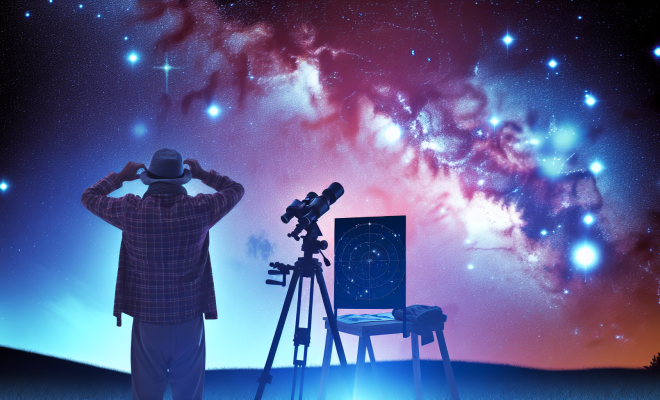
The Messier Marathon is an exhilarating challenge for amateur astronomers and stargazers alike, offering a rare opportunity to observe all 109 Messier objects in a single night. This celestial event typically takes place between mid-March and early April, aligning perfectly with optimal viewing conditions for observers located between 3° and 42° north latitude. For 2026, the prime dates for the Messier Marathon will fall on March 14 and March 21, coinciding closely with the New Moon on March 18, which will provide a darker sky necessary for spotting these faint celestial wonders.
The Origins of the Messier Marathon
The origins of the Messier Marathon can be traced back to the 18th century when the French astronomer Charles Messier first compiled his list of nebulae and star clusters. Messier’s interest in cataloging these objects was sparked during his quest to discover Halley’s Comet. His first significant discovery was the Crab Nebula (M1) in 1758, which helped him distinguish between comets and other deep-sky objects. This endeavor ultimately led to the creation of the Messier catalog, which was meant to help astronomers avoid confusion between comets and the fixed, non-cometary objects of the sky.
The Messier Objects
The Messier catalog consists of a variety of celestial objects, including star clusters, nebulae, and galaxies. Each of the 109 objects is designated with an “M” followed by its number in the catalog. The list is particularly valuable to amateur astronomers because the objects vary in brightness and complexity, making them accessible for viewing with telescopes or even binoculars.
Why a Marathon?
The concept of the Messier Marathon was popularized in the 1970s by a group of enthusiastic amateur astronomers, including Tom Hoffelder, Tom Reiland, and Don Machholz. They sought to challenge themselves and their fellow astronomy enthusiasts by attempting to locate all of the Messier objects in one session. The marathon format encourages teamwork, planning, and strategy, as participants must carefully coordinate their observations to account for factors such as rising and setting times, object visibility, and the need for dark skies.
Planning Your Marathon
To successfully complete a Messier Marathon, careful planning is essential. Here are some tips to help you prepare:
- Location: Choose a dark-sky site away from city lights to maximize visibility.
- Timing: The best time to run the marathon is during the new moon phase or when the moon is below the horizon, minimizing light interference.
- Equipment: Bring a telescope or binoculars, a star chart or app to locate the Messier objects, and a notebook to track your progress.
- Teamwork: Consider teaming up with fellow astronomers or joining a local astronomy club to share the experience and strategies.
The Challenges of the Marathon
While the Messier Marathon is an exciting undertaking, it is not without its challenges. One of the notable difficulties arises from a “gap” in the catalog, specifically in the right ascension range of 21h40m to 23h20m. This gap means that participants must be strategic about when they observe certain objects to ensure they can complete the marathon within the allotted time, typically one night.
The Controversy of M102
Another intriguing aspect of the Messier Marathon is the ongoing debate surrounding the object designated as M102. The controversy pertains to whether M102 corresponds to the Spindle Galaxy (NGC 5866), as observed by French astronomer Pierre Méchain, or if it is a misidentification. This debate adds a layer of intrigue to the marathon, as participants may choose to tackle M102 based on their interpretation of its identity.
Joining the Fun
Many astronomy clubs and organizations host Messier Marathon events, providing a communal experience for participants. These events often include workshops, presentations, and shared observing sessions, enhancing the overall experience. Whether you are a seasoned astronomer or a newcomer, joining a marathon can deepen your appreciation for the night sky and foster connections with fellow enthusiasts.
Conclusion
The Messier Marathon is a captivating challenge that encourages astronomers to engage with the cosmos and appreciate the wonders of the universe. By honing their skills and gathering knowledge about celestial navigation, participants not only enjoy a night of stargazing but also become part of a rich tradition in the field of astronomy. As the dates for the 2026 marathon approach, now is the perfect time to start preparing for this astronomical adventure that is sure to be both fulfilling and unforgettable.