Bobo Doll Experiment: Aggression & Social Learning (1960s)
“`html
The Bobo Doll Experiment is a seminal study in psychology that has shaped our understanding of how children learn behaviors, particularly aggression. Conducted by Albert Bandura in the early 1960s, this experiment provided compelling evidence for social learning theory, which suggests that people can learn through observation and imitation. But what exactly did Bandura discover, and why does it matter today? Let’s explore the depths of this groundbreaking research.
Background: The Birth of Social Learning Theory
Before we dive into the intricacies of the Bobo Doll Experiment, it’s essential to understand the context in which Bandura operated. In the 1960s, behaviorism, which emphasized the role of reinforcement and punishment in learning, dominated psychology. However, Bandura believed this framework was too narrow. He posited that people could learn new behaviors just by watching others, without any direct experience or reinforcement.
Bandura’s interest in observational learning was spurred by his own childhood experiences and the increasing interest in the effects of media violence on behavior. He sought to create an experiment that would illustrate how children could model aggressive behaviors simply by observing adults.
The Experiment: Overview and Methodology
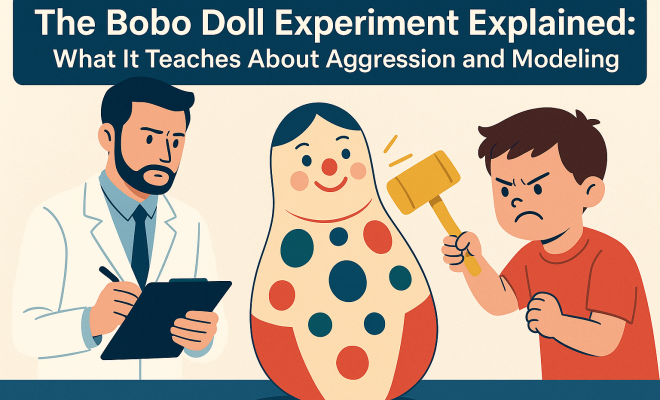
The Bobo Doll Experiment involved a series of studies where children were exposed to adults behaving aggressively towards an inflatable clown-like doll known as the Bobo doll. The methodology included three main groups of children, who were divided based on their exposure to different types of adult behavior:
- Group 1: Children watched adults behaving aggressively towards the Bobo doll, hitting it and shouting at it.
- Group 2: Children observed adults interacting with the Bobo doll in a non-aggressive manner.
- Group 3: A control group that was not exposed to any model.
After viewing the adult models, the children were placed in a room with the Bobo doll and other toys. Their behavior was then observed and recorded for signs of aggression. What Bandura found was remarkable: children who observed the aggressive adult were significantly more likely to mimic that aggression when given the opportunity.
Key Findings: Imitation and Aggression
The results of the Bobo Doll Experiment were definitive and compelling. Children who witnessed the aggressive model not only imitated the specific behaviors they observed but also devised new ways to aggress against the doll. They punched, kicked, and even used other toys to hit the doll, indicating that they had internalized the aggressive behaviors.
Moreover, Bandura noted that the gender of both the model and the child played a role in the imitation of aggression. For example, boys were more likely to imitate physical aggression, while girls were influenced more by the verbal aggression displayed by female models. This distinction raised interesting questions about gender roles and social conditioning that resonate today.
Theoretical Implications: Understanding Social Learning
The findings of the Bobo Doll Experiment led to the development of social learning theory, which posits that learning occurs through the observation of others and the modeling of behaviors, attitudes, and emotional responses. Bandura identified several key components involved in this process:
- Attention: One must pay attention to the behavior of the model to learn from it.
- Retention: The observer must be able to remember the behavior that was modeled.
- Reproduction: The observer must have the ability to reproduce the behavior.
- Motivation: The observer must have a reason or motivation to imitate the behavior.
This framework has since influenced various fields, including education, therapy, and media studies. Educational practices that emphasize modeling positive behaviors and responses have roots in Bandura’s research.
Practical Applications: What We Can Learn Today
The implications of the Bobo Doll Experiment extend far beyond psychology labs; they inform practical applications in a variety of contexts. In education, for instance, teachers can use modeling to foster positive behaviors in the classroom. When educators demonstrate problem-solving techniques or conflict resolution, students are more likely to emulate these behaviors. (See: Bobo Doll Experiment on Wikipedia.)
In parenting, the findings suggest that children learn from the behavior of their parents and caregivers. If a child observes aggression or violence, they may be more likely to replicate those actions. Conversely, modeling constructive communication and conflict resolution can lead to healthier behaviors.
Media Influence: The Role of Television and Video Games
One of the most discussed applications of the Bobo Doll Experiment is its relevance to media consumption. As children increasingly engage with television and video games, the potential for observational learning through media has become a critical area of study. Bandura’s work has sparked debates about the effects of violent media on child behavior. Are children who watch violent television shows more likely to act aggressively? For more on this, see understanding observational learning.
Studies inspired by Bandura’s findings suggest that there is a correlation between exposure to violent media and increased aggression in children. For example, children exposed to violent video games may become desensitized to violence and more likely to emulate aggression in real-life situations. This has led to discussions about media censorship and parental controls, emphasizing the need for responsible media consumption.
Critiques and Limitations of the Experiment
While the Bobo Doll Experiment is highly regarded, it’s not without its critiques. Some psychologists argue that Bandura’s study oversimplifies the complex nature of human behavior. Critics point out that aggression can stem from various factors, including biological predispositions, family environment, and personal experiences. Bandura’s focus on observational learning may not account for these nuances.
Additionally, questions about the ecological validity of the experiment arise. The controlled laboratory setting may not accurately reflect real-world scenarios where children learn behaviors. While the Bobo doll served as an effective tool for studying aggression, one could argue that the findings may not directly translate to children’s interactions with peers or siblings.
Current Relevance and Ongoing Research
The legacy of the Bobo Doll Experiment continues to influence contemporary research in psychology and education. Modern studies have built upon Bandura’s principles, exploring the nuances of how children learn from their environments in more complex and multifaceted ways. Researchers are now investigating the interplay between genetic factors and environmental influences on behavior, which adds depth to our understanding of aggression and learning. We covered insights on behaviorism education in more detail.
Furthermore, with the rise of social media, current research examines how online interactions shape behaviors in ways that Bandura could not have foreseen. The principles of social learning are now being applied to understand the impact of social platforms on youth culture, behavior, and even mental health.
Lessons for Educators and Parents
For educators and parents, the Bobo Doll Experiment provides essential lessons about the significance of role modeling. Children learn not only from what is explicitly taught but also from what they observe in their everyday environments. Here are some actionable insights:
- Model Positive Behavior: Be conscious of the behaviors you demonstrate, whether it’s in a classroom or at home. Children often imitate the emotional responses and coping strategies they observe.
- Encourage Healthy Conflict Resolution: Teach children how to resolve conflicts in non-violent ways. Show them how to communicate their feelings and negotiate differences.
- Monitor Media Consumption: Be aware of the content children are exposed to. Discuss media portrayals of violence and aggression, helping them interpret and critique what they see.
- Provide Opportunities for Positive Modeling: Engage in activities that promote teamwork and cooperation, allowing children to witness and practice positive social interactions.
Current Trends in Research on Aggression
Research into aggression has evolved significantly since Bandura’s time. Today, researchers are using advanced methodologies and technologies to explore the complexities of aggressive behavior. For instance, neuroimaging techniques allow scientists to observe the brain activity of individuals engaged in aggressive thoughts or actions, revealing insights into the underlying neurological mechanisms.
Moreover, studies now consider a broader range of influences, including cultural and socioeconomic factors. Researchers are beginning to understand how different cultural contexts shape the acceptance and expression of aggression. For example, norms around violence can vary widely between communities and cultures, affecting how children perceive and imitate aggressive behaviors.
Statistics from recent studies highlight concerning trends. A report from the American Psychological Association indicates that children exposed to high levels of violent media may show increased aggression and desensitization to violence. Over 70% of children in the U.S. have access to video games rated for mature audiences, raising alarms among child psychologists regarding the potential impact on behavior.
Expert Perspectives on Social Learning Today
To gain further insights into the ongoing relevance of the Bobo Doll Experiment, it helps to hear from experts in the field. Dr. Judith Harris, a prominent psychologist, explains that observational learning is not just about imitation but also about the social context in which learning occurs. She states, “Children are not blank slates. They come to situations with their own personality traits, and those traits interact with what they observe.” (See: Research on observational learning.)
Additionally, Dr. Craig Anderson, a leading researcher on the effects of media violence, emphasizes the need for continued research. He says, “Bandura opened the door to understanding how observation impacts behavior, but the digital age adds layers of complexity that require new approaches to study.” Such insights highlight how Bandura’s work continues to influence current research and discussions in psychology.
FAQs about the Bobo Doll Experiment
What was the purpose of the Bobo Doll Experiment?
The primary purpose was to investigate whether children would imitate aggressive behaviors observed in adults. Bandura aimed to demonstrate that learning could occur through observation alone, without direct reinforcement.
What were the main findings of the experiment?
Children who observed adults behaving aggressively towards the Bobo doll were significantly more likely to replicate those aggressive actions. They not only mimicked the observed behaviors but also created their own aggressive actions, indicating a deeper internalization of aggression.
How does the experiment relate to modern media consumption?
The findings are particularly relevant today as children consume vast amounts of media content, including violent video games and television shows. Research suggests a correlation between exposure to violent media and increased aggression in children, echoing the principles demonstrated in Bandura’s original study.
Are there any criticisms of the Bobo Doll Experiment?
Yes, some critics argue that the experiment oversimplifies aggressive behavior by focusing solely on observational learning. They point out that aggression can result from a variety of factors, including biological, social, and environmental influences. Additionally, concerns about the ecological validity of the experimental setup have been raised.
What lessons can parents and educators draw from the Bobo Doll Experiment?
Parents and educators can learn the importance of modeling positive behaviors and the impact of their actions on children. By demonstrating healthy communication and conflict resolution strategies, they can help children develop stronger social skills and reduce aggressive tendencies. Related reading: community practices in social learning.
Comparative Studies: Insights from Other Research
In the realm of psychological research, the Bobo Doll Experiment is often referenced alongside other studies that explore similar themes of observational learning and aggression. One notable study is the Frustration-Aggression Hypothesis, developed by John Dollard and his colleagues in the 1930s. This theory posits that aggression is often a result of frustration, implying that situational factors can influence aggressive responses just as much as observational learning.
Another relevant study is the work by Bandura and his colleagues on vicarious reinforcement. In these studies, children were shown videos of adults receiving rewards for aggressive behavior, which resulted in increased imitation of those aggressive actions. This highlights the interplay between observational learning and reinforcement, suggesting that the context in which children observe behavior matters significantly.
Furthermore, a study conducted in the 1980s examined the effects of media violence on aggression among teens and found that exposure to violent media not only influenced aggressive behaviors but also significantly impacted their attitudes towards violence. These types of studies validate Bandura’s initial findings by emphasizing that the lessons learned through observation are deeply intertwined with societal influences and media portrayals.
Longitudinal Studies: The Impact Over Time
Longitudinal studies have provided further insights into the effects of early exposure to aggression and violent behavior as demonstrated in the Bobo Doll Experiment. Research tracking children into adolescence has shown that those who displayed aggressive behaviors as young children were more likely to engage in antisocial behavior during their teenage years. This suggests that the effects of early observational learning can persist long into a person’s life.
For instance, a study conducted by the University of Michigan followed participants from childhood through adulthood, revealing a correlation between aggressive play in early childhood, similar to the behavior observed in the Bobo Doll Experiment, and increased rates of criminal behavior in adulthood. Such findings underscore the importance of addressing aggressive tendencies early on and implementing interventions that not only demonstrate positive behaviors but also encourage emotional regulation and empathy.
Innovations in Teaching and Parenting Strategies
Given the implications of the Bobo Doll Experiment, educators and parents are constantly innovating strategies to foster positive behavioral development in children. Some contemporary approaches include:
- Social-Emotional Learning (SEL): Programs that incorporate SEL help children develop emotional intelligence, allowing them to better manage their emotions and understand the emotions of others. These programs often include role-playing and modeling scenarios that encourage empathy and kindness.
- Restorative Practices: Instead of traditional disciplinary methods, educators are increasingly adopting restorative practices that focus on healing and restoration rather than punishment. This approach encourages students to take responsibility and understand the impact of their actions, promoting a more empathetic school environment.
- Positive Parenting Techniques: Parents are encouraged to implement positive reinforcement strategies, such as praising good behavior and providing constructive feedback. This approach helps children learn what behaviors are acceptable and encourages them to emulate those behaviors rather than resorting to aggression.
The Global Perspective: Cultural Differences in Aggression
Understanding the impact of aggression and observational learning in different cultural contexts adds another layer of complexity to the findings of the Bobo Doll Experiment. Research shows that cultural norms influence how aggression is perceived and expressed. For example, in some cultures, aggressive behavior may be more accepted in specific contexts, such as competitive sports, whereas, in others, it may be viewed as entirely unacceptable.
Cross-cultural studies have revealed that children growing up in collectivist societies, where group harmony is emphasized over individual expression, often exhibit lower levels of overt aggression compared to those from individualist societies. This suggests that social norms and values can shape the way children internalize and express aggressive behaviors.
Furthermore, researchers are increasingly examining the role of cultural narratives and myths in shaping children’s perceptions of aggression. For instance, stories that glorify heroes who use violence to achieve justice can influence young minds, leading them to imitate such behaviors as acceptable or even heroic. This highlights the importance of critically assessing not just media consumption but also cultural narratives that children are exposed to.
Conclusion: The Lasting Impact of the Bobo Doll Experiment
The Bobo Doll Experiment remains a cornerstone of psychological research. Bandura’s insights into observational learning and aggression continue to shape our understanding of behavior. This pioneering work not only informs educational practices and parenting strategies but also prompts us to critically engage with the media we consume and the behaviors we model for the next generation.
As society continues to grapple with issues of aggression, violence, and behavioral influence, the lessons derived from Bandura’s experiment are more relevant than ever. By recognizing the power of modeling, we can create environments that foster positive behaviors and contribute to healthier communities.
“`
Trending Now
Frequently Asked Questions
What is the Bobo Doll Experiment?
The Bobo Doll Experiment, conducted by Albert Bandura in the early 1960s, is a pivotal study in psychology that demonstrates how children learn behaviors through observation and imitation, particularly aggressive actions. It highlighted the concept of social learning theory, which suggests that people can acquire new behaviors by watching others rather than through direct reinforcement.
What did Bandura discover in the Bobo Doll Experiment?
Bandura discovered that children who observed adults behaving aggressively towards the Bobo doll were more likely to imitate that aggressive behavior themselves. This finding provided strong evidence for social learning theory, indicating that observational learning plays a significant role in how children develop behaviors.
How does the Bobo Doll Experiment relate to social learning theory?
The Bobo Doll Experiment is foundational to social learning theory, which posits that individuals can learn behaviors by observing others. Bandura’s study illustrated that children could model aggression after watching adults, emphasizing that learning can occur without direct reinforcement or punishment.
What were the groups in the Bobo Doll Experiment?
In the Bobo Doll Experiment, children were divided into three groups: Group 1 observed adults behaving aggressively towards the Bobo doll, Group 2 saw adults interacting non-aggressively, and Group 3 served as a control group with no exposure to adult models. This setup helped compare the effects of different types of adult behavior.
Why is the Bobo Doll Experiment important today?
The Bobo Doll Experiment remains crucial today as it highlights the impact of media and environmental influences on behavior, especially in children. Its findings continue to inform discussions around aggression, media violence, and the importance of positive role models in child development.
What's your take on this? Share your thoughts in the comments below — we read every one.