Mars Dust Storms Spark Chemical Reactions & Lightning
Introduction to Martian Dust Storms
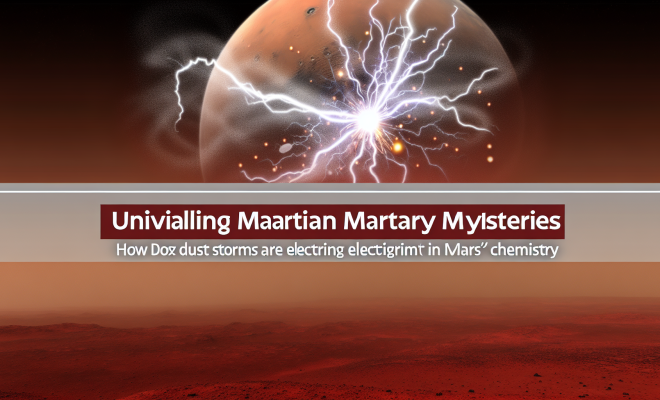
In a groundbreaking study, scientists from Washington University in St. Louis have uncovered a remarkable phenomenon on Mars: the planet’s infamous dust storms and dust devils are not just atmospheric disturbances, but they are also responsible for generating static electricity powerful enough to create sparks akin to lightning. This discovery has profound implications for our understanding of Mars’ chemical processes and its overall environment.
The Role of Dust in Martian Weather
Mars is renowned for its dust storms, which can envelop the entire planet and last for weeks. These storms are a feature of the Martian atmosphere, characterized by fine particles that can be lifted and transported by winds. The research conducted by the team led by Associate Professor Kun Wang highlights how these dust events contribute to electrostatic phenomena.
- Dust Devils: Small whirlwinds, known as dust devils, are common on Mars and play a significant role in the planet’s weather dynamics.
- Static Electricity Generation: As these dust particles collide, they generate static electricity, leading to the formation of lightning-like discharges.
Electrostatic Discharges and Chemical Reactions
The researchers found that the static electricity produced by these dust storms can trigger a variety of chemical reactions on Mars. These reactions are significant as they reshape the planet’s surface and atmosphere, providing insights into the Martian environment.
One of the key findings was the production of chlorine compounds and carbonates as a direct result of these electrostatic discharges. This is particularly important because it contributes to a better understanding of Mars’ chlorine cycle, which has implications for both its geological history and the potential for past life.
Understanding Mars’ Chlorine Cycle
The chlorine cycle on Mars is a relatively underexplored aspect of the planet’s chemistry. The formation of chlorine compounds through static electricity may indicate that Mars has a more complex atmospheric chemistry than previously understood. The study’s findings suggest that:
- The presence of static electricity during dust storms can facilitate the creation of essential compounds.
- These reactions could lead to distinct isotopic fingerprints that can be analyzed to understand the historical climatic and geochemical processes on Mars.
First Experimental Insights on Electrostatic Discharges
One of the most notable aspects of this research is that it represents the first experimental work investigating the impact of electrostatic discharges on isotopes in a Martian environment. Professor Wang praised the study conducted by Alian, which focused on the implications of these discharges for Martian chemistry.
The experimental approach allowed scientists to simulate Martian conditions and observe the outcomes of electrostatic discharges. This methodology is critical as it lends credibility to the findings and provides a scientific basis for understanding how dust storms influence the planet’s chemistry.
Implications for Future Mars Exploration
The implications of this research extend beyond theoretical chemistry. Understanding the electrostatic processes on Mars can inform future exploration strategies, particularly in the search for signs of past life. The presence of chlorine compounds and carbonates may indicate habitable conditions in Mars’ history.
Moreover, the insights gained from studying these dust storms could guide the design of future missions aimed at sampling Martian soil and atmosphere. By targeting regions known for dust activity, scientists can gather data that may reveal more about the planet’s climatic history.
Challenges and Future Research Directions
While this research opens new avenues for understanding Mars, challenges remain. The Martian environment is harsh and difficult to study, requiring innovative technologies for data collection and analysis. Future research will likely focus on:
- Developing instruments capable of measuring electrostatic activity on Mars.
- Conducting long-term observations of dust storm patterns and their chemical outcomes.
- Exploring the potential for electrostatic discharges to influence other chemical cycles on Mars.
Conclusion
The discovery that Mars’ dust storms generate static electricity and initiate chemical reactions marks a significant advancement in our understanding of the planet. As scientists continue to unravel the complexities of Martian chemistry, these findings may provide crucial insights into the planet’s history and its potential to support life. The interplay between electrostatics, chemistry, and geology on Mars is a fascinating avenue of research that promises to yield exciting discoveries in the years to come.