The Astonishing Twist in Student Loan Forgiveness That Just Saved Millions
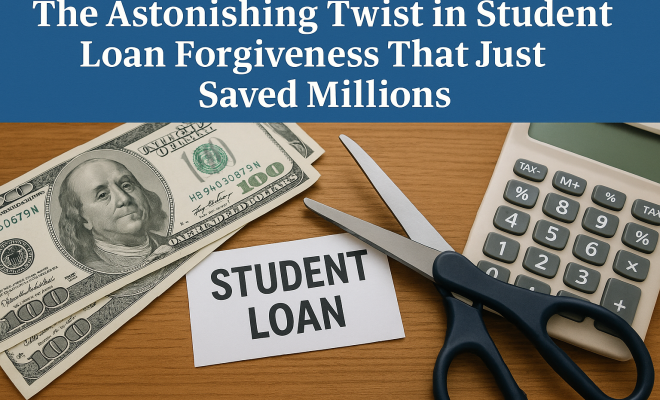
For millions of Americans shouldering the burden of student debt while dedicating their lives to public service, a recent development has brought a collective sigh of relief. The Trump administration, in a surprising turn, quietly dropped two appeals that aimed to significantly restrict the Public Service Loan Forgiveness (PSLF) program. This isn’t just a technical legal maneuver; it’s a profound victory for government and non-profit employees, ensuring that the path they’ve diligently pursued toward student loan forgiveness remains intact, at least for now. It’s a moment that underscores the often-volatile intersection of policy, legal challenges, and the very real financial futures of countless individuals.
The implications of this decision are massive. Had the administration’s appeals succeeded, it would have fundamentally reshaped who qualified for PSLF, potentially leaving hundreds of thousands of public servants in the lurch, facing debt they had planned to have erased. This wasn’t a minor tweak; it was an attempt at a radical redefinition, and the withdrawal of these appeals means that the existing, broader interpretation of ‘public service’ holds. For anyone tracking the often-turbulent waters of student loan forgiveness, this is a truly significant moment, demonstrating the power of legal advocacy and the enduring importance of these critical programs.
The Trump Administration’s Attempt to Redefine Public Service
To fully grasp the significance of this recent withdrawal, we need to rewind a bit and understand what the Trump administration was trying to do. Their efforts centered on a controversial redefinition of what constitutes ‘public service’ under the PSLF program. This wasn’t about tightening up administrative loopholes; it was about fundamentally altering the spirit of the program, moving the goalposts in a way that would have excluded many roles traditionally considered public service.
One particularly contentious aspect of this redefinition involved targeting certain employers based on the services they provided. For instance, there were concerns about excluding organizations that offered gender-affirming care, a move that advocacy groups quickly condemned as discriminatory and politically motivated. The administration’s stance seemed to suggest that some forms of public service were more worthy than others, a subjective interpretation that directly contradicted the broad intent of the original PSLF legislation. This kind of nuanced, politically charged interpretation is exactly what makes student loan forgiveness such a hot-button issue, constantly under scrutiny and subject to legislative and executive whims.
The Legal Battles and Advocacy That Paved the Way
This victory didn’t just happen; it was the result of persistent legal challenges and vocal advocacy from groups like Student Defense. When the administration first moved to narrow the PSLF eligibility, these organizations didn’t just complain; they acted. They filed lawsuits, arguing that the proposed changes were not only anti-democratic but also unlawful. Their legal arguments contended that the administration was overstepping its authority, attempting to unilaterally redefine a program established by Congress.
The initial ruling in June that blocked the administration’s plan was a crucial first step. It sent a clear message that the courts were not going to simply rubber-stamp executive actions that contradicted established law and congressional intent. The subsequent decision by the administration to drop its appeals, rather than continue the legal fight, speaks volumes. It suggests that they recognized the weakness of their legal position and the strong likelihood of further defeats, thus sparing themselves the embarrassment and expense of a prolonged, losing battle. This demonstrates the critical role that independent legal bodies play in safeguarding public programs against potentially arbitrary changes.
Understanding the Public Service Loan Forgiveness (PSLF) Program
For those new to the intricacies of student loan forgiveness, let’s break down what PSLF actually is. Established in 2007, the Public Service Loan Forgiveness program was designed to encourage individuals to enter and stay in public service careers. The premise is straightforward: if you work full-time for a qualifying government agency or non-profit organization and make 120 qualifying monthly payments (that’s 10 years’ worth) under an income-driven repayment plan, the remaining balance of your federal direct loans is forgiven, tax-free.
This program was a game-changer for many, offering a tangible light at the end of the tunnel for those working in lower-paying but vital public roles—think teachers, nurses, social workers, public defenders, and military personnel. Without PSLF, the financial burden of student loans might steer talented individuals away from these essential professions, leading to critical shortages. The promise of student loan forgiveness makes these careers financially viable, allowing dedicated individuals to pursue their passions without being crushed by debt.
Who Qualifies for PSLF? A Closer Look
The eligibility requirements for PSLF, while seemingly simple, have been a source of significant confusion and contention over the years. To qualify, you must:
- Work full-time for a qualifying employer: This includes federal, state, local, or tribal government organizations, as well as 501(c)(3) non-profit organizations. Certain other non-profits that provide specific public services can also qualify, even if they aren’t 501(c)(3)s. This is precisely where the Trump administration tried to introduce restrictions, focusing on the *type* of service rather than just the *type* of employer.
- Have Direct Loans: Only federal Direct Loans are eligible. If you have other types of federal loans (like FFEL or Perkins loans), you’d typically need to consolidate them into a Direct Consolidation Loan to qualify.
- Make 120 qualifying payments: These payments must be made under a qualifying income-driven repayment (IDR) plan and must be on time, for the full amount due, and after October 1, 2007.
The complexity often lies in verifying employment and payment histories, which has historically led to high rejection rates. However, the recent administrative changes and temporary waivers have aimed to address some of these historical issues, making the program more accessible and effective for those who truly qualify. This latest decision to drop the appeals reinforces the established, broader interpretation of these qualifying criteria, offering much-needed stability.
The Impact on Student Loan Borrowers and Public Service
Imagine dedicating a decade of your life to teaching in underserved communities, or providing healthcare in rural areas, all while making consistent student loan payments with the understanding that your remaining debt would eventually be cleared. Then, imagine a sudden policy shift threatening to pull that rug out from under you. That’s the anxiety many public servants have been living with. The dropping of these appeals means that anxiety can, for now, subside. (See: Public Service Loan Forgiveness program.)
This decision is a huge win for morale among public service workers. It validates their commitment and ensures that the financial relief they were promised remains attainable. Without PSLF, the financial strain of student debt can be a significant deterrent for individuals considering public service careers, which often come with lower salaries compared to the private sector. By preserving the program’s integrity, we’re not just helping individuals; we’re strengthening the workforce that underpins our communities and government functions. This makes the program not just a debt relief mechanism, but a vital piece of public policy infrastructure.
The Broader Political Context of Student Loan Forgiveness
Student loan forgiveness is rarely out of the headlines, especially given its political potency. It’s an issue that touches millions of households and has become a regular talking point in elections and policy debates. The Trump administration’s attempt to narrow PSLF wasn’t an isolated incident; it fit into a broader pattern of conservative skepticism towards extensive debt relief programs, often citing concerns about cost to taxpayers and perceived fairness to those who have already paid off their loans. For more context, see Gen Z Financial Literacy.
Conversely, progressive voices often advocate for broader forgiveness, arguing it stimulates the economy, addresses systemic inequalities, and prevents a looming debt crisis. The back-and-forth legal battles and policy adjustments around PSLF are a microcosm of this larger ideological struggle. Each decision, whether to expand or contract eligibility, sends ripples through the political landscape, influencing voter sentiment and shaping future legislative efforts. This particular victory for borrowers represents a temporary triumph for the pro-forgiveness camp, but the debate is far from over.
What This Means for Future PSLF Applicants and Current Participants
For individuals currently pursuing student loan forgiveness through PSLF, or those contemplating a career in public service, this news brings a renewed sense of security. It means that the rules you’ve been operating under are largely stable, at least for the foreseeable future. You won’t wake up tomorrow to find that your employer suddenly doesn’t qualify because of a last-minute reinterpretation of ‘public service.’
However, it’s crucial to remember that policy can always change. While this specific attempt to narrow eligibility has failed, new administrations or legislative bodies could still propose different modifications. The best advice for anyone relying on PSLF is to remain vigilant: meticulously track your employment and payments, keep thorough records, and stay informed about any official announcements from the Department of Education or your loan servicer. Don’t assume anything; verify everything.
Beyond PSLF: The Landscape of Student Loan Forgiveness
While PSLF is a significant program, it’s just one facet of the broader student loan forgiveness landscape. There are various other avenues for debt relief, each with its own specific criteria:
- Income-Driven Repayment (IDR) Forgiveness: After 20 or 25 years of payments on an IDR plan, any remaining balance on your federal loans can be forgiven. Unlike PSLF, this forgiveness is generally taxable as income, which is a key distinction.
- Teacher Loan Forgiveness: Specific to teachers in low-income schools, this program can forgive up to $17,500 in Direct Subsidized or Unsubsidized Loans after five consecutive years of teaching.
- Total and Permanent Disability (TPD) Discharge: For borrowers who are unable to engage in any substantial gainful activity due to a physical or mental impairment.
- Borrower Defense to Repayment: For students whose schools engaged in misconduct, such as fraud or misrepresentation.
- Closed School Discharge:
If your school closes while you’re enrolled or soon after you withdraw, you might be eligible for discharge.
Each of these programs serves a distinct purpose, addressing different circumstances that lead to student debt burdens. The ongoing debate around student loan forgiveness often considers how these programs interact and whether they adequately serve the needs of borrowers while also being fiscally responsible.
The Evolution of PSLF: From Promise to Performance
When PSLF was first enacted in 2007, it was heralded as a groundbreaking initiative to incentivize public service. However, its early implementation was plagued with issues. Many borrowers, diligently making payments for years, found themselves rejected due to technicalities – incorrect loan types, wrong repayment plans, or misunderstandings about what constituted a “qualifying payment.”
For instance, one common pitfall was borrowers being in the wrong repayment plan. While any payment made under an income-driven repayment plan qualifies, many borrowers were initially advised to use other plans, like the Standard Repayment Plan, which would pay off their loan before they hit the 120-payment mark. This led to immense frustration and a sense of betrayal for those who thought they were on track for forgiveness, only to find out they weren’t. The Department of Education’s initial servicer, FedLoan Servicing, also faced significant criticism for its communication and record-keeping.
In response to these widespread issues and a public outcry, the Biden administration introduced the PSLF Waiver in October 2021. This temporary waiver significantly broadened eligibility, allowing past payments that previously didn’t count (due to loan type or repayment plan) to be retroactively counted towards the 120 required payments. It also allowed borrowers with FFEL or Perkins loans to consolidate them into Direct Loans and have their past payments count. This waiver was a monumental step towards correcting historical errors and fulfilling the program’s original promise, ultimately benefiting hundreds of thousands of public servants who were previously locked out.
Statistics and Real-World Impact
The numbers truly highlight the program’s significance. As of early 2024, over 800,000 borrowers have received more than $62.5 billion in student loan forgiveness through PSLF, largely thanks to the temporary waiver and ongoing administrative improvements. Before the waiver, the program’s approval rate was notoriously low, often in the single digits. This meant a vast majority of applicants were rejected, leading to widespread disillusionment.
Consider the story of a public defender who graduated with $150,000 in law school debt. Earning a public servant’s salary, paying that off conventionally would be a monumental, perhaps impossible, task. PSLF offers a viable path, allowing them to continue their vital work without the crushing weight of debt. Similarly, a nurse working in a rural hospital, a social worker supporting vulnerable families, or a teacher in an underfunded school district all benefit immensely. These are not abstract beneficiaries; they are the backbone of our communities, and PSLF directly supports their ability to serve. (See: recent developments in student loan forgiveness.)
The economic impact extends beyond individual relief. When public servants are freed from crushing debt, they have more disposable income to spend, stimulate local economies, and save for retirement or homeownership. It also reduces stress and burnout, potentially leading to higher retention rates in critical public service sectors that often struggle with staffing.
The Role of Loan Servicers in PSLF Success
The success, or failure, of student loan forgiveness programs like PSLF often hinges on the efficiency and accuracy of loan servicers. These are the companies that manage your student loan accounts, process payments, and provide information. Historically, servicers have been a major point of friction for PSLF borrowers. For more context, see Financial Literacy Education in America.
Misinformation, inconsistent advice, and poor record-keeping by servicers contributed significantly to the early high rejection rates. For example, some borrowers were told by their servicers that they were on track for PSLF, only to find out years later that their payments didn’t qualify due to an incorrect repayment plan or an ineligible loan type. This highlights the critical need for robust oversight of loan servicers by the Department of Education and for borrowers to independently verify information.
With the transition of PSLF servicing from FedLoan Servicing to MOHELA, there have been efforts to standardize processes and improve communication. However, borrowers still face challenges. It’s paramount for anyone pursuing PSLF to regularly check their loan status, track payments, and verify their employment certification forms (ECFs) with their servicer. Never rely solely on verbal assurances; always request documentation and keep meticulous records.
PSLF and the Future of Higher Education Funding
The debate around student loan forgiveness, including PSLF, is inextricably linked to the broader conversation about the cost of higher education. Critics of forgiveness programs often argue that they don’t address the root cause of the problem: skyrocketing tuition fees. They contend that simply forgiving debt without reforming the funding model for colleges and universities is akin to putting a band-aid on a gaping wound.
Indeed, many policy experts believe that comprehensive reform is needed, including measures to control tuition costs, increase federal and state funding for public institutions, and ensure greater accountability from colleges regarding student outcomes and debt levels. PSLF, while vital, is a reactive measure to existing debt. A truly sustainable solution would involve making higher education more affordable in the first place, reducing the need for such extensive forgiveness programs.
However, proponents of PSLF argue that it serves a different, equally important purpose: addressing workforce needs and social equity. It acknowledges that certain essential jobs are often underpaid and that the societal benefit of these roles justifies financial support for those who pursue them. It’s a recognition that not all value can be measured in market wages, and that public good requires investment.
Frequently Asked Questions About Student Loan Forgiveness
Q1: Is student loan forgiveness taxable?
A1: This depends on the type of forgiveness. PSLF forgiveness is specifically tax-free at the federal level. However, forgiveness under Income-Driven Repayment (IDR) plans is generally considered taxable income by the IRS, though there’s a temporary federal tax exemption for IDR forgiveness through 2025. State tax laws vary, so it’s wise to consult a tax professional.
Q2: How do I know if my employer qualifies for PSLF?
A2: Generally, qualifying employers include U.S. federal, state, local, or tribal government organizations (including the military) and most not-for-profit organizations that are tax-exempt under Section 501(c)(3) of the Internal Revenue Code. Other non-profits that provide specific public services may also qualify. The best way to confirm is to submit an Employer Certification Form (ECF) to the Department of Education, which will review and confirm your employer’s eligibility.
Q3: What are qualifying payments for PSLF?
A3: A qualifying payment must be made: on a Direct Loan, under a qualifying income-driven repayment plan, for the full amount due, no later than 15 days after your due date, and while you’re employed full-time by a qualifying employer. You need 120 such payments. For more context, see Workplace Learning Trends.
Q4: Can I get PSLF if I work part-time for multiple qualifying employers?
A4: Yes, you can. You are considered to be employed full-time if you work at least 30 hours per week, regardless of whether you are employed by one or more employers. Each employer must be a qualifying employer. You’ll need to submit an ECF for each employer.
Q5: What happens if I leave public service before making 120 payments?
A5: Your payments won’t be forgiven, but the qualifying payments you’ve already made will remain on your record. If you return to public service employment later, you can pick up where you left off and continue making qualifying payments toward the 120 total. There’s no time limit to accumulate the 120 payments, as long as you’re working for a qualifying employer when you make them.
Q6: What’s the difference between PSLF and the PSLF Waiver?
A6: PSLF is the permanent program. The PSLF Waiver (also known as the Limited PSLF Waiver) was a temporary initiative that allowed certain past payments that didn’t previously count for PSLF (due to loan type, repayment plan, or late payments) to be counted retroactively. It significantly broadened eligibility for a limited time, helping many borrowers catch up on their payment count. The waiver period has ended, but its impact continues as many borrowers are still seeing their accounts updated and receiving forgiveness.
Q7: How do I apply for PSLF?
A7: There isn’t a single application until you’ve made all 120 payments. The process involves two main steps:
- Certify your employment: Submit an Employer Certification Form (ECF) annually or whenever you change employers. This helps the Department of Education track your progress.
- Apply for forgiveness: Once you’ve made 120 qualifying payments, you’ll submit the PSLF Application to receive your forgiveness.
It’s highly recommended to submit ECFs regularly to ensure your employment and payment counts are accurate.
Looking Ahead: The Enduring Battle Over Student Debt
The recent decision to drop the appeals regarding PSLF eligibility is a moment of reprieve, a win for dedicated public servants. But it’s important not to view it as the final chapter in the story of student loan forgiveness. The underlying issues—the rising cost of higher education, the crushing weight of student debt, and the philosophical disagreements over who should bear that cost—remain potent and unresolved.
As we move forward, we can expect continued debate, new legislative proposals, and potentially further legal challenges related to student debt. For borrowers, particularly those in public service, staying informed and proactive remains the best defense against shifting policies. This victory reminds us that advocacy and legal action can indeed sway the course of policy, offering hope that the promise of student loan forgiveness will continue to empower those who serve our communities.
The fight for sensible, equitable student debt solutions is an ongoing one, and every significant policy decision, like this one, shapes the financial realities of millions. What happens next is anyone’s guess, but for today, public servants can breathe a little easier, knowing their path to student loan forgiveness remains clear.
Trending Now
Frequently Asked Questions
What is the Public Service Loan Forgiveness program?
The Public Service Loan Forgiveness (PSLF) program is a federal initiative designed to forgive student loan debt for individuals who work in qualifying public service jobs, such as government and non-profit roles, after making 120 qualifying monthly payments. It aims to encourage careers in public service by alleviating the burden of student loans.
How did the Trump administration impact student loan forgiveness?
The Trump administration attempted to redefine what constitutes 'public service' under the PSLF program, aiming to restrict eligibility for loan forgiveness. However, they recently withdrew two appeals that would have significantly altered the program, preserving broader eligibility for public servants seeking loan forgiveness.
Why is the withdrawal of appeals important for student loan forgiveness?
The withdrawal of appeals by the Trump administration is crucial as it maintains the existing, broader interpretation of 'public service' under the PSLF program. This decision protects hundreds of thousands of public servants from potential loss of eligibility for loan forgiveness, ensuring they can continue their pursuit of debt relief.
What are the implications of the recent developments in PSLF?
The recent developments regarding the PSLF program signify a major victory for public service employees, safeguarding their path to student loan forgiveness. Had the appeals not been dropped, many could have faced increased financial burdens and loss of eligibility, fundamentally reshaping their futures.
Who qualifies for the Public Service Loan Forgiveness program?
To qualify for the PSLF program, borrowers must work full-time for a qualifying employer, such as a government agency or non-profit organization, and make 120 qualifying payments on their Direct Loans. The recent withdrawal of appeals helps ensure that a broader range of public service roles remain eligible for forgiveness.
What did we miss? Let us know in the comments and join the conversation.