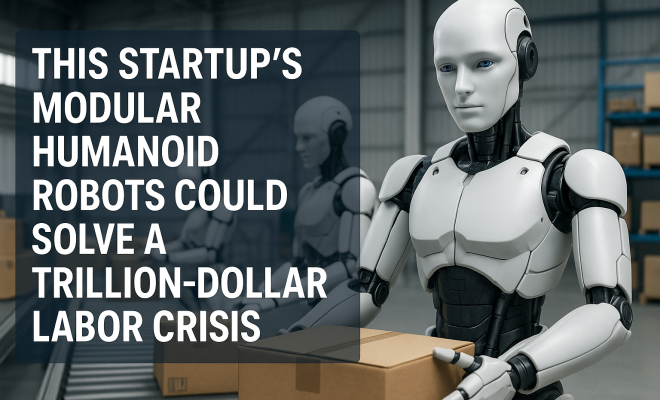
The Astonishing Truth: Companies Are Rehiring Humans AI Couldn’t Replace
Remember all those headlines screaming about AI taking over our jobs? The panic, the doomsday predictions, the sheer certainty that robots were coming for every cubicle and factory floor? Well, it turns out the story is a lot more nuanced, and frankly, a bit astonishing. We’re witnessing a fascinating reversal in the tech job market, a trend that’s quietly challenging the widespread fear of AI-driven job displacement. Companies that eagerly embraced automation, replacing human workers with algorithms and machines, are now finding themselves in a peculiar position: they’re rehiring the very people they let go.
This isn’t just a quirky anecdote; it’s a significant shift. Giants like Ford, the Commonwealth Bank of Australia, and even IBM are bringing back employees they previously replaced with AI. Why? Because automation, for all its dazzling capabilities, fell short. It turns out that while AI excels at the repetitive, predictable 90% of tasks, it struggles profoundly with the remaining 10% – the bits that require genuine human judgment, creative problem-solving, and complex social interaction. This phenomenon highlights a crucial distinction: AI can process data at lightning speed, but it can’t truly ‘think’ or ‘feel’ in the human sense. This opens up an incredible opportunity for us, emphasizing the irreplaceable value of uniquely human skills and making the search for the best reskilling programs for workers replaced by AI more urgent and hopeful than ever.
1. The AI Backlash: Why Automation Fell Short
It’s easy to get swept up in the hype surrounding artificial intelligence. The promises of efficiency, cost-cutting, and superhuman speed are incredibly tempting for any business leader. Many companies, in their initial rush to modernize, believed that AI could simply plug into existing workflows and seamlessly take over tasks previously handled by humans. They invested heavily in algorithms designed to automate customer service, data analysis, manufacturing, and even some aspects of financial trading. The assumption was that if a human could do it, an AI could do it faster, cheaper, and without coffee breaks.
However, reality, as it often does, threw a curveball. What these companies discovered, sometimes at great expense, was that while AI is brilliant at handling structured data and executing predefined rules, it completely falters when confronted with ambiguity, nuance, or unexpected variables. Imagine a customer service bot designed to answer FAQs. It works perfectly until a customer asks a question phrased slightly differently, expresses frustration, or has a complex, multi-layered problem that requires empathy and creative thinking. The bot breaks down. This isn’t a failure of the AI itself, but rather a miscalculation of its capabilities and the inherent complexity of many ‘human’ jobs. The 10% that requires human judgment isn’t just a small fraction; it’s often the most critical, highest-value part of the work.
2. The Human Element: Skills AI Can’t Replicate (Yet)
So, what exactly are these elusive human skills that AI can’t quite grasp? It boils down to capabilities that are deeply intertwined with our consciousness, our emotions, and our ability to navigate an unpredictable world. Think about critical thinking: the ability to analyze information objectively, identify biases, evaluate arguments, and form reasoned judgments. AI can process vast amounts of data, but it doesn’t truly understand context or infer meaning beyond its training data. It can’t question assumptions or generate truly novel insights without explicit programming.
Then there’s emotional intelligence – perhaps the most significant differentiator. This includes empathy, self-awareness, social skills, and the ability to manage relationships. AI can be programmed to mimic emotional responses, but it doesn’t genuinely feel them. It can’t intuitively understand unspoken cues, navigate delicate negotiations, or build trust with a client in the same way a human can. Creativity, collaboration, ethical reasoning, and complex strategic planning also fall into this category. These aren’t just ‘soft skills’; they are foundational human strengths that are proving to be indispensable in an increasingly automated world. These are precisely the skills that the best reskilling programs for workers replaced by AI are now focusing on.
3. Ford’s Revival: Bringing Back Human Touch in Manufacturing
Ford, a company synonymous with industrial innovation, offers a compelling example of this reversal. In their pursuit of hyper-efficient manufacturing, they, like many others, explored and implemented advanced automation on their assembly lines. Robotics took over many repetitive tasks, and AI-driven systems were deployed for quality control and process optimization. The vision was a factory floor where machines largely operated autonomously, minimizing human error and maximizing output. And indeed, for certain very specific, repeatable tasks, this worked well.
However, the complexities of modern vehicle manufacturing quickly highlighted the limitations. When a unique problem arose on the line – a subtle defect not in the AI’s training data, an unexpected material variation, or a need for on-the-spot adjustments that required nuanced understanding of the entire production flow – the automated systems often stalled or produced imperfect results. Ford found that the human eye, the experienced hand, and the problem-solving mind of their skilled workers were still essential for diagnosing complex issues, implementing flexible solutions, and maintaining the overall quality and adaptability of the production process. They began rehiring those very workers, realizing that the blend of human oversight and AI assistance was far superior to pure automation.
4. Commonwealth Bank of Australia: Relearning Customer Connection
In the financial sector, the Commonwealth Bank of Australia (CBA) provides another powerful illustration. Banks have been at the forefront of AI adoption, using it for everything from fraud detection to automated loan applications and customer service chatbots. CBA, like many of its peers, invested heavily in AI to streamline customer interactions, hoping to reduce call center wait times and provide instant answers to common queries. The idea was to free up human agents for more complex tasks, or even reduce their numbers entirely. (See: AI and job market dynamics.)
What they discovered was a significant gap in customer satisfaction and resolution for anything beyond the most basic inquiries. Customers often expressed frustration with impersonal, robotic interactions. When faced with a sensitive financial issue, an unusual transaction, or a need for personalized advice, the AI systems simply couldn’t provide the empathy, nuanced understanding, or creative problem-solving that a human agent could. CBA realized that maintaining strong customer relationships, which are critical in banking, required the human touch. They started bringing back employees to handle more complex customer service roles, focusing on building rapport and trust – skills that are inherently human and paramount for customer loyalty. For more context, see California's Bold Stand Against AI's Dark Side.
5. IBM’s Strategy: Augmenting Humans, Not Replacing Them
IBM, a pioneer in AI development with its Watson platform, offers a particularly insightful perspective. While IBM has certainly championed AI and automation, their recent actions signal a more mature understanding of its role. They, too, initially explored aggressive automation in various internal functions and client-facing services. However, they’ve shifted their focus significantly from outright replacement to augmentation. This means designing AI to enhance human capabilities rather than eliminate them.
IBM understands that the true power of AI lies in its ability to process vast datasets, identify patterns, and offer insights that can inform human decisions. But the final judgment, the creative leap, the ethical consideration, and the client relationship management still rest with a human. For instance, in healthcare, Watson can analyze medical literature and patient data to suggest treatment options, but a doctor makes the ultimate diagnosis and builds a relationship with the patient. This philosophy underscores a crucial point: the future isn’t human-versus-AI; it’s human-plus-AI. IBM is actively promoting reskilling initiatives, both internally and for its clients, to prepare workers for these collaborative roles, making them a key player in defining the best reskilling programs for workers replaced by AI.
6. The World Economic Forum’s Outlook: A Nuanced Future of Work
The World Economic Forum (WEF) has been a consistent voice in analyzing the impact of AI on the global workforce. Their 2025 report, often cited in discussions about AI and jobs, contained some eye-opening statistics. While it did indicate that a significant 41% of employers anticipated workforce reductions due to AI integration, there was another, less-publicized but equally crucial statistic: a resounding 77% of employers committed to reskilling their employees for roles that involve human-AI collaboration. This isn’t a contradiction; it’s a reflection of the evolving understanding of AI’s true potential and limitations.
The WEF’s findings suggest a future where jobs aren’t simply eliminated but transformed. Many routine tasks will indeed be automated, but new roles will emerge that require humans to manage, interpret, and leverage AI systems. This means a shift from performing repetitive tasks to overseeing sophisticated algorithms, making strategic decisions based on AI-generated insights, and focusing on the uniquely human aspects of work. The commitment to reskilling on such a large scale by employers indicates a proactive approach to preparing their workforces for this new paradigm, directly fueling the demand for the best reskilling programs for workers replaced by AI.
7. Online Education’s Critical Role: Accessing the Best Reskilling Programs for Workers Replaced by AI
Given this seismic shift, where does one go to acquire these indispensable human skills? This is where online education platforms step in, playing an absolutely critical role. They offer unparalleled flexibility and accessibility, allowing individuals to upskill or reskill without having to pause their lives or incur the prohibitive costs of traditional university programs. The beauty of online learning is that it democratizes access to high-quality instruction from experts around the world, making it possible for anyone, anywhere, to adapt to the changing demands of the job market.
These platforms are increasingly tailoring their curricula to address the very skills gaps that AI highlights. We’re seeing a surge in courses focused on critical thinking, complex problem-solving, emotional intelligence, creativity, ethical reasoning, and collaboration. Many also offer specialized tracks in human-AI interaction, prompt engineering, data interpretation for non-technical roles, and project management in an AI-driven environment. For anyone looking for the best reskilling programs for workers replaced by AI, these online platforms are often the most practical and effective starting point, offering certifications and even full degrees that employers now actively seek.
8. Key Skills to Cultivate: Beyond the Technical
When we talk about ‘reskilling’ in the age of AI, it’s easy to immediately think of coding bootcamps or data science courses. While technical skills are undeniably valuable, the current trend suggests that the most critical skills to cultivate are often those that are inherently human and difficult to automate. These are the meta-skills that allow us to adapt, innovate, and connect in ways AI simply cannot. Let’s break down some of the most important ones:
- Critical Thinking & Analytical Reasoning: This goes beyond simply processing information. It’s about questioning assumptions, evaluating evidence, identifying logical fallacies, and making sound judgments even with incomplete data. AI can present data, but a human must interpret it and decide on the best course of action.
- Emotional Intelligence & Empathy: Understanding and managing your own emotions, as well as recognizing and influencing the emotions of others, is crucial for leadership, sales, customer service, and team collaboration. This is a bedrock human trait that AI cannot replicate.
- Creativity & Innovation: While AI can generate permutations and variations, true creativity – the ability to conceive entirely new ideas, solve problems in novel ways, or imagine new possibilities – remains a human domain.
- Complex Problem-Solving: Tackling ill-defined problems that lack clear solutions, requiring iterative approaches, synthesis of diverse information, and often collaboration, is a uniquely human strength.
- Collaboration & Communication: Working effectively in teams, negotiating, persuading, and communicating complex ideas clearly and empathetically are skills that become even more vital in a hybrid human-AI workplace.
- Ethical Reasoning & Judgment: As AI becomes more powerful, the need for humans to ensure its ethical deployment and to make value-based decisions becomes paramount.
Investing in developing these areas through the best reskilling programs for workers replaced by AI will position individuals not just to survive, but to thrive in the evolving job market. (See: rehiring trends in tech jobs.)
9. The Future of Work: A Collaborative Human-AI Ecosystem
The emerging picture of the future of work is far less dystopian than many initially feared. It’s not a zero-sum game where humans lose and machines win. Instead, it’s shaping up to be a collaborative ecosystem where humans and AI augment each other’s strengths. AI will continue to excel at processing vast amounts of data, automating routine tasks, and providing powerful analytical insights. This frees up humans to focus on what we do best: innovate, strategize, build relationships, exercise judgment, and apply creativity and empathy to complex problems.
This evolving dynamic means that the demand for individuals skilled in both interacting with AI and leveraging their uniquely human attributes will only grow. It’s an exciting time to be re-evaluating career paths and investing in new skills. The companies that are now rehiring workers they previously replaced with AI are not just admitting a misstep; they are demonstrating a profound understanding of this collaborative future. They recognize that true efficiency and innovation come from the synergistic power of human intelligence and artificial intelligence working hand-in-hand, making the availability and quality of the best reskilling programs for workers replaced by AI a critical component of economic resilience and individual success. For more context, see One Thing About AI Could Devastate Our Future.
10. Beyond the Hype: Understanding AI’s True Limitations
It’s important to remember that AI, at its core, is a tool. A very sophisticated tool, yes, but a tool nonetheless. It operates based on algorithms and the data it’s trained on. This means it has inherent limitations that are often overlooked in the rush to adopt new tech. For instance, AI lacks common sense. It doesn’t understand the world in the way a human does, with all its unspoken rules and societal norms. If you train an AI on data from a particular culture, it will struggle to apply that knowledge effectively in a different cultural context without specific retraining. This “brittleness” in unfamiliar situations is a major reason why human oversight remains crucial.
Another limitation is its inability to truly reason from first principles. AI can find patterns in data, but it can’t spontaneously generate entirely new scientific theories or philosophical concepts. It’s excellent at interpolation (predicting within its known data range) but poor at extrapolation (making accurate predictions outside its training data, especially in novel situations). This is where human creativity and abstract thinking come into play. We can imagine scenarios that haven’t happened yet and devise solutions that have no precedent. Recognizing these fundamental limitations helps us better define the roles where humans truly excel and where AI is best utilized as an assistant.
11. The Role of Government and Industry in Reskilling Initiatives
While online education platforms offer fantastic individual opportunities, the scale of this workforce transformation also calls for broader initiatives. Governments and industries are increasingly stepping up to support reskilling efforts. Many countries are now investing in public-private partnerships to create accessible training programs. For example, some government grants might subsidize tuition for approved reskilling courses, or offer tax breaks to companies that invest heavily in employee training.
Industry consortia are also playing a part. Companies within a specific sector might collaborate to identify common skill gaps and develop standardized training modules. This ensures that the skills being taught are directly relevant to industry needs. Think of automotive manufacturers partnering to train workers on advanced robotics maintenance, or healthcare providers collaborating on digital literacy for medical staff. These larger-scale efforts are vital for ensuring that reskilling isn’t just an individual burden but a collective societal investment in a resilient future workforce. When searching for the best reskilling programs for workers replaced by AI, it’s worth checking if your local government or industry associations offer any sponsored opportunities.
12. Measuring Success: What to Look for in a Reskilling Program
With so many options for reskilling, how do you choose the right one? It’s not just about the course content; it’s also about the program’s effectiveness and how it aligns with your career goals. Here are a few things to look for:
- Employer Recognition: Does the program’s certification or degree hold weight with potential employers? Look for programs developed in partnership with industry leaders or accredited institutions.
- Practical, Hands-on Experience: The best programs don’t just teach theory. They offer projects, simulations, or internships that allow you to apply your new skills in real-world scenarios.
- Career Support: Does the program offer job placement assistance, resume workshops, or interview coaching? A strong support system can make a huge difference in landing a new role.
- Focus on Human-AI Collaboration: As discussed, the future is about working with AI. Look for programs that emphasize how to leverage AI tools, interpret AI outputs, and manage AI systems, rather than simply focusing on AI development.
- Development of Soft Skills: Ensure the curriculum integrates training in critical thinking, emotional intelligence, and communication, as these are increasingly vital.
- Flexibility and Affordability: Consider programs that fit your schedule and budget. Online, self-paced options are often ideal for those balancing work or family commitments.
By carefully evaluating these factors, you can find the best reskilling programs for workers replaced by AI that truly equip you for success. (See: impact of AI on workforce.)
Frequently Asked Questions About Reskilling for an AI-Driven World
Q1: Will AI eventually take ALL human jobs?
Based on current trends and expert consensus, no. While AI will automate many routine and predictable tasks, it consistently struggles with jobs requiring high levels of human judgment, creativity, empathy, complex problem-solving, and ethical reasoning. The focus is shifting from AI replacing jobs to AI transforming jobs and augmenting human capabilities.
Q2: What’s the biggest mistake companies made when initially implementing AI?
Many companies underestimated the complexity of human work and the unique value of human skills. They treated AI as a direct substitute for human labor, failing to recognize that while AI excels at the 90% of predictable tasks, the remaining 10% often requires uniquely human attributes that AI can’t replicate. This led to a loss of efficiency and customer satisfaction when critical human elements were removed.
Q3: How long do reskilling programs typically take?
The duration varies greatly. Some specialized bootcamps can be as short as 3-6 months. Online certificate programs might take 6-12 months. Longer-term programs, like online degrees or extensive professional certifications, could span 1-2 years. It depends on the depth of the skills being acquired and the intensity of the program.
Q4: Are “soft skills” really more important than technical skills now?
It’s not that soft skills are “more” important, but rather equally and increasingly critical. Technical skills allow you to operate the tools (including AI), but soft skills like critical thinking, emotional intelligence, and collaboration are what allow you to use those tools effectively, innovate, and thrive in complex human-AI ecosystems. The blend of both is what employers are truly seeking.
Q5: Can someone with no tech background successfully reskill for an AI-influenced role?
Absolutely! Many of the most in-demand skills in an AI-driven world are not purely technical. Roles like AI ethicists, prompt engineers (who craft effective queries for AI), human-AI interaction designers, and data storytellers require strong communication, critical thinking, and domain expertise, which can be learned or refined without a deep technical background. The best reskilling programs for workers replaced by AI often cater to diverse starting points.
So, if you’ve been worried about AI taking your job, perhaps it’s time to reframe that anxiety into an opportunity. The future isn’t about competing with machines; it’s about partnering with them and doubling down on what makes us uniquely human. And thankfully, there are more resources than ever to help you make that leap.
Trending Now
- our breakdown of fda warned four peptide sellers at once: what the september 2026 letters actually say
- read the full story
- The $392 Billion Illusion: Why Most Startups Won’t See a Dime of Record 2026 Funding
- our breakdown of this crucial date reveals california’s bold stand against ai’s dark side
- This AI Just Made Fusion Energy…
Frequently Asked Questions
Are companies really rehiring workers after using AI?
Yes, many companies, including giants like Ford and IBM, are rehiring workers they previously replaced with AI. This trend reflects a growing recognition that while AI can handle repetitive tasks, it struggles with complex human skills such as judgment and social interaction.
What are the limitations of AI in the workplace?
AI excels at handling repetitive and predictable tasks but falls short in areas requiring human judgment, creativity, and social interaction. This limitation has led companies to realize the irreplaceable value of human skills, prompting them to rehire workers.
Why did companies initially replace humans with AI?
Companies replaced humans with AI due to the promise of increased efficiency, cost reduction, and the ability to handle tasks at superhuman speed. However, many have since discovered that AI cannot fully replicate the nuanced skills of human workers.
What skills are humans providing that AI cannot?
Humans excel in areas requiring creative problem-solving, emotional intelligence, and complex decision-making. These uniquely human skills are essential for tasks that AI struggles to manage, leading to a renewed appreciation for human workers.
What does the trend of rehiring say about the future of work?
The trend of rehiring indicates a shift towards valuing human skills in the workplace. As companies recognize the limitations of AI, there's a growing emphasis on reskilling programs to enhance the capabilities of workers, suggesting a more collaborative future between humans and technology.
What's your take on this? Share your thoughts in the comments below — we read every one.