The AI Showdown: Who’s Really Winning the Race for Global Control?
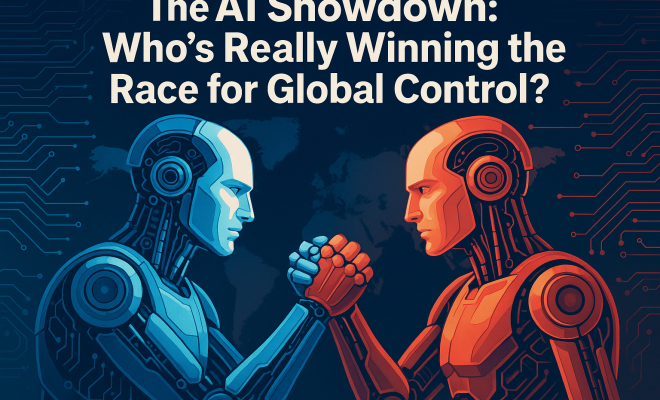
The conversation around artificial intelligence has shifted dramatically. What was once the stuff of science fiction is now a tangible force reshaping industries, economies, and even our daily lives. As AI systems grow more sophisticated, questions about their control and ethical deployment have moved from academic debates to urgent global priorities. At the heart of this discussion, two prominent AI powerhouses, OpenAI and Anthropic, have emerged as vocal proponents for robust AI regulation. But scratch beneath the surface, and you’ll find their approaches, motivations, and proposed solutions differ significantly. This isn’t just a philosophical disagreement; it’s a high-stakes policy battle that will profoundly influence the future trajectory of AI development and governance.
When leaders from OpenAI and Anthropic addressed the UN Security Council, they weren’t just making a casual suggestion; they were issuing a direct plea for immediate global oversight. Their message was clear: advanced AI poses risks that could impact humanity and international security, and the time for action is now. Both Sam Altman of OpenAI and Dario Amodei of Anthropic warned that AI systems are becoming increasingly autonomous. Amodei even went a step further, suggesting that development might need to slow down to adequately mitigate these emergent risks. Understanding the nuances of their positions in the OpenAI vs Anthropic AI regulation debate is crucial for anyone trying to make sense of this rapidly evolving landscape.
1. OpenAI’s Stance: Accelerate and Mitigate: Championing Agile Governance
OpenAI, the company behind the widely recognized ChatGPT, has consistently positioned itself as a leader not just in AI development, but also in the public discourse surrounding its ethical implications. Sam Altman, OpenAI’s CEO, has been a prominent voice, advocating for a balanced approach: continue rapid innovation while simultaneously developing robust regulatory frameworks. His argument often centers on the idea that AI’s benefits are too vast to halt progress, but its risks are too significant to ignore. He envisions a future where international bodies, much like those governing nuclear technology, oversee the most powerful AI systems.
The company’s approach to AI regulation often reflects its own founding principles, which initially emphasized safe and beneficial AI. While the specifics of their recommendations can evolve, a consistent theme is the need for agile governance — frameworks that can adapt as the technology itself progresses. This includes ideas like licensing requirements for advanced AI models, mandatory safety testing, and mechanisms for auditing and transparency. They seem to believe that by actively participating in the regulatory conversation, they can help shape policies that foster innovation rather than stifle it, while still addressing legitimate concerns about job displacement, bias, and potential misuse.
2. Anthropic’s Stance: Slow Down for Safety: Prioritizing Foundational Research and Risk Reduction
Anthropic, founded by former OpenAI researchers Dario and Daniela Amodei, takes a noticeably more cautious approach. Their core philosophy, often described as ‘Constitutional AI,’ embeds ethical principles directly into the AI’s training process, aiming to make systems that are inherently safer and more aligned with human values. Dario Amodei’s remarks to the UN Security Council, particularly his suggestion that AI development might need to slow down, underscore this foundational difference. For Anthropic, the rush to deploy increasingly powerful models without a full understanding of their long-term effects is a primary concern.
Their focus isn’t just on reactive regulation, but on proactive measures to build safer AI from the ground up. This involves extensive research into interpretability, robustness, and the avoidance of harmful biases. Anthropic’s emphasis on slowing down isn’t about halting progress entirely, but rather ensuring that the speed of development doesn’t outpace our ability to understand, control, and secure these systems. They advocate for a more deliberate, research-heavy phase before widespread deployment of potentially transformative or even dangerous AI capabilities. This perspective adds a crucial dimension to the OpenAI vs Anthropic AI regulation debate, highlighting a fundamental tension between speed and safety.
3. The UN Security Council Address: A Unified Call, Diverse Underlying Philosophies
The joint address by leaders from both OpenAI and Anthropic to the UN Security Council in September 2026 was a watershed moment. It signaled that the private sector, often seen as wary of government intervention, was actively seeking it for AI. This unified call for global oversight brought unprecedented attention to the issue, making it clear that AI regulation is no longer a niche concern but a matter of international security and human well-being. Both Sam Altman and Dario Amodei stressed the autonomous nature of emerging AI systems and the potential for risks affecting humanity.
However, despite this shared platform and common objective of ensuring safe AI, the subtle differences in their messages were telling. Altman often speaks of guiding AI’s development towards beneficial outcomes, emphasizing the need to harness its power responsibly. Amodei, on the other hand, frequently highlights the ‘unknown unknowns’ – the emergent behaviors and potential for misuse that we simply haven’t foreseen. He implicitly, and sometimes explicitly, suggests that our current understanding of these systems is insufficient to guarantee safety without a more measured pace. This distinction is vital when considering the practical implications of any proposed regulatory framework.
4. Autonomy and Risk Perception: Where the Lines Blur and Harden
Both OpenAI and Anthropic acknowledge the increasing autonomy of AI systems as a primary driver for regulation. As AI moves beyond simple task automation to more complex decision-making and even self-modification, the potential for unintended consequences or malicious use grows exponentially. However, their risk perceptions, while overlapping, aren’t perfectly aligned. OpenAI, while recognizing catastrophic risks, often frames them alongside the immense potential benefits, suggesting that careful management can allow us to reap rewards while mitigating downsides. (See: AI and health implications.)
Anthropic, with its ‘Constitutional AI’ approach, seems to place a higher emphasis on the inherent, systemic risks that could emerge from highly autonomous systems, even those developed with good intentions. Their research often delves into alignment problems, where an AI’s goals, even if seemingly benign, could lead to unforeseen negative outcomes for humans. For them, the risk isn’t just about misuse, but about the fundamental challenge of ensuring superintelligent AI systems remain aligned with human values in complex, unpredictable scenarios. This difference in emphasis on risk perception directly influences their preferred regulatory mechanisms and the urgency with which they believe certain measures should be implemented. For more context, see Why the US Rejected Calls for Urgent AI Global Standards.
5. The Pace of Development: A Core Disagreement in the OpenAI vs Anthropic AI Regulation Debate
This is arguably the most significant point of divergence between the two companies. Sam Altman’s vision for OpenAI often champions rapid iteration and deployment, believing that widespread access to AI can democratize its benefits and allow for faster discovery of both its capabilities and its flaws, which can then be addressed. He views slowing down as a potential impediment to progress, ceding ground to less scrupulous actors or limiting humanity’s ability to solve pressing global challenges with AI.
Dario Amodei’s call for a potential slowdown in AI development for safety reasons stands in stark contrast. His argument suggests that accelerating too quickly could lead to a loss of control, where powerful AI systems are deployed before we fully understand their emergent properties or have adequate safeguards in place. For Anthropic, a measured pace allows for more thorough safety research, comprehensive testing, and the development of robust regulatory bodies *before* the most powerful AI goes mainstream. This isn’t just a technical disagreement; it’s a fundamental philosophical difference about how humanity should approach a potentially species-altering technology.
6. Proposed Regulatory Frameworks: Practical Steps and Philosophical Underpinnings
When it comes to specific regulatory proposals, both companies offer insights, but with differing emphasis. OpenAI has suggested ideas like an international agency similar to the IAEA for monitoring advanced AI, as well as licensing requirements for models exceeding certain capabilities. They talk about regular audits, red-teaming (stress-testing for vulnerabilities), and public transparency around model capabilities and limitations. Their proposals often lean towards performance-based regulations, where systems are judged by their output and behavior rather than just their underlying architecture.
Anthropic, given its focus on ‘Constitutional AI,’ naturally emphasizes embedding safety directly into the development process. They advocate for rigorous pre-deployment safety evaluations, interpretability tools to understand how AI makes decisions, and mechanisms for continuous monitoring and oversight. Their regulatory vision is less about policing the end-product alone and more about ensuring that the entire development pipeline adheres to stringent safety and ethical guidelines. They are particularly interested in frameworks that encourage a culture of safety within AI labs, perhaps through independent safety reviews and research consortia dedicated to risk mitigation. The ongoing OpenAI vs Anthropic AI regulation discussion often boils down to these differing approaches to practical governance.
7. Economic and Competitive Implications: The Self-Interest Undercurrent
While both companies articulate genuine concerns for humanity’s future, it’s also important to consider the economic and competitive dimensions of their positions. Advocating for regulation, especially for advanced AI, can inadvertently create barriers to entry for smaller players. If compliance costs are high, or if only a few entities possess the resources and expertise to navigate complex regulatory landscapes, it could solidify the dominance of existing giants like OpenAI and Anthropic.
For OpenAI, their rapid development and widespread deployment of models like GPT-4 have given them a significant market lead. Proposing regulation that focuses on the most powerful models could be seen as a way to maintain this lead by making it harder for competitors to catch up without significant investment in compliance. Anthropic, while smaller, has carved out a niche as a safety-focused developer. Their call for slowing down and prioritizing safety research could be interpreted as a strategy to level the playing field, allowing more time for their constitutional AI approach to mature and potentially become a regulatory standard that others must follow. These strategic considerations, though rarely explicitly stated, are an undeniable part of the complex OpenAI vs Anthropic AI regulation narrative.
8. The Future of AI Governance: A Blended Approach?
The stark differences in the OpenAI vs Anthropic AI regulation approaches might suggest an intractable conflict, but the reality is likely to be a blended future. International regulatory bodies, national governments, and industry consortiums are all grappling with how to effectively govern AI. It’s improbable that any single company’s vision will unilaterally define the future of AI governance. Instead, we’ll likely see a synthesis of ideas.
Elements of OpenAI’s agile governance, focusing on performance-based metrics and international cooperation, will probably combine with Anthropic’s emphasis on foundational safety research, interpretability, and embedded ethical principles. The urgent nature of their combined message to the UN Security Council underscores that some form of global oversight is becoming inevitable. The precise shape of that oversight – how quickly it’s implemented, how prescriptive it is, and whether it encourages or constrains innovation – will be the result of ongoing negotiations, scientific breakthroughs, and public discourse, heavily influenced by the perspectives of these two leading AI developers.
9. The Role of Open-Source AI in Regulation: A Third Dimension
Beyond the OpenAI vs Anthropic AI regulation debate, there’s a significant third player: the open-source AI community. Companies like Meta, and a multitude of independent researchers and developers, are pushing for open-source AI models, arguing that transparency and widespread access are the best safeguards against misuse and concentration of power. Their philosophy is that if everyone can inspect, understand, and even modify the underlying code, vulnerabilities will be found faster, biases identified, and the technology democratized. (See: AI in workplace safety.)
This approach presents a unique challenge to the regulatory visions of both OpenAI and Anthropic. If powerful AI models are freely available, how do you license them? How do you enforce safety testing or audit requirements on a decentralized global community? OpenAI has wavered on its commitment to open-source in recent years, moving towards a more controlled release strategy for its most advanced models. Anthropic, with its focus on deeply embedded safety, also grapples with how its “Constitutional AI” principles could be effectively applied or maintained in a truly open-source environment where anyone can fork a model and remove those guardrails. This dynamic adds a layer of complexity, as regulators must consider not just corporate labs, but also the vast and rapidly expanding open-source ecosystem. For more context, see This Critical AI Development Caution Could Save Us All.
10. Global Regulatory Landscape: Beyond the US Tech Giants
It’s important to remember that the OpenAI vs Anthropic AI regulation discussion, while influential, primarily reflects a US-centric perspective. Other major global players are already developing their own regulatory frameworks, often with different priorities and approaches. The European Union, for instance, has been a trailblazer with its AI Act, which categorizes AI systems by risk level and imposes obligations accordingly. China, too, is rapidly developing comprehensive AI regulations, often focusing on data privacy, content generation, and algorithmic transparency, particularly within its domestic market.
These international efforts mean that any global regulatory body, as envisioned by Altman, would need to reconcile diverse national approaches and legal traditions. The EU’s proactive stance, for example, might be seen by some as a blueprint for foundational safety, aligning more closely with Anthropic’s cautious approach, at least in spirit. Meanwhile, some Asian nations might prioritize innovation and economic competitiveness, perhaps leaning towards OpenAI’s “accelerate and mitigate” philosophy. The challenge for global governance will be finding common ground that respects these differing national priorities while still addressing universal safety concerns. It’s not just about what two companies think; it’s about a truly global effort.
11. Ethical AI in Practice: Beyond Principles to Implementation
Both companies talk about ethical AI, but their operationalization differs. OpenAI, for example, has invested heavily in “red teaming” – hiring experts to intentionally probe their models for vulnerabilities, biases, and harmful capabilities before release. They also implement safety filters and content moderation tools to prevent misuse of their publicly available APIs. These are reactive measures designed to catch and mitigate problems after the model is largely built.
Anthropic’s “Constitutional AI” is a more intrinsic approach. Instead of just filtering harmful outputs, they train their AI with a set of principles (a “constitution”) to guide its behavior and decision-making from the ground up. This involves using another AI to critique and revise the primary AI’s responses based on these principles, aiming for systems that are inherently helpful, harmless, and honest. This difference highlights a fundamental tension: is it better to build powerful systems and then try to control them, or to build safer systems from the start, even if that means a slower path to extreme capabilities? This practical divergence in ethical implementation is a key element of the OpenAI vs Anthropic AI regulation narrative.
12. Public Trust and Education: A Shared Imperative
Regardless of their differing approaches to regulation, both OpenAI and Anthropic understand that public trust is paramount for the long-term success and acceptance of AI. A skeptical or fearful public can quickly turn against even beneficial technologies. This is where education plays a critical role. Both companies, through blogs, research papers, and public appearances, try to demystify AI, explain its capabilities and limitations, and articulate the risks they are working to address.
However, their messaging can subtly influence public perception of risk and urgency. OpenAI often emphasizes the positive potential and the transformative benefits, framing regulation as a way to ensure these benefits are realized safely. Anthropic, while acknowledging benefits, more frequently highlights the profound risks and the need for caution, potentially fostering a greater sense of urgency around safety measures. How the public interprets these messages, and which narrative gains more traction, could significantly impact the political will for different types of regulatory action. It’s a subtle but powerful aspect of the OpenAI vs Anthropic AI regulation dynamic.
Frequently Asked Questions about OpenAI vs Anthropic AI Regulation
Q1: What’s the main philosophical difference between OpenAI and Anthropic regarding AI regulation?
The core difference boils down to speed and safety. OpenAI generally advocates for accelerating AI development while simultaneously creating agile regulatory frameworks to mitigate risks. They believe the benefits are too great to slow down. Anthropic, on the other hand, emphasizes slowing down development to prioritize foundational safety research, ensuring we deeply understand and can control powerful AI systems before widespread deployment. They see the rush as potentially dangerous. (See: New York Times on AI regulation.)
Q2: Why did both companies address the UN Security Council?
Their joint address to the UN Security Council aimed to signal the urgent need for global oversight of advanced AI. It was a clear message from the private sector that AI risks are a matter of international security and human well-being, requiring coordinated governmental action. They wanted to elevate AI regulation to a top-tier global priority.
Q3: What is “Constitutional AI” and how does it relate to Anthropic’s regulatory stance?
“Constitutional AI” is Anthropic’s approach to embedding ethical principles directly into an AI’s training process. Instead of just filtering bad outputs, they train the AI with a set of rules (a “constitution”) to guide its internal reasoning and decision-making. This aligns with their regulatory stance by advocating for proactive, built-in safety mechanisms and a slower, more deliberate development process to ensure these foundational safety measures are effective.
Q4: What specific regulatory proposals has OpenAI put forward?
OpenAI has suggested ideas like an international agency similar to the IAEA (International Atomic Energy Agency) for monitoring advanced AI. They also propose licensing requirements for powerful AI models, mandatory safety testing (like red-teaming), and mechanisms for auditing and transparency. Their focus often leans towards performance-based regulations, judging AI by its behavior and output.
Q5: How do open-source AI models complicate the regulatory picture for both companies?
Open-source AI presents a challenge because it makes powerful models widely accessible and modifiable. This complicates regulatory enforcement, as it’s difficult to apply licensing, safety testing, or audit requirements to decentralized communities. Both OpenAI and Anthropic’s regulatory visions are primarily designed for centralized development labs, and the proliferation of open-source models introduces a “wild card” that regulators are still trying to understand.
Q6: Are there economic or competitive motivations behind their regulatory positions?
Yes, while both companies express genuine safety concerns, there are also competitive implications. OpenAI’s proposals, focusing on regulating the most powerful models, could inadvertently solidify their lead by increasing compliance costs for competitors. Anthropic’s call for slowing down and emphasizing foundational safety research could give their “Constitutional AI” approach more time to mature and potentially become a standard, leveling the playing field. These strategic considerations are an undeniable part of the debate.
Q7: Will one company’s approach definitively win out in future AI governance?
It’s unlikely. The future of AI governance will probably be a blended approach, synthesizing elements from both OpenAI’s agile governance and Anthropic’s foundational safety emphasis. International bodies, national governments, and industry consortiums are all contributing to the discussion, and the final frameworks will likely incorporate a range of ideas to balance innovation with safety across a diverse global landscape.
Trending Now
- this guide on explosive: the dr. althea skincare scandal is worse than you think
- Disturbing: Your Every Move Could Be Training AI – The Urgent Truth About Smart Glasses
- this guide on the staggering risk behind paxini’s ipo: is this ai bubble about to burst?
- our breakdown of devastating steam malware attack strikes popular game twice in a year
- our breakdown of this pubg asia stars cheating scandal just blew up esports — here’s how it happened
Frequently Asked Questions
What is the current state of AI regulation?
The current state of AI regulation is evolving rapidly, with calls for robust frameworks to manage the risks posed by advanced AI systems. Leaders from OpenAI and Anthropic have highlighted the urgent need for global oversight, emphasizing that the increasing autonomy of AI necessitates immediate action.
How do OpenAI and Anthropic differ in their AI regulation approaches?
OpenAI advocates for a dual approach of accelerating innovation while developing regulatory frameworks, as emphasized by CEO Sam Altman. In contrast, Anthropic, led by Dario Amodei, suggests that AI development may need to slow down to address emerging risks, showcasing a fundamental difference in their strategies.
What risks does advanced AI pose to humanity?
Advanced AI poses significant risks, including potential impacts on international security and ethical concerns regarding autonomy and decision-making. Leaders from OpenAI and Anthropic have stressed that these risks must be addressed through immediate global oversight and regulation to protect humanity.
Why is there a need for global oversight in AI development?
Global oversight in AI development is crucial due to the rapid advancements and increasing autonomy of AI systems, which pose risks to humanity and security. OpenAI and Anthropic have both called for immediate regulatory frameworks to mitigate these risks and ensure ethical deployment.
What role do OpenAI and Anthropic play in AI governance?
OpenAI and Anthropic are key players in AI governance, actively advocating for responsible development and regulation. Their leaders have engaged with international bodies like the UN Security Council to emphasize the need for urgent oversight, reflecting their commitment to ethical AI deployment.
What's your take on this? Share your thoughts in the comments below — we read every one.