The AI Revolution: 9 Critical Solutions Redefining Satellite Management by 2026
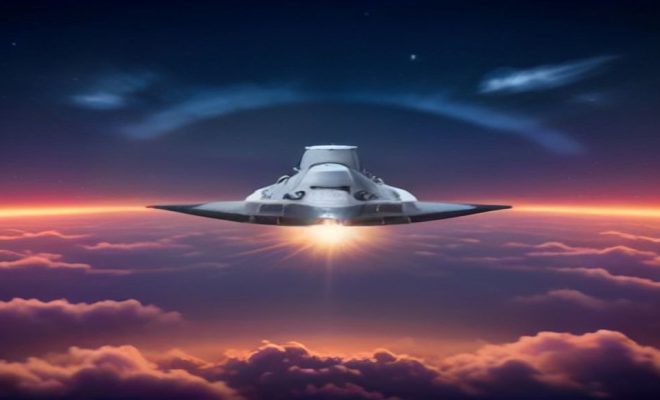
The cosmos is buzzing, and it’s not just the static. We’re standing at the precipice of a new era in space, one where artificial intelligence isn’t just a supporting player but the lead actor. If you haven’t heard, the U.S. Air Force Research Laboratory (AFRL) quietly pulled off something truly groundbreaking on August 2, 2026. They successfully demonstrated a neural network autonomously controlling an orbiting satellite. Think about that for a moment: a machine learning algorithm, not a human, managing the satellite’s core functions — things like attitude control and power. This isn’t just an incremental step; it’s a giant leap, fundamentally shifting how we approach satellite operations and bringing the best AI solutions for satellite management 2026 into sharp focus.
This breakthrough has massive implications, far beyond just defense. Commercial satellite operators are already salivating at the prospect of optimizing their vast constellations and slashing operating costs. Imagine a future where deep-space missions, plagued by communication delays, can rely on AI to make real-time decisions, ensuring mission success even when Earth is light-years away. But with this incredible power comes new challenges, particularly in cybersecurity. An increasingly contested space environment demands robust, intelligent defenses. So, what exactly are the top AI solutions set to define satellite management in this exciting, sometimes unsettling, new landscape? Let’s dive in.
1. Autonomous Orbit & Attitude Control Systems: The AFRL’s Breakthrough
Let’s start where the revolution began: autonomous control. The AFRL’s demonstration wasn’t just a proof of concept; it was a live, in-orbit validation of a neural network taking the reins. This isn’t about pre-programmed rules anymore; it’s about a machine learning algorithm learning and adapting, making decisions about a satellite’s orientation and power distribution in real-time. This level of autonomy is what we’ve dreamed of for decades, moving beyond the traditional, often rigid, rule-based software that has governed satellites since the space age began.
The beauty of this system lies in its ability to handle unforeseen circumstances. Traditional systems require painstaking, often slow, human intervention for anomalous events. An AI, however, can detect, diagnose, and even correct issues with incredible speed, optimizing everything from fuel consumption during orbital maneuvers to ensuring peak performance of solar arrays. For commercial operators running thousands of satellites, this means fewer ground control staff, reduced operational costs, and vastly improved constellation efficiency. It’s truly one of the best AI solutions for satellite management 2026, setting a new benchmark.
2. AI-Powered Anomaly Detection & Predictive Maintenance: Keeping Satellites Healthy
Satellites are complex machines operating in an unforgiving environment. Failures can be catastrophic, both financially and in terms of mission impact. This is where AI-powered anomaly detection and predictive maintenance truly shine. These solutions continuously monitor vast streams of telemetry data – temperature, voltage, current, attitude, power output, and hundreds of other parameters – far more than any human team could ever hope to process effectively.
Using sophisticated machine learning algorithms, these systems learn what ‘normal’ looks like for a particular satellite or constellation. They can then flag even the most subtle deviations, often long before they become critical issues. Imagine an AI noticing a tiny, gradual increase in a subsystem’s temperature that indicates a degrading component, allowing operators to take proactive measures, perhaps reconfiguring the satellite or planning for a software patch, thereby extending its operational life and preventing costly downtime. This proactive approach to satellite health is quickly becoming indispensable.
3. Intelligent Constellation Management & Optimization: The Swarm Whisperers
With the proliferation of mega-constellations like Starlink and OneWeb, managing hundreds, or even thousands, of interconnected satellites is a monumental task. This isn’t just about keeping individual satellites healthy; it’s about ensuring the entire network operates as a cohesive, optimized unit. Intelligent constellation management systems leverage AI to dynamically manage orbital slots, prevent collisions, optimize data throughput, and route communications most efficiently.
These AI solutions can predict traffic patterns, reroute data around congested areas, and even adjust individual satellite positions to maximize coverage or minimize latency for specific users on the ground. Think of it as an incredibly advanced air traffic control system, but for space, constantly adapting to an ever-changing environment. This capability is crucial for maximizing the return on investment for these massive satellite networks, making it one of the absolute best AI solutions for satellite management 2026.
4. Cybersecurity AI for Space Assets: Defending the Digital Frontier
As satellites become more autonomous and interconnected, they also become more attractive targets for cyberattacks. The AFRL’s breakthrough, while exhilarating, also highlights this vulnerability. Imagine a hostile entity gaining control of an autonomous satellite – the implications are chilling. This is why AI-driven cybersecurity solutions are no longer optional but absolutely critical for satellite management. (See: NASA satellite operations overview.)
These systems employ machine learning to detect anomalous network traffic, identify intrusion attempts, and even predict potential attack vectors based on observed patterns. They can analyze vast amounts of data for indicators of compromise, respond to threats in real-time, and even autonomously isolate compromised components to prevent wider system failures. The ability to learn and adapt to new threats, rather than relying solely on static signature databases, is what makes AI uniquely suited to defending our space assets in an increasingly contested and sophisticated cyber landscape. It’s a top-tier contender among the best AI solutions for satellite management 2026.
5. AI-Enhanced Data Processing & Analytics (On-Orbit): Making Sense of the Deluge
Satellites generate an enormous amount of data, from Earth observation imagery to scientific sensor readings. Historically, all this raw data had to be downlinked to Earth for processing, which is time-consuming, bandwidth-intensive, and often delayed. AI-enhanced data processing, particularly on-orbit processing, is a game-changer.
By embedding AI algorithms directly onto the satellite, data can be analyzed, filtered, and compressed before being sent back to Earth. This means only the most relevant, actionable information is transmitted, drastically reducing downlink requirements and accelerating the delivery of insights. For example, an Earth observation satellite could use AI to identify and tag specific features (e.g., deforestation, disaster zones, ship movements) directly from space, sending back only the coordinates and classifications, not gigabytes of raw imagery. This transforms data from a firehose into a finely tuned stream of intelligence.
6. Cognitive Communications & Network Routing: Smarter Connections
Communication links to and from satellites are often prone to interference, atmospheric conditions, and geographical limitations. Cognitive communication systems leverage AI to dynamically optimize these links. They can sense the radio environment, identify the best frequencies, power levels, and modulation schemes in real-time, adapting to changing conditions to maintain robust connectivity.
Beyond individual links, AI also plays a crucial role in intelligent network routing for satellite constellations. These systems can autonomously decide the optimal path for data packets, switching between satellites, ground stations, and inter-satellite links to ensure the lowest latency and highest reliability. For critical applications, like defense communications or real-time disaster response, this ability to maintain seamless, resilient connectivity is invaluable. This is a powerful component of the best AI solutions for satellite management 2026.
7. AI for Space Debris Tracking & Avoidance: Clearing the Cosmic Junkyard
The growing amount of space debris poses an existential threat to active satellites. Collisions, even with tiny fragments, can render multi-million dollar assets useless. AI is stepping up to tackle this monumental challenge. AI algorithms can process vast amounts of tracking data from ground-based radar and optical telescopes, identifying and predicting the trajectories of thousands of pieces of space junk with far greater accuracy than traditional methods.
More importantly, these AI systems can autonomously generate avoidance maneuvers for satellites that are at risk of collision. Instead of relying on human operators to sift through conjunction warnings and plan evasive actions, an AI can rapidly assess the threat, calculate the most fuel-efficient maneuver, and even execute it, minimizing risk and freeing up human resources. This proactive debris management is becoming increasingly vital as the orbital environment becomes more crowded.
8. Robotics and AI for On-Orbit Servicing & Assembly: The Future of Space Infrastructure
While still in its nascent stages, the combination of AI and robotics for on-orbit servicing and assembly promises to revolutionize satellite longevity and capabilities. Imagine a future where malfunctioning satellites aren’t simply written off but can be repaired, refueled, or upgraded by autonomous robotic spacecraft. AI is the brain behind these robotic systems, enabling them to perceive their environment, manipulate tools, and execute complex tasks in the zero-gravity vacuum of space.
From extending the life of aging satellites through refueling missions to assembling large-scale structures like space telescopes or solar power arrays directly in orbit, AI-powered robotics will drastically reduce the cost and complexity of space infrastructure. While not directly managing *existing* satellites in the traditional sense, these solutions indirectly enhance satellite management by making their maintenance and expansion far more feasible and economical. It’s a forward-looking aspect of the best AI solutions for satellite management 2026, pointing to what’s next.
9. Human-AI Collaboration Interfaces: Empowering Operators, Not Replacing Them (Yet)
Despite the rapid advancements in AI autonomy, human operators aren’t going away entirely, at least not in the immediate future. Instead, the focus is on creating highly intuitive human-AI collaboration interfaces. These solutions empower human operators by providing them with AI-generated insights, recommendations, and predictive analyses, allowing them to make faster, more informed decisions. (See: NIST AI systems for satellites.)
Think of it as an AI co-pilot for satellite control. The AI handles the routine, high-volume tasks and flags anomalies, while the human operator retains oversight, makes strategic decisions, and intervenes in truly novel or critical situations. These interfaces are designed to present complex data in easily digestible formats, using visualization tools and natural language processing to bridge the gap between human intuition and AI processing power. This synergy ensures that we leverage the best of both worlds: AI’s speed and processing capability, combined with human experience and judgment. This pragmatic approach ensures that the best AI solutions for satellite management 2026 are not just technically advanced, but also practically integrated into existing workflows.
10. The Broader Impact: Economic Shifts and Global Accessibility
The implications of these advanced AI solutions for satellite management extend far beyond just the operational efficiency of individual satellites or constellations. We’re talking about a fundamental shift in the economics of space. Lower operational costs, extended satellite lifespans, and the ability to manage larger, more complex networks mean that space-based services become significantly more affordable and accessible. This isn’t just good news for large corporations; it democratizes access to space data and services.
Consider remote sensing data, crucial for everything from agricultural yield prediction to climate monitoring. With AI processing data on-orbit and optimizing downlink, even smaller nations or research institutions can access timely, refined information without needing massive ground infrastructure. This boosts economic development in underserved regions, helps combat global challenges like food insecurity, and provides more accurate, real-time insights for disaster response worldwide. The reduction in operational overhead also encourages more innovation, lowering the barrier to entry for new space companies and further accelerating the pace of technological advancement. The best AI solutions for satellite management 2026 are not just about technology; they’re about global empowerment.
11. Expert Perspectives: The Human Element in an AI-Dominated Space
While the excitement around AI in space is palpable, it’s worth hearing from the experts who are actually building and deploying these systems. Many leading aerospace engineers and AI researchers emphasize that the goal isn’t to remove humans entirely, but to elevate their roles. Dr. Elara Vance, a principal AI architect at a major satellite manufacturer, recently noted, “We’re not building AI to replace mission controllers; we’re building AI to make them superhuman. The cognitive load of managing a constellation of thousands of satellites is simply too much for humans alone. AI offloads the mundane, repetitive, and data-intensive tasks, allowing our brilliant engineers to focus on strategy, innovation, and handling truly novel, high-stakes situations.”
This perspective highlights a crucial point: the initial stages of AI integration are about augmentation. The focus is on robust validation, explainable AI (XAI) to understand why an AI made a particular decision, and fail-safes that always allow for human override. As AI systems become more sophisticated and trusted, the level of autonomy will naturally increase, but the foundational principles of safety and human oversight will remain paramount, especially given the high value and critical nature of space assets. The discussion around the best AI solutions for satellite management 2026 often centers on this careful balance.
12. The Regulatory and Ethical Landscape: Charting a Course for Autonomous Space
With increasing autonomy comes a complex web of regulatory and ethical considerations. Who is responsible if an AI-controlled satellite causes a collision? What are the international implications of autonomous defense satellites? These aren’t hypothetical questions; they’re discussions happening right now in policy forums worldwide. Governments and international bodies are grappling with creating frameworks that encourage innovation while ensuring safety, security, and accountability.
Key areas of focus include: Liability and Accountability for AI actions, especially in scenarios like autonomous debris avoidance maneuvers; Cybersecurity Standards that are robust enough to prevent malicious actors from exploiting AI vulnerabilities; Transparency and Explainability for AI systems, particularly in critical applications; and the development of International Norms for autonomous space operations to prevent conflict and ensure the peaceful use of outer space. Getting these frameworks right is just as important as the technological advancements themselves. The best AI solutions for satellite management 2026 will need to operate within these evolving guidelines.
Frequently Asked Questions About AI in Satellite Management
Q1: Is AI in satellite management really new, or has it always been used?
While AI concepts like expert systems and basic automation have been present in space operations for decades, the current wave of AI, particularly machine learning and deep learning, is fundamentally different. It moves beyond pre-programmed rules to systems that can learn, adapt, and make complex decisions autonomously based on vast amounts of data. The AFRL’s demonstration of a neural network autonomously controlling a satellite marks a significant leap in this capability, ushering in a new era of true AI-driven autonomy in space.
Q2: Will AI replace all human satellite operators?
Not in the foreseeable future. The consensus among experts is that AI will augment, rather than completely replace, human operators. AI excels at high-volume data processing, anomaly detection, and optimizing routine tasks. Humans, on the other hand, bring critical thinking, strategic planning, and the ability to handle truly novel or unforeseen situations that AI may not be trained for. The goal is to create human-AI collaboration interfaces that leverage the strengths of both, empowering human operators to manage larger, more complex constellations more effectively.
Q3: What are the biggest risks of using AI for satellite management?
The primary risks revolve around cybersecurity, reliability, and accountability. An autonomous AI system could be a prime target for cyberattacks, potentially leading to loss of control, data manipulation, or even kinetic impacts. There’s also the risk of an AI making an incorrect decision in an unforeseen scenario, or a ‘black box’ problem where it’s difficult to understand why an AI took a particular action. Establishing robust cybersecurity, rigorous testing, fail-safes, and clear accountability frameworks are essential to mitigate these risks.
Q4: How does AI help with space debris?
AI significantly enhances space debris management in two key ways: improved tracking and autonomous avoidance. AI algorithms can process immense datasets from ground-based sensors to more accurately predict the trajectories of thousands of pieces of debris, improving conjunction assessment. More impressively, AI can autonomously calculate and execute optimal, fuel-efficient avoidance maneuvers for satellites at risk of collision, reducing the burden on human operators and ensuring timely action.
Q5: Is AI only for military or large commercial satellites?
While military and large commercial operators are leading the charge due to the scale and criticality of their assets, AI solutions are increasingly becoming accessible and beneficial for smaller satellite operators and missions. As AI models become more efficient and hardware costs decrease, even CubeSats and other small satellite platforms can incorporate on-orbit AI processing and autonomous capabilities. This democratizes access to advanced satellite management features, benefiting scientific research, remote sensing, and developing nations.
Q6: What’s the timeline for widespread AI adoption in space?
Widespread adoption is already underway. Many of the solutions discussed, like AI-powered anomaly detection and intelligent constellation management, are already being integrated into existing and new satellite systems. The AFRL’s 2026 demonstration of full autonomous control marks a significant milestone that will accelerate adoption of deeper autonomy. We can expect to see increasing levels of AI integration and autonomy across all sectors of space operations over the next 5-10 years, with 2026 being a key inflection point.
The year 2026 is shaping up to be a pivotal moment for satellite operations. The AFRL’s successful demonstration has flung open the doors to a future where AI isn’t just assisting but actively controlling our assets in orbit. From optimizing vast constellations and securing against cyber threats to extending satellite lifespans and making deep-space missions more viable, the array of AI solutions emerging is truly transformative. While the challenges, particularly in cybersecurity and regulation, are real, the potential benefits for efficiency, cost reduction, and mission capability are simply too compelling to ignore. We’re not just watching the future unfold; we’re actively building it, one intelligent satellite at a time.
Trending Now
Frequently Asked Questions
What is the significance of AI in satellite management?
AI is revolutionizing satellite management by enabling autonomous control of satellite functions. This allows for real-time decision-making, optimizing operations, reducing costs, and improving mission success, particularly in deep-space missions where communication delays are a challenge.
How did the U.S. Air Force demonstrate AI in satellite control?
On August 2, 2026, the U.S. Air Force Research Laboratory successfully demonstrated a neural network autonomously managing an orbiting satellite. This marked a significant shift in satellite operations, showcasing the potential for AI to handle core functions like attitude control and power management without human intervention.
What are the challenges of using AI in space?
While AI offers significant advantages in satellite management, it also introduces challenges, particularly in cybersecurity. As space becomes more contested, robust defenses are essential to protect AI-controlled satellites from potential threats and vulnerabilities.
What are autonomous orbit and attitude control systems?
Autonomous orbit and attitude control systems utilize AI and machine learning algorithms to manage a satellite's orientation and power distribution in real-time. This technology allows satellites to adapt and make decisions autonomously, enhancing operational efficiency and reliability.
What are the future implications of AI in satellite operations?
The future of AI in satellite operations includes enhanced optimization of satellite constellations, reduced operational costs, and improved capabilities for deep-space missions. As AI technology evolves, it will redefine how satellites are managed and operated, pushing the boundaries of space exploration.
Have you experienced this yourself? We'd love to hear your story in the comments.