The Tech Edvocate

Top Menu

  • Advertisement
  • Apps
  • Home Page
  • Home Page Five (No Sidebar)
  • Home Page Four
  • Home Page Three
  • Home Page Two
  • Home Tech2
  • Icons [No Sidebar]
  • Left Sidbear Page
  • Lynch Educational Consulting
  • My Account
  • My Speaking Page
  • Newsletter Sign Up Confirmation
  • Newsletter Unsubscription
  • Our Brands
  • Page Example
  • Privacy Policy
  • Protected Content
  • Register
  • Request a Product Review
  • Shop
  • Shortcodes Examples
  • Signup
  • Start Here
    • Governance
    • Careers
    • Contact Us
  • Terms and Conditions
  • The Edvocate
  • The Tech Edvocate Product Guide
  • Topics
  • Write For Us
  • Advertise

Main Menu

  • Start Here
    • Our Brands
    • Governance
      • Lynch Educational Consulting, LLC.
      • Dr. Lynch’s Personal Website
      • Careers
    • Write For Us
    • The Tech Edvocate Product Guide
    • Contact Us
    • Books
    • Edupedia
    • Post a Job
    • The Edvocate Podcast
    • Terms and Conditions
    • Privacy Policy
  • Topics
    • Assistive Technology
    • Child Development Tech
    • Early Childhood & K-12 EdTech
    • EdTech Futures
    • EdTech News
    • EdTech Policy & Reform
    • EdTech Startups & Businesses
    • Higher Education EdTech
    • Online Learning & eLearning
    • Parent & Family Tech
    • Personalized Learning
    • Product Reviews
  • Advertise
  • Tech Edvocate Awards
  • The Edvocate
  • Pedagogue
  • School Ratings

logo

The Tech Edvocate

  • Start Here
    • Our Brands
    • Governance
      • Lynch Educational Consulting, LLC.
      • Dr. Lynch’s Personal Website
        • My Speaking Page
      • Careers
    • Write For Us
    • The Tech Edvocate Product Guide
    • Contact Us
    • Books
    • Edupedia
    • Post a Job
    • The Edvocate Podcast
    • Terms and Conditions
    • Privacy Policy
  • Topics
    • Assistive Technology
    • Child Development Tech
    • Early Childhood & K-12 EdTech
    • EdTech Futures
    • EdTech News
    • EdTech Policy & Reform
    • EdTech Startups & Businesses
    • Higher Education EdTech
    • Online Learning & eLearning
    • Parent & Family Tech
    • Personalized Learning
    • Product Reviews
  • Advertise
  • Tech Edvocate Awards
  • The Edvocate
  • Pedagogue
  • School Ratings
  • US Battery as a Service Market Shifts Toward Fleet-Based Energy

  • The Startling Truth: Why Americans Distrust AI with Their Health

  • This Crucial Deadline for Banks Is Closer Than You Think

  • Baffling: CrowdStrike’s $500 Million AI Bet Reshapes Cybersecurity

  • This Crucial Autonomous Driving Rule Could Cost You Everything

  • Baffling: Microsoft AI CEO Demands Halt to Conscious AI Development

  • O seară în ritmul tău: atmosfera divertismentului de cazinou pe internet

  • Outrageous: AppLovin Hit With Lawsuit Over AI Claims — What Investors Need to Know

  • 9 Critical Ways AI Investment Fraud Is Quietly Draining Your Bank Account

  • Is the AI Bubble Bursting? OpenAI’s Funding Woes Revealed

Tech News
Home›Tech News›Texas Students Fight for Inclusive Social Studies Curriculum 2026

Texas Students Fight for Inclusive Social Studies Curriculum 2026
By Matthew Lynch
April 8, 2026
0
Spread the love

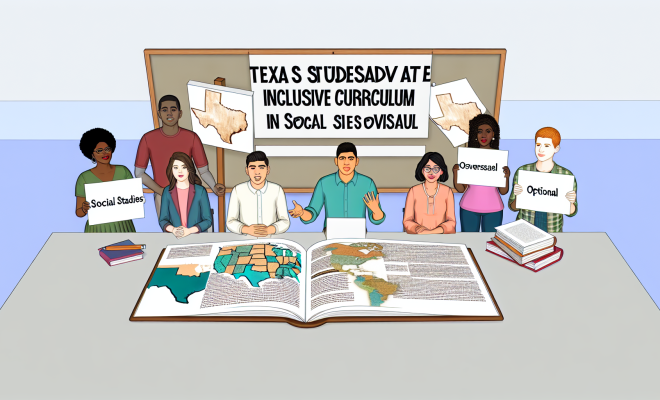
On April 8, 2026, a significant gathering took place at the Texas State Board of Education, where students, parents, and educators voiced their concerns regarding the ongoing revision of social studies standards. The audience urged the board to prioritize inclusivity and critical thinking in the curriculum, rather than allowing political biases to shape educational content. This call for a more balanced approach comes amidst a backdrop of growing concerns about the implications of political influence on educational standards.

Background of the Social Studies Standards Overhaul

The Texas State Board of Education, which holds a Republican majority, initiated a redesign of social studies standards in 2025. The board’s revision emphasizes Texas and U.S. history while significantly downplaying the importance of world cultures and historical contexts. The finalization of these revised standards is scheduled for summer 2026, with a rollout expected by 2030. This timeline has raised alarms among various stakeholders who fear that an imbalanced curriculum could lead to a narrow understanding of history.

Student Voices Against Political Influence

Among the prominent voices at the meeting were students like Caiden Davis from Humble and Zayra Espinoza from Houston. These young advocates articulated their concerns that the current draft of the standards appears to prioritize Western civilization and Christian perspectives, potentially marginalizing the rich diversity of experiences that shape American and global histories.

Davis and Espinoza, alongside their peers, highlighted that the proposed curriculum risks excluding the perspectives of people of color and others who have historically been underrepresented in educational narratives. They argue that a comprehensive education should reflect a multitude of viewpoints and encourage students to engage with history critically and thoughtfully.

The Role of Educators and Experts

Critics of the overhaul have raised concerns about the composition of the advisory panel assisting in the development of the new standards. Many of the advisers lack classroom experience, which raises questions about their understanding of current educational practices and the needs of students. Critics argue that this disconnect could lead to a curriculum that does not effectively prepare students for a diverse and interconnected world.

Furthermore, the reliance on individuals tied to conservative activism has led to fears that the curriculum will serve more as a political tool than as an educational framework. The apprehension centers around the potential for the standards to reflect specific ideological viewpoints rather than a balanced presentation of historical facts and interpretations.

The Importance of Inclusion in Education

As educational institutions strive to prepare students for a global society, the emphasis on inclusion becomes increasingly relevant. Research indicates that diverse educational content can enhance critical thinking skills and foster greater empathy among students. When students are exposed to a variety of historical perspectives, they are better equipped to understand the complexities of societal issues and engage in constructive dialogue.

Inclusion in education is not only about representing different cultures and histories but also about recognizing the contributions of various groups to the fabric of society. Advocates argue that when students learn about the experiences and achievements of different communities, they gain a more comprehensive understanding of the world around them, which is essential for informed citizenship.

Next Steps for the Texas State Board of Education

The Texas State Board of Education is at a critical juncture as it prepares to finalize the new social studies standards. The feedback from students, parents, and educators will likely play a crucial role in shaping the outcome. As the board deliberates, it faces the challenge of balancing political influences with the educational needs of a diverse student population.

Moving forward, stakeholders are calling for transparency in the decision-making process and greater involvement from classroom teachers who have firsthand experience with the challenges and opportunities in teaching social studies. By prioritizing the voices of those directly impacted by educational policies, the board has the opportunity to create a curriculum that reflects the values of inclusion and critical thinking.

Conclusion: A Call for a Balanced Approach

The testimony presented at the Texas State Board of Education serves as a compelling reminder of the importance of inclusive education in shaping future generations. As the board prepares to finalize the social studies standards, the call for a balanced approach that emphasizes diverse perspectives over political agendas must resonate strongly. Addressing the needs of all students is not just an educational imperative but a societal one, ensuring that future citizens are well-informed, empathetic, and equipped to navigate the complexities of an increasingly diverse world.


Previous Article

Trump’s 2027 Budget: $150M Cuts Threaten Tribal ...

Next Article

Texas Social Studies Curriculum Debate Intensifies for ...

Matthew Lynch

Related articles More from author

  • Tech News

    3 Tech Products I Can’t Live Without

    February 19, 2024
    By Matthew Lynch
  • Tech News

    AI Drug Discovery’s First Major Test: This Startup’s Results Just Blew the Lid Off Biotech Ethics

    October 6, 2026
    By Matthew Lynch
  • Tech News

    Hidden Gems: Two New Rocky Exoplanets Orbiting M Dwarfs

    May 20, 2026
    By Matthew Lynch
  • Tech News

    How to calculate mortgage payment

    July 12, 2026
    By Matthew Lynch
  • Tech News

    How to limit WordPress login attempts

    June 25, 2026
    By Matthew Lynch
  • Tech News

    Can I record Skype calls?

    August 17, 2026
    By Matthew Lynch

Search

Login & Registration

  • Log in
  • Entries feed
  • Comments feed
  • WordPress.org

Newsletter

Signup for The Tech Edvocate Newsletter and have the latest in EdTech news and opinion delivered to your email address!

About Us

Since technology is not going anywhere and does more good than harm, adapting is the best course of action. That is where The Tech Edvocate comes in. We plan to cover the PreK-12 and Higher Education EdTech sectors and provide our readers with the latest news and opinion on the subject. From time to time, I will invite other voices to weigh in on important issues in EdTech. We hope to provide a well-rounded, multi-faceted look at the past, present, the future of EdTech in the US and internationally.

We started this journey back in June 2016, and we plan to continue it for many more years to come. I hope that you will join us in this discussion of the past, present and future of EdTech and lend your own insight to the issues that are discussed.

Newsletter

Signup for The Tech Edvocate Newsletter and have the latest in EdTech news and opinion delivered to your email address!

Contact Us

The Tech Edvocate
910 Goddin Street
Richmond, VA 23231
(601) 630-5238
[email protected]

Copyright © 2026 Matthew Lynch. All rights reserved.