Tesla’s Robotaxi Fleet Hits 1 Million Unsupervised Miles: What It Means for the Future
Tesla just dropped a bombshell, announcing its Robotaxi fleet has officially crossed the one-million-mile mark in unsupervised operation. This isn’t just some incremental update; it’s a colossal Tesla self-driving milestone, unveiled during the Cybercab event in Austin on September 3rd. For anyone who’s been watching the autonomous vehicle space, this is the kind of news that makes you sit up and pay attention. It signals a dramatic acceleration in the company’s ambitious self-driving plans and, frankly, throws gasoline on the already burning debate about the safety and readiness of truly driverless cars.
Vice President of AI, Ashok Elluswamy, pointed to this achievement as a powerful indicator of the system’s safety. Think about that for a moment: one million miles without a human safety driver actively monitoring every move. What’s even more mind-boggling is the pace of this acceleration. Tesla racked up roughly 620,000 of those unsupervised miles in just six weeks. That rapid increase came right after the company started removing in-vehicle safety monitors from most of its operations, outside of the particularly complex San Francisco Bay Area. At the same time, they started offering public rides in the Cybercab, a vehicle specifically designed without a steering wheel or pedals. This isn’t just a technological leap; it’s a bold, almost audacious, move that has ignited social media and sparked intense conversations across the globe. So, what exactly does this Tesla self-driving milestone mean for us, the drivers, and the future of transportation?
1. The Unsupervised Million-Mile Mark: A Deep Dive into the Data
Let’s unpack this one-million-mile figure. It’s not just a big number; it represents a massive dataset of real-world driving scenarios handled entirely by Tesla’s AI. When we talk about “unsupervised” operation, we mean there was no human driver in the vehicle, or if there was, they weren’t actively monitoring the system in a safety-critical role. This distinction is crucial. Many autonomous vehicle companies log millions of miles, but often with a safety driver ready to take over at a moment’s notice. Tesla’s recent announcement signals a significant shift towards truly autonomous functionality, moving beyond mere assistance to full self-reliance.
The speed at which Tesla achieved this is equally remarkable. Adding 620,000 unsupervised miles in a mere six weeks suggests an exponential growth curve in their data collection and system validation. This isn’t just about accumulating mileage; it’s about exposing the AI to an incredibly diverse set of urban, suburban, and highway conditions, all without direct human intervention. Every mile driven contributes to refining the AI’s perception, prediction, and planning capabilities, making the system theoretically more robust and safer with each journey. It’s a continuous feedback loop, where real-world data feeds directly back into the development process, iteratively improving the autonomous driving stack.
To put this into perspective, think about the sheer variety of situations a vehicle encounters in a million miles: sudden braking by other cars, unexpected pedestrian movements, navigating construction zones, handling different weather conditions like rain or fog, dealing with aggressive drivers, and understanding complex traffic light patterns. Each of these scenarios, when encountered by an unsupervised system, provides invaluable data points. The AI learns from successful navigation and, crucially, from instances where it might have struggled or required intervention, even if that intervention wasn’t from a human in the car but from remote assistance. This iterative learning process is what makes the accumulation of such extensive, unsupervised mileage so powerful for improving the system’s overall intelligence and safety.
2. The Removal of Safety Monitors: A Calculated Risk?
One of the most controversial, yet impactful, aspects of this Tesla self-driving milestone is the decision to remove in-vehicle safety monitors from most operations. Traditionally, autonomous vehicle testing has involved a human safety driver present, ready to intervene if the system encounters a situation it can’t handle. Tesla’s move, especially outside of the dense and complex San Francisco Bay Area, signifies a profound level of confidence in their Full Self-Driving (FSD) beta system.
This isn’t a decision made lightly. It implies that Tesla’s internal metrics and simulations have reached a point where they believe the system’s safety performance rivals or even surpasses that of a human driver in those environments. Of course, this has ignited a fierce debate. Critics argue that removing human oversight is premature and potentially dangerous, citing past incidents and the inherent unpredictability of real-world driving. However, proponents, including Tesla, would contend that human intervention itself can introduce errors and that a truly autonomous system, once sufficiently validated, can be safer than one constantly overridden by a human. It’s a high-stakes gamble, but one that Tesla seems convinced will pay off.
The concept of “calculated risk” here is key. Tesla isn’t just taking a blind leap; they’re making this decision based on internal statistical analysis and a belief in their system’s reliability. They’ve likely analyzed millions of miles of human-supervised FSD operation, looking at disengagement rates, near-misses, and actual incidents. If their data shows that in certain operational design domains (ODDs) – specific geographical areas or conditions – the FSD system performs with a statistically lower error rate or incident rate than a human driver, then removing the safety monitor becomes a logical, albeit publicly contentious, next step. This move also forces the system to truly stand on its own, pushing the boundaries of its capabilities and revealing areas for improvement without the “crutch” of human intervention. It accelerates the learning process by creating a more challenging, and therefore more informative, testing environment.
3. The Cybercab Launch: A Glimpse into the Future of Mobility
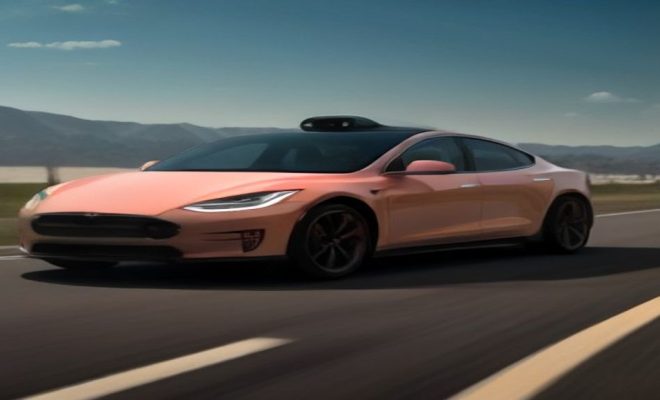
Concurrent with the announcement of the million-mile Tesla self-driving milestone, the company also began offering public rides in its Cybercab. This isn’t just a retrofitted Model 3 or Y; it’s a purpose-built autonomous vehicle. The most striking feature? It’s designed without a steering wheel or pedals. This design choice isn’t merely aesthetic; it’s a powerful statement about Tesla’s vision for fully autonomous transportation.
The Cybercab represents the physical manifestation of the Robotaxi dream. Without human controls, it emphasizes that the vehicle is entirely self-sufficient, designed from the ground up to operate without human input. This shifts the paradigm from a car that can drive itself to a true mobility service. Imagine hailing a ride where there’s no driver, no steering wheel, just a spacious, comfortable cabin designed for passengers. This move is less about personal car ownership and more about a network of on-demand autonomous vehicles, fundamentally reshaping urban transit and potentially reducing the need for individual car ownership in dense areas. (See: Tesla's Robotaxi safety concerns.)
The implications of the Cybercab’s design extend beyond just convenience. By removing the traditional driver controls, Tesla is not only signaling full autonomy but also optimizing the interior space for passenger experience. This could mean more legroom, reconfigurable seating, and potentially even entertainment or productivity features tailored for a rider-only environment. It also addresses a psychological barrier for some users: the expectation of a human driver. When there are no controls, it becomes undeniably clear that the vehicle is operating autonomously, potentially increasing trust for first-time users. This purpose-built design also hints at potential cost efficiencies in manufacturing down the line, as components related to human driving interfaces can be eliminated, leading to simpler assembly and potentially lower operational costs for a Robotaxi fleet.
4. Safety as a Core Argument: Elluswamy’s Perspective
Ashok Elluswamy, Tesla’s VP of AI, didn’t just announce the numbers; he framed the one-million-mile Tesla self-driving milestone as a “testament to safety.” This isn’t a throwaway line; it’s a direct address to the core concern surrounding autonomous vehicles. The public’s primary apprehension about driverless technology centers on safety, and rightfully so. Crashes, even minor ones, involving autonomous vehicles tend to garner significant media attention, often overshadowing the overall safety record.
Elluswamy’s assertion suggests that Tesla’s internal data, derived from these unsupervised miles, supports the argument that their system is achieving a level of safety comparable to, or exceeding, human drivers. This is a critical point of contention in the industry. While Tesla has not publicly released detailed safety metrics for these unsupervised miles in comparison to human-driven miles, the implication is clear: they believe they are building a safer transportation system. For this technology to gain widespread acceptance, demonstrable, transparent safety data will be paramount, and Elluswamy’s statement indicates Tesla is ready to lean into that argument.
The challenge for Tesla, and indeed for the entire AV industry, is to translate these internal safety metrics into publicly digestible and trustworthy information. Comparing AV safety to human driving is complex. Do you compare per mile driven? Per hour? Per incident type? Human error accounts for over 90% of crashes, so the potential for AVs to drastically reduce these incidents is huge. However, the types of errors AVs make can be different and sometimes unexpected. For example, an AV might struggle with an ambiguous hand signal from a construction worker in a way a human wouldn’t, or it might be overly cautious, leading to traffic slowdowns. Elluswamy’s confidence implies Tesla has a robust framework for these comparisons, but the next step will be to open that data up for independent scrutiny. Establishing industry-wide safety metrics and benchmarks, perhaps through collaboration with regulatory bodies, will be vital for building widespread public confidence and validating such bold claims.
5. The San Francisco Bay Area Exception: Acknowledging Complexity
It’s important to note that while Tesla removed in-vehicle safety monitors from “most operations,” the San Francisco Bay Area remained an exception. This isn’t an oversight; it’s a strategic decision that speaks volumes about the challenges of autonomous driving in highly complex urban environments. The Bay Area, particularly San Francisco, presents a unique confluence of narrow streets, unpredictable pedestrians, aggressive cyclists, complex intersections, and diverse weather conditions.
Maintaining human safety monitors in this region acknowledges that even with a million unsupervised miles under its belt, the FSD system still faces a higher degree of difficulty in certain areas. It’s a pragmatic recognition that while the AI is advancing rapidly, there are still edge cases and scenarios in extremely dense, dynamic environments where human judgment and rapid adaptation remain invaluable. This measured approach suggests that Tesla isn’t blindly pushing autonomy everywhere but is strategically deploying it where the system is deemed most robust, while continuing to gather data and refine its capabilities in the most challenging locales.
This exception for the Bay Area really highlights the concept of an “operational design domain” (ODD). An ODD defines the specific conditions under which an autonomous driving system is designed to function. For example, some systems might be limited to highways, others to specific geofenced areas. San Francisco’s ODD is arguably one of the most challenging in the world, with its steep hills, unique road markings (or lack thereof), dense pedestrian traffic, double-parked cars, and frequent, often unpredictable, construction. It’s a living laboratory for edge cases. By keeping human monitors there, Tesla is being realistic about the current limitations of even its advanced system while still pushing for progress. It suggests a tiered rollout strategy: master the easier, more predictable environments first, and then gradually expand into the most complex ones as the AI gains more experience and robustness. This phased approach is a common, and often necessary, strategy in developing highly complex safety-critical systems.
6. Social Media Engagement and Public Debate: The Conversation Explodes
The announcement of this Tesla self-driving milestone, coupled with the Cybercab reveal, has predictably sent social media into overdrive. Discussions are raging across platforms, from X (formerly Twitter) to Reddit, and in countless news comment sections. On one side, you have the fervent Tesla enthusiasts, hailing this as a groundbreaking achievement and a clear sign that full autonomy is not just coming, but is already here. They celebrate the innovation, the speed of development, and the potential societal benefits of a driverless future.
On the other side, a vocal contingent expresses deep skepticism and concern. They point to past FSD incidents, ongoing investigations, and the sheer audacity of operating vehicles without human safety oversight. The debate often devolves into arguments about ethics, regulatory frameworks, and the fundamental question: are we ready for this? This public discourse is crucial. It forces a wider societal reckoning with the implications of autonomous technology, pushing regulators, developers, and the public to engage with the complex questions surrounding safety, liability, and the future of transportation. It’s not just about the tech; it’s about trust.
The intensity of the social media debate isn’t just noise; it’s a reflection of the profound societal shift that autonomous vehicles represent. This isn’t just a new gadget; it’s a technology that promises to fundamentally alter our relationship with transportation, urban planning, and even individual freedom. The “us vs. them” dynamic often seen online, between fervent proponents and staunch critics, highlights the deeply personal nature of cars and driving for many people. It also underscores the need for clear, unbiased information from all parties. The ethical questions are particularly thorny: who is responsible in an accident involving a driverless car? What are the implications for employment in the transportation sector? How do we ensure equitable access to these new mobility services? These aren’t just technical problems; they’re societal challenges that will require careful consideration and broad public engagement to resolve, and social media is often the first, albeit chaotic, forum for these discussions.
7. Regulatory Hurdles and Public Trust: The Road Ahead for Tesla’s Self-Driving Milestone
Achieving a significant Tesla self-driving milestone like one million unsupervised miles is one thing; navigating the labyrinthine world of regulation and public perception is another entirely. Every jurisdiction has its own rules and interpretations regarding autonomous vehicle testing and deployment. While some states have been more open, others maintain strict guidelines, often requiring human safety drivers or specific permits for driverless operation.
Tesla’s aggressive push into unsupervised operation and the public launch of Cybercab will undoubtedly put immense pressure on regulators to either adapt existing frameworks or develop new ones. Beyond official regulations, there’s the equally critical hurdle of public trust. A few high-profile incidents, regardless of the overall safety record, can severely erode public confidence and set back adoption for years. Tesla’s strategy seems to be to demonstrate capability and safety through sheer volume of unsupervised miles, hoping that the data will ultimately sway both regulators and the public. It’s a bold play, and the coming years will show if it’s effective. (See: NHTSA on automated vehicles.)
The current regulatory landscape for autonomous vehicles is a patchwork, with varying rules at federal, state, and even municipal levels in many countries. This fragmented approach can make large-scale deployment incredibly challenging. Regulators are often in a tough spot: they need to foster innovation while ensuring public safety. They’re trying to regulate a technology that’s evolving at an unprecedented pace, making it difficult to write enduring rules. The National Highway Traffic Safety Administration (NHTSA) in the U.S., for instance, has been actively investigating incidents involving FSD, gathering data to understand its performance and safety implications. Building public trust isn’t just about avoiding accidents; it’s about transparency, accountability, and clear communication. Companies like Tesla will need to work closely with regulators, share detailed safety reports, and potentially even engage in independent third-party safety validations to truly win over a skeptical public and pave the way for widespread adoption.
8. The Broader Impact: What This Means for the AV Industry
This Tesla self-driving milestone isn’t just big for Tesla; it sends ripples across the entire autonomous vehicle industry. Competitors, from established automakers to dedicated AV startups like Waymo and Cruise, are undoubtedly watching closely. Tesla’s approach, which heavily leverages its vast fleet of customer vehicles for data collection and a vision-only system, stands in contrast to many others that rely on LiDAR and high-definition maps.
The success, or indeed any setbacks, of Tesla’s unsupervised operations will influence investment, regulatory decisions, and public sentiment for every player in the space. If Tesla can truly demonstrate a superior safety record with its FSD system, it could validate its vision-only approach and accelerate the entire industry’s timeline for full autonomy. Conversely, significant incidents could lead to increased scrutiny and tighter regulations for everyone. This million-mile achievement isn’t just a win for Tesla; it’s a benchmark that raises the bar and intensifies the race towards a fully autonomous future for us all.
The contrasting approaches within the AV industry are particularly interesting. Companies like Waymo and Cruise often use a sensor suite that combines LiDAR, radar, and cameras, along with highly detailed pre-mapped routes, focusing on specific, often smaller, operational domains. Tesla, on the other hand, is betting almost entirely on cameras and neural networks, aiming for a more generalized, scalable solution that doesn’t rely on expensive LiDAR units or extensive pre-mapping. This philosophical difference has significant implications for cost, scalability, and the types of problems each system is best at solving. If Tesla’s vision-only approach proves safe and scalable at a global level, it could dramatically reduce the cost of autonomous vehicles, making them more accessible. However, the reliability of vision-only in adverse weather conditions or scenarios with poor lighting remains a key area of debate and ongoing development for Tesla. This milestone pushes that debate into sharper focus, forcing competitors to re-evaluate their own strategies and timelines.
9. The Economic Implications of Robotaxis: Beyond Personal Ownership
The successful deployment of a Robotaxi fleet, underpinned by milestones like Tesla’s million unsupervised miles, carries enormous economic implications. We’re talking about a potential paradigm shift away from individual car ownership, particularly in urban centers. Imagine a future where instead of buying a car, insuring it, paying for maintenance, and finding parking, you simply hail an autonomous vehicle that arrives at your doorstep within minutes.
This model could drastically reduce the number of vehicles on the road, as one Robotaxi could potentially serve multiple users throughout the day, operating for far more hours than a privately owned car. This would mean less traffic congestion, a reduced need for expansive parking lots (freeing up valuable urban land), and a significant decrease in carbon emissions if these fleets are electric, like Tesla’s. For consumers, it could translate to lower transportation costs, as the per-mile cost of a highly utilized autonomous vehicle could be less than the total cost of owning, operating, and maintaining a personal car. Businesses reliant on transportation, from logistics to tourism, could also see significant cost reductions and efficiency gains. However, this also raises questions about job displacement for professional drivers and the economic impact on industries tied to personal vehicle ownership, like car sales, insurance, and repairs. It’s a complex economic web that will be reshaped by this technology.
10. Data Security and Privacy Concerns: An Overlooked Angle
As autonomous vehicles become more prevalent and sophisticated, especially those operating unsupervised and connected to a central network, the discussion around data security and privacy becomes increasingly vital. Tesla’s FSD system, by its very nature, collects vast amounts of data: camera footage of external environments, internal cabin monitoring, location data, driving patterns, and more. This data is crucial for training and improving the AI, but it also represents a treasure trove of sensitive information.
Who owns this data? How is it stored, protected, and used? Could this data be vulnerable to cyberattacks, potentially compromising user privacy or even the vehicle’s operation? What happens if law enforcement requests access to this data? These are not trivial questions. As companies like Tesla push forward with unsupervised operations and Robotaxi services, they will need to implement robust cybersecurity measures and transparent data privacy policies. Public trust isn’t just about safety on the road; it’s also about feeling confident that your personal information and movements aren’t being misused or exposed. The regulatory frameworks will need to evolve to address these digital challenges, ensuring that the benefits of autonomous technology don’t come at the cost of fundamental privacy rights.
Frequently Asked Questions (FAQ) about Tesla’s Self-Driving Milestone
Q1: What does “unsupervised operation” truly mean for Tesla’s Robotaxi fleet?
A1: Unsupervised operation means there was no human driver in the vehicle, or if a human was present, they were not actively monitoring the system in a safety-critical role, nor were they expected to intervene. The vehicle was operating entirely autonomously, making all driving decisions on its own. This is a significant step beyond assisted driving features, where a human is always expected to be ready to take control.
Q2: How does Tesla’s self-driving approach compare to other autonomous vehicle companies?
A2: Tesla primarily uses a “vision-only” approach, relying heavily on cameras and neural networks to perceive its environment. Most other leading AV companies, like Waymo and Cruise, typically use a more diverse sensor suite that includes LiDAR (Light Detection and Ranging), radar, and high-definition maps in addition to cameras. Tesla believes its vision-only system is more scalable and cost-effective, while others argue that a combination of sensors provides greater redundancy and reliability. (See: Research on autonomous vehicle safety.)
Q3: Why is the San Francisco Bay Area an exception for unsupervised operation?
A3: The San Francisco Bay Area, particularly the city of San Francisco, presents one of the most complex and challenging driving environments due to its dense urban layout, unpredictable pedestrians and cyclists, narrow streets, unique traffic patterns, and diverse weather. Tesla acknowledges that these “edge cases” still require human safety monitors to gather more data and refine the FSD system’s capabilities in such demanding conditions, indicating a pragmatic, phased approach to full autonomy.
Q4: What are the main safety concerns surrounding Tesla’s unsupervised self-driving?
A4: The primary safety concerns revolve around the system’s ability to handle unpredictable real-world scenarios, “edge cases” that haven’t been adequately trained for, and potential software glitches. Critics worry about the absence of a human safety driver to intervene in critical situations, especially given past incidents involving Tesla’s FSD beta. Transparency of safety data and independent validation are key demands from skeptics and regulators.
Q5: How will the Cybercab, designed without a steering wheel or pedals, impact the future of transportation?
A5: The Cybercab’s design signals a future where personal car ownership might decline in favor of on-demand mobility services. Without human controls, the interior can be optimized for passenger comfort and experience. It aims to reduce traffic congestion, parking needs, and potentially transportation costs by maximizing vehicle utilization within a Robotaxi fleet. It represents a shift from owning a car to subscribing to a mobility service.
Q6: How does this Tesla self-driving milestone affect regulatory bodies?
A6: Tesla’s aggressive push into unsupervised operation puts immense pressure on regulators globally to adapt existing laws or create new ones specifically for Level 4 and Level 5 autonomous vehicles. They need to balance fostering innovation with ensuring public safety and addressing complex questions of liability, data privacy, and ethical decision-making in autonomous systems. This milestone will likely accelerate the development of more comprehensive regulatory frameworks.
Q7: What are the economic benefits of a widespread Robotaxi fleet?
A7: Economic benefits include reduced transportation costs for consumers and businesses, decreased traffic congestion, less need for parking infrastructure, and environmental benefits from highly utilized electric vehicles. It could also create new economic models around mobility services, data analytics, and in-vehicle entertainment. However, it also poses challenges for job displacement in traditional driving roles and industries tied to personal car ownership.
Q8: What are the main differences between Level 2 and Level 5 autonomy, and where does Tesla’s FSD stand?
A8: The Society of Automotive Engineers (SAE) defines six levels of driving automation. Level 2 (Partial Automation) means the vehicle can control steering and acceleration/braking, but a human driver must always monitor and be ready to take over. Tesla’s FSD beta, even with unsupervised miles, is technically considered a Level 2+ or Level 3 system in many regulatory contexts because a human is still ultimately liable, and it still requires human oversight in some situations (like the Bay Area exception). Level 5 (Full Automation) means the vehicle can perform all driving tasks under all conditions, with no human intervention ever required. Tesla aims for Level 5 with its Robotaxi fleet, and the unsupervised miles are a step towards that, but it’s not fully there yet in all environments.
So, where do we go from here? Tesla has clearly thrown down the gauntlet with this latest Tesla self-driving milestone. The one million unsupervised miles, the removal of safety monitors, and the Cybercab reveal aren’t just technical achievements; they’re a powerful statement about the company’s belief in its technology and its readiness to push the boundaries of what’s possible. Whether you’re a believer or a skeptic, one thing is undeniable: the future of self-driving is accelerating at an incredible pace, and Tesla is leading the charge into uncharted territory. It’s going to be fascinating to watch how this unfolds, and what it ultimately means for our commutes, our cities, and our very definition of driving.
Trending Now
- this guide on the startling truth about cheapest glp-1 options without insurance
- this guide on the hidden truth behind mosqi shock reviews: what you must know before buying
- our breakdown of this unstoppable force will obliterate apps by 2027, says paytm founder
- Developers Axed a Wild Mechanic in…
- U.S. Supreme Court endorses parental opt-out for LGBTQ+ curriculum | News & Events
Frequently Asked Questions
What does Tesla's one million unsupervised miles mean for self-driving technology?
Tesla's achievement of one million unsupervised miles is a significant milestone in self-driving technology, indicating that their AI system can handle complex driving scenarios without human intervention. This progress suggests that Tesla is advancing towards fully autonomous vehicles, sparking discussions about the safety and readiness of driverless cars in everyday use.
How did Tesla accumulate one million unsupervised miles so quickly?
Tesla accumulated roughly 620,000 unsupervised miles in just six weeks by removing in-vehicle safety monitors from most operations and launching public rides in the Cybercab, a vehicle designed without traditional driving controls. This rapid acceleration demonstrates the company's commitment to advancing its autonomous driving capabilities.
What are the implications of Tesla's Robotaxi fleet for the future of transportation?
Tesla's Robotaxi fleet milestone suggests a transformative shift in transportation, moving towards a future where autonomous vehicles could become mainstream. This could lead to reduced traffic accidents, changes in urban design, and new business models in mobility, all while raising questions about safety and regulatory frameworks.
What safety measures does Tesla have in place for its Robotaxi fleet?
While Tesla's Robotaxi fleet operates unsupervised, the company emphasizes the safety of its AI system, which has been validated through extensive real-world driving data. However, the specifics of safety measures, especially in complex environments, remain a topic of discussion and concern among experts and the public.
How does the public perceive Tesla's autonomous driving advancements?
Public perception of Tesla's autonomous driving advancements is mixed. While many are excited about the potential for safer, more efficient transportation, there are significant concerns regarding safety, regulatory compliance, and the readiness of the technology, especially after the removal of human safety drivers in many scenarios.
Have you experienced this yourself? We'd love to hear your story in the comments.