Tesla Cybercab: NHTSA Investigation Ignites Furious Debate — Here’s Why It Matters
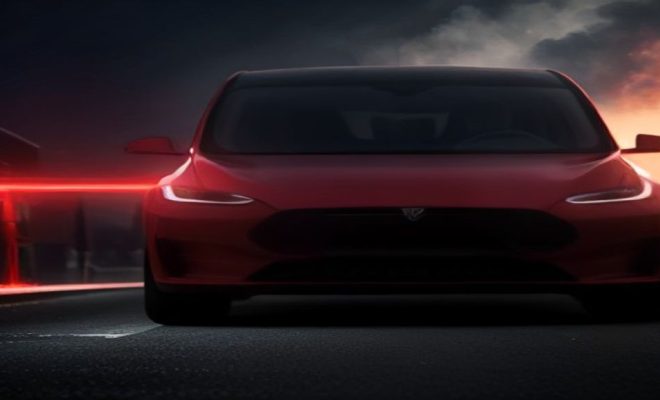
Well, it finally happened. After years of speculation, countless concept renders, and a healthy dose of Elon Musk’s signature hype, Tesla officially rolled out its fully autonomous Cybercab robotaxi service in Austin, Texas, on Thursday, September 3, 2026. This isn’t just another incremental step in self-driving tech; we’re talking about a two-seat vehicle designed from the ground up without a steering wheel or pedals, intended purely for driverless taxi duty. It’s a bold, almost audacious move that screams ‘future,’ but as you might expect, it hasn’t been without its immediate, dramatic fallout.
Barely had the digital confetti settled from the launch announcement before the U.S. National Highway Traffic Safety Administration (NHTSA) dropped its own bombshell: a formal investigation into whether the Cybercab meets federal safety standards. This isn’t just a routine check; it’s a direct challenge to Tesla’s vision of a truly driverless future and has immediately sparked a furious debate across social media, automotive forums, and dinner tables everywhere. Is this the dawn of a new era in urban mobility, or a reckless leap into uncharted territory? The unfolding Tesla self-driving investigation is quickly becoming one of the most talked-about topics in the automotive world, and for good reason.
1. The Cybercab’s Radical Design: A Vision Without a Wheel
Let’s start with what makes the Cybercab so revolutionary, and simultaneously, so controversial. This isn’t just a souped-up Model 3 with some extra sensors. Tesla has engineered the Cybercab from the ground up as a purpose-built, Level 5 autonomous vehicle. What does that mean in practical terms? It means there’s no steering wheel, no pedals, and frankly, no provision for human intervention in the traditional sense. You get in, you tell it where to go (presumably via an app or an in-cabin interface), and it takes you there.
This radical departure from conventional vehicle design is what sets it apart from every other ‘self-driving’ car on the road today, most of which still retain manual controls for human oversight or emergencies. Tesla’s argument, presumably, is that removing these elements reduces cost, increases interior space, and eliminates the temptation for human drivers to interfere with a system designed to be superior. But it also raises fundamental questions about what constitutes a ‘safe’ vehicle when the human element is entirely removed from the driving equation. This isn’t just about software; it’s about a complete reimagining of the car itself.
2. NHTSA’s Swift Response: Why the Immediate Investigation?
The speed with which NHTSA announced its investigation is truly remarkable. Tesla launched the Cybercab on Thursday, September 3, 2026, and the federal probe was revealed almost immediately. This isn’t a case of waiting for incidents to accumulate; it’s a proactive, pre-emptive strike by the regulatory body. Why the urgency?
Part of it surely stems from the Cybercab’s aforementioned lack of manual controls. Traditional vehicle safety standards are built around the assumption of a human driver who can, at minimum, steer and brake. When you remove those foundational elements, the existing regulatory framework struggles to apply. NHTSA isn’t just looking at software glitches; they’re likely examining whether the entire concept of a driverless vehicle without manual overrides can inherently meet federal safety benchmarks designed for a human-operated world. This Tesla self-driving investigation highlights a critical regulatory gap.
3. Federal Safety Standards: A Mismatch for True Autonomy?
Federal Motor Vehicle Safety Standards (FMVSS) are the bedrock of automotive safety in the U.S., covering everything from crashworthiness to lighting, braking, and occupant protection. These standards have evolved over decades, largely in response to the performance and design of human-driven vehicles. Now, with the Cybercab, we have a vehicle that fundamentally challenges those paradigms.
Consider crash testing, for instance. How do you assess the safety of a vehicle that’s supposed to avoid crashes entirely? Or what about emergency braking systems? If there’s no pedal, how is a human supposed to interact in a critical situation, even if that situation is a system failure? NHTSA’s investigation will undoubtedly scrutinize whether the Cybercab’s autonomous systems can reliably replicate, or even exceed, the safety performance expected of a human driver under the vast array of real-world conditions, and how failures are managed without human intervention. This is a complex legal and engineering challenge.
4. The Public Safety Debate: Revolutionary Mobility vs. Uncharted Risks
The public reaction to the Cybercab and the subsequent Tesla self-driving investigation has been, predictably, polarized. On one side, you have the proponents who envision a future where urban congestion is dramatically reduced, parking becomes a non-issue, and mobility is accessible to a broader segment of the population, including those who cannot drive themselves. The idea of summoning a clean, quiet, electric robotaxi at a moment’s notice is incredibly appealing to many, promising convenience and efficiency previously unimaginable.
However, the critics raise valid, significant concerns. The idea of a car with no human oversight, navigating busy city streets, conjures images of potential chaos and danger. What happens if the sensors are blinded by severe weather? What about cybersecurity threats that could compromise the vehicle’s control? How will it handle unpredictable human behavior – pedestrians stepping into traffic, other drivers making erratic moves? These aren’t trivial questions; they speak to fundamental issues of trust, accountability, and the very definition of safety in a world where machines are increasingly making life-and-death decisions on our behalf.
5. Tesla’s Track Record: A History of Bold Claims and Regulatory Scrutiny
Tesla is no stranger to regulatory attention, especially when it comes to its advanced driver-assistance systems, often marketed as ‘Full Self-Driving’ (FSD) Beta. The company has consistently pushed the boundaries of what’s possible with automotive AI, often with a confidence that some see as pioneering and others see as reckless. Previous NHTSA investigations have focused on issues like Autopilot crashes involving emergency vehicles and phantom braking incidents, leading to recalls and software updates. (See: National Highway Traffic Safety Administration.)
This history undoubtedly plays into the current Cybercab investigation. Regulators are likely approaching this with a heightened sense of caution, given Tesla’s past incidents and the public’s perception of the company’s approach to safety. The stakes are much higher now, though, because with the Cybercab, the ‘driver’ is entirely removed from the equation, shifting full responsibility, both morally and legally, onto the autonomous system and its manufacturer.
6. Implications for the Autonomous Vehicle Industry: A Bellwether Moment
The outcome of this Tesla self-driving investigation will have ripple effects far beyond Austin, Texas, and even beyond Tesla itself. It’s a bellwether moment for the entire autonomous vehicle (AV) industry. Other companies like Waymo and Cruise have also been deploying robotaxi services, albeit with different technological approaches and often with safety drivers or more limited operational domains.
If NHTSA finds that the Cybercab, in its current form, cannot meet federal safety standards, it could lead to significant delays, design changes, or even a complete rethinking of how truly driverless vehicles are brought to market in the U.S. Conversely, if Tesla can successfully navigate this regulatory challenge, it could pave the way for a faster adoption of Level 5 autonomy. This investigation isn’t just about one vehicle; it’s about setting precedents for an entire future industry.
7. The Role of Software and AI: The Ultimate Test
At the heart of the Cybercab, and indeed any truly autonomous vehicle, is its software and artificial intelligence. These systems are responsible for perception, prediction, planning, and execution – essentially, all aspects of driving. The investigation will delve deeply into the robustness, reliability, and safety of Tesla’s AI stack. How does it handle edge cases? How is redundancy built in? What are its failure modes, and how are they mitigated?
This isn’t about traditional mechanical safety anymore; it’s about the safety of code. The complexity of these systems means that testing and validation are incredibly challenging. It’s not enough for the system to work 99% of the time; in driving, it needs to be near-perfect, especially when there’s no human to pick up the slack. The Cybercab represents one of the ultimate tests of AI’s capability in a safety-critical, real-world application.
8. What’s Next for the Tesla Self-Driving Investigation?
So, what can we expect as this investigation unfolds? Typically, NHTSA probes involve extensive data collection, analysis of vehicle logs, communication with the manufacturer, and potentially real-world testing. They’ll be looking for evidence of design flaws, software vulnerabilities, or operational limitations that could pose an unreasonable risk to safety. Tesla will be expected to cooperate fully, providing detailed technical documentation and responding to inquiries.
The process could take months, or even longer, given the unprecedented nature of the Cybercab. Outcomes could range from no action, if the vehicle is deemed safe, to mandatory recalls, design modifications, or even restrictions on its operation. Whatever the conclusion, it will undoubtedly shape the future trajectory of autonomous vehicles and the regulatory landscape that governs them. We’re watching a pivotal moment unfold in real-time, one that could redefine how we think about transportation forever.
9. Societal Impact and Public Trust: Beyond the Technicalities
Beyond the technical and regulatory aspects, the Tesla self-driving investigation carries immense societal weight. Public trust is a fragile thing, and a major incident involving a truly driverless vehicle could set back the adoption of autonomous technology by years, if not decades. Conversely, a successful and demonstrably safe deployment of the Cybercab could accelerate the transition to a new era of mobility.
The debate isn’t just about engineering; it’s about our collective comfort level with delegating control to machines, about the ethical implications of AI making decisions that affect human lives, and about how society adapts to such profound technological shifts. The Cybercab isn’t just a car; it’s a symbol of a future that’s rapidly approaching, and how we choose to regulate and embrace it will define much of our urban experience in the decades to come. The stakes couldn’t be higher, and everyone, from regulators to consumers, is watching closely to see how this dramatic chapter unfolds.
10. The Ethical Quandaries of Driverless Decisions
The removal of human intervention in the Cybercab brings forward a whole new set of ethical dilemmas that traditional vehicles simply didn’t face. When an autonomous vehicle encounters an unavoidable crash scenario, whose safety does it prioritize? The passenger inside? Pedestrians on the sidewalk? Other vehicles’ occupants? These are what philosophers call “trolley problems,” but in a real-world, high-speed context.
Currently, there’s no universally accepted ethical framework programmed into autonomous vehicles for such split-second, life-or-death decisions. Different manufacturers might adopt different algorithms, leading to potentially conflicting outcomes. NHTSA’s investigation, while primarily focused on safety standards, will inevitably brush against these ethical considerations. How a vehicle is programmed to “choose” in an impossible situation isn’t just a technical specification; it’s a moral stance. And who bears the legal and moral responsibility when such a decision is made by an algorithm? Is it Tesla, the programmer, the vehicle owner, or even the AI itself? These are questions society is only just beginning to grapple with, and the Cybercab’s deployment forces them into the spotlight. There’s a fuller look at Elon Musk's ambitious vision.
11. Data, Privacy, and Surveillance in a Robotaxi World
A fully autonomous robotaxi like the Cybercab relies on an enormous amount of data. This includes real-time sensor data, mapping information, traffic conditions, and passenger routing requests. But it also likely includes in-cabin monitoring for safety, security, and potentially even user experience improvements. This raises significant concerns about data privacy and potential surveillance.
Who owns this data? How is it stored, protected, and potentially shared? Could law enforcement access real-time or historical travel logs without a warrant? Could the in-cabin cameras be used for purposes beyond immediate safety? As we shift from privately owned cars to shared, autonomous services, our movements and habits become more readily trackable. The investigation might not directly address these privacy issues, but they are an unavoidable byproduct of a fully connected, driverless fleet. Ensuring robust cybersecurity measures to prevent data breaches or malicious control of these vehicles is also paramount, as a compromised fleet could pose a systemic risk. (See: Centers for Disease Control and Prevention.)
12. Insurance and Liability in an Autonomous Landscape
The current automotive insurance model is largely predicated on assigning fault to a human driver. When that driver is removed, the entire liability structure shifts dramatically. If a Cybercab is involved in an accident, who is at fault? Is it Tesla, for the vehicle’s design or software? Is it the component manufacturer for a faulty sensor? Or is there a new category of “no-fault” autonomous vehicle insurance required?
Insurance companies are already scrambling to adapt to this new reality. The Tesla self-driving investigation will have a profound impact on how liability is assessed and managed for AVs. A clear regulatory stance on fault and accountability will be crucial for the widespread adoption of robotaxis. Without it, the legal and financial risks for both manufacturers and consumers become incredibly complex, potentially stalling progress even if the technology itself is deemed safe. This legal vacuum is one of the biggest non-technical hurdles for Level 5 autonomy.
13. Urban Planning and Infrastructure Adaptation
The advent of robotaxis like the Cybercab isn’t just about the vehicles themselves; it’s about how they integrate into and reshape our cities. If robotaxis become ubiquitous, they could drastically reduce the need for private car ownership, which in turn could free up vast amounts of urban land currently dedicated to parking. Imagine parking garages repurposed for housing, green spaces, or commercial developments.
However, cities also need to adapt their infrastructure. Does Austin have dedicated lanes or charging stations optimized for robotaxi fleets? How will traffic management systems communicate with a swarm of autonomous vehicles? What about curb management – where do these vehicles pick up and drop off passengers, especially in busy areas? The investigation, while focused on the vehicle, indirectly highlights the need for a synchronized evolution in urban planning and smart city infrastructure to truly capitalize on the benefits of driverless mobility. The success of Cybercab isn’t just about Tesla’s tech; it’s about city readiness.
14. Global Regulatory Perspectives: A Patchwork of Approaches
While NHTSA’s investigation focuses on U.S. federal standards, it’s worth noting that different countries and regions are taking varied approaches to regulating autonomous vehicles. Europe, for example, often adopts a more cautious, incremental approach, while some Asian countries might be more eager to embrace and test new technologies quickly.
The outcome of the Tesla self-driving investigation could influence global regulatory bodies. If the U.S. sets a high bar for Level 5 autonomy without manual controls, it could become a de facto standard internationally. Conversely, if other regions move faster with different regulatory frameworks, it could create a complex, fragmented market for AV manufacturers. This global regulatory patchwork makes it challenging for companies like Tesla to deploy a uniform product worldwide, requiring significant localization and adaptation of their autonomous systems to meet diverse legal and safety requirements.
15. The Human Element: Job Displacement and New Opportunities
The widespread deployment of robotaxis like the Cybercab will undoubtedly have significant socioeconomic impacts, particularly concerning employment. Millions of jobs globally are tied to human-driven transportation – taxi drivers, truck drivers, delivery personnel. While some argue that autonomous technology will create new jobs in maintenance, oversight, and software development, the net effect on employment is a major concern for policymakers.
This investigation, therefore, isn’t just about the safety of the ride; it’s about the safety of livelihoods. Society needs to prepare for these shifts, potentially through retraining programs or new social safety nets. While Tesla and other AV companies focus on the technological marvel, the broader societal implications of such a disruptive technology are immense and deserve considerable foresight and planning beyond the immediate safety probe.
Frequently Asked Questions (FAQ)
Q1: What exactly is the Tesla Cybercab?
The Tesla Cybercab is a purpose-built, two-seat, fully autonomous robotaxi designed by Tesla. Unlike current self-driving cars, it completely lacks a steering wheel or pedals, meaning there’s no provision for human intervention in the traditional sense. It operates as a Level 5 autonomous vehicle, intended solely for driverless taxi services.
Q2: Why is NHTSA investigating the Cybercab?
NHTSA launched an immediate investigation because the Cybercab’s radical design, specifically the absence of manual controls, challenges existing federal safety standards. These standards were largely written with human-driven vehicles in mind. NHTSA wants to determine if a truly driverless vehicle without human override can inherently meet safety benchmarks designed for a human-operated world. (See: BBC News on autonomous vehicles.)
Q3: What are Federal Motor Vehicle Safety Standards (FMVSS)?
FMVSS are U.S. regulations that set minimum performance requirements for motor vehicles and motor vehicle equipment. They cover aspects like crashworthiness, lighting, braking, and occupant protection. The Cybercab’s design creates a unique challenge for these decades-old standards.
Q4: What is Level 5 autonomy?
Level 5 autonomy (as defined by the SAE International standard) means the vehicle can operate fully autonomously under all driving conditions, in all environments, without any human intervention. There’s no expectation for a human driver to take over. The Cybercab aims to be a Level 5 vehicle.
Q5: How does the Cybercab differ from Tesla’s ‘Full Self-Driving’ (FSD) Beta?
Tesla’s FSD Beta is a Level 2 driver-assistance system that still requires a human driver to be attentive and ready to take over at all times. It’s an advanced system, but it’s not truly autonomous and retains all manual controls. The Cybercab is a completely different vehicle, designed from the ground up to be Level 5 autonomous, with no steering wheel or pedals.
Q6: What are the main concerns about the Cybercab’s safety?
Concerns include how the system handles unpredictable events (edge cases), severe weather conditions that might blind sensors, cybersecurity threats, and the vehicle’s ability to react to erratic human behavior (pedestrians, other drivers) without any human backup. There are also ethical questions about how the AI makes decisions in unavoidable crash scenarios.
Q7: What could be the outcome of the NHTSA investigation?
The investigation could result in various outcomes: no action if the vehicle is deemed safe, mandatory recalls, required design modifications (e.g., adding some form of manual override), or restrictions on its operation. The process will likely take months, given the complexity and unprecedented nature of the vehicle.
Q8: How will the Cybercab affect other autonomous vehicle companies?
The outcome of this investigation will set a precedent for the entire AV industry. If NHTSA sets a high bar or requires significant changes, it could impact how other companies like Waymo and Cruise develop and deploy their own driverless services, potentially leading to delays or changes in industry-wide standards.
Q9: What are the broader societal impacts of widespread robotaxi adoption?
Widespread robotaxi adoption could reduce urban congestion, free up parking spaces, increase mobility access for non-drivers, and potentially lead to fewer accidents. However, it also raises concerns about job displacement for professional drivers, data privacy, cybersecurity, and the need for significant urban planning and infrastructure adaptations.
Q10: Who is liable if a Cybercab causes an accident?
This is a complex legal question that is still being defined. With no human driver, liability could fall to the manufacturer (Tesla), the software developer, or the fleet operator. Current insurance models are not fully equipped for this, and new legal frameworks and insurance products will likely be necessary. (important legislation on AVs)
Trending Now
Frequently Asked Questions
What is the Tesla Cybercab?
The Tesla Cybercab is a fully autonomous robotaxi service launched by Tesla in Austin, Texas, designed without a steering wheel or pedals. It is engineered for driverless operation, allowing passengers to simply enter and input their destination using an app or in-cabin interface.
Why is the NHTSA investigating the Tesla Cybercab?
The NHTSA is investigating the Tesla Cybercab to determine if it meets federal safety standards. This formal investigation follows the vehicle's launch and raises questions about the safety of fully autonomous driving technology.
What are the features of the Tesla Cybercab?
The Tesla Cybercab features a radical design as a Level 5 autonomous vehicle. It lacks traditional controls like a steering wheel and pedals, focusing instead on providing a seamless driverless taxi experience for passengers.
How has the Cybercab launch impacted public debate?
The launch of the Cybercab has ignited a heated debate regarding the future of urban mobility and the safety of autonomous vehicles. Discussions are prevalent across social media and automotive forums, questioning whether this innovation is a leap forward or a reckless risk.
What does Level 5 autonomy mean for the Cybercab?
Level 5 autonomy means that the Tesla Cybercab is fully capable of driving itself without any human intervention. This level of automation allows passengers to travel without the need for a driver or traditional vehicle controls.
What's your take on this? Share your thoughts in the comments below — we read every one.