The Tech Edvocate

Top Menu

  • Advertisement
  • Apps
  • Home Page
  • Home Page Five (No Sidebar)
  • Home Page Four
  • Home Page Three
  • Home Page Two
  • Home Tech2
  • Icons [No Sidebar]
  • Left Sidbear Page
  • Lynch Educational Consulting
  • My Account
  • My Speaking Page
  • Newsletter Sign Up Confirmation
  • Newsletter Unsubscription
  • Our Brands
  • Page Example
  • Privacy Policy
  • Protected Content
  • Register
  • Request a Product Review
  • Shop
  • Shortcodes Examples
  • Signup
  • Start Here
    • Governance
    • Careers
    • Contact Us
  • Terms and Conditions
  • The Edvocate
  • The Tech Edvocate Product Guide
  • Topics
  • Write For Us
  • Advertise

Main Menu

  • Start Here
    • Our Brands
    • Governance
      • Lynch Educational Consulting, LLC.
      • Dr. Lynch’s Personal Website
      • Careers
    • Write For Us
    • The Tech Edvocate Product Guide
    • Contact Us
    • Books
    • Edupedia
    • Post a Job
    • The Edvocate Podcast
    • Terms and Conditions
    • Privacy Policy
  • Topics
    • Assistive Technology
    • Child Development Tech
    • Early Childhood & K-12 EdTech
    • EdTech Futures
    • EdTech News
    • EdTech Policy & Reform
    • EdTech Startups & Businesses
    • Higher Education EdTech
    • Online Learning & eLearning
    • Parent & Family Tech
    • Personalized Learning
    • Product Reviews
  • Advertise
  • Tech Edvocate Awards
  • The Edvocate
  • Pedagogue
  • School Ratings

logo

The Tech Edvocate

  • Start Here
    • Our Brands
    • Governance
      • Lynch Educational Consulting, LLC.
      • Dr. Lynch’s Personal Website
        • My Speaking Page
      • Careers
    • Write For Us
    • The Tech Edvocate Product Guide
    • Contact Us
    • Books
    • Edupedia
    • Post a Job
    • The Edvocate Podcast
    • Terms and Conditions
    • Privacy Policy
  • Topics
    • Assistive Technology
    • Child Development Tech
    • Early Childhood & K-12 EdTech
    • EdTech Futures
    • EdTech News
    • EdTech Policy & Reform
    • EdTech Startups & Businesses
    • Higher Education EdTech
    • Online Learning & eLearning
    • Parent & Family Tech
    • Personalized Learning
    • Product Reviews
  • Advertise
  • Tech Edvocate Awards
  • The Edvocate
  • Pedagogue
  • School Ratings
  • US Battery as a Service Market Shifts Toward Fleet-Based Energy

  • The Startling Truth: Why Americans Distrust AI with Their Health

  • This Crucial Deadline for Banks Is Closer Than You Think

  • Baffling: CrowdStrike’s $500 Million AI Bet Reshapes Cybersecurity

  • This Crucial Autonomous Driving Rule Could Cost You Everything

  • Baffling: Microsoft AI CEO Demands Halt to Conscious AI Development

  • O seară în ritmul tău: atmosfera divertismentului de cazinou pe internet

  • Outrageous: AppLovin Hit With Lawsuit Over AI Claims — What Investors Need to Know

  • 9 Critical Ways AI Investment Fraud Is Quietly Draining Your Bank Account

  • Is the AI Bubble Bursting? OpenAI’s Funding Woes Revealed

Higher Education EdTech
Home›Higher Education EdTech›How is Technology Revolutionizing Campus Libraries?

How is Technology Revolutionizing Campus Libraries?

By Matthew Lynch
August 28, 2017
0
Spread the love

Technology impacts the ways in which teachers – whether elementary, secondary, or post-secondary – present information and assess student learning and capabilities in the classroom.  And students use technology to change the way they learn and communicate in return.  It stands to reason, therefore, that libraries should also grow and change with the influx and prevalence of technology in education.  Technology is a powerful force in education.  Here are five key ways it continues to revolutionize learning experiences in libraries:

  1. It’s not just about the books!

The first (and arguably most significant) way that technology has impacted libraries is that it has shifted the focus from books to digital resources.  Libraries used to be places where students came to read and research, using books that they couldn’t access elsewhere to find information that would be otherwise out of reach.  Now, however, thanks to technology, information is readily abundant.  Libraries now must shift their focus to the sharing and exploration of information, to safely and wisely using the resources available through the internet.  Whereas libraries of yesteryear may have featured stacks and rows of books, wooden study tables and carrels, not you are more likely to see couches and cafes, comfortable study group areas, and maker spaces.  Libraries are shifting from being repositories of information to meeting spaces for the exploration of worldwide information.

  1. Makerspaces

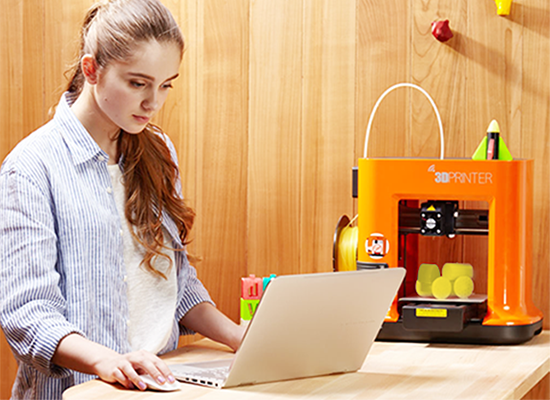
In the spaces where books used to dominate, one way that libraries are letting technology enhance their value is by adding maker spaces.  Makerspaces are creative areas that let students of all levels – and the community at large – gather to brainstorm, problem solve, and create using communal resources.  Because libraries often have resources and buying power greater than that of a single person, they can offer attractive maker space options.  Some of these options include laser cutters and 3D printers.

  1. Subscriptions to databases

As information becomes increasingly digitized – including access to scholarly articles that can be viewed instantaneously after peer review, instead of waiting weeks or months for publication in a paper journal or magazine – libraries become essential places for offering students access to the research they need across all content areas.  Instead of facilitating the long-ago interlibrary loan, now university libraries subscribe to databases for the benefit of their students.  Students can tap into these databases with a university or library log-in, or sometimes simply by being connected to the library’s wifi.  These databases allow the students to connect their learning to the world at large, and to ferret out the information they need to enhance their understanding of a subject, research a project, or write a paper.

  1. Greater, more efficient access to resources

More and more, librarians are becoming facilitators.  Just as high school teachers are “flipping” their classrooms, letting the students learn on their own and then practice their skills under the tutelage of a teacher, so do librarians work now not to find information for students, but to teach students how to navigate resources.  Librarians’ jobs now are to help students become independent researchers; they maintain database subscriptions and digital resources to steer students down the paths they need to find the necessary information.  Instead of performing hours-long, often fruitless internet searches, librarians will know which databases and journals will best suit students’ needs.

  1. Rethinking the roles of librarians

More and more libraries are restaffing their spaces with technology coaches.  As their library buildings are filled with maker spaces and computers, tablets and digital resource centers, it becomes necessary for technology coaches to be on hand to teach students how to use new technology, to maximize the potential of the technology available, to repair and update the hard- and software, and to oversee the appropriate use of the library’s resources.  Librarians may teach the students where to find the digital information they need, but technology coaches maintain the portals to said information, giving students an open, speedy road to their information destinations.

Technology is changing everything about the world around, from how we do our shopping to how we communicate to how we learn.  Now, too, as libraries become more and more plugged in, technology is changing how we get our information, making it faster and granting us access to the most current resources in the easiest way.  Libraries will continue to play a critical role in connecting students to knowledge – the only thing that changes is the lens through which we view that information.


TagsEdtechedtechchatelearningSTEAMSTEM
Previous Article

More Guidelines for Young Children using Edtech

Next Article

Are Coding Bootcamps Worth It?

Matthew Lynch

Related articles More from author

  • EdTech NewsHigher Education EdTech

    Online education: can we bridge the digital divide?

    August 10, 2016
    By Matthew Lynch
  • Early Childhood & K-12 EdTech

    2 Concepts that Illustrate How Fun Math Actually Is

    December 8, 2016
    By Matthew Lynch
  • EdTech Futures

    3 Technologies Making Their Way to Mainstream Education

    February 14, 2017
    By Matthew Lynch
  • Early Childhood & K-12 EdTech

    How to Use Gamification to Help Struggling Students

    April 6, 2017
    By Matthew Lynch
  • Early Childhood & K-12 EdTech

    Is social media messing with children’s morals?

    June 7, 2017
    By Matthew Lynch
  • EdTech News

    Next Generation Science Standards are Smart

    June 12, 2016
    By Matthew Lynch

Search

Login & Registration

  • Log in
  • Entries feed
  • Comments feed
  • WordPress.org

Newsletter

Signup for The Tech Edvocate Newsletter and have the latest in EdTech news and opinion delivered to your email address!

About Us

Since technology is not going anywhere and does more good than harm, adapting is the best course of action. That is where The Tech Edvocate comes in. We plan to cover the PreK-12 and Higher Education EdTech sectors and provide our readers with the latest news and opinion on the subject. From time to time, I will invite other voices to weigh in on important issues in EdTech. We hope to provide a well-rounded, multi-faceted look at the past, present, the future of EdTech in the US and internationally.

We started this journey back in June 2016, and we plan to continue it for many more years to come. I hope that you will join us in this discussion of the past, present and future of EdTech and lend your own insight to the issues that are discussed.

Newsletter

Signup for The Tech Edvocate Newsletter and have the latest in EdTech news and opinion delivered to your email address!

Contact Us

The Tech Edvocate
910 Goddin Street
Richmond, VA 23231
(601) 630-5238
[email protected]

Copyright © 2026 Matthew Lynch. All rights reserved.