The Tech Edvocate

Top Menu

  • Advertisement
  • Apps
  • Home Page
  • Home Page Five (No Sidebar)
  • Home Page Four
  • Home Page Three
  • Home Page Two
  • Home Tech2
  • Icons [No Sidebar]
  • Left Sidbear Page
  • Lynch Educational Consulting
  • My Account
  • My Speaking Page
  • Newsletter Sign Up Confirmation
  • Newsletter Unsubscription
  • Our Brands
  • Page Example
  • Privacy Policy
  • Protected Content
  • Register
  • Request a Product Review
  • Shop
  • Shortcodes Examples
  • Signup
  • Start Here
    • Governance
    • Careers
    • Contact Us
  • Terms and Conditions
  • The Edvocate
  • The Tech Edvocate Product Guide
  • Topics
  • Write For Us
  • Advertise

Main Menu

  • Start Here
    • Our Brands
    • Governance
      • Lynch Educational Consulting, LLC.
      • Dr. Lynch’s Personal Website
      • Careers
    • Write For Us
    • The Tech Edvocate Product Guide
    • Contact Us
    • Books
    • Edupedia
    • Post a Job
    • The Edvocate Podcast
    • Terms and Conditions
    • Privacy Policy
  • Topics
    • Assistive Technology
    • Child Development Tech
    • Early Childhood & K-12 EdTech
    • EdTech Futures
    • EdTech News
    • EdTech Policy & Reform
    • EdTech Startups & Businesses
    • Higher Education EdTech
    • Online Learning & eLearning
    • Parent & Family Tech
    • Personalized Learning
    • Product Reviews
  • Advertise
  • Tech Edvocate Awards
  • The Edvocate
  • Pedagogue
  • School Ratings

logo

The Tech Edvocate

  • Start Here
    • Our Brands
    • Governance
      • Lynch Educational Consulting, LLC.
      • Dr. Lynch’s Personal Website
        • My Speaking Page
      • Careers
    • Write For Us
    • The Tech Edvocate Product Guide
    • Contact Us
    • Books
    • Edupedia
    • Post a Job
    • The Edvocate Podcast
    • Terms and Conditions
    • Privacy Policy
  • Topics
    • Assistive Technology
    • Child Development Tech
    • Early Childhood & K-12 EdTech
    • EdTech Futures
    • EdTech News
    • EdTech Policy & Reform
    • EdTech Startups & Businesses
    • Higher Education EdTech
    • Online Learning & eLearning
    • Parent & Family Tech
    • Personalized Learning
    • Product Reviews
  • Advertise
  • Tech Edvocate Awards
  • The Edvocate
  • Pedagogue
  • School Ratings
  • Is the AI Bubble Bursting? OpenAI’s Funding Woes Revealed

  • Why Millions Are Skipping College for These 7 Online Courses Right Now

  • The Astonishing Truth About PS5 Pro vs Xbox Ally X Financing

  • The Urgent Truth About 2026 Privacy Laws: Why Your Business Could Face Catastrophic Fines

  • Shocking: Esports Pros Reveal the Critical Steps to Protect Your Earnings

  • The Staggering Truth About These New Weight Loss Drugs — And Why You Need to Know

  • The Quiet Crisis: Why Your Auto Loan Interest Rates Are Still Skyrocketing

  • Elvis’s Ghost Haunts AI: The $41 Million Anthropic Copyright Lawsuit Explained

  • 7 Micro-SaaS Tools Quietly Transforming Freelance Productivity — Don’t Miss Out!

  • Who Really Owns the Moon? The Shocking Truth About Lunar Real Estate

Early Childhood & K-12 EdTech
Home›Early Childhood & K-12 EdTech›Teach Kids to Code and Secure Their Future

Teach Kids to Code and Secure Their Future
By Matthew Lynch
March 11, 2017
0
Spread the love

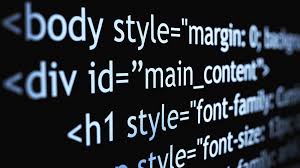
Children today are raised in a world surrounded by technology. Computers, tablets, and smartphones are part of their daily lives since birth, and technology will likely play a prominent role in their future regardless of their chosen career path. And that will make a knowledge of coding even more important.

But many kids don’t have the opportunity to learn much about the language of computers. That means they might be left behind, especially as other parts of the world embrace the idea.

The Language of Tomorrow

Software applications are part of our everyday existence, and that means the language used to create them is only more important. It is also a language that is somewhat universal, as programming languages are used worldwide. This means code has the ability to make our vast world feel smaller as we use it to find common ground.

Hands-On with Fast Feedback

Learning to code is a hands-on experience. While certain key aspects of a language can be introduced in textbooks, the true learning experience happens when children have the opportunity to use what they know to create simple programs.

Additionally, they receive the benefits of fast feedback when their code is executed. In most cases, a kid will know if mere moments if their code contains errors. This means they can immediately reexamine what was entered to find their own mistakes. There is no need to wait for a teacher to check over their work to see if the code is accurate as they can simply execute what is there and see the results themselves.

A New Way of Thinking

Learning how to code isn’t about turning every child into a developer, though it could help manage shortchanges in information technology professions. Instead, by bringing coding into the standard educational paradigm, children can be introduced to a new way of thinking.

Software engineers are adept at problem-solving and rely heavily on mathematics and logic; a method referred to as computational thinking. It provides children with a new set of skills for working their way through the world and for managing any problems they may face along the way.

Increase Interest in STEM

Allowing technology to be a part of education instead of just a tool can help students develop a higher level of interest in STEM subjects early on. By increasing interest, children are more likely to focus their educational efforts on the skills required to work in these areas and can help raise the number of people who eventually pursue these fields as careers.

Additionally, early introduction to coding in all schools can increase the amount of diversity in the corresponding workforces in the future. Diversity is celebrated for increasing creativity and innovation within work groups, but many minorities turn away from careers in STEM fields like IT due to the current lack of diversity, as well as suitable role models and educational support.

Teaching all kids coding helps lower some of the barriers associated with unconscious bias around specific fields, and helps those who may have originally been interested, but lacked true exposure to the skills, explore their options more fully.

Coding as a Stepping Stone

It is important to note that the ability to write code doesn’t guarantee a full understanding of computer science or technology. Instead, it works as an accessible stepping stone to bolster interest and encourage new ways of thinking. Will some students choose to pursue programming as a career? Sure, but many will not. However, that doesn’t mean the experience isn’t valuable to everyone along the way.




TagsEdtechedtechchatelearningSTEAMSTEM
Previous Article

How to Create a Makerspace in any ...

Next Article

20 Top Virtual Reality Apps that are ...

Matthew Lynch

Related articles More from author

  • EdTech News

    Zuckerberg is ploughing billions into ‘personalised learning’ – why?

    July 26, 2016
    By Matthew Lynch
  • EdTech NewsHigher Education EdTech

    No room for sloppiness in online classroom

    September 26, 2016
    By Matthew Lynch
  • Best of the Best ListsEarly Childhood & K-12 EdTech

    6 Kid’s Podcasts That Promote Learning

    July 2, 2017
    By Matthew Lynch
  • EdTech News

    NYC sets 2026 deadline for universal computer science — but what’s being done until then?

    September 7, 2016
    By Matthew Lynch
  • Early Childhood & K-12 EdTechHigher Education EdTech

    The Brains of K-12 Students Come Prewired for EdTech

    December 25, 2016
    By Matthew Lynch
  • The Hechinger Report

    OPINION: Why creating and maintaining accessible digital resources is neither easy nor optional

    June 9, 2017
    By Matthew Lynch

Search

Login & Registration

  • Log in
  • Entries feed
  • Comments feed
  • WordPress.org

Newsletter

Signup for The Tech Edvocate Newsletter and have the latest in EdTech news and opinion delivered to your email address!

About Us

Since technology is not going anywhere and does more good than harm, adapting is the best course of action. That is where The Tech Edvocate comes in. We plan to cover the PreK-12 and Higher Education EdTech sectors and provide our readers with the latest news and opinion on the subject. From time to time, I will invite other voices to weigh in on important issues in EdTech. We hope to provide a well-rounded, multi-faceted look at the past, present, the future of EdTech in the US and internationally.

We started this journey back in June 2016, and we plan to continue it for many more years to come. I hope that you will join us in this discussion of the past, present and future of EdTech and lend your own insight to the issues that are discussed.

Newsletter

Signup for The Tech Edvocate Newsletter and have the latest in EdTech news and opinion delivered to your email address!

Contact Us

The Tech Edvocate
910 Goddin Street
Richmond, VA 23231
(601) 630-5238
[email protected]

Copyright © 2026 Matthew Lynch. All rights reserved.