Supreme Court Upholds Voter ID Laws in 2026: What It Means
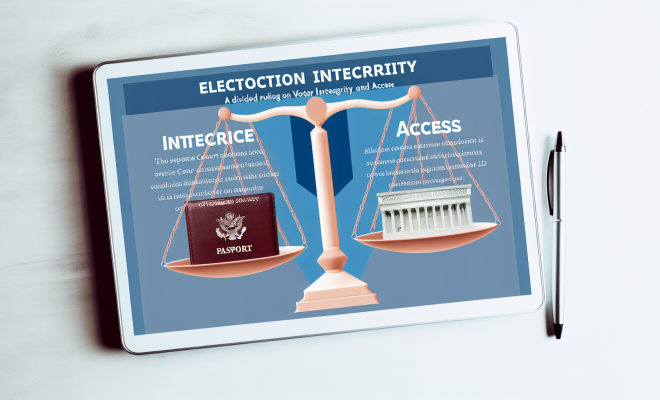
The U.S. Supreme Court delivered a significant ruling on April 7, 2026, affirming the legality of strict voter ID laws across the nation in a decisive 6-3 vote. This landmark decision has sparked a heated debate about election integrity versus voter access, particularly among marginalized communities.
The Majority Opinion
Chief Justice John Roberts authored the majority opinion, emphasizing the importance of maintaining election integrity. He pointed to evidence gathered during the 2024 elections, which showed that instances of voter fraud amounted to less than 0.01%. Despite the low rates of fraud, Roberts argued that the implementation of voter ID laws is essential to uphold public confidence in the electoral process.
According to the ruling, the Court found that the laws in 28 states that require voters to present identification do not constitute a violation of the Voting Rights Act. The majority opinion suggested that these measures help to prevent potential fraud, thereby enhancing the overall security of elections.
The Dissenting Voices
In stark contrast, Justices Sonia Sotomayor, Elena Kagan, and Ketanji Brown Jackson dissented, voicing their concerns over the ruling’s implications for voter suppression. They argued that the strict ID requirements disproportionately affect minority groups and low-income voters, who may struggle to obtain the necessary identification. The dissenting justices pointed to data from pilot states where these laws were enacted, noting a significant 5% drop in voter turnout among low-income populations.
The Impact of Voter ID Laws
The ruling is expected to have far-reaching consequences for the electoral landscape in the United States. With 28 states now operating under stringent voter ID requirements, advocates for voting rights are concerned about the potential disenfranchisement of millions of citizens.
- Many critics argue that the requirement for photo ID creates unnecessary barriers for individuals who may not have access to the proper documentation.
- Supporters of voter ID laws contend that these measures are necessary to safeguard elections against fraud and ensure that only eligible voters participate.
The debate over voter ID laws often revolves around the question of balance—how to protect the integrity of elections while ensuring that all eligible voters can exercise their franchise without undue hardship.
Reactions from Civil Rights Groups
In the wake of the ruling, civil rights organizations expressed their disappointment and concern. Groups like the NAACP and the American Civil Liberties Union (ACLU) have long argued that voter ID laws disproportionately impact African American, Latino, and low-income voters. They contend that these laws are a modern-day manifestation of voter suppression tactics that have historically targeted minority communities.
“This ruling is a setback for democracy,” said an ACLU spokesperson. “We will continue to fight against these unjust laws that hinder the ability of millions to vote.”
Future Implications
The Supreme Court’s decision sets a precedent that could encourage more states to adopt similar voter ID laws, further complicating the landscape of voting rights in America. Legal experts anticipate that this ruling may lead to a series of challenges in lower courts as civil rights advocates seek to address what they view as discriminatory practices.
Additionally, the ruling may invigorate grassroots movements aimed at increasing voter registration and education efforts, particularly within communities that are likely to be affected by these laws. Activists are mobilizing to ensure that voters are aware of the ID requirements and have access to the resources needed to comply.
Conclusion
The Supreme Court’s 6-3 ruling in favor of voter ID laws marks a significant moment in the ongoing discourse surrounding electoral integrity and access to the ballot. As the nation grapples with the implications of this decision, the debate over how to balance security and accessibility in elections is far from over. With potential challenges looming on the horizon, the fight for equitable voting rights continues to resonate across the country.