Supreme Court to Rule on TPS for Migrants in 2026
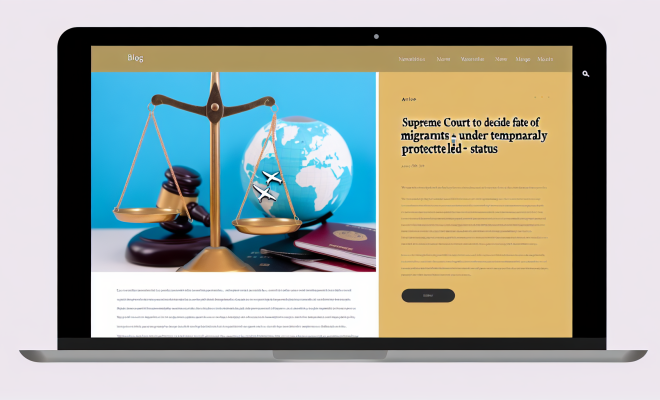
The U.S. Supreme Court is set to hear crucial arguments in April 2026 regarding the Trump administration’s controversial move to terminate Temporary Protected Status (TPS) for approximately 350,000 migrants from Haiti and 6,000 from Syria. This legal status has allowed these individuals to live and work legally in the United States amid ongoing crises in their home countries, including natural disasters and armed conflicts.
Background on Temporary Protected Status
Temporary Protected Status is a humanitarian program established by Congress that provides legal status to individuals from designated countries experiencing dire conditions that prevent their safe return. TPS was granted to nationals of certain countries, including Haiti and Syria, due to significant turmoil—Haiti has been grappling with political instability, poverty, and natural disasters, while Syria continues to face a devastating civil war.
The Administration’s Legal Challenge
The legal battle over TPS has intensified with the Trump administration’s push to end these protections, which raises significant concerns about the potential deportation of thousands of vulnerable individuals. The administration argues that the Department of Homeland Security (DHS) has the authority to terminate TPS based on changing conditions in the migrants’ home countries.
On March 16, 2026, the Supreme Court declined to lift lower court stays that currently protect these migrants, despite the government’s emergency appeals. The administration contended that allowing lower court decisions to stand interferes with national interests and undermines the DHS’s role in managing immigration policy.
Legal Precedents and Previous Court Decisions
This case comes on the heels of a significant ruling where the conservative-majority Supreme Court allowed the termination of TPS for 600,000 Venezuelans, which raised alarm over the future of similar protections for other groups. The decision to end TPS for Venezuelans exposed them to the risk of deportation, prompting advocates and legal experts to voice concerns about the implications for Haitians and Syrians.
Legal experts are closely analyzing this case, as the outcome could set a precedent for future TPS designations and terminations. The arguments will be presented by Solicitor General D. John Sauer, who will lead the Justice Department’s case before the Court.
Arguments for and Against Termination
- For Termination: Proponents argue that the conditions in Haiti and Syria have improved enough to warrant the end of TPS, asserting that the DHS should have the flexibility to make such determinations.
- Against Termination: Opponents argue that the situation in Haiti and Syria remains precarious, with ongoing violence, economic instability, and natural disasters making it unsafe for individuals to return home. They emphasize the humanitarian need to maintain TPS protections.
Implications of the Supreme Court’s Decision
The Supreme Court’s ruling on this matter could have significant implications for the lives of thousands of migrants and their families. If the Court sides with the Trump administration, it could lead to mass deportations, placing many individuals at risk of persecution or hardship in their countries of origin.
Conversely, if the Court rules against the administration, it would reinforce the protections afforded by TPS and potentially pave the way for further extensions or reinstatements for other countries experiencing crises. This decision could also influence public perception of immigration policies and the role of the judiciary in shaping these policies.
Public and Political Reaction
The push to end TPS has sparked widespread protests and advocacy efforts from various immigrant rights groups and humanitarian organizations. Many argue that terminating TPS disregards the humanitarian principles on which the program was founded and threatens the safety and stability of vulnerable populations.
Political leaders from both sides of the aisle have weighed in on the issue, with some supporting the continuation of TPS as a necessary measure of compassion and protection, while others argue for stricter immigration controls.
Conclusion
The Supreme Court’s upcoming arguments on the fate of TPS for Haitian and Syrian migrants represent a pivotal moment in U.S. immigration policy. As the Court prepares to hear these critical arguments, the fate of thousands hangs in the balance, underscoring the importance of understanding the legal, humanitarian, and political dimensions of this pressing issue.
The decision is expected to be released weeks or months after the arguments, leaving many to anxiously await the Court’s determination on the future of Temporary Protected Status in the United States.